- Company Articles
- Products and Technology
- Product knowledge
- Custom Suction Cup Anti-Slip Foot Adjusters for Unique Industrial Applications

Custom Suction Cup Anti-Slip Foot Adjusters for Unique Industrial Applications
Related Product
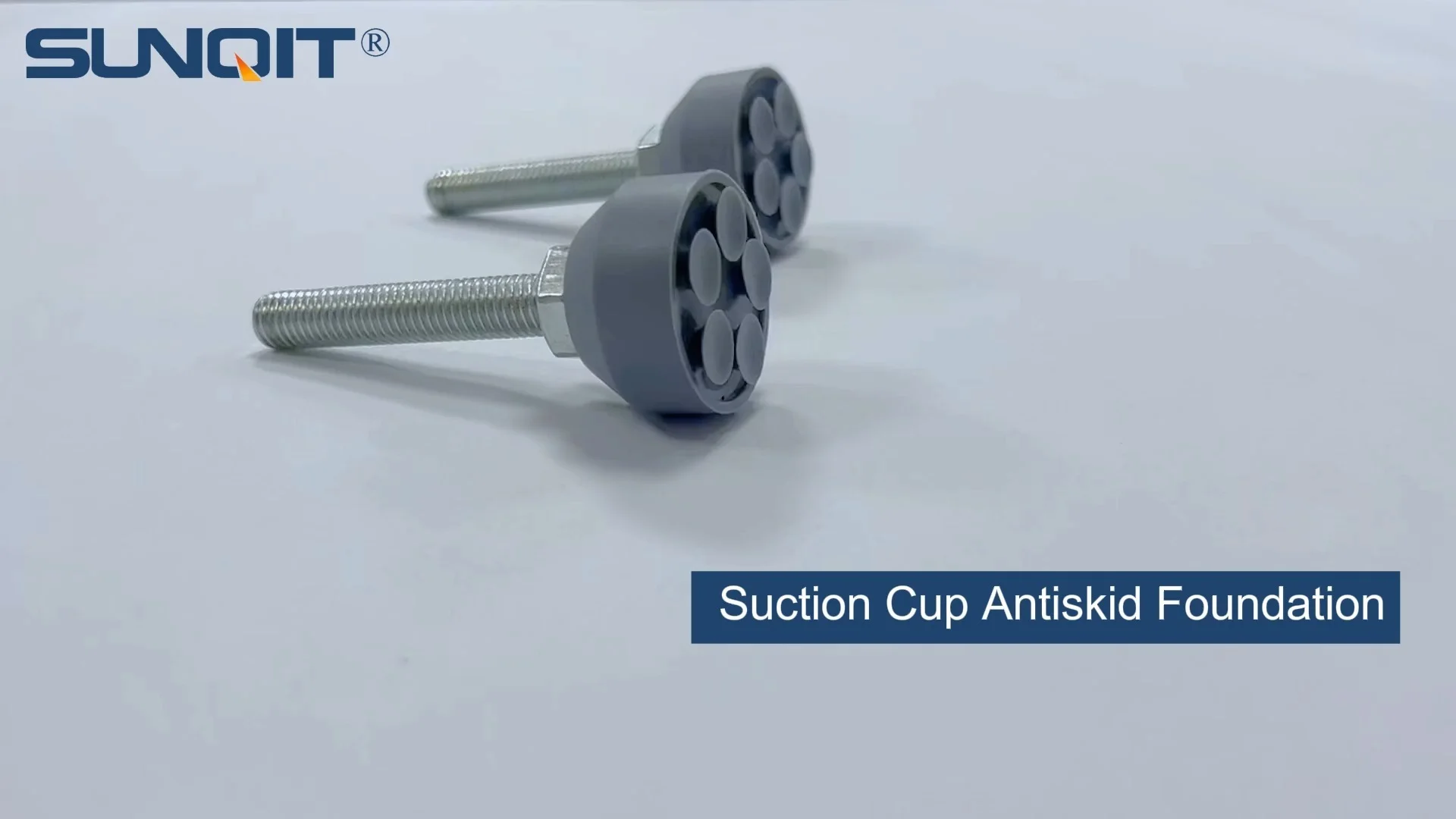
Suction Cup Anti-slip Foot Adjuster
D=35mm suction cup anti-slip foot adjusterï¼screw M10*55ï¼with a blot, used for workbench, flowrack pipe contact with groud.
Step into any industrial workspace—whether it's a high-paced manufacturing plant, a precision lab, or a dynamic assembly line—and you'll quickly spot an unsung challenge: stability. Uneven floors, heavy machinery, and constant movement can turn even the sturdiest workbench into a liability. A tiny wobble might seem trivial, but in environments where precision or safety is critical, it can lead to errors, delays, or accidents. This is where custom suction cup anti-slip foot adjusters come in—not just as parts, but as tailored solutions for the unique quirks of your workspace.
The Hidden Cost of Instability in Industrial Settings
Consider a electronics factory where workers assemble delicate circuit boards on a workbench. If that workbench shifts by just a millimeter, components misalign, leading to faulty products and wasted materials. Or imagine a lean pipe assembly line, where efficiency depends on every part staying in place. A wobbly section here could slow down production or compromise quality. Even in warehouses, unstable turnover trolleys and racks increase accident risks. The issue isn't just about "feeling" steady—it's about reliability, safety, and keeping operations running smoothly.
Traditional foot pads often fail in unique settings. Generic adjusters might not grip smooth floors, lack height flexibility for uneven surfaces, or can't handle heavy loads. Off-the-shelf options rarely fit facilities with specific needs. That's where customization matters, and suction cup anti-slip foot adjusters are built to bridge this gap.
What Are Custom Suction Cup Anti-Slip Foot Adjusters?
At their core, these adjusters are specialized components that attach to equipment bases—think workbenches, machinery, or lean pipe structures—to stabilize them on any surface. Their magic lies in dual functionality: they adjust height and use suction cups to grip surfaces, preventing slips or shifts. Unlike basic rubber feet (which rely solely on friction), suction cups actively adhere to smooth surfaces like concrete or tile, while anti-slip materials ensure traction on rougher floors.
But "custom" is what truly sets them apart. These aren't one-size-fits-all. They're tailored to your needs: size for tight spaces, materials for harsh environments, or grip strength for heavy loads. Whether you need a compact design for a lab workbench or a heavy-duty version for industrial machinery, customization ensures they fit your space perfectly.

Key Features: Built for the Unpredictable
To see why these adjusters stand out, let's break down their critical features and how they solve real-world problems:
| Feature | Benefit | Perfect For |
|---|---|---|
| Adjustable Height (10-50mm) | Levels equipment on uneven floors, from minor dips to sloped surfaces | Older facilities with worn concrete or multi-level work areas |
| Suction Cup Sizes (50mm-150mm) | Larger cups distribute weight for heavy machinery; smaller cups fit tight spaces | Automotive presses (large cups) or compact lab workbenches (small cups) |
| Anti-Slip Rubber + Suction Combo | Suction grips smooth floors (tile, polished concrete); rubber handles rough textures | Mixed-floor facilities (e.g., warehouse concrete + office tile) |
| Corrosion-Resistant Materials | Withstands moisture, chemicals, or extreme temps (stainless steel, reinforced plastic) | Food processing plants, outdoor yards, or chemical labs |
| Threaded Stem Design | Easy installation into pre-drilled holes or T-slots (compatible with aluminum profile frames) | Retrofitting existing workbenches or modular aluminum profile setups |

Why Customization Matters for Unique Applications
Industrial spaces are rarely "standard." A aerospace parts workshop might use aluminum profile workbenches for their lightweight, modular design—but those thin profiles need stable, low-profile feet to avoid adding bulk. A standard adjuster here might be too clunky, disrupting the bench's sleek structure. A custom solution? A slim suction cup adjuster with a threaded stem that fits the aluminum profile's T-slots, adding stability without sacrificing the frame's flexibility.
Another example: lean pipe assembly lines. These systems are built for adaptability—reconfiguring as production needs change. But moving a lean pipe structure across different floor types (smooth concrete in one area, textured tile in another) can cause slipping. A suction cup adjuster with interchangeable bases (rubber for texture, suction for smooth) keeps the same lean pipe setup stable, no matter where it's moved.

Real-World Impact: Case Studies in Stability
Features tell part of the story, but real-world results show their true value. Let's explore two scenarios where customization made all the difference.
Case Study 1: Medical Device Lab
A medical device manufacturer struggled with their quality control workbench. Used to inspect tiny surgical tools under a microscope, the bench sat on polished concrete that had warped slightly over time. Even small vibrations from nearby equipment made the bench wobble, blurring the microscope view and causing inspection errors. Rubber foot pads helped a little but still allowed slipping on the smooth floor.
They switched to custom suction cup anti-slip foot adjusters: 60mm suction cups with a 15-30mm height range. The cups gripped the polished concrete, stopping slips, while the adjusters leveled the bench to within 0.5mm precision. Inspection errors dropped by 35%, and workers reported less eye strain from steady microscope views.
Case Study 2: Automotive Lean Pipe Line
An auto parts plant reconfigured their assembly line with lean pipe systems for flexibility. But the new layout required moving a section over a slightly sloped floor (less than 1 degree, but enough to cause issues). The lean pipe workstations, holding heavy tooling, began to drift, misaligning parts and slowing production. Standard casters were too mobile; fixed feet couldn't handle the slope.
The solution: custom adjusters with dual heights—40mm on the low side, 25mm on the high side—to compensate for the slope. Suction cups kept the lean pipe structure steady, even when workers leaned on it. Production speed returned to normal, and the line retained its flexibility.
Installation: Simple, Even for Unique Setups
These adjusters are designed for easy installation, even for non-specialists. Most screw into pre-drilled holes in equipment bases via a threaded stem. For machinery without holes, adapters fit aluminum profile T-slots, steel frames, or wood. A quick tip: clean floors first—dust or debris reduces suction grip, so a damp cloth ensures maximum adhesion. Level the equipment with the adjusters, then press firmly to engage the suction cups. It takes minutes but delivers long-term stability.
Beyond Stability: The Ripple Effect of Better Design
Stability has a domino effect. When equipment stays steady, workers focus on tasks, not steadying wobbling workbenches. Quality improves as precision tasks become easier. Downtime drops, with less need to stop production for adjustments. Safety culture strengthens, too—fewer slips mean a more confident, productive team.
Custom suction cup anti-slip foot adjusters may be small, but they're a reminder that industrial efficiency depends on the details. They don't just fix problems—they adapt to your space, equipment, and challenges, turning instability from a hidden cost into a competitive edge.
Conclusion: Stability That Grows With Your Business
In evolving industrial spaces—with new machinery, reconfigured layouts, and shifting needs—stability remains constant. Custom suction cup anti-slip foot adjusters aren't just "extras"; they're flexible, future-proof solutions that adapt to whatever your workspace throws at them. Whether leveling a workbench, securing a lean pipe line, or stabilizing aluminum profile frames, these adjusters prove that the smallest components often make the biggest difference.
So next time you walk through your facility, check the base of your equipment. Is instability holding you back? It might be time to invest in a solution as unique as your operation.