- Company Articles
- Products and Technology
- Product knowledge
- Custom Swivel Stem Caster Wheels with Brake: Tailored for Automotive Parts Transport

Custom Swivel Stem Caster Wheels with Brake: Tailored for Automotive Parts Transport
Related Product
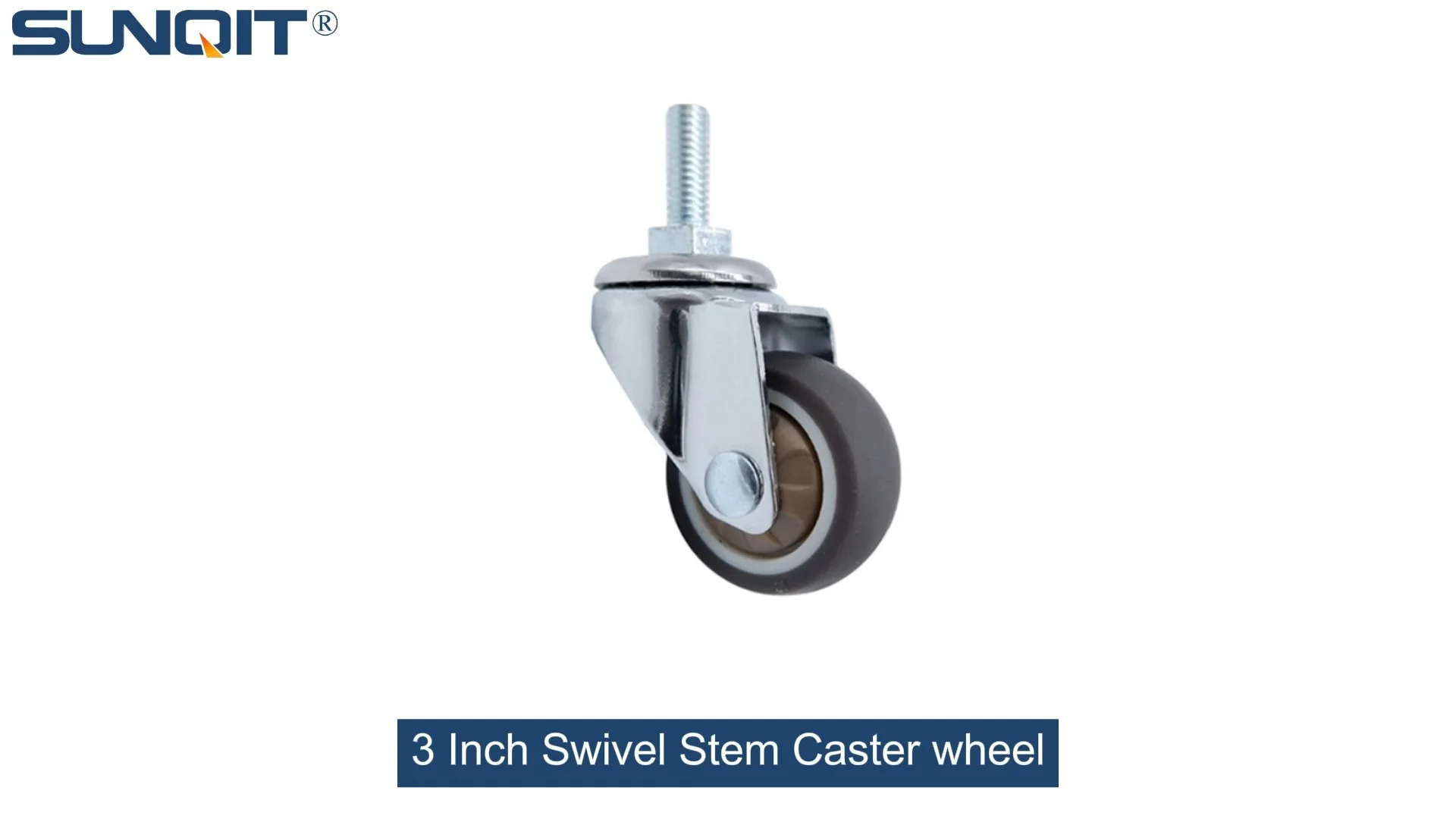
Swivel Stem Caster wheel
360 Degree Swivel Stem Caster. Threaded-post mount design, castors diameter 3 inch.Each swivel caster wheels loading 70KGS. Heavy enough and widely suit for carts, chairs, cabinet, flow rack, workbench, turnover rolley.
In the fast-paced world of automotive manufacturing, every component plays a role in keeping the assembly line moving—from the precision-engineered engines to the smallest screws. Yet, there's one group of components that often goes unnoticed, despite being critical to daily operations: the caster wheels that move parts, tools, and equipment across factory floors. When it comes to transporting delicate or heavy automotive parts, standard caster wheels rarely cut it. That's where custom swivel stem caster wheels with brake come into play—designed to meet the unique demands of automotive parts transport, these specialized wheels are the unsung heroes of efficiency, safety, and reliability.
The Unique Challenges of Automotive Parts Transport
Automotive manufacturing facilities are dynamic environments where time is money, and precision is non-negotiable. The parts being transported range from lightweight plastic trim pieces to heavy engine blocks, each with its own set of requirements. A single misstep—like a caster wheel failing under load, a brake not holding, or a wheel scratching a sensitive part—can lead to costly delays, damaged inventory, or even workplace injuries.
Consider, for example, the transport of a car door panel: it's large, awkwardly shaped, and easily scratched. A standard caster wheel with a hard plastic surface might scuff the panel if it shifts during movement. Or take an engine block weighing several hundred pounds—using a caster with insufficient load capacity could cause the wheel to bend or break, risking injury to the operator and damage to the engine. Then there are the tight spaces of the assembly line: narrow aisles, sudden turns, and the need to maneuver around other workers and equipment demand casters that can swivel smoothly without getting stuck.
Add to this the need for consistency. Automotive plants operate on lean principles, where waste—whether in time, materials, or effort—is minimized. A caster that doesn't roll smoothly slows down transport; a brake that's hard to engage increases the risk of accidents; a stem that doesn't fit the transport cart's mounting holes requires costly adapters. In short, one-size-fits-all casters create inefficiencies that clash with the goal of seamless production.
Why Swivel Stem Caster Wheels with Brake Are a Game-Changer
Swivel stem caster wheels with brake address these challenges head-on, combining three key features that make them ideal for automotive environments: swivel capability, stem mounting, and reliable braking. Let's break down why each matters.
Swivel Capability: Unlike rigid casters, which only roll forward and backward, swivel casters can rotate 360 degrees, allowing the cart or trolley to turn on a dime. This is critical in automotive plants, where space is often limited. Imagine navigating a turnover trolley loaded with suspension parts through a narrow aisle between two assembly stations—swivel casters make it possible to pivot around corners without having to backtrack or readjust the load.
Stem Mounting: Stem-mounted casters attach to equipment via a metal stem (or rod) that inserts into a hole or bracket on the cart, trolley, or workbench. This design offers versatility: stems can be threaded, grip-ring, or expanding, making them compatible with a wide range of transport tools, from lightweight plastic carts to heavy-duty steel racks. Unlike plate-mounted casters, which require bolts and a flat surface, stem casters are easier to install and replace, saving maintenance time.
Brake Mechanisms: In automotive settings, where carts are often left unattended while parts are loaded or unloaded, a reliable brake is non-negotiable. A good brake prevents the cart from rolling away on sloped floors, keeps parts stable during loading, and ensures worker safety. Custom swivel stem casters with brake take this a step further, offering options like total-lock brakes (which lock both the wheel and swivel motion) or directional brakes (which lock only the wheel), depending on the task at hand.

The Case for Customization: Why One-Size-Fits-All Falls Short
If standard swivel stem casters with brake are so useful, why bother with custom versions? The answer lies in the sheer diversity of automotive parts and transport needs. A caster that works for a lightweight bin of screws won't work for a pallet of transmissions. A wheel that's perfect for smooth concrete floors might fail on the rough surface of a warehouse loading dock. Customization allows manufacturers to tailor every aspect of the caster to their specific application, ensuring optimal performance.
Let's take a closer look at the key areas where customization makes the biggest difference:
Wheel Material: More Than Just Rubber vs. Plastic
The material of the caster wheel impacts everything from durability to noise levels to floor protection. In automotive plants, where floors are often polished concrete or epoxy, scratching is a major concern—especially in areas where sensitive parts are handled. A hard nylon wheel might be durable, but it can leave marks; a soft rubber wheel might protect floors but wear down quickly under heavy loads.
Custom caster manufacturers solve this by offering specialized materials like polyurethane-on-nylon (PU-nylon) wheels, which combine the durability of nylon with the floor-friendly, shock-absorbing properties of polyurethane. For environments where oil or chemicals are present (common in automotive maintenance areas), chemical-resistant wheels made from polyolefin or Viton can prevent degradation. Even noise is a factor: in busy plants, quiet wheels (often made from rubber or polyurethane) reduce distractions and improve working conditions.
Stem Design: Fit for the Task
The stem of a caster is its connection to the transport tool, and getting this right is critical for stability and safety. Standard stems come in fixed lengths and diameters, but automotive transport tools—from turnover trolley and rack systems to custom workbenches—often have unique mounting requirements. A turnover trolley used for storing and moving gears, for example, might require a longer stem to accommodate the thickness of the trolley's frame, while a lightweight parts cart could need a shorter, threaded stem for quick attachment.
Custom stem options include expanding stems (which grip the inside of a mounting hole for a secure fit), threaded stems with adjustable heights, and grip-ring stems for quick installation in unthreaded holes. Even stem accessories, like bushings or adapters, can be customized to ensure the caster fits perfectly with existing equipment, eliminating the need for costly modifications to carts or racks.
Brake Type: Safety Tailored to the Job
Not all brakes are created equal, and in automotive settings, the right brake can mean the difference between a smooth operation and a costly accident. A total-lock brake, which locks both the wheel and the swivel motion, is ideal for stationary loading—preventing the cart from rolling and pivoting. Directional brakes, which only lock the wheel, are better for tasks where the cart needs to be repositioned slightly without fully unlocking. Foot-operated brakes are a must for ergonomics, allowing operators to engage or disengage the brake without bending down.
Customization also extends to brake reliability. In high-traffic areas, brakes need to withstand frequent use without wearing down. Heavy-duty brake mechanisms with reinforced springs and durable pawls (the components that lock the wheel) ensure that the brake will hold, even after thousands of operations. For sensitive parts transport, soft-touch brakes that engage smoothly prevent jostling the load, reducing the risk of damage.
Load Capacity: Built to Handle the Weight
Automotive parts vary drastically in weight, and a caster's load capacity is non-negotiable. A standard caster might handle 200 pounds, but an engine block can weigh over 500 pounds, requiring casters rated for 600+ pounds each (with a safety margin). Custom casters are engineered to meet exact load requirements, using thicker steel for the frame, reinforced swivel bearings, and larger wheels to distribute weight evenly.
Overloading a caster is a common cause of failure, leading to bent stems, cracked wheels, or seized swivel mechanisms. By customizing load capacity, manufacturers ensure that each caster is matched to the specific parts it will transport, reducing the risk of breakdowns and extending the caster's lifespan.

Standard vs. Custom: A Comparison
| Feature | Standard Swivel Stem Caster Wheels | Custom Swivel Stem Caster Wheels with Brake |
|---|---|---|
| Wheel Material | Limited options (usually rubber or nylon) | Tailored materials (PU-nylon, chemical-resistant, noise-reducing) |
| Stem Design | Fixed lengths/diameters (threaded or grip-ring) | Custom lengths, expanding stems, and adapters for unique mounts |
| Brake Type | Basic foot brake (often wheel-only lock) | Total-lock, directional, or soft-touch brakes; reinforced mechanisms |
| Load Capacity | Generic ratings (e.g., 200-500 lbs) | Engineered for exact loads (e.g., 600+ lbs for heavy parts) |
| Compatibility | One-size-fits-most (may require adapters) | Designed for specific transport tools (e.g., turnover trolleys, workbenches) |

Integrating Custom Casters into Lean Systems
Automotive manufacturers worldwide rely on lean system principles to eliminate waste and streamline operations. At its core, lean manufacturing is about creating value for the customer by optimizing every step of the production process—and custom swivel stem caster wheels with brake play a direct role in this optimization.
Consider the concept of "flow," a key lean principle that emphasizes continuous, uninterrupted movement of materials. A standard caster that sticks or doesn't swivel smoothly disrupts flow, forcing operators to exert extra effort or stop to adjust the cart. Custom casters with precision swivel bearings and low-friction wheels ensure that parts move from storage to assembly without unnecessary delays. Similarly, reliable brakes prevent carts from rolling away during loading/unloading, reducing the time spent chasing runaway equipment or repositioning loads.
Another lean principle is "standardization," but that doesn't mean uniformity in all tools. Instead, it means standardizing processes to ensure consistency. Custom casters can be standardized for specific tasks—e.g., all engine block trolleys use the same heavy-duty caster with total-lock brakes, while trim part carts use lightweight, noise-reducing casters—creating a predictable, repeatable system that minimizes errors.
Waste reduction is also a byproduct of custom casters. By tailoring wheels to floor types, manufacturers reduce floor damage, lowering repair costs. By matching load capacity to actual needs, they avoid premature caster failure, reducing replacement costs. Even brake customization plays a role: easy-to-use brakes reduce the risk of human error (e.g., forgetting to engage the brake), which can lead to damaged parts or accidents—both forms of waste in the lean framework.
Real-World Impact: A Case Study
To understand the difference custom swivel stem caster wheels with brake can make, let's look at a real-world example. A mid-sized automotive parts supplier in the Midwest was struggling with frequent delays in their transmission assembly line. The issue? The standard caster wheels on their parts trolleys were failing to hold up under the weight of transmission components (around 450 lbs per trolley), leading to bent stems and seized swivel joints. Additionally, the brakes on the standard casters were unreliable—often slipping on the plant's slightly sloped concrete floor, causing trolleys to roll into workstations.
The supplier partnered with a caster manufacturer to design custom solutions. The result? Casters with reinforced steel frames, 6-inch polyurethane-on-nylon wheels (to handle the weight and protect floors), expanding stems (to fit the existing trolley frames), and total-lock brakes with reinforced pawls. Within three months of implementation, the supplier reported:
- A 40% reduction in caster-related downtime (no more bent stems or seized swivels)
- Zero incidents of runaway trolleys (thanks to the reliable total-lock brakes)
- Improved operator satisfaction (easier to maneuver and brake, reducing physical strain)
The investment in custom casters paid for itself within six months, proving that even small components can have a big impact on the bottom line.
Choosing the Right Supplier for Custom Casters
Not all caster suppliers are equipped to handle custom orders, especially for the automotive industry. When selecting a partner, look for manufacturers with:
Industry Expertise: A supplier that understands automotive manufacturing will know the challenges of parts transport, from load requirements to floor conditions. They should be able to recommend materials, brake types, and stem designs based on your specific needs.
Engineering Capabilities: Customization requires more than just swapping out parts—it often involves engineering new components. Look for suppliers with in-house design teams and testing facilities to ensure the caster meets your specifications.
Quality Materials: Automotive parts transport demands durability. The supplier should use high-grade steel for frames, premium bearings for swivel mechanisms, and industrial-strength wheel materials.
Flexibility: Whether you need a small batch of casters for a prototype trolley or thousands for a full production line, the supplier should be able to scale to your needs without sacrificing quality.
Conclusion: Investing in the Unsung Heroes
Custom swivel stem caster wheels with brake may not be the most glamorous components in automotive manufacturing, but their impact is undeniable. By tailoring wheel material, stem design, brake mechanisms, and load capacity to the unique demands of automotive parts transport, these casters improve efficiency, enhance safety, and support lean system goals.
In an industry where every second counts, and every part must arrive in perfect condition, standard casters are a liability. Custom casters, on the other hand, are an investment—one that pays off in reduced downtime, lower maintenance costs, and a smoother, more reliable operation. So the next time you walk through an automotive plant, take a moment to notice the casters under those trolleys and racks. Chances are, the ones keeping the line moving are the custom ones—built to handle the job, not just fill a slot.