- Company Articles
- Products and Technology
- Product knowledge
- Custom T Slot Aluminum Pipe with Board Holder: Designing for Unique Workflows

Custom T Slot Aluminum Pipe with Board Holder: Designing for Unique Workflows
Related Product
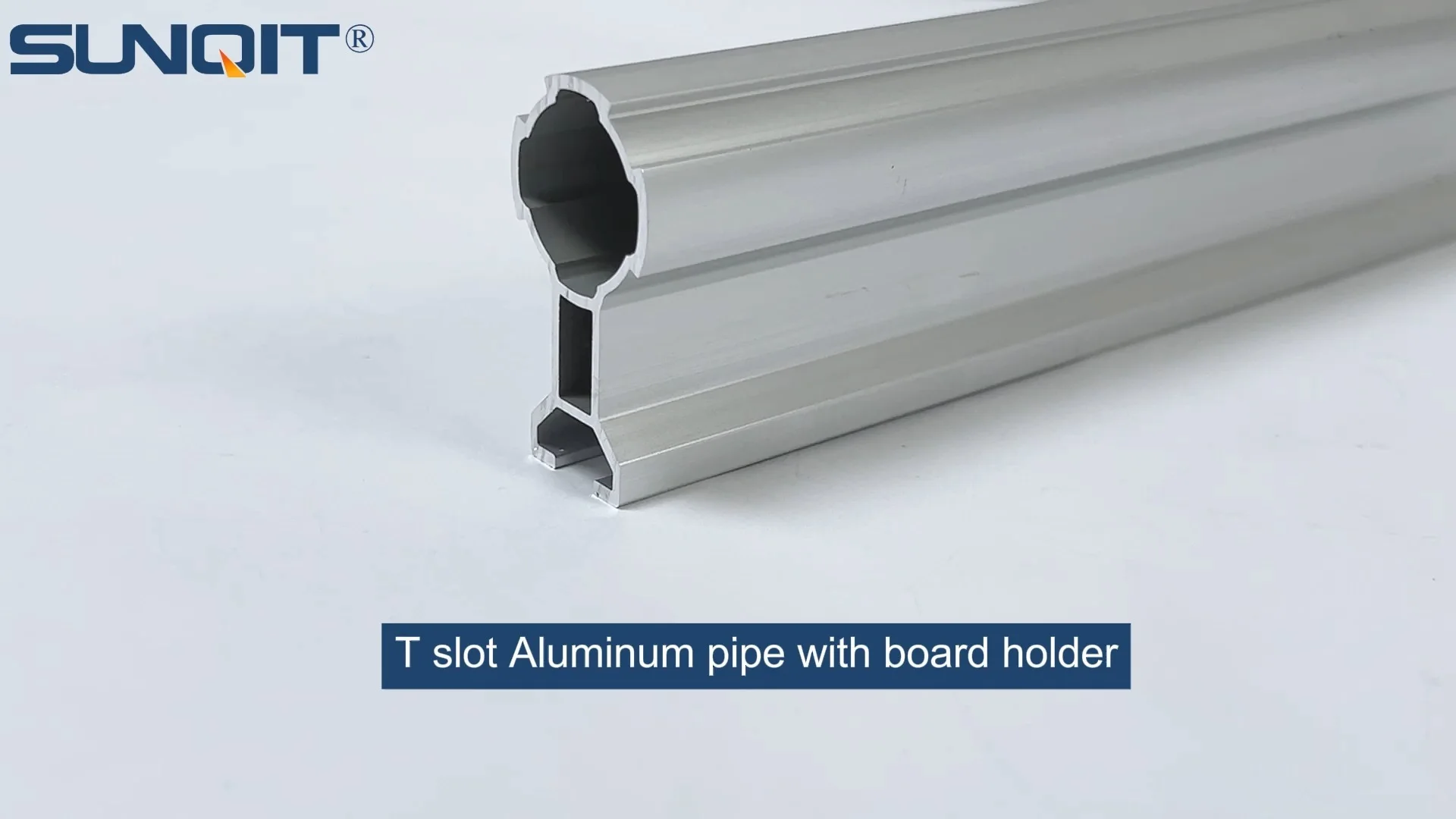
T Slot Aluminum Pipe with Board Holder
T slot Aluminum pipe with board holder,the pipe one side connected by a joint, the other side with a slot which can hold a tray or a aluminum pannel
The Problem with "One-Size-Fits-All" Workspaces
Walk into any busy workshop, manufacturing floor, or lab, and you'll notice something immediately: no two workflows are identical. A electronics assembly line in a tech factory operates differently than a small-batch bakery; a university research lab has unique needs compared to a retail warehouse. Yet, for decades, businesses have relied on generic, off-the-shelf equipment—sturdy but inflexible workbenches, rigid shelving, and fixed material racks—to these diverse processes. The result? Clunky inefficiencies, wasted space, and frustrated teams forced to adapt their work to fit the tools, rather than the other way around.
Take Maria, for example. She manages a small-scale automotive parts assembly team. Their workflow involves assembling intricate components that require frequent access to tools, blueprints, and small parts bins. The standard workbench they've used for years has a fixed shelf that's too low for comfortable blueprint viewing, and the surface is cluttered with tools that don't have a dedicated spot. "We're constantly moving things around just to make space," she sighs. "It's like trying to fit a square peg in a round hole—our workbench wasn't designed for our way of working."
This is where custom solutions step in. Specifically, the custom T Slot Aluminum Pipe with Board Holder has emerged as a game-changer for teams like Maria's. It's not just a piece of equipment; it's a flexible canvas that adapts to your workflow, not the other way around. Let's dive into how this innovative system is redefining what's possible in workspace design.
What is T Slot Aluminum Pipe, Anyway?
Before we get into the board holder specifics, let's break down the star of the show: T Slot Aluminum Pipe. At its core, it's an extruded aluminum profile with a continuous T-shaped groove (the "T slot") running along its length. This simple but genius design is what sets it apart from traditional steel pipes or plastic tubing. The T slot acts as a built-in channel for attaching accessories—brackets, shelves, holders, and even wheels—without the need for welding, drilling, or complex tools. Think of it as a modular building block: strong enough to support heavy loads, lightweight enough to reconfigure, and versatile enough to grow with your needs.
Aluminum itself is a standout material here. Unlike steel, it's resistant to rust and corrosion, making it ideal for humid environments like food processing plants or outdoor workshops. It's also significantly lighter than steel, so even large structures (like workbenches or material racks) can be moved or adjusted by a single person. And because it's extruded, T Slot Aluminum Pipes come in consistent lengths and profiles, ensuring compatibility across accessories—a crucial detail for anyone who wants to mix and match components later.
But what really makes T Slot Aluminum Pipe shine is its ecosystem of aluminum profile accessories . From simple end caps that protect against sharp edges to heavy-duty brackets that secure shelves, these accessories turn basic pipes into fully functional systems. Need a extra shelf? Slide a bracket into the T slot and tighten a screw. Want to add a tool hook? Clip it on. This modularity is why industries from aerospace to healthcare are swapping out rigid setups for T Slot Aluminum solutions.

The Board Holder: Small Accessory, Big Impact
Now, let's zoom in on the star accessory: the board holder. At first glance, it might seem like a minor addition—a simple attachment that holds a piece of plywood, acrylic, or whiteboard to the T Slot Aluminum frame. But in reality, it's the bridge between the pipe's structural strength and the workflow's human element. A well-designed board holder transforms a bare pipe frame into a workbench that works with the user, not against them.
Consider the possibilities. In a manufacturing setting, the board can serve as a task board, displaying step-by-step assembly instructions right at eye level. In a lab, it might hold a heat-resistant panel to protect the wall behind a Bunsen burner. In a retail stockroom, it could be a lightweight whiteboard for jotting down inventory counts or restocking reminders. The key is customization: the board holder can be adjusted for height, angle, and even material to fit the task at hand.
Take the "tilting board holder" option, for instance. It allows the board to pivot from vertical to a 45-degree angle, reducing glare on blueprints or digital tablets. For teams that use touchscreens or interactive displays, there are even holders with built-in swivel mechanisms, letting users rotate the board for collaborative work. And because it's attached via the T slot, repositioning the holder takes minutes—no tools required. If Maria's team suddenly needs to switch from assembling small parts to testing larger components, they can adjust the board holder to free up surface space in seconds.
Material matters too. While plywood is a budget-friendly choice for basic use, aluminum composite panels offer durability for heavy-duty environments. For labs or cleanrooms, antimicrobial acrylic boards resist bacteria growth. The T Slot Aluminum Pipe's versatility means the board holder can accommodate any of these materials, ensuring the setup aligns with both workflow and industry standards.

Designing for Unique Workflows: Key Considerations
Creating a custom T Slot Aluminum Pipe with Board Holder setup isn't about slapping a board onto a frame and calling it a day. It's a thoughtful process that starts with understanding the workflow's unique demands. Here are the critical factors to consider:
1. Workflow Steps: Mapping the "Flow" in Workflow
Every workflow has a rhythm—tasks that happen in sequence, tools that are used repeatedly, materials that move from point A to B. The first step in design is mapping this rhythm. For example, in a electronics assembly line, the workflow might be: (1) Unpack components from bins, (2) Place components on the workbench, (3) Assemble using tools, (4) Test the finished part, (5) Move to quality control. Each step requires specific access to tools, space, and materials.
A custom setup would position the board holder at step (3), holding assembly diagrams, while integrating roller track along the edge of the workbench to slide components from step (1) to (3) smoothly. The T Slot Aluminum frame ensures the roller track and board holder are positioned exactly where the team needs them—no more reaching or bending.
2. Ergonomics: Keeping People Comfortable
Workplace ergonomics isn't just a buzzword; it's about reducing strain and boosting productivity. A board holder mounted too low forces users to hunch over, leading to back pain; one mounted too high causes neck strain. Custom T Slot Aluminum setups let you adjust height, angle, and distance to match the average user's posture.
For example, in a warehouse where workers stand for 8+ hours, the board holder might be mounted at shoulder height, tilted slightly downward to reduce eye strain. In an office workshop where tasks alternate between sitting and standing, the holder could be attached to a height-adjustable T Slot frame, raising or lowering with the push of a button. Aluminum's lightweight nature makes these adjustments feasible even for large setups.
3. Space Constraints: Making the Most of Every Inch
Small workshops and labs often struggle with limited square footage. A custom T Slot Aluminum system, with its modular design, is a space-saving superhero. Unlike fixed workbenches that take up permanent floor space, T Slot frames can be disassembled or reconfigured when needs change. A board holder that's mounted on a vertical pipe frees up surface space, while foldable brackets let the board itself swing out of the way when not in use.
Consider a startup brewery with a tiny packaging area. Their workflow involves labeling bottles, which requires a flat surface and a label template. A custom T Slot workbench with a fold-down board holder (for the template) and caster wheels (for mobility) can be rolled into place during labeling, then folded and stored when the batch is done. No wasted space, no compromise on functionality.
Case Study: How a Custom Setup Transformed a Medical Device Lab
From Chaos to Clarity: The Lab at PrecisionMed Devices
PrecisionMed Devices, a small manufacturer of surgical tools, was struggling with a disorganized lab. Their team of five engineers worked on multiple projects simultaneously, each with unique documentation, tools, and material needs. The lab's generic workbenches had become catch-alls for loose papers, scattered tools, and half-assembled prototypes. "We were spending 15 minutes every morning just clearing space to work," says lead engineer Raj. "And when we needed to reference a design spec, it was either buried under a pile or stuck to the wall with a magnet, too far to read comfortably."
The solution? A custom T Slot Aluminum Pipe system with multiple board holders. Here's how it worked:
- Modular Workbench Frames: Three T Slot Aluminum workbenches, each with adjustable height and width, replaced the old fixed benches. The frames were powder-coated white to reflect light, brightening the lab.
- Multi-Angle Board Holders: Each bench had two board holders—one for a whiteboard (for quick notes and sketches) and another for a clear acrylic board (to hold digital tablets displaying design specs). The holders could tilt 30 degrees, reducing glare on the tablets.
- Tool and Material Integration: T Slot Aluminum profile accessories like tool hooks, small parts bins, and cup holders were added to the frames, keeping tools within arm's reach.
- Mobility with Casters: Two of the workbenches were fitted with locking casters, allowing the team to reconfigure the lab layout for collaborative projects or solo work.
The results were immediate. "Our setup time dropped to zero," Raj reports. "Everyone has their own organized space, and the board holders keep specs right where we need them. We even started using the whiteboards for daily huddles—no more gathering around a tiny desk." Productivity increased by 20% in the first month, and the team's stress levels? "Way down," Raj laughs. "It's amazing how much smoother work gets when your workspace is built for you ."
Comparing Materials: Why T Slot Aluminum Beats Steel and Plastic
You might be wondering: Why not just use steel pipes or plastic extrusions? Both are cheaper upfront, after all. The answer lies in long-term value and versatility. Let's break down the differences:
| Feature | T Slot Aluminum Pipe | Steel Pipe | Plastic Extrusions |
|---|---|---|---|
| Weight | Lightweight (easy to reconfigure) | Heavy (requires tools/machinery to move) | Very light (but less stable for heavy loads) |
| Durability | Corrosion-resistant, scratch-resistant with powder coating | Prone to rust without painting; dents easily | Weak to impacts; degrades in UV light |
| Customization | Unlimited—T slot accepts hundreds of accessories | Limited—requires welding/drilling for modifications | Somewhat customizable, but accessories are proprietary |
| Cost Over Time | Higher upfront, but reusable and adaptable (low long-term cost) | Low upfront, but costly to replace/modify | Low upfront, but needs frequent replacement |
| Eco-Friendliness | 100% recyclable; energy-efficient to produce | Recyclable, but high energy use in production | Non-biodegradable; limited recycling options |
For businesses focused on lean system principles—eliminating waste, optimizing flow, and continuous improvement—T Slot Aluminum Pipe is a natural fit. Its adaptability means you won't waste money replacing entire setups when workflows change. Instead, you simply reconfigure the existing frame and swap out accessories. It's sustainability meets efficiency, and it's why more teams are making the switch.
The Customization Process: Working with a Supplier
So, you're sold on the idea—now what? Customizing a T Slot Aluminum Pipe with Board Holder setup starts with finding the right supplier. Not all suppliers are created equal; look for one with experience in your industry, a wide range of accessories, and a willingness to collaborate on design. Here's what the process typically looks like:
1. Consultation: Talk Through Your Workflow
The best suppliers start by listening. They'll ask questions like: What tasks do you perform daily? What tools and materials do you use most? How much space do you have? Are there specific ergonomic concerns? Be prepared to walk them through your workflow step by step—even better, invite them to visit your workspace (or share photos/videos) so they can visualize the challenges.
2. Design: From Sketch to 3D Model
Using your input, the supplier will create a design. Many use 3D modeling software, so you can see a digital version of the setup before anything is built. This is your chance to tweak details: adjust the height of the board holder, add an extra shelf, or swap out casters for fixed feet. A good supplier will iterate until the design feels right.
3. Prototyping: Test Before You Invest
For complex setups, ask for a prototype. A small-scale version of the workbench or board holder lets you test functionality—does the board tilt smoothly? Is the height comfortable? Can you reach the tools easily? Prototyping saves time and money by catching issues early.
4. Production and Installation
Once the design is finalized, the supplier will manufacture the components. T Slot Aluminum Pipes are cut to length, accessories are assembled, and the board holder is fitted to your specifications. Installation is usually quick—most systems can be put together with basic tools, and many suppliers offer on-site assembly help if needed.
5. Follow-Up: Growing with Your Needs
The relationship shouldn't end after installation. As your workflow evolves, you may need to add more board holders, extend a workbench, or integrate new accessories. A great supplier will be there to help, offering advice and compatible components to keep your setup optimized.
The Future of Workspace Design: Smart, Sustainable, and Modular
As industries evolve—with trends like automation, remote work, and sustainability reshaping how we operate—workspace design is keeping pace. T Slot Aluminum Pipe systems are at the forefront of this shift, thanks to their ability to integrate with new technologies and eco-friendly practices.
Imagine a future where your custom workbench isn't just a static surface, but a connected hub. Sensors embedded in the T Slot Aluminum frame could track tool usage, alerting you when supplies run low. LED lights in the board holder could change color to signal workflow stages (green for "in progress," red for "needs review"). And because aluminum is recyclable, old setups can be disassembled and repurposed, reducing waste.
Accessories are also getting smarter. Solar-powered USB charging ports that clip into T slots, wireless charging pads integrated into board holders, and even AI-powered task boards that sync with project management software are on the horizon. The modularity of T Slot Aluminum means these innovations can be added to existing setups, future-proofing your investment.
Conclusion: Your Workflow Deserves a Custom Fit
In a world where businesses compete on speed, efficiency, and innovation, a one-size-fits-all workspace is a liability. The custom T Slot Aluminum Pipe with Board Holder isn't just a tool—it's a statement that your team's workflow matters, that you value their comfort and productivity, and that you're willing to invest in solutions that grow with you.
Whether you're running a small workshop, a bustling factory, or a cutting-edge lab, the principles are the same: start with your workflow, design around it, and choose tools that adapt as you do. Maria's assembly team, Raj's lab, and countless others have already discovered the difference a custom setup can make. Now it's your turn.
Your workflow is unique. Shouldn't your workspace be, too?