- Company Articles
- Products and Technology
- Solution
- Custom T Slot Aluminum Pipe with Board Holder: Tailored Solutions for Medical Industry

Custom T Slot Aluminum Pipe with Board Holder: Tailored Solutions for Medical Industry
Related Product
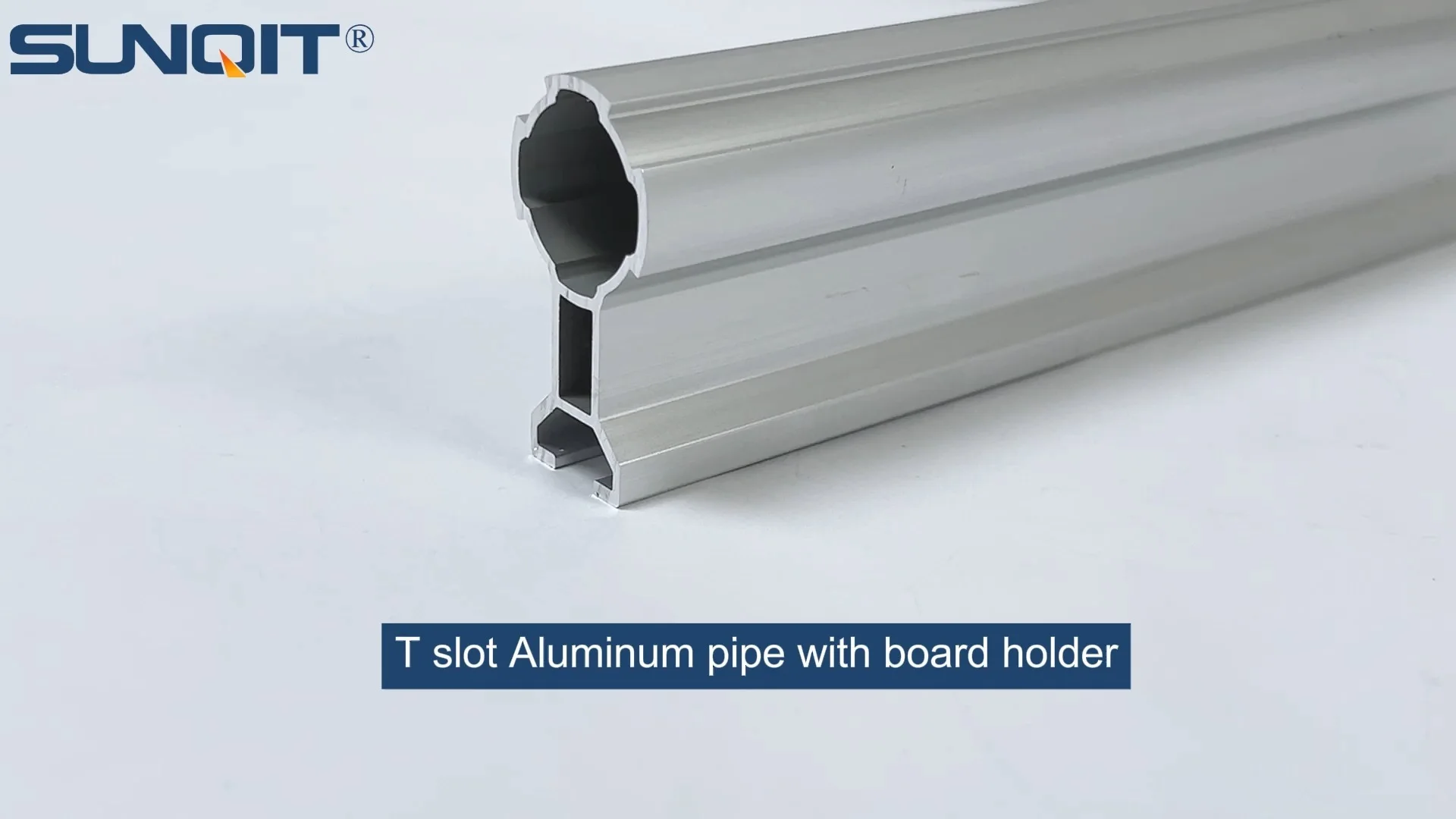
T Slot Aluminum Pipe with Board Holder
T slot Aluminum pipe with board holder,the pipe one side connected by a joint, the other side with a slot which can hold a tray or a aluminum pannel
In the fast-paced world of healthcare, every second counts. Whether it's a lab technician rushing to process critical samples, a nurse organizing surgical tools, or a manufacturer assembling life-saving medical devices, the spaces where these professionals work need to be more than just functional—they need to adapt, support, and evolve with their needs. That's where custom T slot aluminum pipe with board holder systems step in, quietly transforming chaotic workspaces into havens of efficiency and precision. Far more than just "pipes and boards," these solutions are the backbone of modern medical operations, designed to meet the industry's unique demands for sterility, flexibility, and reliability.
The Medical Industry's Unique Needs: Why One-Size-Fits-All Falls Short
Walk into any medical facility, and you'll quickly realize: this isn't an office or a factory. The stakes here are life-or-death, and the environment reflects that. Labs require surfaces that withstand harsh disinfectants without warping. Operating rooms need tool stations that stay stable during procedures but can be reconfigured in minutes for different surgeries. Manufacturing plants for medical devices demand workbenches that hold delicate equipment with pinpoint accuracy, even as production lines shift to new models. And through it all, every surface, every rack, every cart must adhere to strict regulatory standards for cleanliness and safety.
Traditional fixed furniture—think wooden shelves, steel racks bolted to the floor, or plastic carts that crack under heavy loads—simply can't keep up. A lab might invest in a custom steel workbench for a specific machine, only to replace that machine six months later, leaving the bench obsolete. A hospital ward might buy carts that are too bulky to navigate tight corridors, slowing down staff during emergencies. These inefficiencies don't just waste money; they create bottlenecks that put patient care at risk.
What medical professionals need is a system that grows with them. Something that can be adjusted, extended, or reimagined without starting from scratch. That's where custom T slot aluminum pipe with board holder systems shine. Built on the foundation of aluminum extrusion profile technology, these systems are designed to be modular, durable, and endlessly adaptable—exactly what the medical industry has been waiting for.
What Are Custom T Slot Aluminum Pipes with Board Holders, Anyway?
Let's break it down simply: Imagine (oops, scratch that—let's describe ) a frame built from lightweight, silver-colored pipes with grooves (the "T slots") running along their length. These pipes aren't just any metal; they're aluminum extrusion profiles, shaped under high pressure to create strong, consistent structures with built-in channels. Attached to these frames are "board holders"—adjustable brackets that secure everything from lab notebooks and patient charts to tablet mounts and instrument trays. The magic? Those T slots let you slide in accessories—clamps, shelves, hooks, even caster wheels—without drilling holes or welding. Need to move a shelf up by two inches? Loosen a bolt, slide, tighten, done. Want to add a new holder for a larger monitor? Snap in a new bracket. It's like building with giant, industrial-grade Legos, but designed for the rigors of healthcare.
And "custom" is the key word here. Unlike off-the-shelf furniture, these systems are designed for you . A small lab might need a compact workbench with a board holder angled for easy note-taking during experiments. A large manufacturer could require a 20-foot-long assembly line with board holders at varying heights to accommodate different workers. Even the board holders themselves are customizable—some flip up, some rotate 360 degrees, some have built-in cable management to keep messy wires away from sterile zones. It's not about selling you a product; it's about solving your specific problem.

Key Features: Why These Systems Are a Game-Changer for Medical Settings
To truly understand why custom T slot aluminum pipes with board holders are revolutionizing medical workspaces, let's dive into their standout features. The table below breaks down what makes them tick, and how each feature directly benefits healthcare professionals:
| Feature | How It Works | Medical Industry Benefit |
|---|---|---|
| T Slot Aluminum Extrusion Profile | Aluminum pipes with precision-machined T-shaped grooves allow accessories to slide in and lock securely without tools. | Quick reconfiguration means labs can adapt workstations for new tests; hospitals can repurpose carts for different departments in minutes. |
| Adjustable Board Holders | Holders pivot, tilt, and lock at any angle, with options for different materials (plastic, aluminum, antimicrobial laminates). | Nurses can angle patient charts for easy reading while standing; surgeons can position instrument lists at eye level during procedures. |
| Lightweight yet High-Strength Aluminum | Aluminum extrusion profile offers strength comparable to steel but at 1/3 the weight, with natural corrosion resistance. | Mobile workstations are easy for staff to move (even when fully loaded with supplies) but sturdy enough to hold heavy equipment like microscopes. |
| Compatibility with Aluminum Profile Accessories | Works with hundreds of accessories: caster wheels, storage bins, cable clips, and even antimicrobial attachments. | Add caster wheels to turn a static workbench into a mobile cart for emergency supplies; clip on bins to organize syringes and swabs. |
| Smooth, Non-Porous Surfaces | Aluminum profiles are finished with a smooth anodized coating; board holders use sealed, easy-to-clean materials. | Stands up to daily disinfection with bleach, alcohol, or harsh medical cleaners without staining or harboring bacteria. |

Real-World Impact: How These Systems Are Transforming Medical Workspaces
It's one thing to talk about features on paper; it's another to see how they play out in the places where healthcare happens. Let's look at a few examples of how custom T slot aluminum pipe with board holder systems are making a difference:
Case Study 1: The Community Hospital Lab That Cut Test Times by 30%
A mid-sized hospital in the Midwest was struggling with a common problem: their lab workbench was a jumble of fixed shelves, cluttered with pipettes, centrifuges, and sample tubes. Technicians wasted precious minutes reaching across the bench for tools, and when new testing equipment arrived, there was nowhere to put it without crowding the space. The lab manager reached out to a supplier specializing in aluminum extrusion profile systems, and together they designed a custom workstation with T slot pipes and adjustable board holders.
The result? The new setup had board holders positioned at shoulder height for frequently used charts, freeing up counter space. T slots allowed the team to add sliding shelves for the new equipment, and caster wheels made it easy to move the entire bench when deep cleaning the lab. Within three months, the lab reported a 30% reduction in time spent on routine tests—time that could now be dedicated to urgent samples. "It's like we added an extra technician without hiring anyone," the lab manager noted.
Case Study 2: The Medical Device Manufacturer That Eliminated Assembly Errors
A company producing pacemakers and defibrillators was facing a frustrating issue: assembly line workers often misaligned tiny components, leading to costly rework. The problem? Their fixed workbenches forced workers to hunch or stretch to reach tools, causing fatigue and mistakes. The solution? A custom T slot aluminum system with board holders mounted on adjustable arms. Each workstation was tailored to the height and reach of the employee using it, with board holders holding component diagrams at eye level and tool trays positioned exactly where hands naturally fall.
The impact was immediate: assembly errors dropped by 45%, and workers reported less shoulder and back pain. "I used to have to twist my wrist to grab the screwdriver," said one assembler. "Now it's right there, and the diagram is in front of me—no more squinting at a manual on the floor." The company also saved money by reusing the system when they launched a new product line; instead of buying new benches, they simply reconfigured the T slot pipes and swapped out the board holders for updated diagrams.
Why Aluminum? The Material That Makes It All Possible
At the heart of these systems is aluminum extrusion profile—and there's a reason it's not steel, wood, or plastic. Aluminum brings a unique set of benefits that make it perfect for medical environments, starting with its weight. A typical T slot aluminum pipe weighs about 1.5 pounds per foot, compared to 4 pounds for steel. That might not sound like much, but when you're building a 10-foot workbench with shelves and board holders, the difference is night and day. Nurses can move mobile carts single-handedly, even when loaded with supplies, and lab techs can reposition shelves without straining their backs.
Then there's durability. Aluminum naturally resists corrosion, which is critical in medical settings where surfaces are cleaned multiple times daily with strong disinfectants. Unlike steel, it won't rust if a spill isn't wiped up immediately. Unlike wood, it won't warp or harbor mold in humid environments like sterilization rooms. And because it's anodized (a process that creates a hard, protective layer on the surface), it stands up to scratches from heavy equipment or sharp tools—no more unsightly dents that trap bacteria.
Sustainability is another bonus. Aluminum is 100% recyclable, and most extrusion profiles are made from recycled materials. For hospitals and manufacturers aiming to reduce their carbon footprint, this is a big win. Plus, since the systems are modular, you're less likely to throw them away when needs change—you just reconfigure them. It's good for the planet, and good for the budget.
Accessories: The Little Extras That Make a Big Difference
A T slot aluminum pipe system is only as good as the accessories that go with it, and when it comes to the medical industry, the right aluminum profile accessories can turn a basic frame into a specialized tool. Let's talk about some of the most popular ones:
Caster Wheels: Add locking caster wheels to a workbench, and suddenly it's a mobile cart that can follow nurses from patient room to patient room. Look for models with antimicrobial coatings to prevent germ spread and non-marking tires to protect hospital floors.
Storage Bins and Hooks: T slots make it easy to clip on plastic bins for storing gloves, masks, or sample tubes, or hooks for hanging lab coats and aprons. Everything stays within reach but off the counter, reducing clutter.
Cable Management Clips: Medical equipment comes with a lot of cords—monitors, chargers, microscopes. Cable clips that slide into T slots keep wires organized and off the floor, where they could trip someone or get damaged.
Antimicrobial Board Holders: For high-risk areas like operating rooms, board holders can be treated with antimicrobial agents that kill bacteria on contact. It's an extra layer of protection in spaces where sterility is non-negotiable.
The best part? These accessories are interchangeable. A cart used for transporting meds during the day can be fitted with hooks and bins at night to serve as a cleaning station. It's versatility that traditional furniture just can't match.
Lean System Integration: Working Smarter, Not Harder
The medical industry is increasingly adopting lean system principles—focusing on reducing waste, improving flow, and maximizing value. Custom T slot aluminum systems align perfectly with this mindset. In a lean system, every tool, every step, every inch of space should serve a purpose. Fixed furniture often creates waste: if a shelf is too deep, you waste space. If it's too shallow, you waste time searching for items. With T slot systems, you design the space around the work, not the other way around.
Take a hospital pharmacy, for example. A lean system might aim to reduce the time it takes to fill a prescription. A custom aluminum cart with board holders for patient records, bins for medications, and a built-in tablet mount for accessing the pharmacy database can be positioned right next to the medication shelves, cutting down on walking time. At the end of the day, the cart can be reconfigured into a storage unit by removing the board holder and adding stackable bins—no wasted space, no wasted time.
In manufacturing, lean system goals often include minimizing setup time between production runs. A T slot assembly line can be reconfigured in hours instead of days, allowing a company to switch from making syringes to IV catheters without shutting down the line entirely. Board holders can be updated with new instructions, and tool positions adjusted—all without calling in a contractor.
Why Not Just Use Steel or Plastic? The Clear Advantages of Aluminum
You might be wondering: Why aluminum? Couldn't steel or plastic work just as well? Let's compare. Steel is strong, but it's heavy—too heavy for mobile carts or adjustable shelves. It also rusts, which is a dealbreaker in damp environments like labs. Plastic is lightweight, but it bends under heavy loads and can't withstand high temperatures (like the heat from sterilization ovens). Wood is cheap, but it absorbs moisture, harbors bacteria, and warps when cleaned with chemicals. Aluminum extrusion profile hits the sweet spot: strong enough to hold heavy equipment, lightweight enough to move, resistant to corrosion and heat, and easy to clean.
Another advantage? Aluminum's aesthetic. Medical spaces can be stressful, and a cluttered, industrial-looking environment doesn't help. Aluminum has a clean, modern finish that fits seamlessly into hospitals, labs, and clinics. It's not just functional—it looks professional, which matters when patients and regulators walk through.
The Future of Medical Workspaces: Where Custom Aluminum Systems Are Headed
As medical technology advances, so too will the need for smarter workspaces. Custom T slot aluminum pipe with board holder systems are poised to keep up, thanks to ongoing innovations in materials and design. Here are a few trends to watch:
Smart Integration: Imagine (again, oops— picture ) board holders with built-in RFID tags that track which tools are used and when, helping hospitals manage inventory. Or T slot pipes with embedded sensors that alert staff when a cart is overloaded or a shelf is left unlocked in a restricted area.
3D Printing for Custom Accessories: While the pipes and basic holders will still be mass-produced, 3D printing could allow for ultra-custom accessories—like a board holder shaped to fit a specific medical device or a bin designed for an oddly sized sample tube. It's customization taken to the next level.
Enhanced Ergonomics: As we learn more about how workspace design affects worker health, future systems will likely include features like height-adjustable T slot frames that sync with employee smartwatches, automatically raising or lowering as someone approaches. Board holders could tilt based on eye tracking, ensuring optimal viewing angles without manual adjustment.
Conclusion: More Than a Workspace—A Partner in Patient Care
At the end of the day, custom T slot aluminum pipe with board holder systems aren't just about pipes and brackets. They're about empowering the people who save lives. A lab technician who can focus on testing instead of searching for tools. A nurse who can move quickly because their cart is lightweight and organized. A manufacturer who can produce life-saving devices with fewer errors and less waste. These systems don't just improve workflows—they improve outcomes.
If you're in the medical industry, ask yourself: Is your current workspace holding you back? Are you wasting time, money, or energy on furniture that wasn't designed for your unique challenges? It might be time to explore the possibilities of custom aluminum extrusion profile systems. They're not a one-time purchase; they're an investment in efficiency, safety, and adaptability—three things no medical facility can afford to be without.
In a world where healthcare never stops evolving, your workspace shouldn't either. Custom T slot aluminum pipes with board holders are more than a solution—they're a promise: to grow with you, support you, and help you do what you do best: care for others.