- Company Articles
- Products and Technology
- Product knowledge
- Custom T-Slot Rubber Seal Covers: When Standard Sizes Don't Fit Your Lean Pipe System

Custom T-Slot Rubber Seal Covers: When Standard Sizes Don't Fit Your Lean Pipe System
Related Product
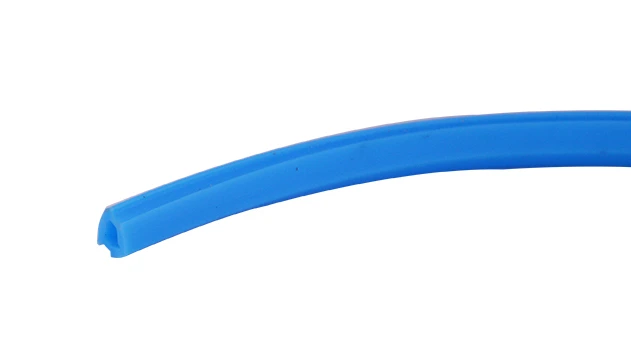
T-slot Rubber Seal Cover
The rubber T-slot seal cover prevents dust and debris buildup, covers wires in the T-slot channel, and adds an extra layer of protection to applications. It rolls into the T-slot, making it easy to assemble.
Walk into any modern manufacturing facility, and you'll likely spot a symphony of lean pipe systems—workbenches cluttered with tools, material racks stacked with components, and conveyor belts gliding products from one station to the next. These systems, built from aluminum profiles, stainless steel pipes, and a maze of connectors, are the backbone of efficient production. But if you lean in closer, you might notice something small yet critical: the T-slots running along those aluminum profiles. And if those T-slots are fitted with rubber seal covers that don't quite sit right—gapping at the edges, peeling up at the corners, or even falling off entirely—you're looking at a problem that's bigger than it seems.
Standard T-slot rubber seal covers are designed to be "one-size-fits-most," but in the world of custom lean pipe systems, "most" doesn't always cut it. Maybe your facility uses non-standard aluminum profiles, or you've modified a workbench to fit a unique assembly process. Perhaps you're working with ESD-sensitive components and can't risk gaps that might compromise static protection. Whatever the reason, forcing a standard seal cover into a non-standard slot is like trying to jam a square peg into a round hole: it wastes time, hurts efficiency, and can even create safety hazards. That's where custom T-slot rubber seal covers come in. Let's dive into why they matter, when to invest in them, and how they can transform your lean pipe system from "good enough" to "perfectly tailored."
What Are T-Slot Rubber Seal Covers, Anyway?
Before we talk about why standard sizes fail, let's get clear on what T-slot rubber seal covers actually do. If you're familiar with aluminum profiles—the modular, T-slot-equipped beams that form the skeleton of lean pipe systems—you know those T-shaped grooves are versatile. They let you slide in brackets, fasteners, or accessories like aluminum guide rails or roller track connectors, making it easy to reconfigure workbenches, racks, or conveyors on the fly. But left uncovered, those T-slots are vulnerable.
Dust, metal shavings, and spilled liquids can seep into the slots, gumming up the works and making it hard to adjust accessories later. Sharp edges on exposed T-slots can scratch workers' hands or snag gloves. And over time, debris buildup can even corrode the aluminum, shortening the life of your expensive profiles. T-slot rubber seal covers solve these issues by snapping into the grooves, creating a tight, protective barrier. They're usually made of flexible rubber or silicone, designed to withstand the wear and tear of daily use—scrapes from tools, impacts from moving parts, and the occasional chemical spill.
Standard seal covers are mass-produced to fit common aluminum profile sizes: think 2020, 3030, or 4040 EU standard profiles. They come in basic colors like black or grey, and they're cheap and easy to find. For facilities using off-the-shelf lean pipe systems, they work just fine. But if your setup is even slightly custom? That's when the trouble starts.
The Problem with "One-Size-Fits-All" in Lean Pipe Systems
Lean manufacturing thrives on customization. The whole point of a lean pipe system is to design workflows that fit your processes, not the other way around. Maybe you've built a material rack with 3060 aluminum profiles instead of the standard 3030 to hold heavier components. Or you've modified a workbench to include a specialized roller track for delicate parts, requiring a wider T-slot. Perhaps you're using aluminum extrusion profiles with unique slot dimensions because they're better suited for your industry—like food processing, where hygiene demands smoother surfaces and tighter seals.
Standard T-slot rubber seal covers aren't built for these scenarios. Let's say you're using a 4080 aluminum profile (wider and taller than the common 4040) to support a heavy-duty conveyor. The standard seal cover for 4040 profiles will be too narrow, leaving gaps on either side of the T-slot. Those gaps let in dust and debris, which can jam the slot over time, making it impossible to adjust accessories without first cleaning out the gunk. Worse, if the seal cover is too short, it might slide out of place when you attach a bracket or connector, defeating the purpose entirely.
Even minor variations can cause issues. Maybe your aluminum profiles are slightly worn from years of use, warping the T-slot shape. Or you've added aluminum profile accessories like side guides or tray holders that extend into the slot, reducing the available space for a seal. In electronics manufacturing, where ESD workbenches are critical, a misfitting seal cover can be catastrophic: gaps in the T-slot can create pathways for static electricity, putting sensitive circuit boards at risk of damage. Standard seals just aren't designed to account for these nuances.
| Scenario | Standard Seal Cover Issue | Impact on Your Lean System |
|---|---|---|
| Using non-standard aluminum profiles (e.g., 3060 instead of 3030) | Seal is too narrow or short, leaving gaps | Dust/debris buildup; reduced lifespan of profile |
| Modified ESD workbench with custom brackets | Seal peels up around bracket edges | Compromised static protection; safety hazard |
| Heavy-duty material rack with warped T-slots (from weight) | Seal doesn't sit flush, slides out of place | Scratched components; workers' hands at risk |
| Food-grade stainless steel pipe series with smooth T-slots | Standard rubber is too rigid, won't conform to slot curves | Hygiene risks (bacteria in gaps); non-compliance with regulations |

Why Custom Matters: Real-World Pain Points
To understand the value of custom T-slot rubber seal covers, let's look at a few real-world examples. These aren't hypothetical—they're stories from facilities that switched to custom seals and never looked back.
Case 1: The Automotive Supplier with a "Frankenbench"
A mid-sized automotive parts supplier in Michigan had a problem: their main assembly workbench was a "frankenbench"—a Frankenstein's monster of modified aluminum profiles, repurposed conveyor parts, and custom brackets. Originally a standard 4040 aluminum workbench, it had been altered over the years to fit larger engine components, with sections of 4080 profiles welded on and T-slots widened to accommodate heavy-duty clamps. The standard 4040 seal covers they'd been using were a disaster: on the 4080 sections, they gapped so badly that screws and washers kept falling into the T-slots. On the modified 4040 sections, the widened slots made the seals too loose, causing them to pop off during assembly, leaving workers to stop and reattach them multiple times a day.
After months of frustration, they reached out to their lean pipe supplier and requested custom seal covers. The supplier measured the modified T-slots, adjusted the seal width and thickness, and even added a slightly tackier rubber compound to help the seals grip the warped metal. The result? No more gaps, no more falling seals, and a 15% reduction in downtime from workers stopping to fix the issue. "It sounds small, but when you're assembling 500 parts a day, every minute counts," said the facility manager. "Those custom seals paid for themselves in a week."
Case 2: The Electronics Plant Fighting Static on ESD Workstations
An electronics manufacturer in California specializes in building circuit boards for medical devices—products where even a tiny static discharge can ruin thousands of dollars' worth of components. Their ESD workstations are critical: every surface, from the tabletop to the T-slots, is designed to dissipate static. But they were struggling with standard T-slot seal covers. The ESD-safe rubber in standard seals was too rigid to fit the slightly irregular T-slots on their custom aluminum profiles (modified to include built-in cable management channels). Gaps between the seal and the slot created "hot spots" for static buildup, leading to two costly component failures in one month.
Their solution? Custom ESD-safe T-slot rubber seal covers. The supplier used a softer, more flexible silicone-rubber blend that conformed to the irregular slot shape, eliminating gaps. They also added conductive particles to the rubber to ensure consistent static dissipation across the entire seal surface. Since installing the custom seals, the plant hasn't had a single static-related failure. "We used to check the seals every hour to make sure they were flush," said the production supervisor. "Now we forget they're there—and that's the point."

The Benefits of Custom T-Slot Rubber Seal Covers: More Than Just a "Perfect Fit"
At first glance, custom T-slot rubber seal covers might seem like a luxury—why not just live with the standard ones and save a few dollars? But the reality is, they offer benefits that go far beyond a snug fit. Here's why they're worth the investment:
1. Durability That Matches Your Workload
Standard seal covers are made from basic rubber compounds designed for average use. If your lean pipe system sees heavy traffic—think material racks loaded with 50-pound boxes, or workbenches where tools are constantly dragged across the surface—standard rubber will wear down quickly, cracking or tearing within months. Custom seals let you choose materials that match your workload. Need something oil-resistant for a machine shop? Opt for nitrile rubber. Working in a cold storage facility? Silicone rubber stays flexible in low temperatures. For ESD workbenches, you can specify conductive or dissipative rubber blends. It's about building a seal that lasts as long as your system does.
2. Safety First (and Second, and Third)
A loose or gapped seal cover isn't just an annoyance—it's a safety risk. Exposed T-slots have sharp edges that can scratch workers' hands or catch on gloves. If a seal peels up, it creates a tripping hazard (especially on floor-level material racks or conveyor tracks). In food or pharmaceutical facilities, gaps can trap bacteria or debris, violating hygiene standards. Custom seals eliminate these risks by fitting perfectly, staying in place, and covering edges completely. It's a small change that makes a big difference in keeping your team safe and compliant.
3. Aesthetics That Boost Morale (Yes, Really)
It might sound trivial, but a clean, well-maintained workspace matters. Scratched, peeling, or mismatched seal covers make even the most efficient lean system look run-down—and that can drag down team morale. Custom seals let you choose colors that match your facility's branding or safety protocols (e.g., yellow for high-traffic areas, red for caution zones). You can even add subtle textures for grip or emboss logos for a polished look. When workers see that every detail, right down to the T-slot seals, is cared for, it sends a message: "We invest in quality, and we value your work."
4. Compatibility with Your Favorite Accessories
Aluminum profile accessories—like roller track connectors, caster mounts, or tray holders—are designed to slide into T-slots with minimal friction. A misfitting seal cover can throw off that compatibility. If the seal is too thick, it might make accessories hard to insert; if it's too thin, accessories might wobble or slip. Custom seals are engineered to work with your existing accessories. For example, if you use a lot of roller track placon mounts (those handy brackets that connect roller tracks to aluminum profiles), your supplier can adjust the seal's thickness to ensure the mount still slides smoothly into the slot. It's about making sure your entire system works together seamlessly.
How to Work with a Supplier to Get Custom T-Slot Rubber Seal Covers
So, you're convinced custom seals are the way to go. Now what? The process of ordering custom T-slot rubber seal covers is simpler than you might think—if you partner with the right lean pipe supplier. Here's how to approach it:
Step 1: Document Your Needs (and Measure Twice)
Start by identifying which parts of your lean system need custom seals. Is it a single workbench, an entire conveyor line, or all your material racks? For each area, measure the T-slot dimensions carefully: width, depth, and any irregularities (like warping or modifications). Take photos of the slots, too—this helps the supplier visualize the problem. Note the environment: Is the area exposed to oil, chemicals, or extreme temperatures? Do you need ESD protection? The more details you provide, the better the supplier can tailor the solution.
Step 2: Find a Supplier Who Specializes in Customization
Not all lean pipe suppliers offer custom rubber seal covers—many stick to off-the-shelf parts. Look for a supplier with experience in aluminum profile accessories and a track record of making custom components. Ask if they have in-house design or engineering teams (this speeds up the process) and if they offer samples or prototypes. A good supplier will ask questions like, "What's the maximum weight on the profile?" or "How often do you adjust accessories in the T-slot?"—signs they're thinking about your unique use case.
Step 3: Test a Prototype (and Be Patient)
Once you've shared your specs, the supplier will likely create a prototype seal cover. Test it rigorously: install it in the T-slot, attach accessories, and simulate daily use (drag tools across it, wipe it down with cleaning supplies, etc.). Does it stay in place? Are there any gaps? If something's off, don't hesitate to ask for adjustments. Customization is a collaborative process—your feedback ensures the final product is perfect.
Step 4: Order in Bulk (and Save)
Custom parts often have a higher upfront cost than standard ones, but ordering in bulk can bring the per-unit price down. If you know you'll need seals for multiple areas (or future expansions), ask about volume discounts. Many suppliers also offer "blanket orders"—you pay upfront for a certain quantity, and they ship them to you as needed, saving storage space in your facility.
Final Thoughts: Don't Let Small Parts Derail Your Lean System
In lean manufacturing, success lies in the details. A misaligned conveyor, a wobbly workbench, or—yes—a poorly fitting T-slot rubber seal cover can throw off your entire process, wasting time, money, and energy. Standard seal covers have their place, but when your lean pipe system is custom-built to your workflows, your seals should be, too.
Custom T-slot rubber seal covers aren't a luxury—they're an investment in efficiency, safety, and longevity. They solve real-world problems, from dust buildup in non-standard profiles to static risks on ESD workstations. And with the right supplier, getting them is easier than you might think.
So, the next time you walk through your facility, take a closer look at those T-slots. Are your seal covers doing their job? If not, it might be time to go custom. Your lean system—and your team—will thank you.