- Company Articles
- Products and Technology
- Product knowledge
- Custom Three Way Aluminum Pipe Joints: Meeting Unique Manufacturing Needs

Custom Three Way Aluminum Pipe Joints: Meeting Unique Manufacturing Needs
Related Product
Three Way Aluminum Pipe Joint
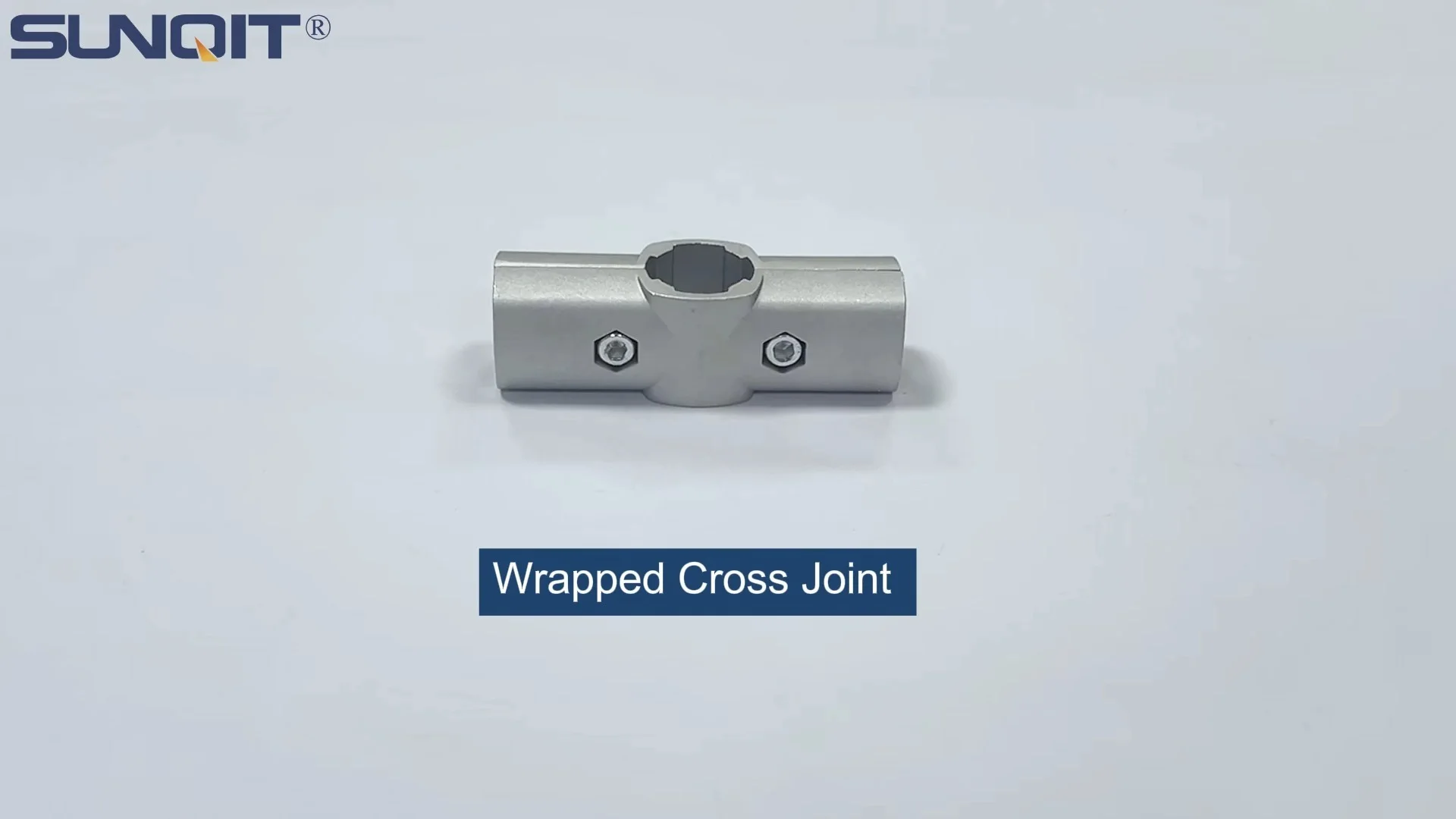
Aluminum 3 way pipe joint for 28mm aluminum pipe connection in 3 direction.
Introduction: The Backbone of Modern Manufacturing Flexibility
In the fast-paced world of manufacturing, where every inch of space, every second of production time, and every ounce of material counts, the difference between success and stagnation often lies in the tools and components that hold it all together. From the assembly lines of automotive plants to the precision workbenches of electronics factories, the infrastructure that supports these operations needs to be as dynamic and adaptable as the industries themselves. This is where components like three way aluminum pipe joints step into the spotlight—small in size, but monumental in their impact on efficiency, flexibility, and customization.
Aluminum, long celebrated for its lightweight strength and corrosion resistance, has become the material of choice for countless industrial applications. When shaped into extrusion profiles—precision-engineered lengths with consistent cross-sections—aluminum becomes the building block for everything from conveyor systems to workstations. But even the most well-designed aluminum profile is only as effective as the joints that connect it. Standard joints, while reliable, often fall short when faced with the unique challenges of custom manufacturing setups. That's where custom three way aluminum pipe joints come in: tailored to fit specific needs, these components bridge the gap between off-the-shelf solutions and the one-of-a-kind requirements of modern production floors.
In this article, we'll dive deep into the world of custom three way aluminum pipe joints. We'll explore what makes them essential, how they're designed and manufactured, and the transformative impact they can have on industries ranging from aerospace to consumer goods. Whether you're a plant manager looking to optimize your assembly line, a design engineer tasked with creating a modular workspace, or simply curious about the unsung heroes of manufacturing infrastructure, this guide will shed light on why customization isn't just a luxury—it's a necessity.
Aluminum, long celebrated for its lightweight strength and corrosion resistance, has become the material of choice for countless industrial applications. When shaped into extrusion profiles—precision-engineered lengths with consistent cross-sections—aluminum becomes the building block for everything from conveyor systems to workstations. But even the most well-designed aluminum profile is only as effective as the joints that connect it. Standard joints, while reliable, often fall short when faced with the unique challenges of custom manufacturing setups. That's where custom three way aluminum pipe joints come in: tailored to fit specific needs, these components bridge the gap between off-the-shelf solutions and the one-of-a-kind requirements of modern production floors.
In this article, we'll dive deep into the world of custom three way aluminum pipe joints. We'll explore what makes them essential, how they're designed and manufactured, and the transformative impact they can have on industries ranging from aerospace to consumer goods. Whether you're a plant manager looking to optimize your assembly line, a design engineer tasked with creating a modular workspace, or simply curious about the unsung heroes of manufacturing infrastructure, this guide will shed light on why customization isn't just a luxury—it's a necessity.
Understanding Three Way Aluminum Pipe Joints: More Than Just a Connector
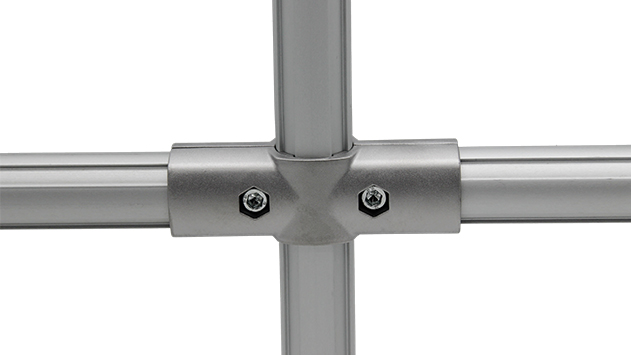
At first glance, a three way aluminum pipe joint might seem like a simple piece of hardware: a small, often T-shaped or Y-shaped component designed to connect three lengths of pipe at a fixed angle. But beneath its unassuming exterior lies a wealth of engineering and purpose. Let's break down what these joints are, how they work, and why they're indispensable in modular manufacturing systems.
**The Basics: Design and Function** Three way aluminum pipe joints are precisely machined components made from aluminum extrusion profile, chosen for its optimal balance of strength, weight, and machinability. Unlike rigid welded connections, these joints allow for tool-free assembly and disassembly, making them ideal for modular setups. Most are designed to connect pipes at 90-degree angles (forming a T-junction) or 120-degree angles (forming a Y-junction), though custom designs can accommodate virtually any angle based on specific needs.
What sets these joints apart is their versatility. A single joint can anchor a workbench leg to a horizontal support beam, connect a shelf to a vertical frame, or link multiple conveyor tracks in a distribution center. The secret lies in their internal design: many feature threaded holes, compression fittings, or locking mechanisms that secure pipes firmly in place while allowing for adjustments if the layout needs to change.
**Materials Matter: Why Aluminum?** While joints can be made from steel, plastic, or even brass, aluminum remains the top choice for most industrial applications. Aluminum extrusion profile, in particular, offers several advantages: - **Lightweight**: Aluminum is roughly one-third the weight of steel, making assembled structures easier to move and reconfigure. - **Corrosion Resistance**: Aluminum naturally forms a protective oxide layer, making it suitable for use in humid or chemical-exposed environments (a critical feature in food processing or pharmaceutical facilities). - **Strength-to-Weight Ratio**: Despite its lightness, aluminum provides ample strength for most manufacturing loads, from supporting a workbench to holding heavy machinery parts. - **Sustainability**: Aluminum is 100% recyclable, aligning with the growing focus on eco-friendly manufacturing practices.
**Integration with Lean Systems** In the context of lean manufacturing—a philosophy centered on minimizing waste and maximizing value—three way aluminum pipe joints are more than just connectors; they're enablers. Lean systems thrive on flexibility: the ability to adapt workflows, reconfigure workstations, and scale operations up or down with minimal downtime. Standard joints, with their fixed angles and limited load capacities, can restrict this flexibility. Custom joints, by contrast, are designed to fit seamlessly into lean frameworks, allowing manufacturers to build exactly what they need, when they need it, without overbuilding or wasting materials.
For example, imagine a electronics assembly line where workstations must be adjusted to accommodate new product sizes every few months. With standard joints, reconfiguring the line might require replacing entire sections of pipe or purchasing new connectors. With custom three way joints, the same base pipes can be repurposed, with joints tailored to the new angles and load requirements—saving time, money, and resources.
**The Basics: Design and Function** Three way aluminum pipe joints are precisely machined components made from aluminum extrusion profile, chosen for its optimal balance of strength, weight, and machinability. Unlike rigid welded connections, these joints allow for tool-free assembly and disassembly, making them ideal for modular setups. Most are designed to connect pipes at 90-degree angles (forming a T-junction) or 120-degree angles (forming a Y-junction), though custom designs can accommodate virtually any angle based on specific needs.
What sets these joints apart is their versatility. A single joint can anchor a workbench leg to a horizontal support beam, connect a shelf to a vertical frame, or link multiple conveyor tracks in a distribution center. The secret lies in their internal design: many feature threaded holes, compression fittings, or locking mechanisms that secure pipes firmly in place while allowing for adjustments if the layout needs to change.
**Materials Matter: Why Aluminum?** While joints can be made from steel, plastic, or even brass, aluminum remains the top choice for most industrial applications. Aluminum extrusion profile, in particular, offers several advantages: - **Lightweight**: Aluminum is roughly one-third the weight of steel, making assembled structures easier to move and reconfigure. - **Corrosion Resistance**: Aluminum naturally forms a protective oxide layer, making it suitable for use in humid or chemical-exposed environments (a critical feature in food processing or pharmaceutical facilities). - **Strength-to-Weight Ratio**: Despite its lightness, aluminum provides ample strength for most manufacturing loads, from supporting a workbench to holding heavy machinery parts. - **Sustainability**: Aluminum is 100% recyclable, aligning with the growing focus on eco-friendly manufacturing practices.
**Integration with Lean Systems** In the context of lean manufacturing—a philosophy centered on minimizing waste and maximizing value—three way aluminum pipe joints are more than just connectors; they're enablers. Lean systems thrive on flexibility: the ability to adapt workflows, reconfigure workstations, and scale operations up or down with minimal downtime. Standard joints, with their fixed angles and limited load capacities, can restrict this flexibility. Custom joints, by contrast, are designed to fit seamlessly into lean frameworks, allowing manufacturers to build exactly what they need, when they need it, without overbuilding or wasting materials.
For example, imagine a electronics assembly line where workstations must be adjusted to accommodate new product sizes every few months. With standard joints, reconfiguring the line might require replacing entire sections of pipe or purchasing new connectors. With custom three way joints, the same base pipes can be repurposed, with joints tailored to the new angles and load requirements—saving time, money, and resources.
The Case for Customization: Why One Size Rarely Fits All
Standard three way aluminum pipe joints have their place: they're affordable, readily available, and work well for common applications like basic shelving or simple workbenches. But when manufacturing needs grow complex—whether due to unique spatial constraints, specialized load requirements, or industry-specific regulations—standard joints often hit a wall. This is where customization becomes not just beneficial, but essential. Let's explore the scenarios where off-the-shelf solutions fall short and how custom joints rise to the challenge.
**Spatial Constraints: Making the Most of Tight Quarters** Manufacturing facilities are rarely blank slates. Old machinery, immovable structural columns, or irregular floor plans can create tight, awkward spaces that standard joints can't navigate. For instance, a pharmaceutical plant might need a material rack that wraps around a ventilation duct, requiring joints that connect pipes at 135-degree angles instead of the standard 90. Or a small electronics workshop might need a compact workbench with legs that angle inward to fit under a low ceiling—something no standard T-joint can accommodate.
Custom three way joints solve this by adapting to the space, not the other way around. A design team can work with engineers to create joints with offset angles, shorter bodies, or modified mounting points, ensuring every inch of available space is used efficiently.
**Load and Stress Requirements: Beyond the Standard Capacity** Standard joints are tested to support typical loads—say, 50-100 kg per connection. But what if your application requires more? A automotive parts manufacturer might need a conveyor system that carries heavy engine blocks, requiring joints that can withstand 200+ kg of constant stress. Or a aerospace facility might need a workbench that supports precision tools and raw materials, demanding joints with zero deflection under load.
Custom joints can be engineered to meet these higher demands. By adjusting the thickness of the aluminum extrusion profile, reinforcing critical stress points, or integrating additional locking mechanisms, manufacturers can create joints that exceed standard load ratings while maintaining the lightweight benefits of aluminum.
**Industry-Specific Needs: From Clean Rooms to Harsh Environments** Different industries come with unique challenges that standard joints can't address. In the food and beverage sector, for example, joints must be easy to clean and resistant to bacteria growth—requiring smooth, crevice-free designs and food-grade aluminum alloys. In electronics manufacturing, static electricity is a constant threat, so joints might need conductive coatings to dissipate electrostatic discharge (ESD), protecting sensitive components on the workbench.
Even in more general manufacturing settings, customization can enhance safety. A chemical plant might need joints with heat-resistant coatings, while a construction site could benefit from joints with anti-slip surfaces to prevent accidents during assembly.
**The Limitations of Standard Joints: A Quick Comparison** To better understand why customization matters, let's compare standard and custom three way aluminum pipe joints across key metrics:
As the table shows, standard joints excel in simplicity and cost-effectiveness for basic tasks, but custom joints unlock a new level of performance for complex, unique, or high-stakes applications.
**Spatial Constraints: Making the Most of Tight Quarters** Manufacturing facilities are rarely blank slates. Old machinery, immovable structural columns, or irregular floor plans can create tight, awkward spaces that standard joints can't navigate. For instance, a pharmaceutical plant might need a material rack that wraps around a ventilation duct, requiring joints that connect pipes at 135-degree angles instead of the standard 90. Or a small electronics workshop might need a compact workbench with legs that angle inward to fit under a low ceiling—something no standard T-joint can accommodate.
Custom three way joints solve this by adapting to the space, not the other way around. A design team can work with engineers to create joints with offset angles, shorter bodies, or modified mounting points, ensuring every inch of available space is used efficiently.
**Load and Stress Requirements: Beyond the Standard Capacity** Standard joints are tested to support typical loads—say, 50-100 kg per connection. But what if your application requires more? A automotive parts manufacturer might need a conveyor system that carries heavy engine blocks, requiring joints that can withstand 200+ kg of constant stress. Or a aerospace facility might need a workbench that supports precision tools and raw materials, demanding joints with zero deflection under load.
Custom joints can be engineered to meet these higher demands. By adjusting the thickness of the aluminum extrusion profile, reinforcing critical stress points, or integrating additional locking mechanisms, manufacturers can create joints that exceed standard load ratings while maintaining the lightweight benefits of aluminum.
**Industry-Specific Needs: From Clean Rooms to Harsh Environments** Different industries come with unique challenges that standard joints can't address. In the food and beverage sector, for example, joints must be easy to clean and resistant to bacteria growth—requiring smooth, crevice-free designs and food-grade aluminum alloys. In electronics manufacturing, static electricity is a constant threat, so joints might need conductive coatings to dissipate electrostatic discharge (ESD), protecting sensitive components on the workbench.
Even in more general manufacturing settings, customization can enhance safety. A chemical plant might need joints with heat-resistant coatings, while a construction site could benefit from joints with anti-slip surfaces to prevent accidents during assembly.
**The Limitations of Standard Joints: A Quick Comparison** To better understand why customization matters, let's compare standard and custom three way aluminum pipe joints across key metrics:
| Feature | Standard Three Way Joints | Custom Three Way Joints |
|---|---|---|
| Angle Options | Limited (typically 90° or 120°) | Unlimited (custom angles to fit spatial needs) |
| Load Capacity | Fixed (50-100 kg standard) | Tailored to specific requirements (up to 500+ kg) |
| Material Options | Basic aluminum alloy | Specialized alloys (food-grade, heat-resistant, ESD-safe) |
| Design Flexibility | One-size-fits-most | Adjustable for space, weight, or safety needs |
| Industry Applications | General manufacturing, light-duty use | Specialized sectors (aerospace, pharmaceuticals, automotive) |

The Manufacturing Journey: How Custom Joints Go from Idea to Reality
Creating a custom three way aluminum pipe joint isn't just about machining a piece of metal—it's a collaborative process that starts with a problem and ends with a solution tailored to fit. Let's walk through the typical journey of a custom joint, from initial consultation to final production, and highlight the key steps that ensure quality and precision.
**Step 1: Consultation and Needs Assessment** The process begins with a conversation. A manufacturer or facility manager reaches out with a challenge: "Our current workbench setup is too rigid," or "We need a conveyor system that fits around this column," or "Our standard joints keep failing under heavy loads." The custom joint supplier then works to understand the specifics: What's the application? What are the load requirements? Are there spatial constraints? What industry standards (if any) must be met (e.g., FDA, OSHA, ESD)?
This phase often involves site visits, where engineers measure the space, assess existing structures, and even test the loads the joint will need to support. For example, if a client needs a joint for a workbench in an electronics factory, the team will note the height of the bench, the weight of the equipment it will hold, and whether ESD protection is required.
**Step 2: Design and Engineering** With the requirements in hand, the design team gets to work. Using computer-aided design (CAD) software, they create 3D models of the joint, incorporating custom angles, material thicknesses, and locking mechanisms. This is where the expertise in aluminum extrusion profile comes into play: engineers select the optimal alloy and extrusion process to balance strength, weight, and cost.
During this phase, the team also considers manufacturability. Can the design be produced with standard machining tools, or will specialized equipment be needed? Are there potential weak points that could fail under stress? Finite element analysis (FEA) software is often used to simulate how the joint will perform under load, ensuring it meets safety and durability standards before a single prototype is made.
**Step 3: Prototyping and Testing** Once the design is finalized, a prototype is created—usually via CNC machining or 3D printing (for plastic components, though aluminum prototypes are often machined for accuracy). This prototype is then put through rigorous testing: - **Load Testing**: The joint is mounted to pipes and subjected to increasing weights until it reaches (and exceeds) the required load capacity. - **Durability Testing**: The joint is assembled and disassembled repeatedly to ensure the locking mechanism doesn't wear out. - **Environmental Testing**: If the joint is for a harsh environment (e.g., high humidity, chemicals), it's exposed to those conditions to check for corrosion or degradation.
Client feedback is critical here. The prototype is sent to the client for fit testing: Does it connect the pipes correctly? Does it fit in the intended space? Are there any adjustments needed for ease of use? Based on this feedback, the design is refined—sometimes multiple times—until it meets all requirements.
**Step 4: Production and Quality Control** Once the prototype is approved, production begins. For aluminum joints, this typically involves: - **Extrusion**: The aluminum alloy is heated and forced through a die to create the basic shape (the aluminum extrusion profile). - **Machining**: The extruded profile is cut to size and precision-machined to add holes, threads, or locking features. - **Finishing**: The joint is anodized, painted, or coated (e.g., with ESD-resistant material) to enhance durability and appearance.
Throughout production, quality control checks are performed at every stage. Samples are tested for dimensional accuracy (using calipers and coordinate measuring machines), load capacity, and finish quality. Only joints that meet the strictest standards move on to packaging and delivery.
**Step 5: Delivery and Support** Finally, the custom joints are shipped to the client, often with assembly instructions and support from the supplier's technical team. Many suppliers also offer follow-up services, checking in after installation to ensure the joints are performing as expected and addressing any issues that arise.
This journey—from idea to installation—highlights why custom three way aluminum pipe joints are more than just products; they're solutions built on collaboration, engineering, and a deep understanding of manufacturing needs.
**Step 1: Consultation and Needs Assessment** The process begins with a conversation. A manufacturer or facility manager reaches out with a challenge: "Our current workbench setup is too rigid," or "We need a conveyor system that fits around this column," or "Our standard joints keep failing under heavy loads." The custom joint supplier then works to understand the specifics: What's the application? What are the load requirements? Are there spatial constraints? What industry standards (if any) must be met (e.g., FDA, OSHA, ESD)?
This phase often involves site visits, where engineers measure the space, assess existing structures, and even test the loads the joint will need to support. For example, if a client needs a joint for a workbench in an electronics factory, the team will note the height of the bench, the weight of the equipment it will hold, and whether ESD protection is required.
**Step 2: Design and Engineering** With the requirements in hand, the design team gets to work. Using computer-aided design (CAD) software, they create 3D models of the joint, incorporating custom angles, material thicknesses, and locking mechanisms. This is where the expertise in aluminum extrusion profile comes into play: engineers select the optimal alloy and extrusion process to balance strength, weight, and cost.
During this phase, the team also considers manufacturability. Can the design be produced with standard machining tools, or will specialized equipment be needed? Are there potential weak points that could fail under stress? Finite element analysis (FEA) software is often used to simulate how the joint will perform under load, ensuring it meets safety and durability standards before a single prototype is made.
**Step 3: Prototyping and Testing** Once the design is finalized, a prototype is created—usually via CNC machining or 3D printing (for plastic components, though aluminum prototypes are often machined for accuracy). This prototype is then put through rigorous testing: - **Load Testing**: The joint is mounted to pipes and subjected to increasing weights until it reaches (and exceeds) the required load capacity. - **Durability Testing**: The joint is assembled and disassembled repeatedly to ensure the locking mechanism doesn't wear out. - **Environmental Testing**: If the joint is for a harsh environment (e.g., high humidity, chemicals), it's exposed to those conditions to check for corrosion or degradation.
Client feedback is critical here. The prototype is sent to the client for fit testing: Does it connect the pipes correctly? Does it fit in the intended space? Are there any adjustments needed for ease of use? Based on this feedback, the design is refined—sometimes multiple times—until it meets all requirements.
**Step 4: Production and Quality Control** Once the prototype is approved, production begins. For aluminum joints, this typically involves: - **Extrusion**: The aluminum alloy is heated and forced through a die to create the basic shape (the aluminum extrusion profile). - **Machining**: The extruded profile is cut to size and precision-machined to add holes, threads, or locking features. - **Finishing**: The joint is anodized, painted, or coated (e.g., with ESD-resistant material) to enhance durability and appearance.
Throughout production, quality control checks are performed at every stage. Samples are tested for dimensional accuracy (using calipers and coordinate measuring machines), load capacity, and finish quality. Only joints that meet the strictest standards move on to packaging and delivery.
**Step 5: Delivery and Support** Finally, the custom joints are shipped to the client, often with assembly instructions and support from the supplier's technical team. Many suppliers also offer follow-up services, checking in after installation to ensure the joints are performing as expected and addressing any issues that arise.
This journey—from idea to installation—highlights why custom three way aluminum pipe joints are more than just products; they're solutions built on collaboration, engineering, and a deep understanding of manufacturing needs.

Applications Across Industries: Where Custom Joints Make a Difference
Custom three way aluminum pipe joints are versatile enough to find a home in nearly every manufacturing sector. Their ability to adapt to unique challenges makes them indispensable in industries ranging from automotive to aerospace, and from small workshops to large-scale production facilities. Let's explore some of the most common applications and how these joints enhance operations.
**Automotive Manufacturing: Streamlining Assembly Lines** The automotive industry is a hotbed of modular manufacturing, where production lines must be reconfigured frequently to accommodate new models or design changes. Custom three way aluminum pipe joints play a key role here, supporting everything from workbenches where mechanics assemble engines to conveyor systems that transport parts between stations.
For example, a car manufacturer might need a T-joint that connects a vertical support beam to two horizontal tracks at a 105-degree angle, allowing a conveyor to navigate around a robotic welding arm. A custom joint with reinforced walls and a locking lever ensures the tracks stay aligned, even under the constant vibration of the factory floor.
**Electronics Production: Precision and ESD Protection** In electronics manufacturing, where components are small, delicate, and sensitive to static, precision is paramount. Workstations must be stable, adjustable, and ESD-safe to prevent damage to circuit boards or microchips. Custom three way joints help here by: - Supporting height-adjustable workbenches, allowing operators to work comfortably. - Connecting shelving units at odd angles to maximize storage space for small parts. - Incorporating conductive materials to dissipate static, protecting components during assembly.
One electronics client, for instance, needed a Y-shaped joint to connect three aluminum profile shelves above a workbench, each holding different types of resistors and capacitors. The custom joint was designed with shallow angles to ensure the shelves didn't block overhead lighting, while ESD-safe coatings prevented static buildup.
**Aerospace: Lightweight Strength for Critical Components** Aerospace manufacturing demands components that are both incredibly strong and extremely lightweight—requirements that aluminum extrusion profile and custom joints excel at meeting. From tooling racks to assembly jigs, these joints help build structures that can support heavy aircraft parts without adding unnecessary weight.
A case in point: A manufacturer of airplane wings needed a joint to connect three sections of a jig used to hold wing spars during assembly. The joint had to withstand the weight of the spar (over 300 kg) while allowing for precise alignment. A custom design with thickened walls and a self-locking mechanism met these needs, ensuring the jig remained stable throughout the assembly process.
**Food and Beverage: Hygiene and Adaptability** In food processing facilities, cleanliness is non-negotiable. Custom three way joints here are designed with smooth, crevice-free surfaces that can be easily sanitized, preventing the buildup of bacteria. They're also resistant to corrosion from frequent washdowns with harsh chemicals.
For example, a brewery might use custom joints to build a modular conveyor system for moving kegs. The joints, made from food-grade aluminum, feature rounded edges to avoid trapping spills and a quick-release mechanism that allows workers to disassemble the conveyor for deep cleaning at the end of each shift.
**Warehousing and Logistics: Optimizing Space and Flow** Warehouses and distribution centers thrive on efficiency, and custom joints help maximize both space and workflow. Whether it's building a picking station with angled shelves or a sorting system with converging conveyor tracks, these joints allow facilities to adapt to changing inventory needs.
A large online retailer, for instance, used custom T-joints to create a series of "flow racks"—shelving units where products slide forward as items are picked. The joints were designed to slope the racks at a precise 5-degree angle, ensuring boxes glide smoothly without jamming, while reinforced connections supported the weight of stacked inventory.
**Automotive Manufacturing: Streamlining Assembly Lines** The automotive industry is a hotbed of modular manufacturing, where production lines must be reconfigured frequently to accommodate new models or design changes. Custom three way aluminum pipe joints play a key role here, supporting everything from workbenches where mechanics assemble engines to conveyor systems that transport parts between stations.
For example, a car manufacturer might need a T-joint that connects a vertical support beam to two horizontal tracks at a 105-degree angle, allowing a conveyor to navigate around a robotic welding arm. A custom joint with reinforced walls and a locking lever ensures the tracks stay aligned, even under the constant vibration of the factory floor.
**Electronics Production: Precision and ESD Protection** In electronics manufacturing, where components are small, delicate, and sensitive to static, precision is paramount. Workstations must be stable, adjustable, and ESD-safe to prevent damage to circuit boards or microchips. Custom three way joints help here by: - Supporting height-adjustable workbenches, allowing operators to work comfortably. - Connecting shelving units at odd angles to maximize storage space for small parts. - Incorporating conductive materials to dissipate static, protecting components during assembly.
One electronics client, for instance, needed a Y-shaped joint to connect three aluminum profile shelves above a workbench, each holding different types of resistors and capacitors. The custom joint was designed with shallow angles to ensure the shelves didn't block overhead lighting, while ESD-safe coatings prevented static buildup.
**Aerospace: Lightweight Strength for Critical Components** Aerospace manufacturing demands components that are both incredibly strong and extremely lightweight—requirements that aluminum extrusion profile and custom joints excel at meeting. From tooling racks to assembly jigs, these joints help build structures that can support heavy aircraft parts without adding unnecessary weight.
A case in point: A manufacturer of airplane wings needed a joint to connect three sections of a jig used to hold wing spars during assembly. The joint had to withstand the weight of the spar (over 300 kg) while allowing for precise alignment. A custom design with thickened walls and a self-locking mechanism met these needs, ensuring the jig remained stable throughout the assembly process.
**Food and Beverage: Hygiene and Adaptability** In food processing facilities, cleanliness is non-negotiable. Custom three way joints here are designed with smooth, crevice-free surfaces that can be easily sanitized, preventing the buildup of bacteria. They're also resistant to corrosion from frequent washdowns with harsh chemicals.
For example, a brewery might use custom joints to build a modular conveyor system for moving kegs. The joints, made from food-grade aluminum, feature rounded edges to avoid trapping spills and a quick-release mechanism that allows workers to disassemble the conveyor for deep cleaning at the end of each shift.
**Warehousing and Logistics: Optimizing Space and Flow** Warehouses and distribution centers thrive on efficiency, and custom joints help maximize both space and workflow. Whether it's building a picking station with angled shelves or a sorting system with converging conveyor tracks, these joints allow facilities to adapt to changing inventory needs.
A large online retailer, for instance, used custom T-joints to create a series of "flow racks"—shelving units where products slide forward as items are picked. The joints were designed to slope the racks at a precise 5-degree angle, ensuring boxes glide smoothly without jamming, while reinforced connections supported the weight of stacked inventory.
Case Study: How Custom Joints Transformed a Manufacturer's Workflow
To put the impact of custom three way aluminum pipe joints into perspective, let's look at a real-world example: a mid-sized automotive parts manufacturer that struggled with rigid workstations and inefficient material flow—until custom joints changed the game.
This case study illustrates a key point: custom three way aluminum pipe joints aren't just about connecting pipes—they're about empowering manufacturers to build the exact infrastructure they need, when they need it, without compromise.
The Challenge: Rigid Workstations and Wasted Space
**Client Profile**: A manufacturer of brake components for passenger cars, with a 50,000 sq. ft. facility and 75 employees. **Problem**: The company's assembly workstations were built using welded steel frames, which were heavy, immovable, and difficult to adjust. As production demands changed—new brake models required different tooling, and worker teams grew in size—the fixed workstations became a bottleneck. Workers often had to walk long distances to retrieve tools or materials, and the steel frames took up valuable floor space that could be used for additional assembly lines. **Goal**: Redesign the workstations to be modular, adjustable, and space-efficient, while ensuring they could support the weight of heavy brake components (up to 150 kg per workstation).
The Solution: Custom Three Way Joints and Aluminum Profiles
After consulting with a supplier of aluminum extrusion profile and custom joints, the manufacturer decided to replace the steel frames with modular workstations built using aluminum pipes and custom three way joints. Here's how the solution addressed their needs:
- **Custom Angles for Space Optimization**: The facility had irregularly shaped corners and columns that the old steel workstations couldn't navigate. Custom three way joints with 135-degree angles allowed the new workstations to wrap around these obstacles, reclaiming over 1,200 sq. ft. of floor space.
- **Reinforced Load Capacity**: The joints were engineered with thicker walls and internal ribbing to support the 150 kg load of brake components. Testing showed they could withstand up to 200 kg, providing a safety buffer.
- **Tool-Free Adjustment**: Each joint featured a quick-locking lever, allowing workers to adjust the height of the workbench or reposition shelves in minutes—no welding or heavy tools required.
- **Integration with Lean Systems**: The modular design aligned with the company's shift to lean manufacturing. If a workstation wasn't needed, it could be disassembled and stored, or reconfigured for a new product line in hours instead of days.
The Results: Improved Efficiency and Flexibility
Within six months of installing the new workstations, the manufacturer saw significant improvements:
- **Reduced Waste**: Material retrieval time dropped by 40%, as tools and parts were now stored directly at the workstation (thanks to custom shelving connected via three way joints).
- **Increased Productivity**: Assembly line throughput rose by 25%, as workers could adjust their workstations to fit their height and workflow, reducing fatigue.
- **Scalability**: When the company landed a new contract for truck brake components, they reconfigured 10 existing workstations in a single weekend using the same custom joints—avoiding the cost of building new steel frames.
- **Employee Satisfaction**: Workers reported higher job satisfaction, citing the ability to customize their workspaces and the reduced physical strain of moving materials.
Conclusion: The Future of Manufacturing is Custom
In a world where manufacturing is increasingly driven by customization, agility, and efficiency, the humble three way aluminum pipe joint has emerged as a quiet revolutionary. Far more than a simple connector, it's a bridge between standardization and uniqueness—a component that allows factories, workshops, and facilities to build exactly what they need, adapt to changing demands, and stay ahead in a competitive landscape.
From the automotive assembly lines that rely on their strength to the electronics workbenches that benefit from their precision, custom three way aluminum pipe joints prove that even the smallest components can have the biggest impact. They embody the principles of lean manufacturing by minimizing waste, maximizing flexibility, and putting the power of design back into the hands of those who use the equipment every day.
As technology advances and industries evolve, the demand for custom solutions will only grow. Whether it's integrating with advanced aluminum extrusion profiles, incorporating smart sensors for predictive maintenance, or adapting to new materials, the future of three way joints is bright—and custom.
So, the next time you walk through a manufacturing facility, take a moment to look at the structures around you: the workbenches, the conveyor systems, the shelving units. Chances are, somewhere in that maze of aluminum and steel, a custom three way joint is hard at work—holding it all together, and holding the key to a more efficient, flexible, and successful future.
From the automotive assembly lines that rely on their strength to the electronics workbenches that benefit from their precision, custom three way aluminum pipe joints prove that even the smallest components can have the biggest impact. They embody the principles of lean manufacturing by minimizing waste, maximizing flexibility, and putting the power of design back into the hands of those who use the equipment every day.
As technology advances and industries evolve, the demand for custom solutions will only grow. Whether it's integrating with advanced aluminum extrusion profiles, incorporating smart sensors for predictive maintenance, or adapting to new materials, the future of three way joints is bright—and custom.
So, the next time you walk through a manufacturing facility, take a moment to look at the structures around you: the workbenches, the conveyor systems, the shelving units. Chances are, somewhere in that maze of aluminum and steel, a custom three way joint is hard at work—holding it all together, and holding the key to a more efficient, flexible, and successful future.