- Company Articles
- Products and Technology
- Solution
- Custom Three Way Lean Pipe Joint Solutions: Meeting Special Requirements

Custom Three Way Lean Pipe Joint Solutions: Meeting Special Requirements
Related Product
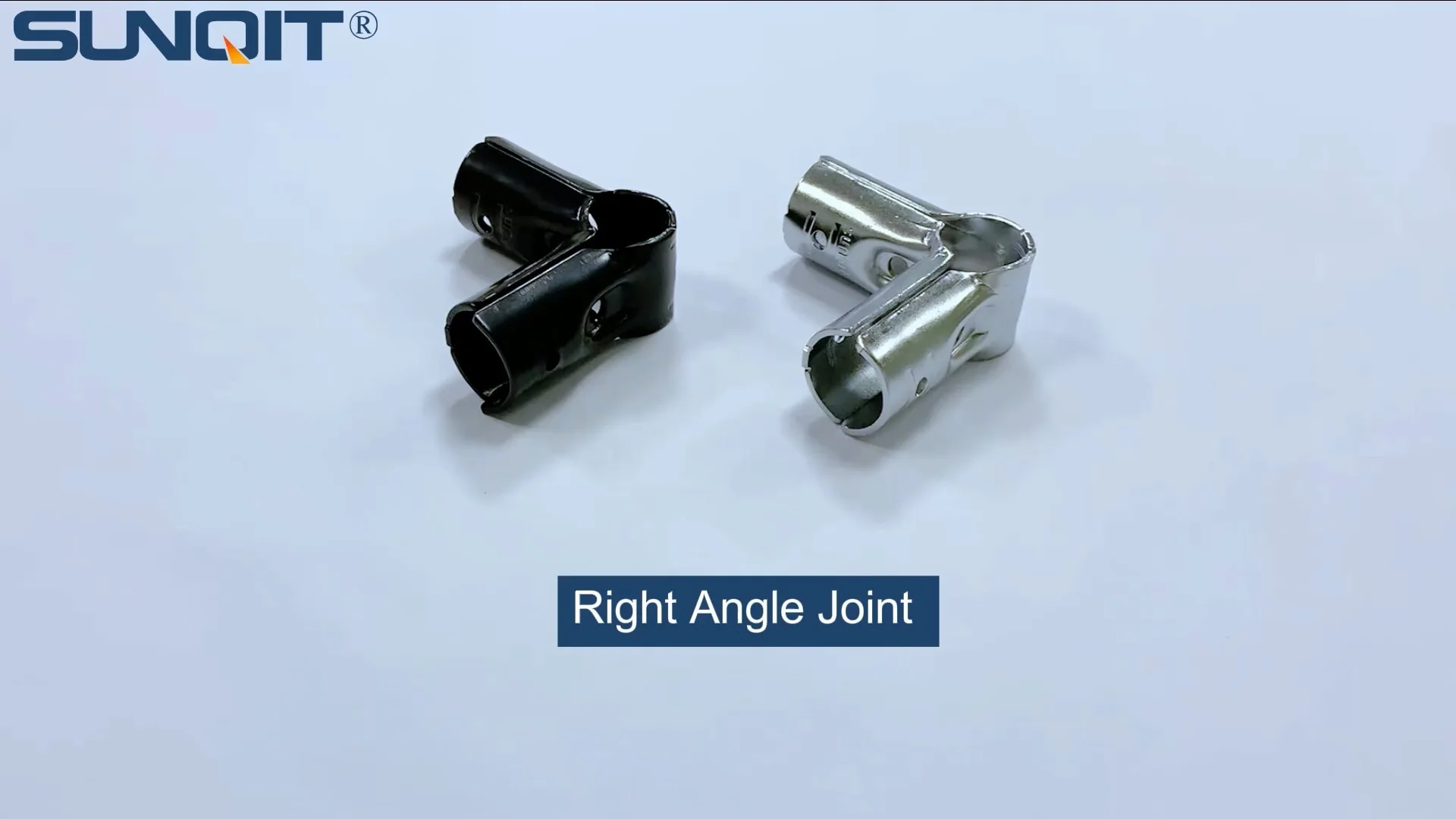
Three Way Lean Pipe Joint
Three way lean pipe joint for 3 pcs 28MM lean pipe connection in straight angle, which used widely in workbench, flow rack, hand trolley frame connection.
Introduction: The Problem with "One-Size-Fits-All" in Lean Manufacturing
In the world of manufacturing, where efficiency and adaptability are the cornerstones of success, every workspace tells a unique story. Your assembly line might snake through a tight facility with low ceilings, while a competitor's plant boasts wide-open floors with room to spare. A pharmaceutical lab requires sterile, corrosion-resistant setups, whereas an automotive workshop needs heavy-duty structures that can withstand daily wear and tear. Here's the thing: standard, off-the-shelf equipment rarely fits these diverse needs perfectly. This is especially true for the backbone of lean systems—the humble lean pipe joint.
Lean manufacturing isn't just about cutting costs; it's about designing workflows that work with your team, not against them. When your workbenches, flow racks, or turnover trolleys feel like they're forcing your processes into a box, productivity suffers. Parts get stuck in awkward corners, employees waste time reaching for tools, and bottlenecks pop up where they shouldn't. That's where custom solutions come in—and at the heart of many of these solutions lies the three way lean pipe joint.
In this article, we'll dive into why custom three way lean pipe joint solutions are game-changers for businesses with unique requirements. We'll explore their role in lean systems, the limitations of standard joints, and how tailoring them to your specific needs can transform your workspace. Whether you're a small workshop owner or a production manager at a large facility, understanding the value of these customized components could be the key to unlocking smoother workflows, happier teams, and better bottom-line results.
Lean manufacturing isn't just about cutting costs; it's about designing workflows that work with your team, not against them. When your workbenches, flow racks, or turnover trolleys feel like they're forcing your processes into a box, productivity suffers. Parts get stuck in awkward corners, employees waste time reaching for tools, and bottlenecks pop up where they shouldn't. That's where custom solutions come in—and at the heart of many of these solutions lies the three way lean pipe joint.
In this article, we'll dive into why custom three way lean pipe joint solutions are game-changers for businesses with unique requirements. We'll explore their role in lean systems, the limitations of standard joints, and how tailoring them to your specific needs can transform your workspace. Whether you're a small workshop owner or a production manager at a large facility, understanding the value of these customized components could be the key to unlocking smoother workflows, happier teams, and better bottom-line results.
The Basics: What Are Three Way Lean Pipe Joints, Anyway?
Let's start with the fundamentals. A lean pipe joint is the connector that holds your lean system together—literally. It's the piece that joins pipes, forming the frames of workbenches, the shelves of flow racks, or the rails of conveyor systems. Without reliable joints, your entire setup would wobble, sag, or even collapse under the weight of tools, materials, or products.
A three way lean pipe joint, as the name suggests, connects three pipes at once. Unlike two-way joints (which form straight lines or 90-degree angles) or four-way joints (which branch in four directions), three way joints are versatile workhorses. They're the reason you can build an L-shaped workbench with a side shelf, a flow rack with angled tiers, or a trolley with a third rail for extra stability.
Most standard three way joints are designed for common angles—think 90 degrees (like the corner of a square) or 180 degrees (a straight line with a branch). They're usually made of steel or plastic, with a basic finish that works for general use. But here's the catch: real-world workspaces are rarely built around "common" angles. Maybe your facility has a sloped floor that requires joints angled at 15 degrees to keep racks level. Or perhaps you need a joint that can support heavy machinery, so standard plastic or thin steel just won't cut it. That's when "standard" becomes "stifling."
A three way lean pipe joint, as the name suggests, connects three pipes at once. Unlike two-way joints (which form straight lines or 90-degree angles) or four-way joints (which branch in four directions), three way joints are versatile workhorses. They're the reason you can build an L-shaped workbench with a side shelf, a flow rack with angled tiers, or a trolley with a third rail for extra stability.
Most standard three way joints are designed for common angles—think 90 degrees (like the corner of a square) or 180 degrees (a straight line with a branch). They're usually made of steel or plastic, with a basic finish that works for general use. But here's the catch: real-world workspaces are rarely built around "common" angles. Maybe your facility has a sloped floor that requires joints angled at 15 degrees to keep racks level. Or perhaps you need a joint that can support heavy machinery, so standard plastic or thin steel just won't cut it. That's when "standard" becomes "stifling."

The Limitations of Off-the-Shelf: Why Standard Joints Fall Short
Don't get us wrong—standard lean pipe joints have their place. For simple setups, like a basic workbench or a straight-line flow rack, they're affordable, easy to find, and quick to assemble. But when your needs get specific, their limitations become impossible to ignore. Let's break down the most common pain points:
1. Rigid Angles = Wasted Space Standard three way joints typically lock into fixed angles (90°, 180°, maybe 45° if you're lucky). But what if your workspace has an odd corner—say, 120°—because of a structural beam or a door? Using standard joints here would mean leaving gaps or forcing a layout that juts into walkways, creating safety hazards or slowing down material transport.
2. Limited Load Capacity Most off-the-shelf joints are rated for light to medium loads. If you're working with heavy parts—like automotive components or industrial machinery—standard plastic joints might crack, and thin steel joints could bend over time. This isn't just a productivity issue; it's a safety risk. A joint that fails could send tools or products crashing, injuring employees or damaging equipment.
3. Material Mismatches Standard joints are often made of generic steel or plastic, which might not hold up in harsh environments. For example, a food processing plant needs corrosion-resistant materials to avoid contamination, while an electronics workshop requires ESD (Electrostatic Discharge) protection to prevent static from frying sensitive components. Standard joints rarely come with these specialized finishes or materials.
4. Poor Compatibility with Accessories Lean systems aren't just pipes and joints—they're a ecosystem of lean pipe and accessories. Casters, roller tracks, workbench tops, and tool holders all need to integrate seamlessly. Standard joints might not have the holes, slots, or mounting points to attach these accessories securely. Imagine building a flow rack with a standard joint, only to realize the roller track you need won't bolt onto it without drilling custom holes (which weakens the joint, by the way).
The bottom line? When your workspace is unique, standard joints force you to compromise. And in lean manufacturing, compromise equals waste—waste of time, space, and resources.
1. Rigid Angles = Wasted Space Standard three way joints typically lock into fixed angles (90°, 180°, maybe 45° if you're lucky). But what if your workspace has an odd corner—say, 120°—because of a structural beam or a door? Using standard joints here would mean leaving gaps or forcing a layout that juts into walkways, creating safety hazards or slowing down material transport.
2. Limited Load Capacity Most off-the-shelf joints are rated for light to medium loads. If you're working with heavy parts—like automotive components or industrial machinery—standard plastic joints might crack, and thin steel joints could bend over time. This isn't just a productivity issue; it's a safety risk. A joint that fails could send tools or products crashing, injuring employees or damaging equipment.
3. Material Mismatches Standard joints are often made of generic steel or plastic, which might not hold up in harsh environments. For example, a food processing plant needs corrosion-resistant materials to avoid contamination, while an electronics workshop requires ESD (Electrostatic Discharge) protection to prevent static from frying sensitive components. Standard joints rarely come with these specialized finishes or materials.
4. Poor Compatibility with Accessories Lean systems aren't just pipes and joints—they're a ecosystem of lean pipe and accessories. Casters, roller tracks, workbench tops, and tool holders all need to integrate seamlessly. Standard joints might not have the holes, slots, or mounting points to attach these accessories securely. Imagine building a flow rack with a standard joint, only to realize the roller track you need won't bolt onto it without drilling custom holes (which weakens the joint, by the way).
The bottom line? When your workspace is unique, standard joints force you to compromise. And in lean manufacturing, compromise equals waste—waste of time, space, and resources.

Custom Three Way Lean Pipe Joints: Tailored to Your Workspace
Custom three way lean pipe joints solve these problems by starting with a simple question:
What does your workspace actually need?
Instead of forcing your processes to fit the joint, the joint is designed to fit your processes. Let's explore the key ways they can be customized:
Angles That Follow Your Layout The most obvious customization is angle flexibility. A reputable lean pipe supplier can create three way joints with angles as specific as 17°, 135°, or even 185° (for those tricky "almost straight but not quite" layouts). For example, a aerospace parts manufacturer we worked with had a facility with curved walls to accommodate large equipment. By designing 120° and 150° three way joints, we helped them build flow racks that hugged the curves, using every inch of available space without blocking access to machinery.
Materials Built for Your Environment Custom joints aren't limited to generic steel. Depending on your needs, they can be crafted from: - Stainless Steel: Ideal for food, pharmaceutical, or marine environments where rust and corrosion are concerns. A three way lean pipe joint chrome-plated stainless steel, for example, adds an extra layer of protection against moisture and chemicals. - Aluminum: Lightweight but surprisingly strong, aluminum lean pipe joints are perfect for mobile setups like turnover trolleys. They're also resistant to corrosion and easier to maneuver than steel. - ESD-Safe Plastics: For electronics manufacturing, joints made with ESD-safe materials prevent static buildup, protecting sensitive components like circuit boards from damage.
Load Ratings That Match Your Needs Custom joints can be reinforced to handle heavy loads. This might mean thicker steel walls, reinforced welding, or internal bracing. A automotive plant we partnered with needed a workbench that could support 500 lbs of tools and parts. By beefing up the three way joints with 2.0mm steel and adding gussets (triangular support plates), we created a structure that felt rock-solid, even with daily use.
Integrated Accessories for Seamless Workflows The best custom joints don't just connect pipes—they play well with other components. Need to attach a roller track to your flow rack? A custom joint can include pre-drilled holes or slots that align perfectly with roller track connectors, eliminating the need for guesswork or extra hardware. Similarly, if you're building a mobile trolley, joints can be designed to fit caster accessories snugly, preventing wobbling or squeaking as the trolley moves.
Angles That Follow Your Layout The most obvious customization is angle flexibility. A reputable lean pipe supplier can create three way joints with angles as specific as 17°, 135°, or even 185° (for those tricky "almost straight but not quite" layouts). For example, a aerospace parts manufacturer we worked with had a facility with curved walls to accommodate large equipment. By designing 120° and 150° three way joints, we helped them build flow racks that hugged the curves, using every inch of available space without blocking access to machinery.
Materials Built for Your Environment Custom joints aren't limited to generic steel. Depending on your needs, they can be crafted from: - Stainless Steel: Ideal for food, pharmaceutical, or marine environments where rust and corrosion are concerns. A three way lean pipe joint chrome-plated stainless steel, for example, adds an extra layer of protection against moisture and chemicals. - Aluminum: Lightweight but surprisingly strong, aluminum lean pipe joints are perfect for mobile setups like turnover trolleys. They're also resistant to corrosion and easier to maneuver than steel. - ESD-Safe Plastics: For electronics manufacturing, joints made with ESD-safe materials prevent static buildup, protecting sensitive components like circuit boards from damage.
Load Ratings That Match Your Needs Custom joints can be reinforced to handle heavy loads. This might mean thicker steel walls, reinforced welding, or internal bracing. A automotive plant we partnered with needed a workbench that could support 500 lbs of tools and parts. By beefing up the three way joints with 2.0mm steel and adding gussets (triangular support plates), we created a structure that felt rock-solid, even with daily use.
Integrated Accessories for Seamless Workflows The best custom joints don't just connect pipes—they play well with other components. Need to attach a roller track to your flow rack? A custom joint can include pre-drilled holes or slots that align perfectly with roller track connectors, eliminating the need for guesswork or extra hardware. Similarly, if you're building a mobile trolley, joints can be designed to fit caster accessories snugly, preventing wobbling or squeaking as the trolley moves.

Standard vs. Custom Three Way Lean Pipe Joints: A Quick Comparison
| Feature | Standard Three Way Joints | Custom Three Way Joints |
|---|---|---|
| Angle Options | Limited (90°, 180°, occasionally 45°) | Unlimited (17°, 120°, 150°, etc.—tailored to your space) |
| Load Capacity | Light to medium (typically up to 200 lbs per joint) | Heavy-duty (can be reinforced for 500+ lbs) |
| Materials | Generic steel or plastic | Stainless steel, aluminum, ESD-safe plastics, chrome-plated options |
| Accessory Compatibility | Basic (may require extra drilling or adapters) | Seamless (pre-drilled for roller tracks, casters, etc.) |
| Best For | Simple, standard layouts with light loads | Unique spaces, heavy loads, harsh environments, or specialized workflows |
Real-World Impact: How Custom Joints Transform Workspaces
It's one thing to talk about the benefits of custom three way lean pipe joints, but let's look at how they've made a difference for real businesses. These aren't just "nice-to-haves"—they're solutions that solved critical pain points.
Case Study 1: The Electronics Workshop with ESD Woes A small electronics manufacturer in California was struggling with static damage to circuit boards. Their standard plastic workbenches, built with generic lean pipe joints, weren't ESD-safe. Even with anti-static mats, static buildup on the joints would occasionally discharge, frying sensitive components. The team was losing $5,000+ monthly in scrapped parts.
We worked with them to design custom three way joints made from ESD-safe plastic, paired with aluminum lean pipe (which conducts static away from work surfaces). We also added ESD-safe caster wheels to their trolleys, ensuring static protection from the floor up. Within three months, part failures dropped by 90%, and the team reported feeling more confident handling delicate components.
Case Study 2: The Beverage Bottling Plant's Space Crunch A beverage bottling plant had a narrow production line—only 8 feet wide—with a 130° corner where two conveyor belts met. Standard 90° joints forced their flow rack to jut into the walkway, making it hard for employees to move between stations. Bottles would occasionally topple off the rack, leading to spills and delays.
We designed custom 130° three way joints, paired with aluminum guide rails to keep bottles stable. The new rack hugged the corner perfectly, freeing up 2 feet of walkway space. Employees could now move freely, and spills dropped to zero. The plant manager later told us, "It's amazing how much a few angled joints changed the whole feel of the line—we're moving faster, and everyone's less stressed."
Case Study 3: The Automotive Shop's Heavy-Duty Needs A truck repair shop needed a mobile workbench that could hold engine parts weighing up to 600 lbs. Their previous setup, with standard steel joints, would wobble dangerously, and the wheels would sink into the concrete floor. The team was reluctant to use it, slowing down repairs.
We built a custom solution with reinforced three way joints (2.0mm steel, welded gussets) and paired them with heavy-duty casters (rated for 800 lbs total). The joints were designed to distribute weight evenly, and the casters had locking brakes for stability. The result? A workbench that felt "like a tank," according to the shop foreman. Repairs that used to take 2 hours now took 90 minutes, and the team no longer worried about accidents.
Case Study 1: The Electronics Workshop with ESD Woes A small electronics manufacturer in California was struggling with static damage to circuit boards. Their standard plastic workbenches, built with generic lean pipe joints, weren't ESD-safe. Even with anti-static mats, static buildup on the joints would occasionally discharge, frying sensitive components. The team was losing $5,000+ monthly in scrapped parts.
We worked with them to design custom three way joints made from ESD-safe plastic, paired with aluminum lean pipe (which conducts static away from work surfaces). We also added ESD-safe caster wheels to their trolleys, ensuring static protection from the floor up. Within three months, part failures dropped by 90%, and the team reported feeling more confident handling delicate components.
Case Study 2: The Beverage Bottling Plant's Space Crunch A beverage bottling plant had a narrow production line—only 8 feet wide—with a 130° corner where two conveyor belts met. Standard 90° joints forced their flow rack to jut into the walkway, making it hard for employees to move between stations. Bottles would occasionally topple off the rack, leading to spills and delays.
We designed custom 130° three way joints, paired with aluminum guide rails to keep bottles stable. The new rack hugged the corner perfectly, freeing up 2 feet of walkway space. Employees could now move freely, and spills dropped to zero. The plant manager later told us, "It's amazing how much a few angled joints changed the whole feel of the line—we're moving faster, and everyone's less stressed."
Case Study 3: The Automotive Shop's Heavy-Duty Needs A truck repair shop needed a mobile workbench that could hold engine parts weighing up to 600 lbs. Their previous setup, with standard steel joints, would wobble dangerously, and the wheels would sink into the concrete floor. The team was reluctant to use it, slowing down repairs.
We built a custom solution with reinforced three way joints (2.0mm steel, welded gussets) and paired them with heavy-duty casters (rated for 800 lbs total). The joints were designed to distribute weight evenly, and the casters had locking brakes for stability. The result? A workbench that felt "like a tank," according to the shop foreman. Repairs that used to take 2 hours now took 90 minutes, and the team no longer worried about accidents.
Choosing the Right Lean Pipe Supplier: More Than Just a Vendor
Custom three way lean pipe joints aren't something you can buy from a catalog—they require collaboration. That's why choosing the right lean pipe supplier is just as important as the joint itself. Here's what to look for:
1. Engineering Expertise A good supplier should have in-house engineers who can review your workspace, understand your load requirements, and design joints that meet safety standards. Avoid suppliers who just "wing it"—ask for CAD drawings or prototypes before full production.
2. Material Knowledge Your supplier should be able to guide you toward the best materials for your environment. For example, if you're unsure whether stainless steel or aluminum lean pipe is better for your facility, they should ask questions about moisture, temperature, and load to help you decide.
3. Flexibility in Production Customization often means smaller batches, but that shouldn't translate to sky-high prices or long lead times. Look for suppliers with in-house manufacturing capabilities—this lets them adjust designs quickly and keep costs reasonable.
4. A Focus on Lean Principles The best suppliers don't just sell parts—they understand lean manufacturing. They'll ask about your workflows, identify inefficiencies, and suggest joint designs that improve processes, not just fit them. For example, a supplier who notices your team is constantly bending to reach tools might recommend a joint that raises a shelf to waist height, reducing strain and saving time.
1. Engineering Expertise A good supplier should have in-house engineers who can review your workspace, understand your load requirements, and design joints that meet safety standards. Avoid suppliers who just "wing it"—ask for CAD drawings or prototypes before full production.
2. Material Knowledge Your supplier should be able to guide you toward the best materials for your environment. For example, if you're unsure whether stainless steel or aluminum lean pipe is better for your facility, they should ask questions about moisture, temperature, and load to help you decide.
3. Flexibility in Production Customization often means smaller batches, but that shouldn't translate to sky-high prices or long lead times. Look for suppliers with in-house manufacturing capabilities—this lets them adjust designs quickly and keep costs reasonable.
4. A Focus on Lean Principles The best suppliers don't just sell parts—they understand lean manufacturing. They'll ask about your workflows, identify inefficiencies, and suggest joint designs that improve processes, not just fit them. For example, a supplier who notices your team is constantly bending to reach tools might recommend a joint that raises a shelf to waist height, reducing strain and saving time.
Conclusion: Custom Joints, Custom Success
Lean manufacturing is about adaptability—and that starts with the building blocks of your workspace. Standard three way lean pipe joints have their place, but for businesses with unique layouts, heavy loads, or harsh environments, they're often more of a hindrance than a help. Custom solutions, on the other hand, put you in control. They let you design a workspace that fits your processes, not the other way around.
Whether it's a three way lean pipe joint chrome-plated for corrosion resistance, an aluminum joint reinforced for heavy loads, or a uniquely angled joint that frees up space, these customized components are investments in efficiency, safety, and team morale. They turn "good enough" workspaces into great ones—where employees can focus on what they do best, not fighting against clunky equipment.
So, if you've been making do with standard joints and feeling like something's off in your workflow, it might be time to explore custom options. Talk to a reputable lean pipe supplier, walk them through your space, and ask: "What if we built this for us ?" The answer might surprise you—and transform your business.
Whether it's a three way lean pipe joint chrome-plated for corrosion resistance, an aluminum joint reinforced for heavy loads, or a uniquely angled joint that frees up space, these customized components are investments in efficiency, safety, and team morale. They turn "good enough" workspaces into great ones—where employees can focus on what they do best, not fighting against clunky equipment.
So, if you've been making do with standard joints and feeling like something's off in your workflow, it might be time to explore custom options. Talk to a reputable lean pipe supplier, walk them through your space, and ask: "What if we built this for us ?" The answer might surprise you—and transform your business.