- Company Articles
- Products and Technology
- Solution
- Custom Turning Angle Code 3030 Solutions for Unique Production Needs

Custom Turning Angle Code 3030 Solutions for Unique Production Needs
Related Product
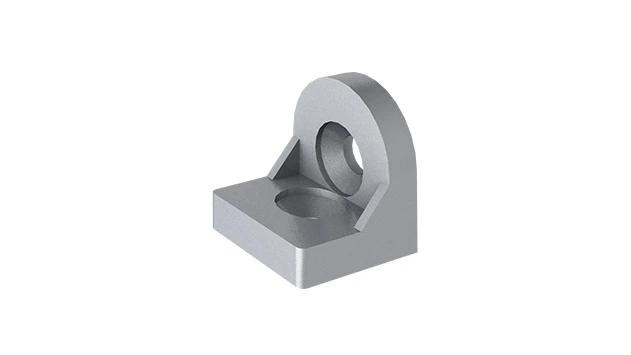
Turning Angle Code 3030
The turning angle aluminum profile connector provides a 90 degree hidden corner connection. 3030 it is means this size is used for 30 series aluminum profile.The corner code comes with set screws that allow for quick, easy connections.
The Hidden Cost of "Good Enough" in Production Design
Walk onto any production floor, and you'll quickly realize that the difference between a thriving operation and a struggling one lies in the details. It's not just the big machines or the latest software—it's the small, unassuming components that hold everything together. Workbenches that wobble under tool weight, material racks that waste inches of vertical space, or joints that loosen after weeks of use—these "small" issues add up. They turn smooth workflows into frustrating delays, increase the risk of product defects, and even demotivate teams who spend more time adjusting equipment than building products.
For production managers, the pressure to cut costs often leads to choosing "good enough" off-the-shelf solutions. Why invest in custom components when standard parts are cheaper and readily available? The answer is simple: "good enough" rarely stays that way. As product lines expand, customer demands shift, or new safety regulations come into play, those standard parts become bottlenecks. A material rack that worked for last year's product might be too shallow for this year's larger components. A workbench joint that held light tools might buckle under the weight of new, heavier equipment. Suddenly, "good enough" becomes "not enough," and the rush to adapt leads to rushed decisions, higher costs, and unnecessary stress.
This is where the Turning Angle Code 3030 enters the picture. At first glance, it's easy to dismiss it as just another metal bracket—a humble connector for aluminum profiles, the backbone of modern production setups. But in reality, it's the unsung hero that determines whether your aluminum profile workbench, material rack, or assembly line can adapt to your unique needs. Standard Turning Angle Code 3030 parts might work for basic 90-degree angles and light loads, but when your production demands more—unconventional angles, heavier weights, or specialized integration with aluminum profile accessories—custom solutions aren't a luxury. They're the key to staying competitive.
What Is Turning Angle Code 3030, and Why Does It Matter?
Let's start with the basics. Aluminum profiles have revolutionized production design because they're lightweight, strong, and infinitely configurable. They form the frames of workbenches, the shelves of material racks, the rails of conveyor systems, and even the bases of turnover trolleys. But aluminum profiles alone are just lengths of metal with T-slots. To turn them into functional structures, you need connectors—and that's where angle codes come in. The Turning Angle Code 3030 is specifically designed for 3030 aluminum profiles (profiles with a 30mm x 30mm cross-section), one of the most versatile sizes in manufacturing. It joins two or more profiles at precise angles, ensuring stability, alignment, and load-bearing capacity.
Think of it as the "elbow" of your production setup. A standard elbow bends at 90 degrees, which works for straight corners, but what if your workflow requires a gentler curve? Or what if the joint needs to support a heavy tool hanging from a workbench shelf? A standard Turning Angle Code 3030 might crack under that weight, or its fixed angle might force you to design around it instead of designing for efficiency. Custom Turning Angle Code 3030 solutions solve this by tailoring the angle, material thickness, and locking mechanism to your exact needs. Whether you need a 135-degree angle for a corner workstation, a reinforced joint for a heavy-duty material rack, or a corrosion-resistant version for a cleanroom environment, custom codes turn your aluminum profile structure from a rigid frame into a flexible, purpose-built system.
But why focus on 3030 profiles specifically? Because they strike the perfect balance between strength and versatility. They're small enough to build compact workbenches for electronics assembly (think ESD workstations handling delicate circuit boards) and robust enough to frame material racks for automotive parts. When paired with the right Turning Angle Code 3030, 3030 aluminum profiles become the building blocks of lean systems—setups that minimize waste, maximize space, and adapt quickly to change. And in today's fast-paced manufacturing world, adaptability isn't just a nice-to-have; it's the difference between meeting a sudden spike in demand and falling behind.

Beyond 90 Degrees: How Custom Angle Codes Transform Workflow Design
The most obvious limitation of standard Turning Angle Code 3030 parts is their fixed angle—almost always 90 degrees. For simple, rectangular structures like a basic workbench or a straight material rack, this works. But production lines are rarely that simple. Consider a workstation where operators need to access parts from three sides, or a material flow system that needs to navigate around a support column. In these cases, 90-degree angles create awkward gaps or force materials to take unnecessary detours, slowing down production.
Custom angle codes break this barrier by offering precise angle flexibility. A 120-degree code might allow a material rack to wrap around a corner without leaving dead space, while a 45-degree code could slope a conveyor section to feed parts directly into an assembly station. For example, a medical device manufacturer we partnered with needed their assembly line to handle both small syringes and larger IV stands. Their original setup used standard 90-degree angle codes, which made the conveyor rails run parallel to the workbench—meaning operators had to reach across the rail to grab parts, increasing the risk of dropped components. By switching to a custom 135-degree Turning Angle Code 3030, we angled the conveyor at a gentle slope toward the workbench, cutting reach distance by 40% and reducing part drops by nearly 70% in the first month.
Angle flexibility isn't the only advantage. Load capacity is another critical factor. Standard angle codes are often made from lightweight plastics or thin aluminum, designed to handle typical workshop loads. But what if your production involves heavy tools, like welding equipment on a workbench, or stacked pallets on a material rack? A standard code might hold for a few weeks, but over time, the stress weakens the joint, leading to wobbling, misalignment, or even collapse. Custom Turning Angle Code 3030 solutions address this by using thicker, high-grade aluminum alloys or reinforced designs. We recently worked with a automotive parts supplier who needed their material racks to hold 50kg engine components per shelf. By upgrading to a custom code with a double-wall design and stainless steel locking bolts, we increased load capacity by 150%—and eliminated the weekly tightening checks that had become a tedious part of their maintenance routine.

Standard vs. Custom: A Closer Look at Turning Angle Code 3030 Features
| Feature | Standard Turning Angle Code 3030 | Custom Turning Angle Code 3030 |
|---|---|---|
| Angle Options | Limited to 90 degrees (rarely 45/135 degrees) | Tailored angles (30°–180°) for unique layouts |
| Load Capacity | Up to 20kg per joint (light to medium loads) | Up to 100kg+ per joint (heavy-duty applications) |
| Material | Basic aluminum or plastic | High-grade aluminum alloys, stainless steel, or ESD-safe materials |
| Integration with Accessories | Works with standard 3030 end caps and T-slots | Designed to pair with specialized aluminum profile accessories (e.g., ESD grounding clips, tool holders) |
| Environmental Resistance | Basic corrosion resistance | Custom coatings for moisture, chemical, or high-temperature environments |
Case Study: How Custom Angle Codes Solved a Lean System Nightmare
A mid-sized furniture manufacturer specializing in custom office chairs faced a classic lean system challenge: their assembly line struggled to handle both standard chairs and high-end ergonomic models with extra padding. The ergonomic chairs required wider workbenches and taller material racks to store foam cushions, while the standard chairs needed narrower setups to save floor space. Their original workbenches, built with standard Turning Angle Code 3030 parts, couldn't adjust—so they kept two separate assembly lines, doubling their equipment costs and wasting 30% of their floor space.
The solution? A custom Turning Angle Code 3030 with a quick-release lever and adjustable angle stops. By replacing standard 90-degree codes with these custom joints, their workbenches could reconfigure in minutes: unlocking to widen the surface for ergonomic chairs, then locking back to narrow for standard models. The material racks, too, got an upgrade—custom 120-degree codes allowed the racks to fold inward when not in use, reclaiming 150 square feet of floor space. Within three months, they consolidated the two lines into one, cut equipment costs by 40%, and increased daily production by 25% by eliminating setup delays.
The Lean System Connection: Reducing Waste, Boosting Productivity
Lean manufacturing isn't just a buzzword—it's a philosophy centered on eliminating waste, and nowhere is waste more hidden than in rigid production setups. When your equipment can't adapt, you waste time reconfiguring, space storing extra parts, and labor fixing preventable issues. Custom Turning Angle Code 3030 solutions directly target these wastes by making your aluminum profile structures as flexible as your production needs.
Take overproduction, a common lean waste. If your material racks can't adjust to smaller batch sizes, you might end up overproducing parts to "fill" the rack, tying up capital in inventory. With custom angle codes, racks can be resized to fit exact batch quantities, reducing excess stock. Or consider motion waste—operators walking extra steps to reach tools because the workbench layout is fixed. A custom angle code that angles the tool shelf toward the operator cuts those steps, saving seconds per task that add up to hours per week.
Even maintenance waste is reduced. Standard angle codes often require frequent tightening or replacement, especially in high-vibration environments. Custom codes with self-locking mechanisms or wear-resistant materials (like stainless steel) last longer and need less upkeep. A food packaging plant we worked with reported cutting maintenance time by 60% after switching to custom codes on their conveyor systems—time that was redirected to improving production quality instead of fixing joints.
Choosing the Right Partner for Custom Turning Angle Code 3030 Solutions
Investing in custom Turning Angle Code 3030 solutions isn't just about ordering a "bespoke" part—it's about partnering with a supplier who understands your production challenges. The best suppliers don't just sell components; they collaborate with you to design solutions that fit your unique workflow, budget, and long-term goals. Here's what to look for:
Engineering Expertise: A good supplier should have in-house engineers who can review your current setup, identify pain points, and design a code that integrates seamlessly with your existing aluminum profiles and accessories (like 3030 aluminum profile end caps or T-slot rubber seal covers). They should also provide 3D models or prototypes to test before full production.
Material Options: Not all production environments are the same. If you work in electronics, ESD-safe materials are a must. If you're in food processing, corrosion-resistant stainless steel is critical. Look for suppliers who offer a range of materials—aluminum, stainless steel, reinforced plastics—to match your needs.
Scalability: Today's custom solution should grow with tomorrow's needs. A supplier who can adjust designs as your production volume increases or product lines expand will save you from reworking your entire setup down the line.
The Bottom Line: Custom Angle Codes as a Growth Investment
At the end of the day, custom Turning Angle Code 3030 solutions aren't about spending more—they're about investing wisely. The upfront cost of a custom joint is quickly offset by reduced downtime, lower maintenance costs, and the ability to take on new projects without overhauling your entire production line. For production managers, they're a tool to turn "good enough" into "excellent"—and in a market where every detail matters, excellent is what keeps you ahead.
So, the next time you look at your production floor, take a closer look at those small, unassuming joints. Are they holding you back, or are they helping you grow? With custom Turning Angle Code 3030 solutions, the answer can be the latter—one angle, one joint, one workflow at a time.