- Company Articles
- Products and Technology
- Product knowledge
- Custom vs. Off-the-Shelf Gusset Alp 3030: Which Fits Your Needs?

Custom vs. Off-the-Shelf Gusset Alp 3030: Which Fits Your Needs?
Related Product
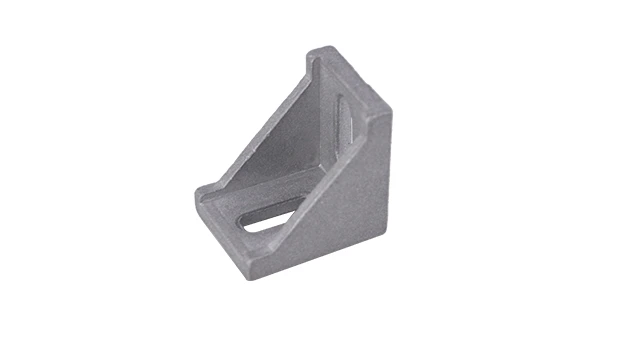
Gusset ALP 3030
The 3030 bracket/Gusset is an external fastening method that creates a 90 degree connection. 3030 means this size is used for 30 series aluminum profile with a quick connection by bolt and nut.
Walk into any modern manufacturing facility, warehouse, or even a DIY workshop, and you'll likely spot the sleek, modular structures that make workflows hum—aluminum profiles. These versatile frames form the backbone of workbenches, material racks, conveyor systems, and more. But behind their clean lines and adaptability lies a network of small but critical components that hold everything together: aluminum profile accessories. Among these, the Gusset Alp 3030 stands out as a unsung hero. It's the quiet workhorse that reinforces joints, distributes weight, and ensures your aluminum structure doesn't just look good—it performs reliably, day in and day out.
If you're knee-deep in a project that involves 3030 aluminum profiles (one of the most common sizes for everything from light-duty workbenches to industrial lean system setups), you've probably asked yourself: Should I go with off-the-shelf Gusset Alp 3030, or invest in a custom version? It's not a trivial question. The choice can impact your project timeline, budget, and even the long-term efficiency of your setup. Let's dive in—no jargon, just real talk about which option makes sense for your needs.
First Things First: What Even Is a Gusset Alp 3030?
Before we compare custom vs. off-the-shelf, let's make sure we're on the same page about what a Gusset Alp 3030 actually does. Picture this: You're building a workbench using 3030 aluminum profiles (those 30mm x 30mm extruded beams with T-slots for easy). When you connect two profiles at a right angle—say, a vertical leg to a horizontal shelf—you need more than just a basic joint to keep it stable. Over time, the weight of tools, materials, or repeated use can strain that joint, leading to wobbling, misalignment, or even failure. That's where the gusset comes in.
A gusset is a flat, often triangular or rectangular piece of metal (in this case, aluminum) that bolts or clamps onto the outside (or sometimes inside) of the joint. It acts like a reinforcement bracket, spreading the load across a larger area and preventing the joint from flexing. The "Alp 3030" part specifies that it's designed for 3030 aluminum profiles—so it's pre-sized to fit the profile's dimensions, with holes aligned to the T-slots for easy mounting. Think of it as the "backbone" of your aluminum structure's joints; without it, even the sturdiest profiles can feel flimsy under pressure.
Now, Gusset Alp 3030 isn't just one-size-fits-all. Manufacturers produce standard versions (off-the-shelf) for common use cases, but when your project has unique demands—unusual angles, extreme weight loads, or tight space constraints—custom options enter the picture. Let's break down both paths.
Off-the-Shelf Gusset Alp 3030: The "Ready-to-Go" Option
What It Is (and Why It's Popular)
Off-the-shelf Gusset Alp 3030 is exactly what it sounds like: pre-designed, mass-produced gussets available for immediate purchase from suppliers. They come in standard shapes (usually right triangles or squares), standard thicknesses (often 2-3mm), and with pre-drilled holes that line up perfectly with 3030 aluminum profile T-slots. You can find them in catalogs, online stores, or local hardware suppliers—no waiting, no design meetings, just grab and install.
For many projects, this is the default choice. Why? Let's start with the obvious: speed . If you're in a rush to get your workbench up or your material rack assembled, off-the-shelf gussets mean you don't have to wait for a manufacturer to design, prototype, and produce a custom part. Need 50 gussets by next week? A quick call to your aluminum profile supplier, and they'll ship them out the same day.
Then there's cost . Mass production drives down prices. Since suppliers make thousands of these gussets at once, they can offer them at a fraction of the cost of a custom design. For small businesses, startups, or hobbyists watching their budget, this is a huge win. Why pay extra for a custom solution if a standard one works?
Consistency is another perk. Off-the-shelf gussets are made to strict, standardized specs. That means every gusset in the box will fit your 3030 profiles the same way, with holes in the same positions and the same load-bearing capacity. If you're building multiple identical structures (say, 20 workbenches for a factory floor), this uniformity reduces errors during assembly and ensures each unit performs identically. No surprises, no guesswork—just reliable, repeatable results.
The Pros: When Off-the-Shelf Shines
- Immediate availability : No lead times. If your project can't wait, this is non-negotiable.
- Lower upfront cost : Mass production = lower per-unit price, ideal for tight budgets.
- Proven reliability : Standard gussets are tested for common load cases (e.g., supporting 50-100kg per joint), so you know they'll work for typical setups like workbenches or small material racks.
- Easy to source : Most aluminum profile suppliers stock them, so you won't struggle to find replacements or extras later.
The Cons: Where It Falls Short
Off-the-shelf gussets are great for "normal" projects, but they have limits. Let's say you're building a lean system for a automotive parts assembly line, where the workbench needs to support heavy machinery (200kg+) at a 45-degree angle. A standard gusset, designed for 90-degree joints and 100kg loads, might buckle under the stress. Or maybe your workspace is unusually tight—think a small electronics repair shop where every inch counts. A standard square gusset might stick out too far, blocking access to tools or materials.
Another issue: lack of flexibility in design . Standard gussets are made for 90-degree joints 90% of the time. If your project requires 135-degree angles, curved edges, or cutouts to accommodate other components (like cables or sensors), off-the-shelf options will leave you frustrated. You might end up jury-rigging a solution with multiple gussets or spacers, which adds complexity and weakens the joint over time.
Finally, over-engineering (or under-engineering) . A standard gusset might be thicker than you need (adding unnecessary weight and cost) or thinner than required (posing safety risks). For example, a hobbyist building a light-duty shelf might end up with a 3mm-thick off-the-shelf gusset when a 2mm would suffice—wasting money. Conversely, a manufacturer skimping on a standard gusset for a heavy-load application could face structural failures.

Custom Gusset Alp 3030: Tailored to Your Exact Needs
What It Is (and When You Might Need It)
Custom Gusset Alp 3030 is designed from scratch (or modified from a base design) to fit your project's unique requirements. This could mean adjusting the shape (e.g., a 60-degree angle instead of 90), increasing thickness (4mm instead of 2mm for heavy loads), adding cutouts (to fit around obstructions), or even changing the material (e.g., reinforced aluminum alloy for extra strength). It's not mass-produced; instead, you work with a supplier or fabricator to create a one-of-a-kind (or small-batch) gusset.
Custom gussets aren't for every project. They require time, communication, and often a higher budget. But when your project checks certain boxes—unique geometry, extreme performance demands, or a need for precision—they become indispensable. Let's explore why.
The Pros: Why Custom Might Be Worth the Investment
The biggest advantage of custom Gusset Alp 3030 is precision . If your workbench needs to fit into a corner with odd angles, or your lean system conveyor requires gussets that don't interfere with moving parts, a custom design ensures every millimetre is accounted for. For example, a medical device manufacturer I worked with once needed gussets with rounded edges to comply with safety regulations (no sharp corners near sensitive equipment). Off-the-shelf gussets had square edges, so we went custom—and the result was a setup that met both safety standards and workflow needs.
Then there's performance optimization . Custom gussets let you dial in thickness, material, and shape to match your load requirements exactly. If you're building a material rack that needs to hold 300kg per shelf, a fabricator can engineer a gusset with extra reinforcement ribs or a thicker base to handle that weight without overdoing it (unlike off-the-shelf, which might force you to choose between "too weak" or "overkill"). This not only improves safety but also reduces unnecessary weight, making your structure easier to move or modify later.
Flexibility in design is another win. Need a gusset that doubles as a cable management clip? A custom fabricator can add a small notch or channel. Working with limited vertical space? They can slim down the gusset's height while keeping the critical joint area thick. For unique projects—like a mobile workbench on casters that needs to navigate tight aisles—custom gussets can be shaped to avoid catching on walls or equipment, something off-the-shelf simply can't do.
The Cons: The Trade-Offs of "Bespoke"
Custom Gusset Alp 3030 isn't a magic bullet, and the biggest downside is cost . Designing a custom gusset involves engineering time (CAD drawings, stress testing), prototyping (to ensure it works), and small-batch production—all of which add up. A single custom gusset can cost 3-5x more than an off-the-shelf one, and minimum order quantities (MOQs) often apply (e.g., 50+ units), even if you only need 10. For small projects or tight budgets, this can be a dealbreaker.
Lead time is another hurdle. Off-the-shelf gussets ship in days; custom ones can take weeks (or longer, if revisions are needed). If your project has a hard deadline, custom might not be feasible. I once helped a startup that needed gussets for a trade show display—they opted for off-the-shelf because the custom lead time (3 weeks) would have missed their booth setup date.
Finally, dependency on supplier expertise . A bad custom gusset is worse than no gusset at all. If your fabricator cuts corners on material thickness or misaligns the holes with your 3030 profiles, you'll end up with weak joints or parts that don't fit. This means vetting suppliers carefully—checking their experience with aluminum profiles, asking for past work samples, and maybe even requesting a test prototype—adds another layer of effort.

Off-the-Shelf vs. Custom: A Quick Comparison
| Factor | Off-the-Shelf Gusset Alp 3030 | Custom Gusset Alp 3030 |
|---|---|---|
| Cost | Lower (mass production = economies of scale) | Higher (design, prototyping, small-batch production) |
| Lead Time | Immediate (same-day or next-day shipping) | Weeks (design + production) |
| Design Flexibility | Limited (standard shapes, angles, and sizes) | High (tailored to unique angles, loads, or constraints) |
| Performance | Good for standard loads (50-100kg) and 90-degree joints | Optimized for exact loads, angles, or environments |
| Best For | Small projects, standard workbenches/racks, tight deadlines | Unique angles, heavy loads, safety-critical setups, custom workflows |
How to Choose: 5 Key Questions to Ask
Deciding between off-the-shelf and custom Gusset Alp 3030 boils down to your project's specific needs. Here are five questions to guide you:
- What's my load requirement? If you're supporting less than 100kg per joint and using 90-degree angles, off-the-shelf is likely fine. Over 150kg, or with unusual angles, custom becomes worth considering.
- How tight is my timeline? Need parts in a week? Stick to off-the-shelf. Have 4-6 weeks to spare? Custom is possible.
- Is my design "standard"? If your structure uses basic 3030 profile joints with no odd angles or space constraints, off-the-shelf works. If it has unique geometry, custom is better.
- What's my budget? Small projects (e.g., a home workshop workbench) can't justify custom costs. Larger, high-stakes projects (e.g., industrial lean systems) often can—especially if failure risks downtime or safety issues.
- Will I need to scale or modify later? Off-the-shelf gussets are easy to replace if you expand. Custom gussets, while tailored, might be harder to replicate if you need more later (unless you save the design files).
Real-World Scenarios: Which One Works When?
Scenario 1: The Small Workshop Owner
Maria runs a small woodworking workshop and wants to build a new workbench using 3030 aluminum profiles. She needs it to hold tools, lumber, and a small saw (total load: ~80kg). The space is standard (no odd corners), and she wants to assemble it this weekend. For Maria, off-the-shelf Gusset Alp 3030 is perfect. It's affordable, available at her local supplier, and the standard 90-degree design fits her bench's square frame. No need for custom—she'd just be paying extra for features she doesn't need.
Scenario 2: The Automotive Manufacturer
A mid-sized auto parts plant is upgrading its lean system to include a tilted workbench for engine assembly. The bench needs to hold 250kg, angle at 45 degrees, and fit into a tight space between two conveyor belts. Off-the-shelf gussets can't handle the angle or load, and their bulk would block the conveyors. Here, custom Gusset Alp 3030 makes sense. The plant works with a supplier to design a reinforced, angled gusset with a slim profile—ensuring safety, fit, and workflow efficiency. The higher cost is offset by reduced downtime and improved worker productivity.
Scenario 3: The DIY Enthusiast
Raj is building a custom drone testing rig using 3030 aluminum profiles. The rig needs to tilt 30 degrees, hold sensitive equipment (cameras, sensors), and have cutouts for wiring. Standard gussets are 90-degree and too thick, so Raj opts for a small-batch custom order. He works with a local fabricator to design a lightweight, angled gusset with cable channels. It costs more than off-the-shelf, but the result is a rig that fits his exact needs—something no pre-made part could match.
So, Which Should You Choose?
At the end of the day, there's no "better" option—only the one that aligns with your project's goals. Off-the-shelf Gusset Alp 3030 is the practical choice for standard setups, tight budgets, and quick timelines. It's reliable, affordable, and ready when you are. Custom Gusset Alp 3030, on the other hand, is the problem-solver for unique challenges—unusual angles, heavy loads, or space constraints that standard parts can't handle. It's an investment, but one that pays off in performance and precision.
Remember: Gusset Alp 3030 might seem like a small component, but it's the glue that holds your aluminum structure together. Whether you go off-the-shelf or custom, prioritize fit, load capacity, and compatibility with your 3030 profiles. And if you're ever unsure? Start with off-the-shelf for prototypes—you can always switch to custom if you hit a wall. After all, the best aluminum profile accessories are the ones that make your workflow smoother, safer, and more efficient—whatever form they take.