- Company Articles
- Products and Technology
- Product knowledge
- Custom vs Standard Aluminum Workbench C: Which Fits Your Production Goals?

Custom vs Standard Aluminum Workbench C: Which Fits Your Production Goals?
Related Product
Aluminum Workbench C
aluminum-tube-workbench-is-more-flexible-and-durable,-compared-with-traditional-pe/abs-coated-steel-tube.-it-is-easy-to-assemble,-anti-corrosion,-rust-protection,-and-recycle-use-after-disassemble.
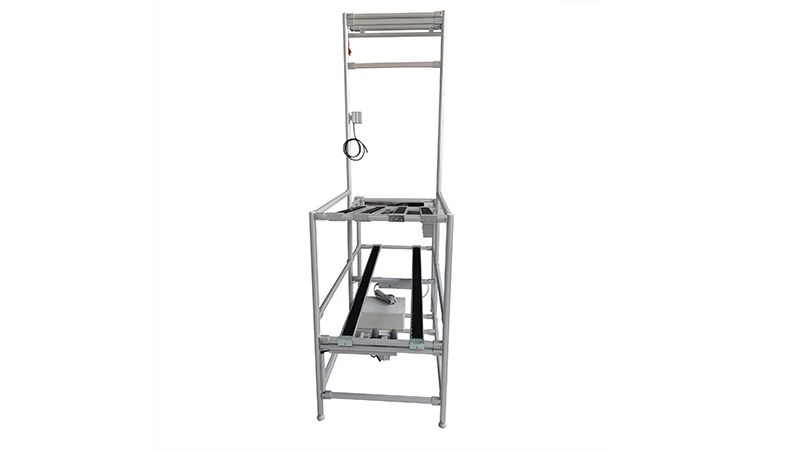
Every production floor tells a story—of efficiency, bottlenecks, and the quiet battles to keep workflows moving smoothly. At the heart of that story often sits a humble yet critical tool: the workbench. For manufacturers, assembly line managers, and lean system enthusiasts, choosing the right workbench isn't just about having a surface to place tools. It's about aligning every inch of your workspace with your production goals. Today, we're diving deep into a common dilemma: Aluminum Workbench C —should you go standard or custom? Let's unpack what each option brings to the table, and how to decide which one will write a better chapter in your production story.
First Things First: What is Aluminum Workbench C?
Before we compare standard and custom, let's get clear on the star of the show: Aluminum Workbench C. If you've spent time researching workbenches, you've likely noticed a alphabet soup of models—A, B, C, D, and so on. Each is designed with specific use cases in mind, and C has emerged as a popular choice for mid-sized production lines, warehouses, and assembly operations. Why? Its backbone is aluminum profile, a material prized for its strength-to-weight ratio, corrosion resistance, and sleek, modular design. Unlike clunky wooden workbenches or heavy steel alternatives, Aluminum Workbench C balances durability with flexibility, making it a favorite for teams aiming to streamline processes without sacrificing sturdiness.
At its core, Aluminum Workbench C typically features a flat work surface (often a single deck, though configurations vary), a frame built from aluminum extrusion profiles, and integrated mounting points for accessories like tool hooks, shelves, or bins. What sets it apart from other models? Think of it as the "all-rounder" of workbenches—not too basic, not overly specialized. But here's where the plot thickens: that "all-rounder" label can mean different things depending on whether you opt for the standard off-the-shelf version or a custom build tailored to your unique needs.
The Case for Standard Aluminum Workbench C: Speed, Simplicity, and Savings
Let's start with the path of least resistance: the standard Aluminum Workbench C. Picture walking into a supplier's catalog or website and seeing a listing for "Aluminum Workbench C—Standard Model." What you're getting is a pre-designed, mass-produced unit built to fit the most common production scenarios. Let's break down its defining features, and why they might align with your goals.
What You Get with Standard
Standard Aluminum Workbench C is a study in consistency. Suppliers design it based on industry norms, so you can expect:
- Fixed dimensions: Typically, a width of 1200–1500mm, depth of 600–800mm, and height of 800–900mm (ergonomically tuned for average user height).
- Single or double deck: Most standard models come with a single work surface (no lower shelf) to keep things lightweight, though some include a basic lower shelf for storage.
- Aluminum profile frame: Built from 4040 or 3030 aluminum extrusion profiles (common sizes in the industry), with aluminum profile accessories like corner brackets and end caps pre-installed for stability.
- No casters (by default): Unlike mobile workbenches, standard C often sits fixed on the floor—great for stationary workstations where movement isn't needed.
- Basic load capacity: Usually rated for 200–300kg, enough for tools, parts bins, and small equipment.
The Pros: Why Standard Might Be Right for You
For many teams, standard Aluminum Workbench C checks the boxes without overcomplicating things. Here's where it shines:
1. Budget-friendly upfront costs: Mass production drives down prices. Standard models skip the design fees and custom manufacturing steps, so you'll pay less per unit. For small businesses or teams with tight budgets, this is a huge win. Instead of sinking funds into a custom build, you can invest in other lean system tools—like flow racks or conveyor systems—to boost efficiency elsewhere.
2. Ready to roll (or sit) immediately: Need a workbench yesterday? Standard models are in stock. Suppliers keep them on the shelf, so you can place an order and have it delivered in days, not weeks. This is critical for teams facing sudden production spikes or replacing a broken workbench to avoid downtime.
3. Easy to replace or scale: Since standard models are identical, swapping out a damaged workbench is a breeze. No need to re-measure or re-design—just order another C and slot it into place. This also makes scaling simple: if you add a second shift, you can buy two more standard C workbenches and train the new team on a familiar setup.
4. Tested and trusted: Standard designs aren't random—they're based on years of supplier experience and customer feedback. You can trust that the dimensions, load capacity, and materials have been vetted in real-world production environments. No surprises, no "will this work?" anxiety.
The Cons: When "One Size Fits All" Starts to Feel Tight
Of course, "standard" also means "not tailored." For teams with unique workflows, this can lead to friction. Here are the potential downsides:
1. Limited adjustability: If your team includes workers of varying heights, a fixed-height standard workbench can lead to ergonomic issues—back strain, fatigue, and slower work. Similarly, if your parts are larger than the standard depth, you might end up with items hanging off the edge, increasing the risk of drops or damage.
2. No room for "extras": Standard models often skimp on customization options. Need a built-in ESD (Electrostatic Discharge) mat for electronics assembly? Or a shelf angled at 45 degrees to feed parts into a flow rack? Chances are, the standard C won't have it. You'll end up jury-rigging solutions with zip ties or duct tape, which undermines the very organization you're trying to build.
3. Mismatched with lean system goals: Lean manufacturing thrives on eliminating waste—including wasted space or motion. If your standard workbench is 1500mm wide but your team only uses 1000mm of it, you're wasting floor space that could be used for a conveyor or extra storage. Conversely, if it's too narrow, workers might have to walk extra steps to grab tools, adding unnecessary motion to the process.

The Case for Custom Aluminum Workbench C: Built to Your Workflow's Rhythm
Now, let's flip the script: custom Aluminum Workbench C. This isn't about slapping a logo on a standard model—it's about collaborating with a supplier to design a workbench that fits your production line like a well-tailored glove. Imagine sitting down with a designer and saying, "Our workers need to stand and sit interchangeably," or "We need this bench to feed directly into our flow rack system," and having them build it exactly that way. Here's what that entails, and why it might be worth the investment.
What You Get with Custom
Custom Aluminum Workbench C is a blank canvas, but with guardrails (thankfully—no need to reinvent the wheel). You'll work with your supplier to tweak or overhaul key elements, such as:
- Dimensions: Width, depth, and height can be adjusted to fit your space. Need a 2000mm wide bench to accommodate a team of two? Or a 800mm depth to fit in a tight corner? Done.
- Mobility: Add caster wheels (lockable, of course) for benches that need to move between stations. Suddenly, your workbench isn't tied to one spot—it can follow the workflow.
- Accessories: Want shelves, bins, tool rails, or even integrated LED lighting? Custom builds let you pick and choose aluminum profile accessories that align with how your team works. For example, if your process uses small parts, you can add a grid of dividers on the surface to prevent mixing.
- Specialized surfaces: ESD mats for electronics, heat-resistant tops for welding, or non-slip coatings for oily parts—custom workbenches let you match the surface to the task.
- Integration with existing systems: If your production line uses flow racks, conveyors, or automated feeding systems, a custom workbench can be designed to connect seamlessly. Think: a sloped surface that feeds parts directly into a flow rack, or a cutout that aligns with a conveyor belt to reduce manual lifting.
The Pros: When Custom Becomes a Productivity Catalyst
At its best, a custom Aluminum Workbench C isn't just a tool—it's an extension of your lean system goals. Here's why it might be the right choice:
1. Ergonomics that boost morale and speed: When a workbench is built around your team's needs, fatigue drops, and focus rises. For example, adjustable-height benches let workers switch between sitting and standing, reducing back pain and keeping energy levels steady. Over time, this translates to fewer absences, faster task completion, and a happier team.
2. Zero waste, maximum space: Custom dimensions mean you're using every square inch of your workbench (and floor space) intentionally. A 900mm depth instead of 1200mm might free up room for a rack next to the bench, cutting down on the steps workers take to grab materials. It's lean manufacturing in action—eliminating "muda" (waste) one measurement at a time.
3. Future-proofing your workflow: As your production goals evolve, a custom workbench can evolve with you. Maybe you start with a fixed bench, but later add caster wheels when you expand to two shifts. Or you design in extra mounting points for accessories you might need down the line, like barcode scanners or digital displays. Custom builds are investments in long-term flexibility.
4. Competitive edge through uniqueness: Your competitors are using standard workbenches. A custom setup that aligns perfectly with your proprietary process can give you a hidden advantage—faster cycle times, fewer errors, and a workflow that's harder for others to replicate. It's not just about keeping up; it's about pulling ahead.
The Cons: When Custom Becomes a Headache
Custom isn't a silver bullet, though. It comes with trade-offs that are important to weigh:
1. Higher upfront costs: Designing, engineering, and manufacturing a custom workbench takes time and resources. You'll pay more per unit than you would for a standard model—sometimes 30–50% more. For small businesses or startups with limited capital, this can be a barrier.
2. Longer lead times: Standard workbenches ship in days; custom ones can take weeks (or even months) to design, prototype, and produce. If you need a solution yesterday, custom might not be feasible.
3. The risk of over-customization: It's easy to get carried away adding features. Do you really need that built-in tablet holder, or will a simple clamp-on version work? Over-customizing can drive up costs and create a workbench that's too specialized—if your workflow changes, you might end up with a bench that's no longer useful.

Standard vs Custom: A Side-by-Side Comparison
To make the choice clearer, let's put standard and custom Aluminum Workbench C head-to-head. Use this table as a checklist to align each option with your production goals:
| Factor | Standard Aluminum Workbench C | Custom Aluminum Workbench C |
|---|---|---|
| Cost | Lower upfront cost (typically $300–$600 per unit) | Higher upfront cost (often $800–$1,500+ per unit) |
| Lead Time | Fast (1–5 business days) | Slow (2–8 weeks, depending on complexity) |
| Flexibility for Workflow Changes | Low—fixed design limits adaptability | High—built to evolve with your needs |
| Ergonomics | Basic—fits average user, but not all | Tailored—adjustable to team's height, posture, and tasks |
| Integration with Lean Systems | Limited—may create waste (space, motion) | High—designed to eliminate waste and align with flow |
| Accessory Options | Pre-set (e.g., basic shelves, tool hooks) | Unlimited (choose aluminum profile accessories, caster wheels, etc.) |
| Risk of Obsolescence | Low—easy to replace with identical model | Higher—if workflow changes drastically, custom features may become irrelevant |

How to Decide: 5 Questions to Align with Your Production Goals
Now that you understand the pros and cons, how do you choose between standard and custom? It all comes down to your production goals. Ask yourself these five questions to find clarity:
1. What's My Primary Goal: Short-Term Speed or Long-Term Efficiency?
If you need to get a production line up and running in a month, standard Aluminum Workbench C is the way to go. It's fast, reliable, and lets you start generating revenue quickly. But if your goal is to optimize for efficiency over the next 3–5 years—reducing cycle times, cutting waste, or scaling production—custom might deliver a better ROI. Think of it like buying a car: a standard model gets you from A to B, but a custom-tuned one can get you there faster and more comfortably, even if it costs more upfront.
2. How Unique is My Workflow?
Do you follow a standard assembly process used by thousands of other manufacturers? If yes, standard will likely work. But if your process has unique steps—e.g., assembling oversized parts, handling delicate electronics, or collaborating across multiple shifts with different tasks—a custom workbench can eliminate the friction of forcing a square peg into a round hole. For example, a team that assembles medical devices might need a custom workbench with built-in magnification lamps and ESD protection—features a standard model can't match.
3. What's My Budget for Upfront Costs vs. Ongoing Savings?
Custom workbenches cost more upfront, but they can save money over time. Let's say a standard bench costs $500, and a custom one costs $1,200. If the custom bench reduces task time by 10 seconds per unit, and your line produces 10,000 units per month, that's 10,000 x 10 seconds = 100,000 seconds saved per month—over 27 hours. At an average labor cost of $25/hour, that's $675 saved monthly. In less than two months, the custom bench has paid for itself. Crunch the numbers: will the efficiency gains offset the higher initial cost?
4. What Do My Team Members Say?
Your frontline workers are the ones who'll use the workbench every day—so ask them! A quick survey or focus group can reveal pain points the standard model might miss. Maybe they're constantly reaching for tools on a shelf that's too high, or parts keep rolling off the edge. Their feedback can turn "nice-to-have" custom features into "must-have" efficiency drivers. After all, a workbench that fits your team's needs is a workbench they'll take pride in keeping organized.
5. How Likely is My Workflow to Change in the Next 2–3 Years?
If you're launching a new product line, expanding to new markets, or adopting automation, your workflow will evolve. A standard workbench might become obsolete quickly, forcing you to replace it sooner. A custom workbench, designed with adaptability in mind (e.g., adjustable height, modular accessories), can grow with you. For example, adding caster wheels later or swapping out a surface for a new material is easier if the bench was built with those possibilities in mind.
Real-World Examples: When Standard and Custom Shined (or Fell Short)
Sometimes, hearing how others have navigated this choice makes all the difference. Let's look at two hypothetical (but realistic) scenarios to see standard and custom Aluminum Workbench C in action.
Example 1: The Small Electronics Manufacturer (Standard Success Story)
A small company producing smartphone chargers has a tight budget and a simple workflow: two workers per bench, assembling components from bins. They need 5 workbenches to meet demand. They opt for standard Aluminum Workbench C ($450 each, total $2,250). The benches arrive in 3 days, and the team is up and running within a week. Since their process is repetitive and uses standard-sized parts, the fixed dimensions work well. Six months later, they've doubled production and added 5 more standard benches—no learning curve, no delays. For them, standard was the perfect fit: fast, affordable, and aligned with their straightforward goals.
Example 2: The Automotive Parts Supplier (Custom Game-Changer)
A mid-sized supplier to automotive manufacturers produces precision engine components. Their workflow involves multiple steps: machining, inspection, packaging, and shipping. Workers complained about constantly moving between benches and flow racks, leading to errors and slowdowns. They invested in 10 custom Aluminum Workbench C units ($1,100 each, total $11,000). Key custom features: caster wheels for mobility, adjustable height, and a sloped surface that feeds directly into a flow rack. Within three months, error rates dropped by 15%, and cycle time per unit decreased by 20 seconds. The custom benches paid for themselves in under a year, and the team reported higher job satisfaction. For them, custom wasn't a luxury—it was a strategic investment in their lean system.
Example 3: The Over-Customization Trap (What to Avoid)
A startup building custom drones decided to go all-in on custom Aluminum Workbench C. They added features like built-in 3D printers, retractable tool drawers, and even USB charging ports—costing $2,000 per bench. Six months later, they pivoted to a new drone model with smaller components, making the large drawers and 3D printer mounts obsolete. The benches became too heavy to move (even with caster wheels) and too specialized to repurpose. They ended up replacing them with standard models, wasting $10,000. The lesson? Customize thoughtfully—focus on features that will add value for years, not just your current project.
Final Verdict: It's About Alignment, Not Perfection
So, which is better: standard or custom Aluminum Workbench C? The answer isn't "one is always better than the other"—it's "which aligns with your production goals, workflow, and budget."
Choose standard if: you need a quick solution, have a straightforward workflow, are on a tight budget, or plan to scale with identical setups. It's reliable, affordable, and gets the job done for most "average" production scenarios.
Choose custom if: your workflow is unique, ergonomics and efficiency are top priorities, you can afford the upfront cost, or you want to integrate the workbench with existing systems like flow racks or conveyors. It's an investment that pays dividends in productivity and team satisfaction.
Remember, the best workbench is the one that fades into the background—so your team can focus on what they do best: building great products. Whether standard or custom, Aluminum Workbench C is a tool to help you write that story. Choose wisely, and watch your production goals turn into reality.