- Company Articles
- Products and Technology
- Application Cases
- Customer Reviews: User Experiences with Two Way Lean Pipe Joint in Factories

Customer Reviews: User Experiences with Two Way Lean Pipe Joint in Factories
Related Product
Two Way Lean Pipe Joint
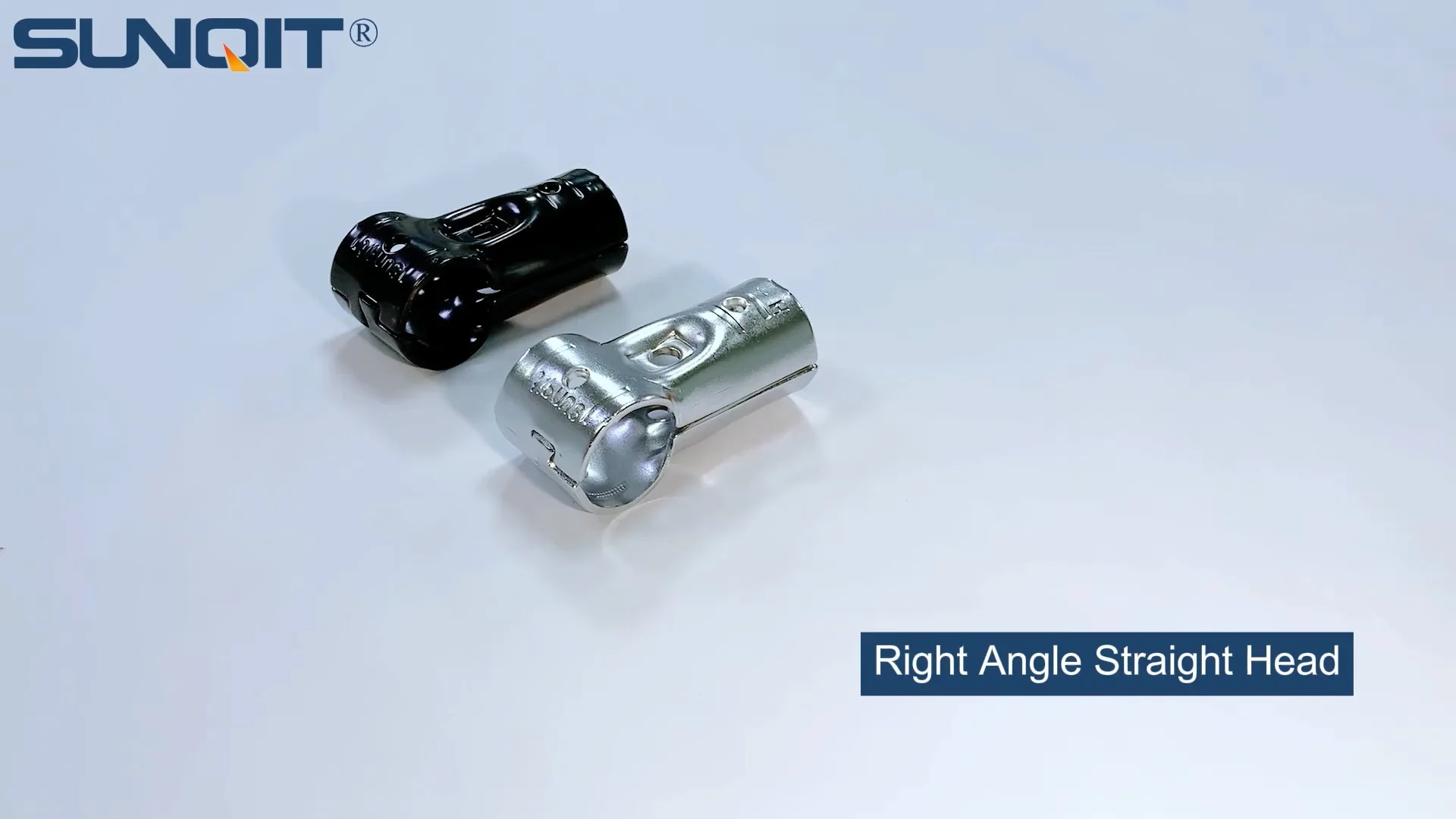
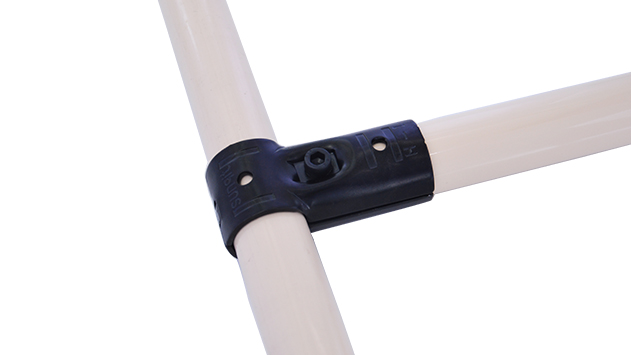
Two way lean pipe joint for 2 pcs 28MM lean pipe connection in straight angle, which used widely in workbench, flow rack, hand trolley frame connection.
Case Study 1: Streamlining Small-Scale Electronics Assembly with Custom Workbenches
Background: Precision Tech, a 50-person electronics assembly plant in Oregon
Precision Tech specializes in small-batch circuit board assembly for medical devices—a field where precision and cleanliness are non-negotiable. By 2023, their production floor was feeling the squeeze: demand was up 30%, but their fixed, wooden workbenches were rigid and took up valuable space. "We were stuck with workbenches that were either too big for our current needs or too small when we added new equipment," recalls Jamie Liu, Production Manager. "Rearranging them took a team of two people and half a day—time we couldn't afford to lose."
Their biggest pain points? Space constraints, the need for ESD (electrostatic discharge) protection to safeguard sensitive components, and the inability to quickly reconfigure workstations for different product runs. "We looked into pre-built ESD workstations, but they were expensive and one-size-fits-all," Jamie explains. "Our team needed something that could grow with us, not box us in."
The Solution: Two Way Lean Pipe Joints + Lean Pipe Workbenches
After researching modular solutions, Precision Tech connected with a local lean system supplier who recommended a setup built around two way lean pipe joints. "The supplier explained that these joints would let us build custom lean pipe workbenches using standard lean pipe and accessories—no welding or special tools required," Jamie says. "We were skeptical at first—how sturdy could something that snaps together really be?"
The team started small: a test workstation using 1.5mm PE coated lean pipe, two way lean pipe joints, and ESD-safe tabletop material. "Assembly took 45 minutes—by myself," Jamie laughs. "I followed the instructions, clicked the joints into place, and had a fully functional workbench. When we needed to add a shelf for tools, we just added another pipe and joint—no hassle."
The Results: Flexibility, Speed, and Cost Savings
Within three months, Precision Tech replaced all 12 of their old workbenches with custom setups using two way lean pipe joints. The impact was immediate: "Our floor space utilization improved by 20% because we could design workbenches to fit exactly where we needed them," Jamie reports. "Changeovers between product runs now take 20 minutes instead of 2 hours—we just adjust the height or add/remove shelves using the joints."
Cost-wise, the savings were substantial. "Pre-built ESD workstations would have cost us $3,000 each—$36,000 total," Jamie notes. "With lean pipe, two way joints, and our own labor, we spent $12,000—70% less. And because the joints are reusable, we can disassemble and rebuild workstations as our needs change. That's sustainability we can actually measure."
"The two way lean pipe joint turned our production floor from a static space into a living, breathing system. We're no longer limited by what's 'off the shelf'—we build what works for us, when we need it. It's like having a factory that can rearrange itself." — Jamie Liu, Production Manager, Precision Tech
Case Study 2: Automotive Parts Manufacturer Eliminates Bottlenecks with Flow Racks
Background: GearPro, a mid-sized automotive parts plant in Michigan
GearPro produces transmission components for major automakers, operating three shifts a day to meet tight deadlines. By early 2024, their material flow system was breaking down: parts were getting stuck on fixed metal racks, causing delays in assembly lines. "Our old flow racks were welded steel—sturdy, but impossible to adjust," says Mike Torres, Logistics Supervisor. "If a part size changed or a new component was added, we'd have to weld new brackets or buy entirely new racks. It was a logistical nightmare."
Worse, the rigid racks weren't compatible with their existing lean system supplier's roller tracks, which they used to move parts from storage to assembly. "We had a mishmash of systems," Mike explains. "The roller tracks would dump parts onto a table, and workers would carry them to the line—wasted steps, wasted time."
The Solution: Two Way Lean Pipe Joints + Modular Flow Racks
GearPro's lean consultant recommended a radical shift: replacing fixed racks with modular flow racks built using two way lean pipe joints and roller track components. "The consultant showed us how two way joints could connect lean pipe into frames, and then we could attach roller tracks to those frames using brackets," Mike says. "The best part? The joints were compatible with our existing lean pipe and accessories from our current supplier—no need to replace everything at once."
The team started with a pilot flow rack for their most problematic part: a 15-pound gear housing that frequently jammed on old racks. "We built a three-tier flow rack using 2.0mm stainless steel pipe (for extra strength), two way joints, and 40 steel roller track with black wheels," Mike recalls. "Assembly took two hours with three people—most of that time was just measuring. The joints clicked into place, and the roller tracks bolted right onto the frame."
The Results: Smoother Flow, Less Downtime, Happier Teams
From day one, the new flow rack solved the jamming issue. "Parts glide from the top tier to the assembly line without getting stuck—no more workers standing around waiting to unjam racks," Mike reports. But the real win was adaptability. "Last quarter, we introduced a new gear housing that's 2 inches wider. Instead of welding new brackets, we just loosened the two way joints, adjusted the pipe spacing, and tightened them back up. Total time: 20 minutes. The old setup would have taken two days and a welder."
Over six months, GearPro expanded the system to 12 flow racks, covering 80% of their material flow. "Downtime due to material handling dropped by 45%," Mike says. "Our assembly line throughput increased by 15%, and worker satisfaction scores went up—no one likes fighting with stuck parts all day."
"The two way lean pipe joint turned our flow racks from obstacles into allies. We're not just moving parts faster—we're moving smarter. When our needs change, our racks change with us. That's the kind of agility automotive manufacturing demands." — Mike Torres, Logistics Supervisor, GearPro
Case Study 3: Scaling Up in Appliance Manufacturing with Heavy-Duty Aluminum Setups
Background: HomeWorks Appliances, a large-scale factory in Texas
HomeWorks produces refrigerators and ovens for major brands, with a production line that runs 24/7. By 2024, their growth was outpacing their material handling systems: "We were adding a new production line for smart refrigerators, and our old workstations and roller tracks couldn't handle the heavier loads or the ESD requirements of the electronics inside," says Raj Patel, Plant Engineer. "We needed something industrial-strength but still flexible."
Their biggest challenge? Balancing durability with adaptability. "We considered aluminum profile systems—they're strong, but they can be pricey and require specialized tools," Raj explains. "Then our lean system supplier suggested a hybrid approach: aluminum profile accessories paired with two way lean pipe joints for the structural frames."
The Solution: Two Way Joints + Aluminum Profile for Heavy-Duty Workstations
HomeWorks opted to build a mix of ESD workstations and roller track systems using two way lean pipe joints (for the frame) and aluminum profile accessories (for surfaces and roller track mounts). "Aluminum profile is rigid enough for heavy countertops, and the two way joints let us build the frame quickly," Raj says. "We used 3030 aluminum profile for the workstation tops and 40 aluminum roller track for material flow—all connected via two way joints and brackets."
One critical test: a workstation designed to hold a 300-pound smart refrigerator control panel during assembly. "We built the frame with 2.0mm stainless steel pipe and two way joints, then attached an aluminum honeycomb panel top for rigidity," Raj recalls. "We loaded it up with weights—350 pounds total—and shook it. The joints didn't budge. That's when we knew this system could handle our needs."
The Results: Strength, Compliance, and Longevity
Today, the new smart refrigerator line uses 24 workstations and 8 roller track systems built with two way lean pipe joints. "These setups have been running 24/7 for 10 months, and we've had zero issues with joint failure or instability," Raj reports. "ESD compliance is spot-on—no static damage to circuit boards, which saves us $10,000+ a month in scrap."
Adaptability has also paid off. "Last month, we reconfigured three workstations to accommodate a new component design," Raj says. "Using the two way joints, we adjusted the height and added side rails in under an hour. With our old steel workstations, that would have required cutting and welding—three days of downtime."
"At our scale, downtime costs money—big money. The two way lean pipe joint gives us the strength of steel with the flexibility of plastic. We can build, adapt, and scale without skipping a beat. For high-volume manufacturing, that's a game-changer." — Raj Patel, Plant Engineer, HomeWorks Appliances

Real-World Impact: Comparing the Results
| Factory Type | Initial Challenge | Solution Components | Key Benefits | Measurable Results |
|---|---|---|---|---|
| Small Electronics (Precision Tech) | Space constraints, rigid workbenches | Two way lean pipe joints, 1.5mm PE coated lean pipe, ESD tabletop | Custom workbenches, quick reconfiguration | 20% better space utilization, 60% faster changeovers, 70% cost savings vs. pre-built workstations |
| Automotive Parts (GearPro) | Jammed flow racks, incompatible systems | Two way lean pipe joints, 2.0mm stainless steel pipe, 40 steel roller track | Modular flow racks, supplier compatibility | 45% less downtime, 15% higher throughput, 20-minute reconfigurations (vs. 2 days) |
| Appliance Manufacturing (HomeWorks) | Heavy loads, ESD compliance, scalability | Two way lean pipe joints, aluminum profile accessories, stainless steel pipe | Sturdy workstations, ESD safety, 24/7 durability | Zero joint failures in 10 months, $10K/month saved on scrap, 1-hour reconfigurations (vs. 3 days) |

FAQs: What Factory Teams Ask About Two Way Lean Pipe Joints
Q: Are two way lean pipe joints strong enough for heavy loads?
A: Yes—when paired with the right pipe thickness. For light loads (under 50 pounds), 1.0mm or 1.2mm PE coated lean pipe works well. For heavier loads (100+ pounds), opt for 1.5mm–2.0mm stainless steel or aluminum pipe. All three case studies above handled loads from 15 pounds (electronics parts) to 350 pounds (appliance panels) with no issues.
Q: How long do the joints last? Do they loosen over time?
A: Most two way lean pipe joints are made from durable plastic or metal (like zinc-plated steel) and can last 5–7 years with regular use. They're designed with friction-fit or bolted connections to prevent loosening; simply retighten bolts (if applicable) every 6–12 months as part of routine maintenance. GearPro's automotive racks, for example, have been in 24/7 use for 10 months with no loosening.
Q: Can two way joints work with other brands or suppliers?
A: In most cases, yes. Most lean system suppliers design their joints to fit standard lean pipe diameters (typically 28mm or 30mm). Precision Tech and GearPro both used joints from one supplier with pipe/accessories from another with no compatibility issues. Always check diameter specs with your supplier first.
Q: Are they difficult to assemble? Do we need special tools?
A: No special tools required! Most two way joints snap or twist into place by hand. For bolted joints, a basic hex key or wrench is all you need. Precision Tech's Jamie Liu assembled a workbench solo in 45 minutes with no prior experience. Suppliers often provide online tutorials or guides to help.
Conclusion: The Two Way Lean Pipe Joint—A Small Part with a Big Impact
From small electronics plants to large-scale appliance factories, the two way lean pipe joint has proven itself as more than just a connector—it's a catalyst for change. By enabling teams to build, adapt, and scale their workbenches, flow racks, and material handling systems without welding, special tools, or downtime, it embodies the very spirit of lean manufacturing: eliminate waste, empower teams, and focus on what matters—producing quality products efficiently.
As Jamie, Mike, and Raj can attest, the benefits are tangible: cost savings, faster changeovers, improved space utilization, and happier, more productive teams. "It's not just about the joint itself," Jamie Liu sums up. "It's about the freedom it gives you to design your factory around your needs, not the other way around."
For any manufacturing team looking to embrace lean principles, the two way lean pipe joint is a small investment with outsized returns. As these case studies show, it's not just a tool—it's a partner in progress.