- Company Articles
- Products and Technology
- Application Cases
- Customer Success Stories: T Slot Aluminum Pipe in Manufacturing Upgrades

Customer Success Stories: T Slot Aluminum Pipe in Manufacturing Upgrades
Related Product
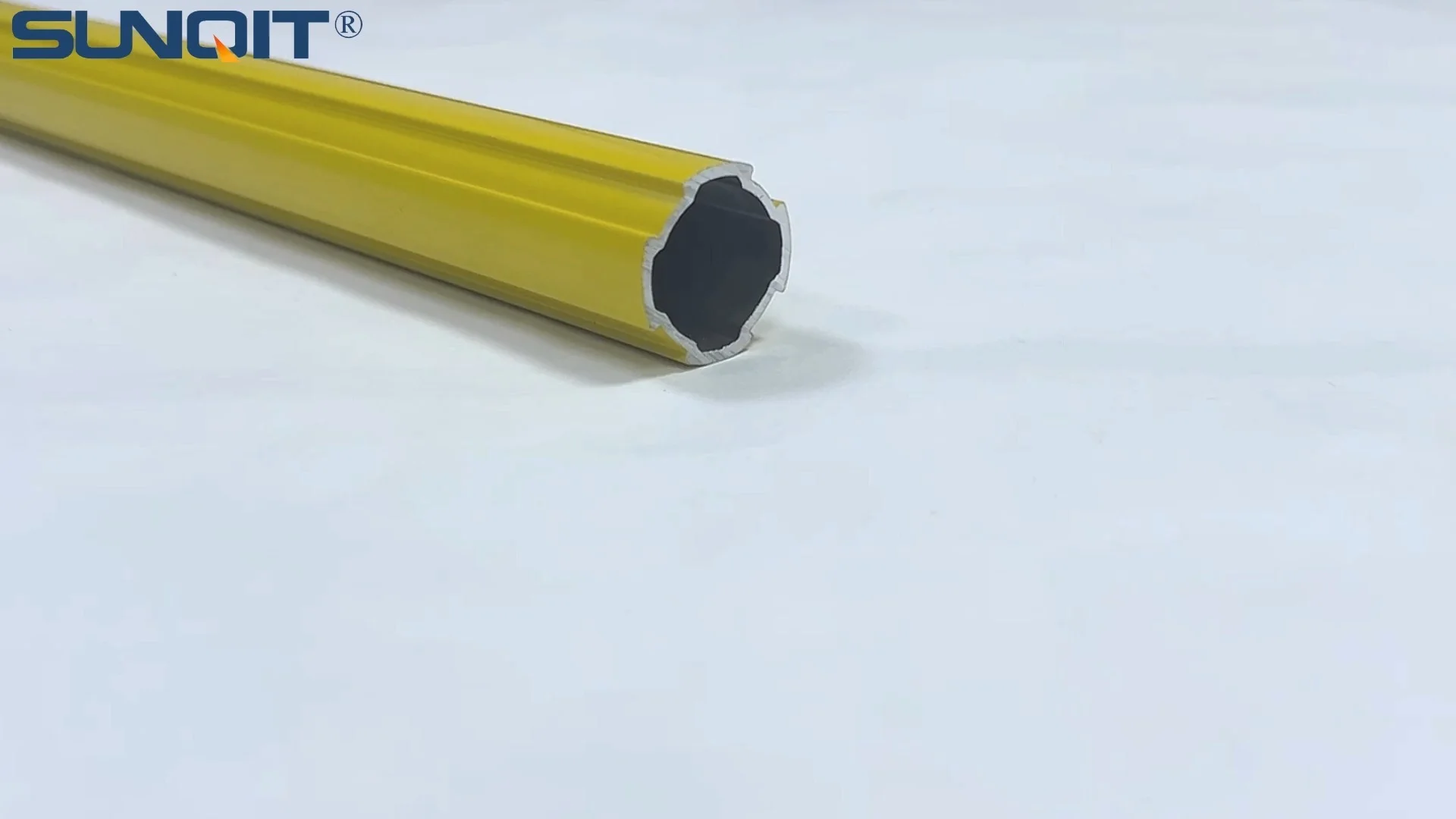
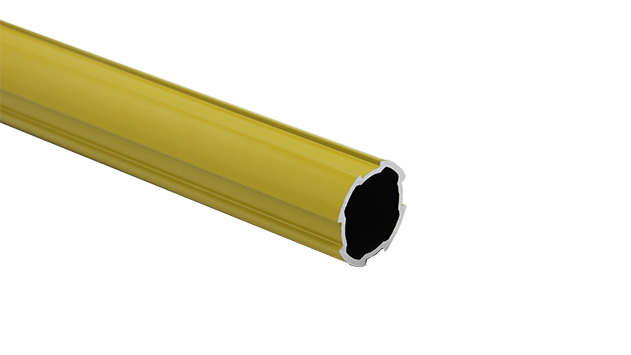
T Slot Aluminum Pipe
Aluminum pipe, it is used for workbench, flow rack,hand trolley assemble work with advantage of flexible and durable, yellow color makes it more attactive as a caution remind.
Manufacturing floors are more than just assembly lines and machines—they're living, breathing ecosystems where every tool, every workstation, and every material flow impacts the people behind the products. For years, many factories have limped along with rigid, outdated setups: workbenches bolted to the floor, conveyor systems that take weeks to reconfigure, and material racks that can't adapt to shifting production needs. These aren't just inefficiencies—they're silent drains on morale, creativity, and bottom lines. But what if there was a solution that felt less like a "system" and more like a partner? Enter T slot aluminum pipe: lightweight, modular, and surprisingly human-centric. In this article, we'll dive into real stories of manufacturers who swapped their frustrations for flexibility, and how T slot aluminum pipe became the backbone of their transformation.
From Stagnant to Swift: PrecisionTech's Workbench Revolution
PrecisionTech, a small electronics manufacturer in Ohio, had a problem that felt all too familiar: their workbenches were stuck in time. For over a decade, the team had relied on heavy wooden workstations built to fit a single product line—small circuit boards for home appliances. But as consumer demand shifted, so did their orders. One month, they'd be assembling smart thermostat components; the next, sensors for fitness trackers. Each new product meant jury-rigging the old benches with clamps, makeshift shelves, and even duct tape to fit new tools or larger circuit boards.
"I remember one Monday morning, we had a rush order for a new sensor model," says Jamie, the production supervisor. "The boards were 2 inches wider than our usual, so we spent two hours unscrewing the old wooden shelves, drilling new holes, and praying the bench didn't split. By the time we started production, we were already behind. The team was frustrated, and honestly? I was too. We were wasting time fixing the workspace instead of building products."
The breaking point came when a key client visited the factory. As Jamie walked them through the floor, the client pointed out the mismatched shelves and wobbly tool holders. "They didn't say anything outright, but I could see the concern," Jamie recalls. "We pride ourselves on precision, but our workbenches looked like a DIY project gone wrong." That afternoon, Jamie started researching alternatives—and stumbled on T slot aluminum pipe.
At first, the team was skeptical. "Aluminum? It looked so lightweight compared to our solid wood benches," says Mike, a lead assembler. "We thought it might not hold up to our daily use—screwdrivers dropped, circuit boards stacked, even the occasional coffee mug spill." But after a consultation with a local supplier, they agreed to test a single workstation: a T slot aluminum pipe workbench with adjustable shelves, tool hooks, and a cable management system built into the frame.
The installation day was eye-opening. Unlike the old wooden benches, which took two people and half a day to assemble, the T slot aluminum pipe workbench went up in under an hour. "We just clicked the aluminum profile accessories into place—no drilling, no sawing, no swearing," Mike laughs. "I adjusted the shelf height with a hex key in 30 seconds. It felt like playing with a really sturdy Lego set."
The real test came two weeks later, when another product change hit. This time, instead of hours of rework, Jamie and the team reconfigured the bench in 15 minutes. "We moved the shelf up, added a side rail for the new tools, and were back to assembling," Jamie says. "The team cheered—actual cheering on the production floor. That's when I knew we'd made the right call."
Six months in, the results speak for themselves. PrecisionTech has cut setup time for new products by 85%, reduced material waste from misplaced tools (thanks to the built-in hooks), and even seen a 12% boost in daily output. But the biggest win? Morale. "These benches feel like they're on our side," Mike says. "They adapt when we need them to, so we can focus on what we do best: building good products."
| Metric | Before (Wooden Workbenches) | After (T Slot Aluminum Pipe Workbenches) |
|---|---|---|
| Time to reconfigure for new products | 2–3 hours | 10–15 minutes |
| Daily output (units) | ~280 | ~315 |
| Worker-reported frustration (1–10 scale) | 7.2 | 2.8 |
| Tool misplacement incidents per week | 12 | 3 |
Today, PrecisionTech has replaced all 12 of their old workbenches with T slot aluminum pipe models. They've even added custom extensions using aluminum profile to create collaborative workstations for team problem-solving. "It's not just about the benches," Jamie says. "It's about feeling like we can keep up with the world now. And that? That's priceless."
Rolling Toward Efficiency: AutoStream's Roller Track Breakthrough
AutoStream, a mid-sized automotive parts supplier in Michigan, had a conveyor system that was the definition of "set it and forget it"—but not in a good way. For years, their assembly line for brake calipers relied on a heavy steel roller track that had been installed in the 1990s. It was durable, sure, but "durable" didn't mean "adaptable." When the company landed a contract to supply parts for electric vehicles (EVs), their old system hit a wall.
"EV brake calipers are lighter but have more intricate components," explains Raj, AutoStream's operations manager. "Our old roller track was built for heavier parts, so the calipers would slide too fast, causing jams. We needed to slow the flow, add side guides to keep parts aligned, and even create a small incline at one section to reduce manual lifting. But the steel track? It was welded in place. To make those changes, we'd have to shut down production for a week, hire a welder, and pray the modifications held."
The first shutdown cost them $45,000 in lost production. The second, three months later, cost even more. "Our clients were patient, but we could see the writing on the wall," Raj says. "If we couldn't adapt faster, we'd lose the EV contract. And that contract was 30% of our projected growth."
Desperate for a solution, Raj turned to a trade show, where he met a supplier showcasing aluminum profile roller track systems. "I was skeptical at first—aluminum seemed too soft compared to steel," he admits. "But then they demonstrated how the T slot aluminum pipe track connected. No welding, no bolts—just these little connectors that clicked into the slots. They adjusted the incline by adding a few aluminum profile supports, snapped on side guides, and had a custom track set up in 10 minutes. I thought, 'This is magic.'"
AutoStream decided to pilot the aluminum roller track on a small section of their line. The installation was scheduled for a weekend to avoid downtime. "We expected it to take all Saturday," Raj says. "Instead, two technicians had the 20-foot track up by noon. They even let our team help—showed us how to adjust the rollers, how to add or remove sections. It felt empowering."
The first week with the new track was a revelation. The EV calipers glided smoothly, no jams. When a design tweak required the track to be 6 inches wider, the team made the change in 45 minutes during a lunch break. "A lunch break!" Raj exclaims. "Before, that would have been a week of chaos. Now? We barely missed a beat."
"The best part? Our operators love it. Before, they'd strain their backs lifting parts that got stuck on the steel track. Now, the aluminum roller track flows so smoothly, they can focus on inspecting the calipers instead of wrestling with them. One operator, Maria, even said, 'This track cares about us.' I didn't expect that—equipment having a 'heart'—but it does. It's designed to make their jobs easier, not harder."
Six months later, AutoStream has replaced 80% of their steel roller track with aluminum profile systems. They've expanded the EV line, added a second shift, and reduced production errors by 18%—all because the track adapts as quickly as their needs do. "We're not just building parts anymore," Raj says. "We're building a factory that can grow with us. And that's all thanks to T slot aluminum pipe and that little roller track that started it all."
Clean Rooms, Clear Minds: MediBuild's Lean System Transformation
In the world of medical device manufacturing, precision isn't just a goal—it's a mandate. MediBuild, a California-based maker of surgical tools, operates in a strict cleanroom environment where even the smallest static charge or particle can ruin a batch of scalpels or forceps. For years, their workstations were built from stainless steel: sturdy, easy to sanitize, but heavy enough to require a forklift for repositioning. And worst of all? Stainless steel conducts static electricity, putting sensitive electronics at risk.
"We had ESD mats on the steel benches, but they'd wear out every few months," says Lina, MediBuild's quality control manager. "We'd spend thousands replacing them, and even then, we'd get occasional static-related defects. Plus, when we needed to rearrange the cleanroom for a new production layout—say, adding a station for a new tool design—we'd have to shut down for a full day. The steel benches weighed 300 pounds each. Moving them required four people and a lot of swearing. It was exhausting, and it made us dread process improvements."
The final straw came during an FDA audit. A inspector noted that the steel benches were difficult to clean thoroughly—gaps between the welded shelves trapped dust, even after deep cleaning. "That was a wake-up call," Lina says. "We needed a workstation that was ESD-safe, easy to sanitize, and light enough to move without a forklift. That's when we found T slot aluminum pipe ESD workbenches."
The supplier walked Lina through the specs: aluminum profile frames with ESD-safe coatings, shelves that could be removed for deep cleaning, and casters that locked securely to prevent movement during production. "They even let us test a sample bench in our cleanroom," she says. "We spilled isopropyl alcohol on it, scrubbed it with our sanitizing wipes, and checked for static. It passed every test. And when we needed to move it? Two people lifted it like it was nothing."
MediBuild replaced all 15 of their steel workstations with T slot aluminum pipe models over a single weekend. "The team was giddy," Lina laughs. "On Monday, everyone wanted to work at the new benches. They loved that the shelves adjusted with a twist of a knob, that the cable management built into the T slot kept wires from tangling, and that they could wipe down every surface without worrying about trapped dust."
The impact was immediate. Static-related defects dropped to zero. Cleaning time per workstation decreased by 40%. And when the next layout change came—a new tool requiring a longer assembly line—Lina's team rearranged six benches in 90 minutes. "No forklift, no shutdown, no stress," she says. "The FDA inspector came back six months later and said, 'Whatever you did to those workstations, keep doing it.' That's the best compliment we could ask for."
But the most unexpected benefit? Creativity. "Before, people avoided suggesting layout changes because they knew how painful they'd be," Lina says. "Now, our operators come to me with ideas: 'What if we angle the benches this way to reduce reaching?' 'Can we add a shelf here for tools?' It's like the workbenches gave them permission to innovate. And that's the real power of T slot aluminum pipe—it's not just a tool. It's a catalyst for the people who make the magic happen."
PrecisionTech, AutoStream, and MediBuild aren't anomalies. They're proof that manufacturing upgrades don't have to be cold, technical overhauls. When you choose tools designed with people in mind—like T slot aluminum pipe, aluminum profile, and modular roller track—you're not just improving efficiency. You're honoring the skill, dedication, and ingenuity of the teams who show up every day to build better products.
These stories share a common thread: frustration turned to freedom. Stagnation turned to adaptability. And perhaps most importantly, workplaces that once felt like obstacles became partners in progress. T slot aluminum pipe isn't just changing how factories operate—it's changing how people feel about their work. And in manufacturing, where the human touch is often overshadowed by machines, that's the greatest success story of all.