- Company Articles
- Products and Technology
- Product knowledge
- Customizable Castor Install Base Sizes for Unique Trolley and Rack Designs

Customizable Castor Install Base Sizes for Unique Trolley and Rack Designs
Related Product
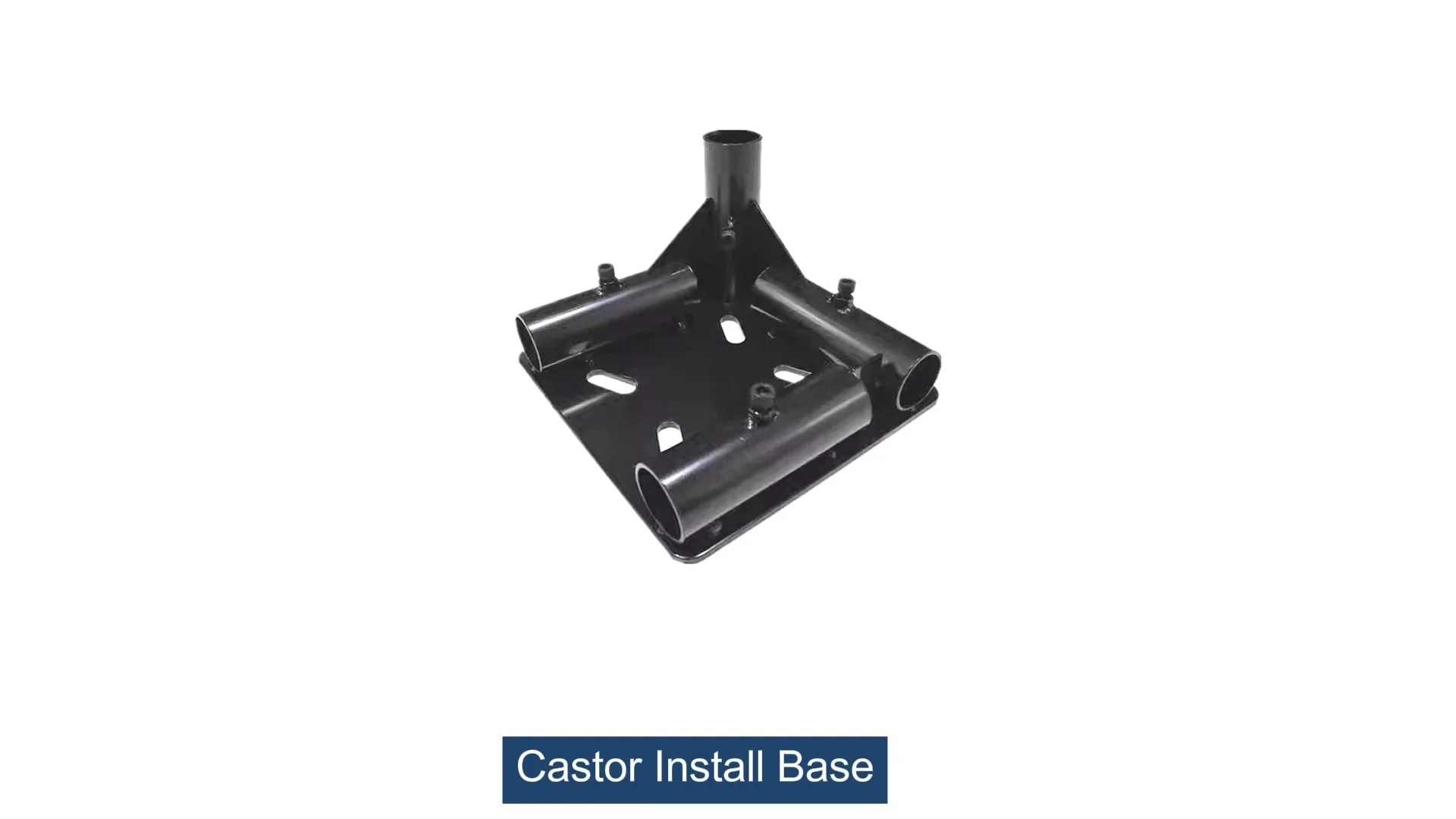
Castor Install Base
Castor install base, used for connection between pipe and castor, it can connect 4 pcs pipe by 1 pcs castor base, to make the structure strong and stable.
In the bustling world of warehouses, factories, and retail stockrooms, there's an unsung hero working behind the scenes to keep operations moving—quite literally. It's not the flashy machinery or the high-tech software, but something far more foundational: the castor install base. These unassuming components might not grab headlines, but they're the critical link between your turnover trolley and rack and the casters that make them mobile. Imagine a busy warehouse where workers glide loaded trolleys from station to station, or a manufacturing floor where material racks shift seamlessly to feed assembly lines—none of this happens without a reliable, well-fitted castor install base.
But here's the thing: not all trolleys and racks are created equal. A small parts trolley in an electronics workshop has very different needs than a heavy-duty material rack in an automotive plant. That's where customizable castor install base sizes step in. They're the quiet problem-solvers that turn generic equipment into tailored tools, ensuring safety, efficiency, and longevity in even the most unique work environments. In this article, we'll dive into why customizable castor install bases matter, how they integrate with everything from aluminum profile structures to everyday workbenches, and why one-size-fits-all solutions often fall short.
What Are Castor Install Bases, Anyway?
Let's start with the basics. A castor install base is the plate or bracket that connects a caster wheel to the bottom of a trolley, rack, or workbench. Think of it as the "middleman" between the equipment and the floor—it distributes the weight of the load, keeps the caster securely attached, and ensures smooth movement. Without a sturdy, well-sized base, even the best caster wheel will underperform. A too-small base might bend under heavy loads; a misaligned one could cause the trolley to wobble or get stuck. In short, the castor install base is the foundation of mobility in any workspace.
These bases come in all shapes and sizes, but their core job remains the same: to create a stable connection. They're typically made from metals like steel or aluminum (we'll talk more about aluminum profile later) for durability, and they feature pre-drilled holes or slots to attach casters and secure them to the trolley frame. Some bases are flat, others have raised edges for extra reinforcement, and many are designed to work with specific caster types—swivel, rigid, locking, or heavy-duty.
Why "One-Size-Fits-All" Bases Don't Cut It
Walk into any hardware store, and you'll find shelves of "universal" castor install bases. They're cheap, easy to find, and marketed as a "solution for everything." But in reality, "universal" often translates to "compromised." Here's why:
1. Load Capacity Mismatches
A small, lightweight base might work for a tool trolley holding 50kg, but slap it on a material rack loaded with 300kg of automotive parts, and you're asking for trouble. Overloading a base can lead to bending, cracking, or even caster detachment—putting workers at risk of injury and damaging expensive inventory. Customizable sizes let you choose a base rated for your exact load, whether it's 100kg or 1000kg.
2. Trolley and Rack Design Variability
Turnover trolley and rack designs are as unique as the businesses that use them. One might have a narrow frame for navigating tight warehouse aisles; another could be extra-wide to hold bulkier items. A standard base might not align with the trolley's frame holes, forcing workers to drill new ones (weakening the structure) or use ill-fitting hardware. Custom bases are designed to match your trolley's exact dimensions, ensuring a perfect fit from day one.
3. Floor and Environment Challenges
Not all floors are created equal. A smooth concrete floor in a modern factory handles casters differently than a rough, uneven warehouse floor with cracks and debris. A base that's too low might catch on bumps, while one that's too high could raise the trolley's center of gravity, making it prone to tipping. Custom sizes let you adjust height and width to suit your floor conditions, keeping movement smooth and safe.

Key Factors to Consider When Customizing Your Castor Install Base
Customizing a castor install base isn't just about picking a bigger or smaller plate—it's about aligning the base with your specific needs. Here are the critical factors to keep in mind:
1. Total Load Weight
Start by calculating the maximum weight your trolley or rack will carry. This includes the weight of the trolley itself plus the materials it holds. As a rule of thumb, add 20% to this number to account for unexpected loads (e.g., a worker leaning on the trolley). A base's load capacity should exceed this total to ensure safety.
2. Trolley/Rack Dimensions
Measure the distance between the trolley's frame rails where the base will attach. The base should span this distance to distribute weight evenly. For example, a narrow trolley with 30cm between rails needs a base that's at least 25cm wide to avoid overhanging edges, which can catch on obstacles.
3. Material Choice: Why Aluminum Profile Stands Out
While steel is a traditional choice for bases, aluminum profile is gaining popularity for its versatility and lightweight strength. Aluminum is corrosion-resistant, making it ideal for humid environments (like food processing plants) or outdoor use. It's also easy to machine, so custom holes or slots can be added without weakening the material. Plus, aluminum's lighter weight reduces the overall load on casters, extending their lifespan. For businesses prioritizing flexibility and durability, aluminum profile bases are a smart investment.
4. Caster Type and Accessories
Your caster and accessories will influence the base design. Swivel casters, for example, need a base with enough clearance to rotate freely without hitting the trolley frame. Locking casters might require extra space for the brake mechanism. If you're using heavy-duty casters with large wheels, the base should be wide enough to support their mounting plate without overhang.

Common Castor Install Base Sizes and Their Applications
To give you a better sense of how sizing works, here's a breakdown of standard and custom sizes, along with their typical uses. Remember, these are starting points—your unique needs might call for something in between!
| Base Size (Length x Width) | Material | Max Load Capacity | Ideal Applications |
|---|---|---|---|
| 10cm x 10cm | Steel/Aluminum | Up to 100kg | Small tool trolleys, workbench accessories |
| 15cm x 15cm | Aluminum Profile | 100kg – 250kg | Medium turnover trolleys, retail display racks |
| 20cm x 20cm | Steel/Aluminum | 250kg – 500kg | Heavy-duty material racks, warehouse trolleys |
| Custom (e.g., 25cm x 30cm) | Reinforced Steel/Aluminum | 500kg+ | Industrial machinery trolleys, oversized component racks |

Real-World Impact: How Custom Bases Transform Workspaces
Still not convinced that custom castor install bases are worth the investment? Let's look at two hypothetical (but realistic) scenarios:
Scenario 1: The Electronics Manufacturer
A small electronics plant uses narrow turnover trolleys to move circuit boards between assembly stations. Their original "universal" 10cm x 10cm steel bases were too wide for the trolley frames, causing the trolleys to wobble. Workers reported back pain from steadying the carts, and several circuit boards were damaged when trolleys tipped. After switching to custom 8cm x 12cm aluminum profile bases (designed to fit their trolley's unique rail spacing), wobbling stopped, damage decreased by 90%, and worker complaints dropped. The lightweight aluminum also made the trolleys easier to push, cutting assembly line delays by 15%.
Scenario 2: The Warehouse Distribution Center
A large warehouse used standard 20cm x 20cm bases on their material racks, which often carried 400kg loads. The bases were rated for 500kg, but the warehouse's uneven concrete floors caused excessive stress on the base corners, leading to cracks. After switching to custom 25cm x 25cm reinforced steel bases with raised edges (to better distribute weight on uneven floors), base replacements dropped from once every 3 months to once a year. The warehouse saved $12,000 annually on replacement costs and reduced downtime from unexpected cart failures.
Accessories and Compatibility: Making Your Base Work Harder
A great castor install base is even better when paired with the right accessories. Here are a few must-consider add-ons:
1. Locking Mechanisms
Many caster and accessories include brakes, but your base needs to accommodate them. Look for bases with extra clearance or mounting holes for brake levers, ensuring easy access for workers to lock/unlock the trolley when loading/unloading.
2. Anti-Slip Pads
For workbenches or stationary racks that occasionally move, anti-slip pads on the base prevent unwanted sliding on smooth floors. They're a simple add-on that boosts safety in busy workspaces.
3. Corrosion-Resistant Coatings
If your workspace is humid (e.g., a food or pharmaceutical plant) or exposed to chemicals, opt for bases with zinc plating or powder coating. This adds a layer of protection against rust and corrosion, extending the base's life.
Maintenance Tips to Keep Your Bases (and Trolleys) Rolling
Even the best custom base needs regular care to perform its best. Here's how to keep yours in top shape:
- Inspect monthly: Check for cracks, bent edges, or loose bolts. Tighten any loose hardware immediately—even a slightly loose bolt can cause uneven weight distribution.
- Clean regularly: Wipe down bases with a damp cloth to remove dirt and debris, which can scratch the surface and lead to corrosion. For aluminum profile bases, avoid abrasive cleaners that can damage the finish.
- Lubricate caster joints: While this is technically for the caster, it helps reduce stress on the base. A few drops of lubricant on swivel joints every 3 months keeps movement smooth and prevents unnecessary strain.
- replace when needed: If you notice cracks, significant bending, or rust that can't be cleaned, replace the base immediately. Waiting can lead to safety hazards or damage to your trolley/rack.
Final Thoughts: Invest in the Foundation of Mobility
Castor install bases might not be the most glamorous part of your workspace, but they're the backbone of efficiency, safety, and productivity. By choosing customizable sizes tailored to your turnover trolley and rack designs, load capacities, and environment, you're not just buying a part—you're investing in a smoother, safer, and more cost-effective operation. Whether you opt for durable aluminum profile or heavy-duty steel, remember: the right base size isn't a luxury; it's a necessity.
So, the next time you're shopping for trolley or rack components, don't overlook the castor install base. Take the time to measure, calculate, and customize—and watch how this small change makes a big difference in your daily operations.