- Company Articles
- Products and Technology
- Solution
- Customizable Free Flow Chain Conveyor Solutions for Warehousing Logistics

Customizable Free Flow Chain Conveyor Solutions for Warehousing Logistics
Related Product
Free Flow Chain Conveyor
The free flow conveyor system uses a free flow chain that can increase the speed of the tooling board that supports the products. This can improve the efficiency and quality of the production process, as well as reduce the wear and tear of the system.
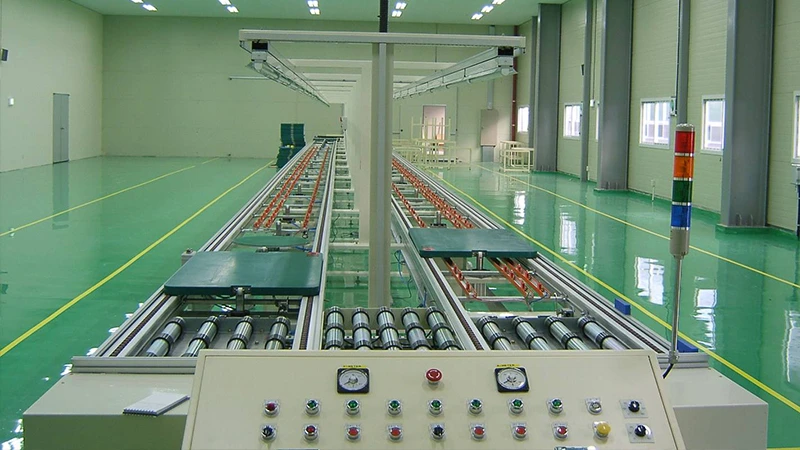
In today's fast-paced warehousing and logistics landscape, efficiency isn't just a goal—it's the backbone of staying competitive. Every day, warehouses juggle diverse products, tight deadlines, and ever-changing demand, all while trying to maximize space and minimize errors. The difference between a smooth operation and a chaotic one often comes down to the tools that keep things moving. Enter the free flow chain conveyor: a versatile, adaptable system designed to turn bottlenecks into streamlined pathways. But what makes these conveyors truly game-changing isn't just their ability to move goods—it's their capacity to be tailored to fit your unique workflow. Let's dive into how customizable free flow chain conveyor solutions are redefining warehousing logistics, one tailored component at a time.
What Are Free Flow Chain Conveyors, Anyway?
At their core, free flow chain conveyors are material handling systems built to move products with minimal friction, often using a combination of gravity and gentle mechanical assistance. Unlike rigid, one-size-fits-all conveyors, these systems are designed to be flexible—think of them as the "building blocks" of material flow. They consist of a series of rollers or chains mounted on a frame, allowing items to glide from one point to another with little resistance. But what sets them apart is their focus on customization : everything from the length and width of the track to the type of rollers and frame material can be adjusted to match the specific needs of your warehouse.
Whether you're moving small electronic components or bulky cartons, free flow chain conveyors adapt. They're especially valuable in environments where product sizes, weights, or throughput demands vary—common scenarios in e-commerce, manufacturing, and third-party logistics (3PL) operations. And when paired with complementary tools like flow racks or workbenches, they create a cohesive ecosystem that transforms how your team handles inventory.
Why Customization Matters: Designing for Your Unique Workflow
No two warehouses are identical. A pharmaceutical facility might need conveyors that comply with strict cleanliness standards, while a automotive parts distributor prioritizes durability for heavy loads. Customization ensures your conveyor system doesn't just "fit" your space—it enhances it. Here's how the key customizable features address real-world challenges:
1. Frame Material: Balancing Strength and Flexibility
The frame is the backbone of your conveyor, and choosing the right material is critical. Many modern systems use aluminum profile frames for their winning combination of lightweight design and strength. Aluminum resists corrosion, making it ideal for humid or temperature-fluctuating environments, and its modular nature means you can easily add or remove sections as your needs change. For heavier-duty applications, steel frames are also an option, but aluminum profile remains a top choice for warehouses prioritizing agility and long-term cost savings.
2. Roller Track Design: Tailoring Movement to Your Products
The roller track is where the magic happens—literally. The spacing between rollers, their diameter, and the material they're made from directly impact how smoothly products move. For example, small, fragile items like electronics benefit from closer roller spacing to prevent tipping, while larger boxes can handle wider gaps. Roller materials also vary: plastic rollers are gentle on delicate surfaces and often ESD-safe (static-resistant), while steel rollers tackle heavy loads with ease. Some systems even offer swivel roller balls for omnidirectional movement, perfect for sorting stations where products need to change direction quickly.
3. Length, Height, and Layout: Making the Most of Your Space
Warehouses are often constrained by space, so conveyor systems need to work with the layout, not against it. Customizable lengths let you connect distant areas—say, from a back storage room to a front packing station—without wasting floor space. Adjustable heights ensure the conveyor aligns with existing equipment, like flow racks or workbenches, creating a seamless "pick-and-pass" workflow. Even the angle of the track can be tweaked: a slight incline uses gravity to move products, reducing energy costs, while a flat layout is better for controlled, motorized movement.
4. Integration with Existing Systems
A conveyor shouldn't exist in isolation. The best systems integrate with tools you already use, like flow racks for storage or workbenches for packing. For example, a free flow chain conveyor might feed directly into a workbench where employees pack orders, with roller tracks ensuring products arrive at the right height and speed. This integration eliminates manual lifting, reduces errors, and keeps your team focused on high-value tasks instead of moving goods by hand.
Key Components: The Building Blocks of a Reliable System
A customizable free flow chain conveyor is only as good as its parts. Let's break down the essential components that make these systems tick, and how they contribute to a smoother workflow:
| Component | Function | Customization Options |
|---|---|---|
| Aluminum Profile Frame | Provides structural support; holds rollers and tracks in place. | Available in various widths (e.g., 2020, 3030, 4040 profiles); cut to custom lengths; compatible with T-slot accessories for easy modification. |
| Roller Track | Enables smooth product movement via rotating rollers. | Roller spacing (50mm–150mm); roller material (plastic, steel, aluminum); ESD-safe options; swivel or fixed roller designs. |
| Flow Racks | Stores products and feeds them onto the conveyor via gravity. | Number of rows/levels; depth; roller track integration; adjustable dividers for mixed product sizes. |
| Workbench | Serves as a station for packing, sorting, or quality checks at the conveyor end. | Height-adjustable; single/double deck; with/without casters; ESD-safe tops; integrated tool storage. |
These components work together to create a system that's not just functional, but future-proof. For instance, if your business expands and you need to add a new sorting station, aluminum profile frames make it easy to extend the conveyor, while extra roller track sections can be swapped in without overhauling the entire setup. This modularity is why so many warehouses choose customizable free flow chain conveyors—they grow with your business.
The Impact of Customization: Beyond "Just Moving Goods"
Investing in a customizable free flow chain conveyor isn't just about moving products from A to B—it's about transforming your warehouse's efficiency, safety, and bottom line. Here's how these systems deliver tangible benefits:
1. Faster Throughput, Less Labor
Manual material handling is slow and error-prone. A well-designed conveyor system reduces the need for employees to carry or push heavy items, cutting down on time spent moving goods and freeing up staff to focus on tasks like order accuracy or customer service. In busy seasons—like Black Friday for e-commerce—this speed boost can mean the difference between meeting shipping deadlines and falling behind.
2. Reduced Product Damage
Rough handling is a leading cause of product damage in warehouses. Free flow chain conveyors with soft-start motors and gentle roller tracks minimize jostling, keeping items intact. For industries like retail or electronics, where damaged goods eat into profits, this is a game-changer. Custom roller materials—like plastic for fragile items—add an extra layer of protection.
3. Space Optimization
Warehouse space is expensive, and a one-size-fits-all conveyor can waste valuable square footage. Custom layouts let you weave conveyors around existing structures, use vertical space with elevated tracks, or create compact loops for sorting. Aluminum profile frames are also lightweight, so they don't require reinforced flooring, opening up more layout possibilities.
4. Scalability for Growth
Businesses rarely stay the same, and your conveyor system shouldn't either. As you add new product lines, expand your facility, or increase order volume, customizable components let you upgrade without replacing the entire system. Need to add a new branch to the conveyor? Simply order extra aluminum profile sections and roller track. Want to handle heavier loads? Swap out plastic rollers for steel ones. This scalability ensures your initial investment continues to pay off for years.
Real-World Applications: Where Custom Conveyors Shine
Customizable free flow chain conveyors aren't just theoretical—they're solving problems in warehouses across industries. Let's look at a few examples of how businesses are using them to drive results:
E-Commerce Fulfillment Centers
During peak shopping seasons, e-commerce warehouses face a flood of small to medium-sized packages. A major online retailer recently upgraded to a free flow chain conveyor system with aluminum profile frames and variable roller spacing. By integrating flow racks at the start of the line (to store products) and workbenches at the end (for packing), they reduced order processing time by 35%. The system's ESD-safe roller track also protected electronics from static damage, cutting returns by 20%.
Automotive Parts Distribution
Automotive parts come in all shapes and sizes—from tiny screws to bulky engine components. A parts distributor in the Midwest opted for a customizable system with steel roller tracks for heavy items and plastic rollers for smaller parts. They also added swivel roller balls at sorting stations to quickly redirect products to different shipping lanes. The result? A 50% reduction in manual lifting injuries and a 40% increase in daily order shipments.
Pharmaceutical Warehousing
Pharmaceutical warehouses require strict compliance with standards and temperature control. A pharmaceutical distributor used aluminum profile frames (easy to clean and corrosion-resistant) and smooth plastic roller tracks (to prevent dust buildup) to create a conveyor system that meets FDA guidelines. They also added adjustable speed controls to ensure delicate medications aren't jostled, and integrated barcode scanners along the track for real-time inventory tracking. This customization helped them pass regulatory audits with ease and reduce medication handling errors by 25%.
Conclusion: Your Warehouse, Your Way
In the world of warehousing logistics, "one size fits all" is a thing of the past. Today's operations demand systems that adapt to their unique challenges—whether that's tight space, diverse products, or fluctuating demand. Customizable free flow chain conveyors, with their aluminum profile frames, versatile roller tracks, and seamless integration with flow racks and workbenches, offer exactly that: a tailored solution that moves goods efficiently, protects products, and grows with your business.
By focusing on customization, you're not just buying a conveyor—you're investing in a workflow that works for you . It's about turning chaos into order, manual labor into automation, and static spaces into dynamic hubs of productivity. So, if you're ready to transform how your warehouse operates, start with a system that's designed to fit your needs from the ground up. After all, the best logistics solutions aren't just built—they're crafted .