- Company Articles
- Products and Technology
- Product knowledge
- Customization Options for 3030b EU Standard Aluminum Profile: Cut-to-Length & Finishes

Customization Options for 3030b EU Standard Aluminum Profile: Cut-to-Length & Finishes
Related Product
3030B EU Standard Aluminum Profile
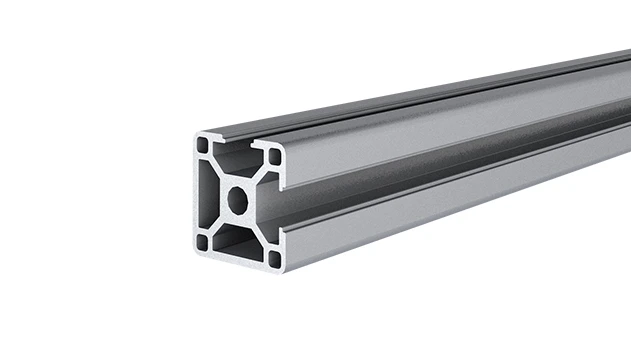
3030 is a 3.00 x 3.00CM fractional 30 series square extrusion T-slot profile with two side open T-slots, each side with 3.00cm face, 2 side with open slot, 2 side with closed face. The profile has align-a-grooves to assist in aligning connecting profiles.
Walk into any modern factory, workshop, or even a high-end retail store, and you'll likely spot the unsung hero of industrial design: aluminum profiles. These sleek, versatile structures form the backbone of workbenches, shelving units, machine frames, and everything in between. But not all aluminum profiles are created equal. For projects that demand precision, durability, and a perfect fit, the 3030b EU Standard Aluminum Profile stands out as a top choice. What makes it even more powerful? The ability to customize it—specifically, cut-to-length services and tailored finishes. In this article, we'll dive into why these customizations matter, how they work, and how they can transform your next project from "good enough" to "exactly right."
What is 3030b EU Standard Aluminum Profile, Anyway?
Before we get into customization, let's make sure we're all on the same page about the star of the show: the 3030b EU Standard Aluminum Profile. Part of the broader family of aluminum extrusion profiles , this particular profile is defined by its dimensions (30mm x 30mm cross-section) and adherence to EU manufacturing standards. That means consistent quality, precise tolerances, and compatibility with a wide range of aluminum profile accessories —think connectors, end caps, and brackets—from suppliers across Europe and beyond.
But why 30mm x 30mm? It's a sweet spot. Not too bulky for lightweight applications, yet sturdy enough to support moderate loads. Whether you're building a small workbench for a home garage or a large-scale material rack for a factory floor, the 3030b profile offers the rigidity and flexibility to get the job done. Its T-slot design (those grooves running along the length) is another key feature—they let you slide in accessories, fasten components, or even add panels without drilling holes, making assembly a breeze.
So, if the 3030b is already a "standard" profile, why customize it? Here's the thing: no two projects are identical. A furniture designer might need 1.2-meter lengths for a custom bookshelf, while an automotive plant could require 4.5-meter sections for an assembly line frame. Similarly, a profile used in a damp warehouse needs a corrosion-resistant finish, whereas one in a retail display might need a bold, glossy color to match branding. Customization—specifically cut-to-length and finishes—turns a "one-size-fits-most" product into a "made-just-for-you" solution.
The Importance of Customization: Why "Off-the-Shelf" Isn't Always Enough
Let's start with a scenario. Imagine you're managing a small electronics manufacturing workshop. You need to build 10 custom test stations, each with a frame made from 3030b aluminum profile. The standard length for these profiles is 6 meters, which is great for large-scale projects but way more than you need. If you buy 6-meter lengths, you'll end up cutting them down to 1.5 meters each—wasting material, time, and money on sawing, deburring, and cleanup. Plus, if your cuts aren't precise, the frames might wobble or misalign, throwing off your entire setup.
Now, picture the same workshop, but this time you order the 3030b profiles pre-cut to 1.5 meters. No waste, no extra labor, and every piece is exactly the same length. That's the power of cut-to-length. Similarly, if those test stations are going in a cleanroom where aesthetics matter, a plain aluminum finish might look too industrial. A smooth, powder-coated finish in your company's brand color? Suddenly, your functional test stations also reflect your professionalism.
Customization isn't just about convenience—it's about efficiency, cost savings, and quality. It reduces material waste (which is better for the environment, too), minimizes labor time, and ensures that every component fits perfectly the first time. For businesses, that translates to faster project timelines, lower costs, and a final product that meets (or exceeds) expectations.

Cut-to-Length Services: Precision at Your Fingertips
Let's dive deeper into cut-to-length services—the first major customization option for 3030b profiles. At its core, cut-to-length is exactly what it sounds like: a supplier cuts the aluminum profile to your specified length before shipping it to you. But there's more to it than just grabbing a saw and trimming. Modern suppliers use advanced equipment to ensure precision, consistency, and clean edges—all critical for a professional result.
How Cut-to-Length Works
The process starts with you, the customer, providing the exact length(s) you need. Reputable suppliers will ask for details like: total number of pieces, desired length per piece (down to the millimeter), and any special requirements (e.g., "square cuts only" or "deburr all edges"). Once you confirm, the supplier gets to work. Most use CNC (Computer Numerical Control) saws or precision cutting machines, which are programmed to cut with incredible accuracy—often within ±0.1mm. That's tighter than the width of a human hair, ensuring every piece is identical.
After cutting, the edges are deburred (smoothed out to remove sharp corners) and cleaned to remove any aluminum shavings. Some suppliers even offer additional services like chamfering (beveling the edges for safety or aesthetics) or drilling holes at specific points—though that's often considered an extra customization. The finished pieces are then packaged to prevent scratching during shipping, so they arrive ready to assemble.
The Benefits of Cut-to-Length
So, why pay a little extra for pre-cut profiles instead of doing it yourself? Let's break down the advantages:
- Material Savings: No more buying longer lengths than you need. You pay for exactly what you use, reducing waste (and landfill impact).
- Time Savings: Skip the cutting, deburring, and cleanup. Your team can start assembling immediately, speeding up project timelines.
- Precision: CNC machines guarantee consistency. Every piece is the same length, so your assemblies align perfectly—no more "this one is a millimeter too short" headaches.
- Safety: Sharp, uneven edges from DIY cuts can cause injuries. Pre-cut profiles have smooth, deburred edges, making handling safer.
- Cost Efficiency: While there's a small premium for cut-to-length, the savings on labor, material waste, and rework often make it cheaper in the long run.
Who benefits most from cut-to-length? Just about anyone! Small workshops save on labor, large factories ensure consistency across batches, and even hobbyists get professional results without investing in expensive cutting tools. It's a customization that scales to fit any project size.
Finishes: More Than Just Looks—Protection, Durability, and Branding
Now, let's talk about finishes. The "raw" aluminum finish of a 3030b profile is functional—it's corrosion-resistant to a degree, lightweight, and has a clean, industrial look. But in many cases, you need more. Maybe you're using the profile outdoors, where rain and humidity could cause oxidation. Or you want it to match a specific color scheme. Or perhaps you need a texture that's slip-resistant for safety. Finishes transform the profile's appearance and performance, making them a critical customization option.
There are several common finishes for 3030b aluminum profiles, each with its own benefits and best-use cases. Let's explore the most popular ones:
Anodizing: The Classic Choice for Durability
Anodizing is one of the most widely used finishes for aluminum profiles, and for good reason. It's an electrolytic process that creates a protective oxide layer on the surface of the aluminum, making it harder, more scratch-resistant, and highly corrosion-resistant. Think of it as adding a "armor" layer that's integrated into the metal itself (unlike paint, which sits on top).
Anodized finishes come in natural (silver/gray) or dyed colors like black, blue, or gold. The natural finish is popular for industrial applications where aesthetics take a backseat to functionality—it has a matte, slightly textured look that hides fingerprints and minor scratches. Dyed anodizing adds color without sacrificing durability, making it great for applications where both performance and appearance matter, like retail displays or medical equipment.
One of the best things about anodizing is its eco-friendliness. The process uses water-based electrolytes, and the finished product is 100% recyclable. It's also low-maintenance—just wipe it down with a damp cloth to keep it looking new. For outdoor use, anodized 3030b profiles can withstand rain, UV rays, and even salt spray (in marine environments), making them a top choice for outdoor kiosks or garden structures.
Powder Coating: Color, Gloss, and Versatility
If you're looking for bold colors, a glossy finish, or a specific texture, powder coating is the way to go. Unlike anodizing, which is a chemical process, powder coating involves applying a dry powder (usually polyester) to the aluminum surface using an electrostatic gun, then baking it in an oven. The heat melts the powder, forming a hard, even coating that adheres tightly to the metal.
The color options here are almost endless—from bright reds and blues to subtle pastels, metallic shades, or even custom Pantone matches. You can also choose the finish: matte, satin, gloss, or even textured (like a "hammered" or "wrinkled" look) to hide imperfections. This makes powder coating ideal for branding—imagine a retail store using 3030b profiles powder-coated in their signature green to build product displays that stand out.
Durability-wise, powder coating is tough. It resists chipping, fading, and corrosion, and it's more flexible than paint, so it won't crack if the profile bends slightly. It's also thicker than anodizing (typically 50-150 microns vs. 5-20 microns for anodizing), which adds an extra layer of protection. That said, it's not as hard as anodized aluminum, so it might scratch more easily in high-wear areas. For most indoor applications, though, it's more than up to the task.
Electrophoretic Coating: Smooth, Uniform, and Corrosion-Resistant
Electrophoretic coating (also called "e-coating") is a lesser-known but highly effective finish, especially for parts that need a smooth, uniform look. It works by submerging the aluminum profile in a water-based paint bath and applying an electric current, which draws the paint particles to the metal surface. The result is a thin (10-30 microns), even coating that covers every nook and cranny—including the inside of the T-slots, which can be hard to reach with other methods.
E-coating is often used as a base coat under powder coating for extra corrosion resistance, but it can also be used alone for a sleek, matte finish. It's available in limited colors (mostly black, white, or gray), but it's highly durable and eco-friendly (low VOC emissions). If you're building something like a medical cart or a cleanroom fixture where a smooth, non-porous surface is critical (to prevent bacteria buildup), electrophoretic coating is a solid choice.
Mechanical Finishes: Texture and Grip
For applications where texture or grip is more important than color, mechanical finishes are the way to go. These include brushing (creating fine, parallel lines for a "brushed aluminum" look), sandblasting (using abrasive particles to create a rough, matte texture), or polishing (for a mirror-like shine). Brushed finishes are popular in consumer electronics or furniture, where they add a modern, industrial-chic vibe. Sandblasted finishes, on the other hand, are great for non-slip surfaces or for hiding fingerprints in high-touch areas.
Mechanical finishes are often combined with other processes—for example, a brushed finish followed by clear anodizing to protect the texture and add corrosion resistance. They're less about color and more about feel and appearance, making them a favorite for high-end or design-focused projects.
Comparing Finishes: Which One is Right for You?
With so many options, choosing the right finish can feel overwhelming. To simplify, let's break down the key factors: durability, color options, texture, cost, and application. Here's a quick comparison:
| Finish Type | Durability (Scratch/Corrosion) | Color Range | Texture/Appearance | Best For |
|---|---|---|---|---|
| Anodizing (Natural) | High (Hard, corrosion-resistant) | Limited (Silver/gray, some dyed options) | Matte, slightly textured | Industrial equipment, outdoor use, marine environments |
| Anodizing (Dyed) | High (Same as natural, with color) | Moderate (Blacks, blues, golds, reds) | Matte to semi-gloss | Medical devices, retail displays, architectural trim |
| Powder Coating | Medium-High (Tough, flexible, chip-resistant) | Extensive (Any color, custom matches, metallic, textured) | Matte, satin, gloss, or textured | Branded displays, furniture, indoor/outdoor structures |
| Electrophoretic Coating | High (Uniform, corrosion-resistant) | Limited (Black, white, gray) | Smooth, matte | Cleanrooms, medical carts, parts with complex shapes |
| Mechanical (Brushed/Sandblasted) | Medium (Depends on topcoat; bare metal is less corrosion-resistant) | Natural aluminum (can be clear-coated) | Textured (brushed lines, matte sandblasted) | High-end furniture, consumer electronics, decorative trim |
Aluminum Profile Accessories: Customization Doesn't Stop at the Profile
A customized 3030b profile is only as good as the accessories that go with it. After all, even the perfect length and finish won't matter if your connectors don't fit or your end caps are the wrong size. That's why it's crucial to work with a supplier who offers compatible aluminum profile accessories —and who understands how custom profiles and accessories work together.
Let's start with connectors. The 3030b profile uses standard T-slot connectors, but if you've customized the length or finish, you need to ensure the connectors are the right size and material. For example, if you're using anodized profiles in a food processing plant, you might need stainless steel connectors to match the corrosion resistance. Or, if you've powder-coated the profiles in a custom color, you might want color-matched plastic end caps to keep the look consistent.
End caps are another small but important accessory. They plug the ends of the profiles, preventing dust, debris, or moisture from getting inside the T-slots, and they also give the finished project a polished, professional look. Most suppliers offer end caps in various materials (plastic, aluminum) and colors, including options that match powder-coated or anodized finishes.
Other accessories to consider include brackets (for joining profiles at angles), hinges (for foldable structures), panel mounts (for attaching plywood or acrylic panels to the T-slots), and even casters (for mobile workbenches or carts). The key here is compatibility: a reputable aluminum profile supplier will ensure that their custom-cut and finished profiles work seamlessly with their accessories, so you don't have to worry about mismatched parts or loose connections.
For example, if you order 3030b profiles cut to 2-meter lengths with a black powder-coated finish, your supplier should be able to provide black plastic end caps, black powder-coated brackets, and stainless steel connectors that fit perfectly. This not only saves time but also ensures the entire structure is strong, durable, and visually cohesive.
Real-World Applications: How Customized 3030b Profiles Make a Difference
To really understand the impact of cut-to-length and finishes, let's look at some real-world examples of how customized 3030b profiles are used across industries.
Manufacturing & Assembly Lines
In automotive manufacturing, precision is everything. A car parts supplier might use 3030b profiles to build workstations where workers assemble engine components. These workstations need to be exactly 2.4 meters long to fit the assembly line layout, so cut-to-length services ensure every frame is uniform. The profiles are then anodized to resist oil, grease, and coolant, keeping the workstations looking clean and preventing corrosion over time. Add in aluminum brackets and panel mounts, and you've got a durable, functional workstation that integrates seamlessly into the production process.
Retail & Display
A clothing brand opening a new store wants displays that reflect their modern, minimalist aesthetic. They use 3030b profiles powder-coated in their signature white to build custom clothing racks and shelving units. The profiles are cut to specific lengths to fit the store's layout—1.8 meters for wall-mounted racks, 2.1 meters for free-standing units. Clear anodized aluminum brackets and white plastic end caps keep the look sleek and consistent, while the powder coating ensures the displays stay bright and chip-free even with daily customer interaction.
Medical & Laboratory Equipment
A lab equipment manufacturer needs to build mobile test carts for a hospital. The carts must be easy to clean, corrosion-resistant, and sturdy enough to hold heavy equipment. They choose 3030b profiles cut to 1.2-meter lengths (to fit through hospital doorways) with anodized finishes for durability and easy sanitization. Electrophoretic coating on the connectors and brackets adds an extra layer of corrosion resistance, and rubber casters (another accessory) make the carts easy to move. The result is a cart that meets strict medical standards and lasts for years in a demanding environment.
Aerospace & Defense
Aerospace components require lightweight yet strong structures. A defense contractor might use 3030b profiles to build frames for avionics testing equipment. The profiles are cut to precise lengths (down to the millimeter) to ensure the frame can hold sensitive instruments without flexing. A clear anodized finish protects against corrosion in humid testing environments, and stainless steel connectors add strength without adding weight. The T-slot design lets engineers easily attach sensors and wiring, making the equipment adaptable for different tests.
Choosing the Right Supplier: What to Look For
Customizing 3030b profiles is only as good as the supplier doing the work. To ensure you get the best results, here are a few key things to look for in an aluminum profile supplier:
- Precision Cutting Equipment: Ask about their cutting technology. Do they use CNC saws? What's their tolerance (aim for ±0.1mm or better)? Can they handle small batches (like 10 pieces) and large orders (like 1000+ pieces) with the same accuracy?
- Finishing Expertise: Do they offer in-house finishing, or do they outsource it? In-house finishing is better for quality control. Ask about their anodizing line (what thicknesses can they achieve?), powder coating capabilities (can they match custom colors?), and quality testing (do they check for adhesion or corrosion resistance?).
- Accessory Compatibility: Do they offer a full line of accessories (connectors, end caps, brackets) that work with their 3030b profiles? Can they customize accessories to match your finish (e.g., color-matched end caps)?
- Certifications: Look for ISO 9001 certification (for quality management) and ISO 14001 (for environmental management, if sustainability matters to you). EU standard compliance is also a must for 3030b profiles.
- Customer Service: Do they have technical support to help you choose the right finish or calculate lengths? Can they provide samples (a small cut piece with your desired finish) before you place a large order? What's their lead time for custom orders?
A reliable supplier will walk you through the customization process, answer your questions, and even offer suggestions based on your project needs. For example, if you're unsure whether anodizing or powder coating is better for your application, they should explain the pros and cons based on your environment, budget, and aesthetic goals.
Conclusion: Customization = Confidence
The 3030b EU Standard Aluminum Profile is already a versatile, reliable choice for countless projects. But when you add cut-to-length services and tailored finishes, it becomes a tool for innovation—a way to build exactly what you need, exactly how you need it. Whether you're a small workshop owner or a large-scale manufacturer, customization reduces waste, saves time, and ensures your project meets the highest standards of quality and design.
So, the next time you're planning a project that involves aluminum profiles, don't settle for off-the-shelf lengths or generic finishes. Invest in cut-to-length and finishes that fit your unique needs. Your team, your budget, and your final product will thank you.
After all, in a world where "good enough" is everywhere, "exactly right" is what sets great projects apart. And with customized 3030b aluminum profiles, "exactly right" is just a phone call (or email) to your supplier away.