- Company Articles
- Products and Technology
- Product knowledge
- Customized Duplex Aluminum Pipe Joints for 3C Assembly Workstations

Customized Duplex Aluminum Pipe Joints for 3C Assembly Workstations
Related Product
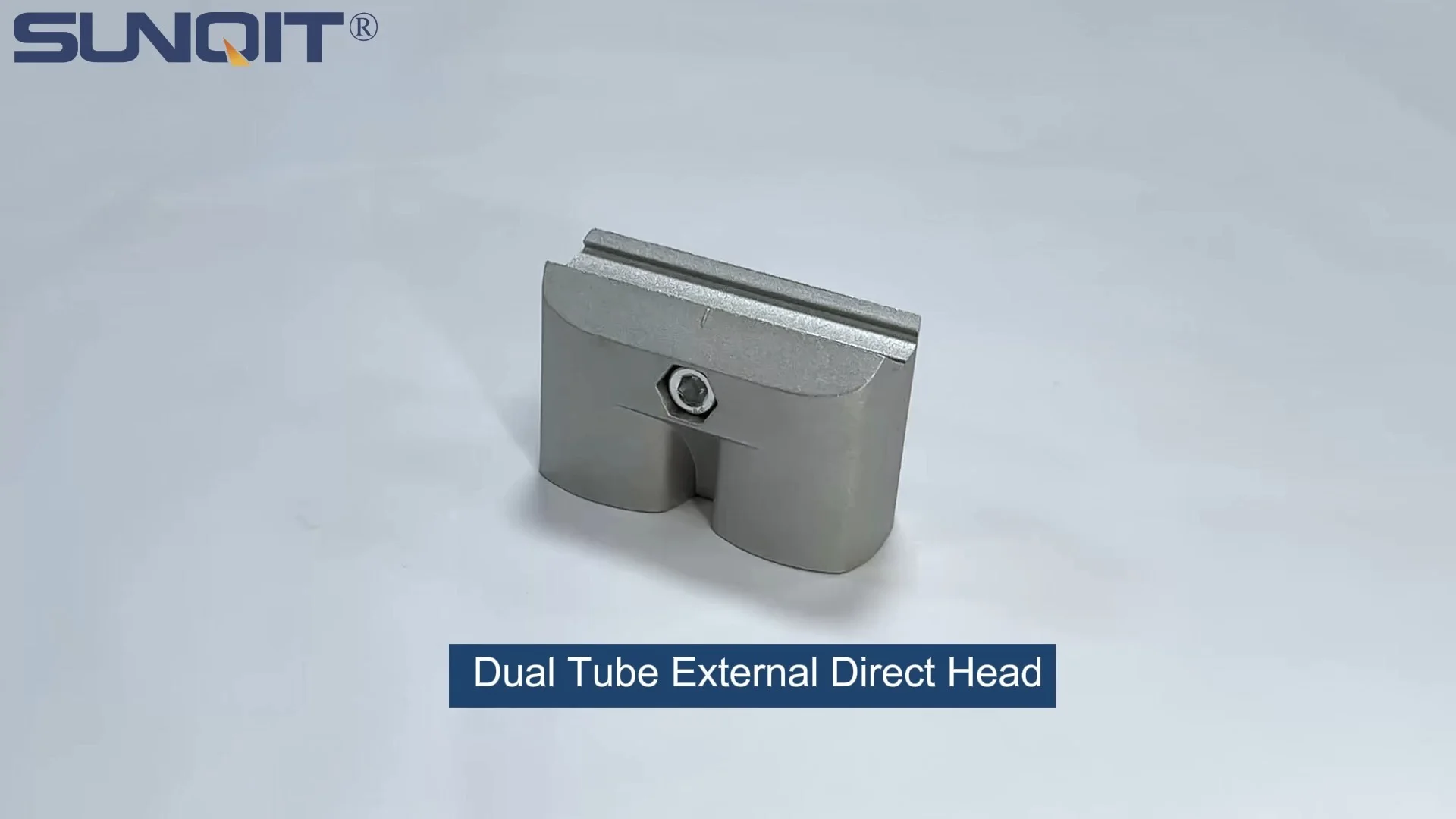
Duplex Aluminum Pipe Joint
Duplex Aluminum pipe joint used for one pcs 28pcs aluminum pipe and one pcs of 28mm duplex pipe connection in straight angle.
In the fast-paced world of 3C manufacturing—where "3C" stands for computers, communications, and consumer electronics—every second counts. From smartphones with millimeter-thin designs to laptops that fold like paper, the industry thrives on precision, speed, and adaptability. At the heart of this high-stakes environment lies the assembly workstation: a hub where components come together, where technicians spend hours piecing together the gadgets we rely on daily. But not all workstations are created equal. The difference between a clunky, rigid setup and a smooth, flexible one often comes down to a small but mighty component: the duplex aluminum pipe joint. Today, we're diving into how these unassuming connectors are revolutionizing 3C assembly lines, making workstations smarter, more customizable, and better equipped to handle the industry's ever-changing demands.
The Heart of the Workstation: Understanding Duplex Aluminum Pipe Joints
Before we jump into why duplex aluminum pipe joints are a game-changer, let's break down what they are. Simply put, these joints are the "glue" that holds together the aluminum profiles that form the skeleton of modern assembly workstations. Unlike traditional fixed joints or bulky steel connectors, duplex aluminum pipe joints are designed for versatility. They're typically made from high-grade aluminum alloy, which strikes the perfect balance between strength and lightweight flexibility. What makes them "duplex" is their ability to connect two aluminum pipes at various angles—often 90°, 45°, or even custom angles—while maintaining structural integrity. Think of them as the Swiss Army knife of workstation building: one joint, multiple possibilities.
In 3C assembly, where components can range from tiny circuit boards to larger display panels, the ability to adjust the workstation's layout on the fly is crucial. A duplex aluminum joint doesn't just connect pipes; it empowers teams to reconfigure workbenches, material racks, and roller tracks in minutes, not days. This adaptability is why leading 3C manufacturers are swapping out old steel frames for aluminum profile systems built around these innovative joints.
Why Duplex Aluminum Joints Stand Out: Key Benefits for 3C Assembly
So, what makes duplex aluminum pipe joints a better choice than traditional options like welded steel joints or plastic connectors? Let's break down the benefits that matter most in 3C assembly:
| Feature | Duplex Aluminum Pipe Joints | Traditional Steel Joints |
|---|---|---|
| Material | High-grade aluminum alloy | Mild steel or iron |
| Weight | Up to 60% lighter | Heavy, requires more support |
| Flexibility | Reconfigurable angles; no welding needed | Fixed angles; requires cutting/welding to adjust |
| Load Capacity | Supports up to 150kg per joint (varies by size) | Higher load capacity but bulkier |
| Installation Time | 10-15 minutes per connection | 1-2 hours (including welding/cooling) |
| Corrosion Resistance | Natural oxide layer; rust-proof | Prone to rust without coating |
Table 1: Comparing duplex aluminum pipe joints with traditional steel joints for 3C assembly workstations.
Lightweight Yet Strong: A Critical Balance
3C assembly workstations often need to be mobile—whether to reposition lines for a new product launch or to accommodate seasonal demand spikes. Duplex aluminum joints, paired with aluminum profiles, cut down on weight without sacrificing strength. A typical workstation frame built with these components weighs 40-50% less than a steel equivalent, making it easier to move with casters (another essential accessory we'll cover later) and reducing strain on factory floors.
Tool-Free Adjustments: Saving Time on the Line
In 3C manufacturing, product cycles are shorter than ever. A new smartphone model might hit the market every 6-12 months, and each iteration can require tweaks to assembly processes. With duplex aluminum joints, reconfiguring a workstation doesn't mean calling in a welding team or shutting down the line for hours. Most joints can be adjusted with a simple hex key or even by hand, letting technicians modify workbench heights, add new material racks, or integrate roller tracks in minutes. This agility is a game-changer for meeting tight production deadlines.
Corrosion Resistance: Perfect for Clean Environments
3C components are delicate—dust, moisture, and rust can ruin sensitive electronics. Steel joints, even when painted, are prone to corrosion over time, especially in factories where cleaning agents are used regularly. Aluminum, on the other hand, forms a natural oxide layer that resists rust and corrosion. This makes duplex aluminum joints ideal for cleanrooms or assembly areas where hygiene is critical, ensuring your workstation stays durable and contamination-free for years.

Customization in Action: Designing Workstations Around Your Needs
One of the biggest advantages of duplex aluminum pipe joints is their ability to support truly customized workstation designs. 3C assembly isn't one-size-fits-all: a workstation for assembling smartwatch screens will look very different from one building laptop motherboards. Let's explore how these joints enable tailored solutions.
Workbench E: A Case Study in Simplicity
Take the "Workbench E (single deck-without caster)" as an example. This stripped-down, no-frills design is popular for tasks that require a stable, fixed surface—like precision soldering or component inspection. Using duplex aluminum joints, manufacturers can adjust the height of the workbench to match technician ergonomics (typically 750-900mm, depending on the task) and choose the worktop material, from anti-static aluminum honeycomb panels to heat-resistant phenolic resin. The joints connect the aluminum profile legs and frame, ensuring the bench stays wobble-free even when loaded with tools and components.
Material Rack B: Organizing Components with Precision
For component storage, "Material Rack B (3 row and 3 floor)" is a common choice. This rack uses duplex aluminum joints to connect vertical supports and horizontal shelves, creating a sturdy structure that can hold everything from small plastic bins to larger component trays. The beauty of using aluminum joints here is adjustability: if a new component is taller than expected, you can easily reposition the shelves by loosening the joints, moving the crossbars, and tightening them back up. No drilling, no cutting—just quick, tool-based adjustments.
Integrating Roller Tracks for Smooth Component Flow
To keep components moving from station to station, roller tracks are a must. Duplex aluminum joints play a key role here, too. For example, "Plastic roller track guide rail yellow" or "Aluminum guide rail A" can be mounted to workstation frames using specialized brackets, all connected via duplex joints. This allows for the creation of gravity-fed tracks that move PCBs, screens, or batteries from one technician to the next, reducing manual handling and speeding up production. The joints ensure the tracks are aligned perfectly—even slight misalignments can jam components, so precision here is critical.

Integration with Lean Systems: Streamlining 3C Production
Lean manufacturing principles—focused on minimizing waste, maximizing efficiency, and continuous improvement—are the backbone of successful 3C operations. Duplex aluminum pipe joints and aluminum profile workstations align seamlessly with these principles, making them a cornerstone of lean system implementation.
5S and Visual Management: A Clutter-Free Workspace
The 5S methodology (Sort, Set in Order, Shine, Standardize, Sustain) is all about creating an organized, efficient workspace. Duplex aluminum joints help here by enabling custom storage solutions that keep tools and components exactly where they're needed. For example, a workstation might include a side rack with labeled bins for screws, connectors, and adhesives—all mounted using adjustable aluminum joints. This "Set in Order" step reduces time wasted searching for parts, while the clean, modular design of aluminum profiles makes "Shine" (cleaning) easier than with cluttered steel frames.
Just-In-Time (JIT) Production: Adapting to Demand
JIT production relies on producing only what's needed, when it's needed, to reduce inventory costs. This requires assembly lines that can scale up or down quickly. Duplex aluminum workstations are inherently scalable: if demand for a particular tablet model spikes, you can add extra workbenches or extend material racks in hours, not days. The joints' flexibility also allows for "U-shaped" or "cell-based" layouts, where teams work in tight loops, minimizing movement and cutting down on lead times.
Continuous Improvement: Testing and Tweaking Without Disruption
Lean isn't a one-time project—it's an ongoing process. With duplex aluminum joints, testing new workstation layouts is low-risk. Suppose a team wants to experiment with a new component feeding system: they can reconfigure the roller tracks, adjust the workbench height, or add a new shelf in minutes, test the setup for a shift, and revert back if it doesn't work. This ability to iterate quickly is invaluable for driving continuous improvement on the assembly line.

Beyond Joints: Essential Accessories for a Complete Workstation Setup
Duplex aluminum pipe joints are the foundation, but a truly effective 3C assembly workstation needs the right accessories to shine. Let's explore some must-have add-ons that work hand-in-hand with your aluminum profile frame.
Casters for Mobility
Even fixed workstations sometimes need to move—whether for deep cleaning, line reconfiguration, or temporary production runs. "Flat adjustable swivel castor wheel" or "360° swivel expanding stem casters wheel with brake" are popular choices. These casters mount to the bottom of workstation legs (connected via duplex joints, of course) and allow for smooth movement across factory floors. The brakes ensure stability when the workstation is in use, preventing accidental shifts during precision tasks.
Anti-Static Solutions for Sensitive Electronics
Static electricity is a silent killer in 3C assembly, capable of frying microchips or damaging delicate circuits. ESD (Electrostatic Discharge) workbenches and accessories are non-negotiable. "ESD workbench wholesale" options often include anti-static worktops, grounded frames, and even "Swivel roller balls 1 inch" with conductive materials to dissipate static. Duplex aluminum joints, being metal, can be grounded easily, adding an extra layer of protection for sensitive components.
Swivel Roller Balls for Versatile Component Handling
For tasks that require moving components in multiple directions—like positioning a laptop chassis for screen installation—"Stainless steel swivel roller balls 1 inch" or "Swivel roller balls 0.5 inch" are indispensable. These small, omnidirectional balls mount to workbench surfaces, allowing technicians to glide heavy or awkward components with minimal effort. They're often used in conjunction with roller tracks, creating a seamless flow from loading to assembly to inspection.
Aluminum Profile Accessories for Added Functionality
Aluminum profiles themselves have a range of accessories that enhance workstation utility. "Aluminum profile rubber strip" covers the T-slots in profiles, preventing dust buildup and protecting technicians from sharp edges. "4040 aluminum profile end cap" adds a clean, finished look while keeping debris out of the profile channels. And "Aluminum pipe clamp" secures tools, cables, or small shelves to the frame, keeping the workspace organized and efficient.
Real-World Impact: Case Studies from 3C Factories
Talk is cheap—let's look at how duplex aluminum pipe joints have made a tangible difference for 3C manufacturers.
Case Study 1: A Mid-Sized Smartphone Manufacturer
A smartphone factory in Shenzhen was struggling with frequent line reconfigurations. Every time a new model launched, they had to rebuild workstations from scratch using steel frames, taking 2-3 days and costing thousands in downtime. After switching to duplex aluminum joints and aluminum profiles, they reduced reconfiguration time to just 4 hours. The key? They pre-built modular sections (workbench tops, material racks, roller track assemblies) that could be connected on the fly via the joints. For their latest model launch, they reconfigured 12 workstations in a single shift, avoiding production delays entirely.
Case Study 2: A Tablet Assembly Plant Focused on Ergonomics
Ergonomics is a big concern in 3C factories, where repetitive tasks can lead to worker fatigue and injuries. A tablet manufacturer in Dongguan wanted to reduce wrist strain among technicians assembling touchscreens. Using duplex aluminum joints, they designed adjustable-height workbenches that could be raised or lowered to match each technician's seated or standing preference. They also added angled roller tracks (connected via joints) to position screens at a 15° angle, reducing neck and eye strain. Within three months, reported fatigue dropped by 30%, and productivity increased by 15% as workers could maintain focus longer.
Choosing the Right Supplier: What to Look For
To get the most out of duplex aluminum pipe joints and aluminum profile workstations, partnering with the right supplier is critical. Here's what to prioritize:
Quality Materials and Testing
Not all aluminum is created equal. Look for suppliers that use high-grade aluminum alloys (like 6063-T5, common in industrial profiles) and test their joints for load capacity, durability, and corrosion resistance. Ask for test reports or certifications—reputable suppliers will be happy to share them.
Customization Capabilities
Your assembly needs are unique, so your supplier should offer more than off-the-shelf products. Can they create custom joint angles? Do they provide design support for complex workstations? A good supplier will work with your team to turn your sketches or CAD files into functional, buildable designs.
Range of Accessories
Workstations are more than frames and joints—you need roller tracks, casters, worktops, and more. Choosing a supplier that offers a full lineup of accessories (like "Roller track placon mount for aluminum profile high" or "Caster accessories") saves time and ensures compatibility. Mixing and matching parts from different suppliers can lead to fit issues and delays.
Technical Support and After-Sales Service
Even the best components need troubleshooting from time to time. Look for suppliers with responsive technical support teams that can help with installation questions, replacement parts, or design tweaks. A supplier that offers on-site training for your team (on how to use the joints, adjust workstations, etc.) is a bonus.
Conclusion: Future-Proofing Your Assembly Line
In the 3C industry, standing still means falling behind. As products get smaller, more complex, and production cycles shorter, your assembly workstations need to keep up. Duplex aluminum pipe joints, paired with aluminum profiles and the right accessories, offer the flexibility, durability, and customization needed to stay competitive.
From lightweight, adjustable frames to seamless integration with lean systems and roller tracks, these joints are more than just connectors—they're the building blocks of a future-proof assembly line. Whether you're assembling the next flagship smartphone or a cutting-edge smartwatch, investing in duplex aluminum pipe joints isn't just about improving today's production—it's about ensuring you can adapt, grow, and innovate tomorrow.
So, take a look at your current workstations. Are they holding you back? Could a little more flexibility, a few less hours of reconfiguration time, or a more ergonomic design make a difference? If the answer is yes, it might be time to explore what duplex aluminum pipe joints can do for your 3C assembly line. Your technicians, your bottom line, and your next product launch will thank you.