- Company Articles
- Products and Technology
- Product knowledge
- Customizing Aluminum Workbench A: Tailored Designs for Your Industry Needs

Customizing Aluminum Workbench A: Tailored Designs for Your Industry Needs
Related Product
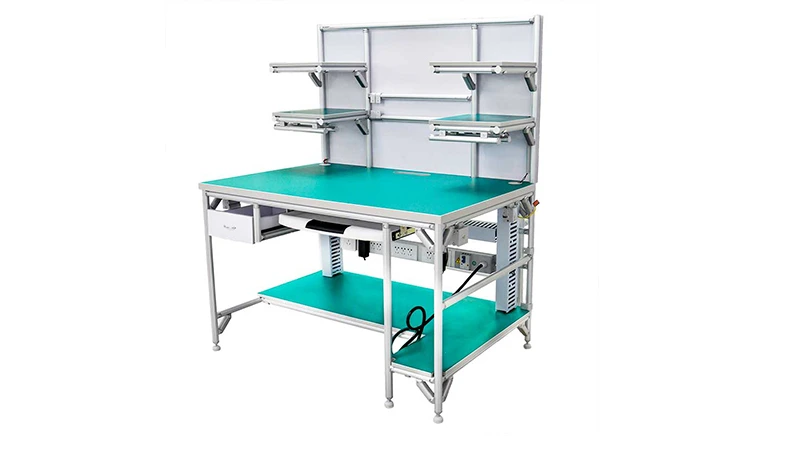
Aluminum Workbench A
Aluminum tube workbench is more flexible and durable, compared with traditional PE/ABS coated steel tube. It is easy to assemble, anti corrosion, rust protection, and recycle use after disassemble.
The Problem with "One-Size-Fits-All" Workbenches
Walk into any workshop, manufacturing plant, or lab, and you'll quickly notice something: no two workspaces are identical. A team assembling circuit boards has different needs than one building car engines. A small startup in a garage crams tools into every inch, while a large factory lines up workstations in long, efficient rows. Yet, for decades, the default solution has been the "standard" workbench—one size, one surface, one set of features. And more often than not, it misses the mark.
Maybe you've experienced it yourself. That workbench you ordered online looked perfect in the photos, but in reality, it's three inches too wide for your corner, leaving no room for the tool cabinet. Or the surface scratches easily, ruining the sensitive components you handle daily. Perhaps the height is all wrong—too low, forcing you to hunch over, or too high, straining your shoulders by the end of the shift. The drawers don't fit your tools, the shelves are too shallow, and worst of all, there's no way to fix it. It's a static piece of furniture in a dynamic world, and it's holding you back.
The truth is, a workbench isn't just a table. It's the heart of your operation. It's where ideas become products, where precision meets productivity, and where your team spends hours of their day. When it's not designed with your specific needs in mind, every task takes a little longer, every movement feels a little awkward, and over time, those small inefficiencies add up to big losses—time, money, and even employee morale.
Meet Aluminum Workbench A: More Than Just a Table
Enter Aluminum Workbench A—a solution built on the idea that your workspace should adapt to you, not the other way around. This isn't just a workbench; it's a customizable system designed to grow, change, and evolve with your industry's unique demands. At its core? High-quality aluminum profile and aluminum extrusion profile, materials that combine strength, flexibility, and durability in a way no wood or generic steel can match.
Core Materials: Aluminum Profile & Extrusion—The Building Blocks of Customization
Aluminum has long been a favorite in manufacturing for good reason. It's lightweight, so even large workbenches are easy to move or reconfigure. It's resistant to rust and corrosion, making it ideal for humid labs, cleanrooms, or factories where spills happen. And perhaps most importantly, it's incredibly strong for its weight—strong enough to support heavy tools, machinery, or batches of materials without bending or warping.
But what truly sets Aluminum Workbench A apart is the use of aluminum extrusion profile. Unlike standard aluminum sheets or bars, extrusion profiles are created by forcing heated aluminum through a custom die, shaping it into precise, consistent cross-sections. Think of it like squeezing toothpaste through a tube—except the result is a rigid, uniform piece with built-in features like T-slots, grooves, and channels. These T-slots are the secret sauce: they allow you to attach, detach, and rearrange accessories with just a few bolts, no welding or drilling required. Want to add a shelf? Slide a bracket into the T-slot. Need a tool holder on the left instead of the right? Unscrew the old one and pop a new one in. It's modularity at its finest, and it's why Aluminum Workbench A can be tailored to almost any need.
The Beauty of Aluminum Extrusion Profile: Precision That Powers Possibility
Imagine building a workbench like you would with Legos—only sturdier and designed for real-world use. That's the flexibility aluminum extrusion profile offers. Each profile is engineered to lock into others seamlessly using aluminum profile accessories like connectors, brackets, and end caps. This means your workbench isn't just a single unit; it's a system of parts that can be mixed, matched, and modified. Need a longer surface? Add another extrusion section. Want to split the bench into two for a new team member? Disconnect the joints and rearrange. The precision of the extrusion process ensures every piece fits perfectly, so even after multiple reconfigurations, your workbench remains stable and secure.
And it's not just about function—aluminum extrusion profile looks clean and professional, too. The smooth, consistent finish resists scuffs and marks, keeping your workspace looking polished even after years of use. For industries where presentation matters—like client-facing labs or showrooms—this is a small detail that makes a big impression.

Why Customization Matters: Tailoring to Your Unique Workflow
So, we've established that aluminum profile and extrusion make customization possible—but why does customization matter so much? Because your workflow is unique. The tasks you perform, the tools you use, the space you have, and the people on your team all combine to create a one-of-a-kind environment. Aluminum Workbench A doesn't just acknowledge that—it celebrates it. Let's break down the key areas where customization transforms a good workbench into a great one.
Size & Layout: From Compact Corners to Spacious Production Lines
Space is often the first challenge. A small electronics workshop in a city loft might need a bench that's 4 feet long and 2 feet deep, fitting neatly between a storage rack and a window. A automotive parts manufacturer, on the other hand, could require a 10-foot bench with room for multiple workers to assemble components side by side. With Aluminum Workbench A, size isn't a limitation—it's a starting point.
Height is another critical factor. The average workbench is designed for someone around 5'9", but what if your team includes people of varying heights? An ergonomically disastrous setup for a tall worker (hunching, straining) is just as bad as one for a shorter worker (reaching, overextending). Custom height options—adjustable or fixed—ensure everyone can work comfortably, reducing fatigue and the risk of repetitive strain injuries. Some setups even include motorized height adjustment, letting users switch between sitting and standing throughout the day, a small change that can boost focus and energy levels significantly.
Surface Solutions: Beyond the Basics—Because Not All Work is Created Equal
The surface of your workbench is where the magic (or the mess) happens. A woodworker might need a rough, grippy surface to prevent slipping. A jeweler needs something smooth and scratch-resistant to protect delicate pieces. In electronics, static electricity is the enemy—so an ESD (electrostatic discharge) surface that grounds static charges is non-negotiable. Aluminum Workbench A offers surfaces tailored to each of these needs and more.
For example, aluminum honeycomb panels are a popular choice for lightweight strength. They consist of a thin aluminum skin over a honeycomb core, making them rigid but easy to move. For labs or cleanrooms, antimicrobial surfaces prevent the growth of bacteria, keeping workspaces sterile. And for heavy-duty use—like in metalworking or auto repair—thick, reinforced aluminum plates can withstand impacts, sparks, and heavy tool use without a scratch. The best part? These surfaces aren't permanent. If your needs change—say, you shift from assembling plastic parts to handling ESD-sensitive electronics—you can swap out the surface without replacing the entire bench.
Accessories That Elevate: Aluminum Profile Accessories Turn "Good" into "Great"
A workbench is only as useful as the tools and materials it keeps within reach. That's where aluminum profile accessories come in. These aren't just add-ons—they're the details that turn a basic bench into a productivity hub. Let's say you're in manufacturing and need to move parts from one end of the bench to the other. Add roller tracks to the surface, and suddenly materials glide smoothly, reducing the need for manual lifting. Need to keep tools organized? Attach tool holders, pegboards, or magnetic strips to the T-slots. Short on floor space? Add overhead shelves or under-bench cabinets using bracket accessories. Even small touches like cup holders, label holders, or monitor mounts can make a big difference in daily workflow.
And because these accessories are designed specifically for aluminum extrusion profiles, they fit perfectly. No more jury-rigging with zip ties or duct tape. No more wobbly shelves or loose tool holders. Every bracket, connector, and caster wheel locks securely into the T-slots, ensuring stability even with heavy use. It's customization without compromise—practical, durable, and designed to make your workday easier.

Industry Spotlight: How Aluminum Workbench A Fits Your World
Customization isn't just about making a workbench "yours"—it's about making it work for your industry's unique challenges. Let's take a look at how Aluminum Workbench A adapts to three very different fields, proving that one design can truly serve many when built with flexibility in mind.
Electronics Manufacturing: Precision, ESD Protection, and Space-Saving Design
In electronics, every millimeter matters. Components are tiny, static is deadly, and workspace is often at a premium. A standard workbench with a clunky wooden surface and fixed shelves would be a disaster here. Aluminum Workbench A rises to the challenge with thick-walled aluminum extrusion profiles for the frame, reinforced surfaces, and integrated roller tracks to feed parts from station to station.
Imagine a small electronics startup assembling smartwatches. Their workspace is tight, so they opt for a narrow, 3-foot-wide bench with a fold-down side shelf for extra space when needed. The surface is ESD-safe, with built-in cable management channels to keep USB cords and wires from tangling. Above the bench, a slim overhead shelf holds microscopes and testing equipment, attached via aluminum profile brackets. On the side, a small roller track feeds components from a storage bin to the assembler, reducing reaching and wasted motion. It's compact, efficient, and designed to grow—if they expand to tablets, they can add a longer extrusion section and swap the surface for a larger ESD panel. No new bench needed.
Automotive Assembly: Heavy-Duty Strength and Material Flow
Automotive plants are a world of heavy tools, large parts, and constant motion. A workbench here needs to withstand abuse while keeping materials moving smoothly along the production line. Aluminum Workbench A rises to the challenge with thick-walled aluminum extrusion profiles for the frame, reinforced surfaces, and integrated roller tracks to feed parts from station to station.
Consider a team assembling car door panels. Their workbench is 10 feet long, with a roller track running the length to move panels from one worker to the next. The surface is a thick aluminum plate, resistant to scratches from metal parts and impacts from power tools. Under the bench, heavy-duty casters (locked in place during use) allow the entire setup to be moved for deep cleaning or reconfiguration. Side rails with hooks hold power tools, and a lower shelf stores spare parts in bins. Because the automotive industry is always evolving, the bench can be modified next year when they switch to electric vehicle doors—just add a new roller track section and adjust the height to match the new component sizes.
Small Batch Production: Flexibility for Changing Priorities
Small batch producers—think craft breweries, custom furniture makers, or boutique toy companies—face a unique challenge: their work changes constantly. One week they're assembling 500 units of Product A, the next 200 of Product B, each with different tools, materials, and space needs. A rigid workbench would leave them constantly rearranging or buying new furniture. Aluminum Workbench A, with its modular design, is their secret weapon.
Take a custom candle maker, for example. They switch scents and container sizes monthly, so their workspace needs to adapt. Their Aluminum Workbench A starts as a simple table for melting wax, but when they launch a new line of large candles, they add an extension using aluminum profile connectors. When the holiday rush hits and they need to package 10x the usual orders, they attach roller tracks to the bench to slide finished candles to a packaging station. After the rush, they remove the tracks and extension, folding the bench back to its original size. It's like having multiple workbenches in one, without the storage headache.
The Customization Process: Collaborating for Perfection
Customizing Aluminum Workbench A isn't about picking options from a dropdown menu—it's a collaborative process between you and your supplier. The best suppliers don't just sell products; they solve problems. Here's how it typically works:
Step 1: The Consultation—Listening to Your Needs
It starts with a conversation. A good supplier will ask questions: What do you make? How big are your typical batches? How many people use the bench? What tools do you need within arm's reach? Are there specific hazards (like static, moisture, or chemicals) to consider? They'll even visit your workspace if possible, taking measurements and noting obstacles like doors, windows, or power outlets. This isn't just about specs—it's about understanding your workflow, your pain points, and your goals.
Step 2: Design—Turning Ideas into Blueprints
Next, the supplier translates your needs into a design. Using 3D modeling software, they'll create a virtual prototype of your custom workbench, complete with dimensions, surface type, and accessories. This is your chance to tweak: "Can we move the roller track to the left?" "What if we add a second shelf?" "Is there a way to make the height adjustable?" The design phase is collaborative, so you'll review drafts until it feels right. No surprises—just a clear vision of what you're getting.
Step 3: Prototyping & Testing—Making Sure It Works
For complex or high-stakes projects, some suppliers offer prototypes. This is a scaled-down or partial version of the workbench to test key features. Maybe you want to see if the roller track feeds parts smoothly, or if the ESD surface actually grounds static. Testing the prototype ensures the final product works as intended, saving time and frustration later.
Step 4: Production & Delivery—Building to Your Exact Specifications
Once the design is approved, production begins. The aluminum extrusion profiles are cut to size, surfaces are attached, and accessories are added—all according to your custom plan. Because aluminum extrusion is a precise process, every part fits perfectly, and the bench is assembled with care. When it's ready, it's delivered and set up in your workspace, often with help from the supplier to ensure everything is level, secure, and working as expected.
Standard vs. Custom: The Case for Investing in Aluminum Workbench A
You might be thinking, "Custom sounds great, but isn't it more expensive than a standard workbench?" It's true—customization often has a higher upfront cost. But when you consider the long-term benefits, the math shifts. Let's break it down with a comparison:
| Feature | Standard Workbench | Custom Aluminum Workbench A |
|---|---|---|
| Size & Layout | Fixed; often too big/small for your space | Tailored to your exact dimensions; expandable as needed |
| Surface | Basic wood or generic steel; no specialization | ESD, antimicrobial, scratch-resistant, or heavy-duty—whatever you need |
| Accessories | Limited; often require drilling or modification | Customizable with roller tracks, tool holders, shelves, etc.—no permanent changes needed |
| Ergonomics | One-size-fits-all height; may cause strain | Adjustable height; designed for your team's comfort |
| Durability | Wood warps, steel rusts; often needs replacement in 3–5 years | Aluminum resists corrosion; lasts 10+ years with proper care |
| Cost Over Time | Lower upfront cost, but may need replacement or modification | Higher upfront cost, but no replacement needed; adapts as your business grows |
| Efficiency | Wasted space, awkward tool placement; slower workflow | Optimized layout; tools/materials within reach; faster, smoother tasks |
The standard workbench might save you money today, but it costs you in efficiency, ergonomics, and longevity. Aluminum Workbench A, on the other hand, is an investment in your team's productivity and your business's future. It grows with you, adapts to new challenges, and keeps working hard long after a standard bench would have given out.
The Long-Term Benefits: Why Customization Pays Off
Beyond the immediate perks—like a bench that fits your space and tools—customizing Aluminum Workbench A delivers long-term benefits that impact your bottom line and your team's happiness.
Efficiency That Aligns with Lean System Principles
Lean system thinking is all about eliminating waste—whether it's wasted time, space, or motion. A custom workbench is lean by design. By keeping tools and materials within arm's reach, reducing unnecessary movement, and streamlining workflows, it cuts down on the "non-value-added" tasks that eat up your day. For example, a roller track that feeds parts directly to the assembler eliminates the need to walk to a storage bin 20 times an hour. Over a year, that's hundreds of hours saved—time that can be spent on more important tasks, like innovation or quality control.
Ergonomics: Happier, Healthier Teams
A workbench that's too low, too high, or poorly laid out isn't just annoying—it's a health risk. Repetitive strain injuries (RSIs), back pain, and eye strain are common in workplaces with poor ergonomics, leading to lost workdays and higher insurance costs. Custom Aluminum Workbench A prioritizes ergonomics, with adjustable heights, surfaces at the right angle, and tools positioned to reduce bending, reaching, and twisting. When your team is comfortable, they're more focused, productive, and likely to stay with your company long-term.
Durability: Built to Last, Even in Tough Environments
Aluminum is tough. It resists rust, dents, and scratches better than wood or standard steel. In humid environments—like food processing plants or coastal labs—it won't warp or rot. In industrial settings with heavy use, it holds up to impacts and wear. This durability means your workbench won't need to be replaced every few years, saving you money in the long run. And because it's modular, you can replace individual parts (like a scratched surface or a broken caster) instead of the entire bench—another win for sustainability and cost-effectiveness.
Scalability: Grow Without Starting Over
Businesses change. You hire more people, launch new products, or move to a larger space. A standard workbench becomes obsolete quickly in these cases. Aluminum Workbench A, with its modular aluminum extrusion profile and accessories, scales with you. Need to add a second bench? Connect two extrusion frames. Expanding to a new product line? Swap out the surface and add new accessories. Moving to a bigger warehouse? Disassemble the bench, move it, and reassemble—no heavy lifting or new purchases required. It's a workbench that grows with your ambition.
Conclusion: Your Workbench, Your Way—Aluminum Workbench A Delivers
In a world where every industry, every team, and every task is unique, a "one-size-fits-all" workbench is a relic of the past. Aluminum Workbench A isn't just a piece of furniture; it's a partner in your success—designed to adapt to your needs, grow with your business, and make every day at work a little easier, more efficient, and more productive.
From the precision of aluminum extrusion profile to the flexibility of aluminum profile accessories, from ESD surfaces for electronics to roller tracks for automotive lines, this workbench is built to solve your specific challenges. It's not about spending more—it's about investing in a solution that pays off in efficiency, ergonomics, and durability for years to come.
So why settle for a bench that works "okay" when you could have one that works for you ? Whether you're a small startup in a garage or a large factory with hundreds of workers, Aluminum Workbench A is proof that customization isn't a luxury—it's the key to unlocking your workspace's full potential. Your team deserves it. Your business deserves it. And with Aluminum Workbench A, it's finally within reach.