- Company Articles
- Products and Technology
- Solution
- Customizing Aluminum Workbench B: Tailoring to 3C Assembly and Medical Production Needs

Customizing Aluminum Workbench B: Tailoring to 3C Assembly and Medical Production Needs
Related Product
Aluminum Workbench B
Aluminum tube workbench is more flexible and durable, compared with traditional PE/ABS coated steel tube. It is easy to assemble, anti corrosion, rust protection, and recycle use after disassemble.
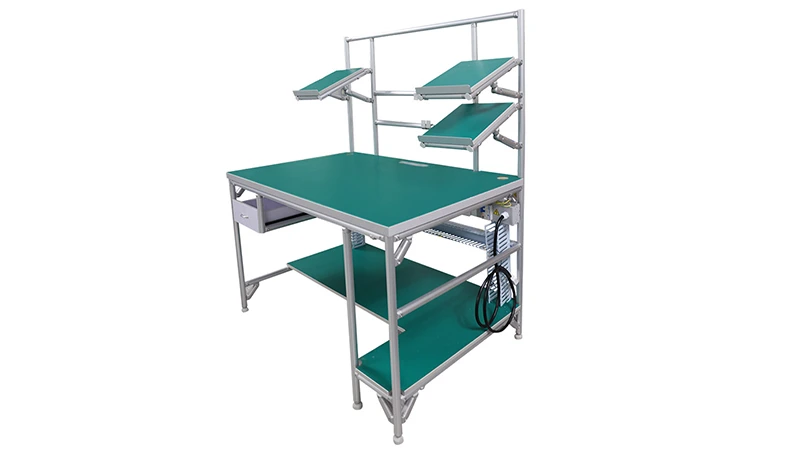
Walk into any modern 3C (computers, communications, consumer electronics) assembly plant or medical device manufacturing facility, and you'll notice a silent hero on the factory floor: the workbench. It's not just a table— it's the command center where precision meets productivity, where tiny circuit boards come to life and life-saving instruments take shape. But not all workbenches are created equal. In fast-paced industries like 3C and medical production, a one-size-fits-all approach can lead to wasted time, errors, and frustrated teams. That's where Aluminum Workbench B comes in. Designed with flexibility at its core, this workbench isn't just a piece of equipment; it's a customizable solution that adapts to the unique rhythms of your workflow. Let's dive into how tailoring Aluminum Workbench B can transform your production line, one optimized station at a time.
Why 3C and Medical Production Demand Customization
3C assembly and medical production might seem worlds apart, but they share a critical commonality: precision is non-negotiable. In 3C, imagine assembling a smartphone with components smaller than a grain of rice— a misaligned workstation can throw off delicate soldering or part placement, leading to defective products. In medical manufacturing, consider a surgical tool that must meet strict sterilization standards; a workbench that traps dust or harbors bacteria could compromise patient safety. Beyond precision, these industries face unique challenges that demand tailored solutions.
3C production lines are notoriously dynamic. New models launch every few months, each with different component sizes and assembly steps. A workbench that works for a tablet might be inefficient for a smartwatch. Medical production, on the other hand, deals with strict regulatory requirements— from static control to material compatibility (no toxic finishes here). Add to that the need for ergonomics (workers spend 8+ hours at these benches) and space optimization (factories are getting leaner), and it's clear: generic workbenches just won't cut it.
| Requirement | 3C Assembly | Medical Production |
|---|---|---|
| Static Control | Critical (prevents ESD damage to circuit boards) | Important (protects sensitive electronic components in devices) |
| Material Compatibility | Durable, lightweight (frequent reconfiguration) | Sterilizable, non-porous (resists chemicals and bacteria) |
| Workflow Flexibility | High (rapid product model changes) | Moderate (stable processes but occasional updates) |
| Ergonomics | Essential (repetitive tasks, long shifts) | Crucial (precision work requires comfortable positioning) |
Aluminum Workbench B: The Customization Canvas
At first glance, Aluminum Workbench B looks straightforward: a sturdy frame, a flat surface, and a clean design. But beneath that simplicity lies a modular powerhouse. The secret? Its foundation in Aluminum Profile— lightweight, strong, and infinitely adaptable. Unlike traditional wooden or steel workbenches, which are fixed in shape and hard to modify, Aluminum Profile-based benches use a t-slot system. Think of it like building with advanced Lego blocks: you can add, remove, or rearrange components (shelves, tool holders, lighting) with just a few bolts and brackets. This modularity is why Aluminum Workbench B is the go-to for industries that can't afford downtime during reconfigurations.
Let's break down the basics. The standard Aluminum Workbench B (single deck, without casters) starts with a frame made from high-strength Aluminum Profile— typically 2020, 3030, or 4040 series, depending on load requirements. The deck, usually an aluminum honeycomb panel or anti-static laminate, sits atop the frame, providing a smooth, stable surface. But here's where customization kicks in: you can adjust the height (critical for ergonomics), add side rails, integrate LED task lighting, or even mount small conveyors or Flow Rack attachments for material handling. It's not just a workbench— it's a blank canvas for your workflow.

Key Custom Features for 3C Assembly
In 3C assembly, time is money— and every second counts. Workers often switch between tasks: soldering in the morning, quality inspection in the afternoon, and packaging in the evening. Aluminum Workbench B can be tailored to keep up with this pace. Here are the top custom features 3C teams swear by:
- Adjustable Height: Not all workers are the same height. A bench that raises or lowers (via manual cranks or electric lifts) ensures everyone can work comfortably, reducing strain and fatigue. For example, a 5'2" operator assembling earbuds needs a lower surface than a 6' tall technician soldering motherboards.
- ESD Workstation Integration: Static electricity is the silent enemy of electronics. A single static discharge can fry a microchip, rendering an entire device useless. Custom Aluminum Workbench B can include ESD-safe surfaces, grounding straps, and ionizers to neutralize static. The deck might be coated with a dissipative material, and the frame connected to a grounding system— ensuring every component on the bench stays protected.
- Tool-less Accessory Rails: 3C assembly requires a toolkit's worth of small tools: tweezers, screwdrivers, magnifying glasses. Instead of fumbling through drawers, add t-slot accessory rails along the bench edges. Attach magnetic tool holders, USB charging ports for soldering irons, or small bins for screws and washers. Everything stays within arm's reach, cutting down on "hunt and gather" time.
- Flow Rack Attachments: Parts don't assemble themselves— they need to be delivered to the bench efficiently. Mounting a small Flow Rack on the side of Aluminum Workbench B lets components (like circuit boards or connectors) slide directly into place, reducing the need for workers to walk to a separate storage area. It's a small change that adds up to big time savings over a shift.
"We used to spend 15 minutes per shift just fetching parts from the storage room," says Maria, a production supervisor at a 3C factory in Shenzhen. "After adding Flow Rack attachments to our Aluminum Workbench B stations, that time dropped to 2 minutes. Over a month, that's hundreds of hours saved."

Tailoring for Medical Production: Where Sterility and Safety Meet
Medical production has its own set of rules— and Aluminum Workbench B rises to the challenge with features that prioritize sterility, compliance, and precision. Unlike 3C, where speed is key, medical manufacturing demands strict adherence to protocols (think FDA regulations or ISO 13485). Every surface, every material, and every tool must be easy to clean and free of contaminants. Here's how customization addresses these needs:
- Smooth, Seamless Surfaces: Traditional workbenches with crevices or wooden surfaces can trap bacteria or dust— a big no-no for medical tools. Custom Aluminum Workbench B uses sealed, non-porous materials like aluminum honeycomb panels with a powder-coated finish or stainless steel decks. These surfaces wipe clean with disinfectants, and there are no cracks for pathogens to hide in.
- Stainless Steel Accessories: Even small components matter. Instead of plastic tool holders (which can degrade over time or harbor static), opt for stainless steel brackets and bins. They're durable, resistant to harsh cleaning chemicals, and compatible with autoclaving for high-risk applications (like assembling surgical scissors).
- Integrated Lighting and Magnification: Medical components are often tiny— think hypodermic needle hubs or pacemaker electrodes. Adding adjustable LED task lights (with color temperatures that mimic natural daylight) and flip-up magnifying glasses to Aluminum Workbench B reduces eye strain and ensures workers can spot even the smallest defects.
- Lockable Storage: Regulatory compliance requires traceability. Custom under-bench cabinets with lockable drawers let teams store sensitive parts (like sterile syringes or proprietary components) securely, with audit-ready access logs. No more "missing" parts or unauthorized handling.
Lean System Integration: From Waste to Efficiency
Both 3C and medical production thrive on Lean System principles— eliminating waste, streamlining workflows, and continuous improvement. Aluminum Workbench B isn't just a tool; it's a Lean enabler. By customizing the bench to fit your specific process, you can cut out unnecessary steps and create a "flow" that keeps work moving forward without bottlenecks.
For example, consider a typical 3C assembly line where workers pass components from bench to bench. If each bench is at a different height or lacks a way to pass parts smoothly, workers end up lifting or reaching awkwardly— a form of "motion waste" in Lean terms. By aligning Aluminum Workbench B stations at the same height and adding roller track (a small conveyor-like attachment) between them, parts glide from one station to the next with minimal effort. It's a simple customization that reduces fatigue and speeds up throughput.
In medical production, Lean means minimizing inventory on the bench (to reduce contamination risk). Custom Aluminum Workbench B can include small, adjustable Flow Rack shelves above or below the deck, holding just enough parts for the current shift. This "just-in-time" approach ensures parts are fresh, reduces clutter, and makes it easy to spot when supplies run low. It's Lean in action— and it all starts with a workbench that's designed to support the process, not fight against it.
Real-World Success Stories
Talk is cheap— results matter. Let's look at how two companies transformed their production lines with customized Aluminum Workbench B:
Case Study 1: 3C Manufacturer (Smartphone Assembly)
A mid-sized 3C company in Guangdong was struggling with high defect rates (5% of units failed QA) and low worker morale. Their old wooden workbenches were warped, leading to uneven surfaces, and static buildup was frying sensitive chips. They switched to Aluminum Workbench B with ESD Workstation features: anti-static laminate decks, grounding straps, and adjustable height frames. They also added tool rails with color-coded holders (red for soldering tools, blue for inspection gear) to reduce "search time." Within three months, defect rates dropped to 1.2%, and worker satisfaction scores rose by 30%. "The bench feels like it was built for us," one operator noted. "I don't waste time adjusting my chair or hunting for tools anymore."
Case Study 2: Medical Device Company (Surgical Instrument Production)
A medical device firm in Minnesota needed to comply with new FDA regulations requiring stricter sterility controls. Their existing steel workbenches had chipped paint and hard-to-clean corners, failing audits. They customized Aluminum Workbench B with stainless steel decks, seamless edges, and lockable stainless steel storage. They also added UV-C light strips under the shelves to sanitize tools overnight. The result? They passed their next FDA inspection with zero findings, and cleaning time per bench dropped from 20 minutes to 5 minutes. "We used to dread audit season," said the plant manager. "Now, we look forward to showing off our workbenches."
Choosing the Right Supplier: Beyond the Bench
Customizing Aluminum Workbench B isn't just about picking features— it's about partnering with a supplier who understands your industry. A good Lean System supplier won't just sell you a bench; they'll visit your facility, observe your workflow, and recommend solutions you might not have considered. Look for suppliers who offer:
- On-Site Consultations: A supplier who sends a team to your factory to measure spaces, interview workers, and analyze bottlenecks will deliver a more tailored solution than one who just takes orders over the phone.
- Fast Turnaround on Custom Parts: If you need a unique bracket or a specialized shelf, your supplier should have in-house machining or a network of partners to produce it quickly— no waiting weeks for overseas shipping.
- Post-Sale Support: Even the best workbench might need tweaks. Choose a supplier who offers training (on how to reconfigure the bench) and responsive customer service for repairs or upgrades.
Conclusion: Your Workbench, Your Way
In 3C and medical production, the difference between good and great often lies in the details— and the workbench is one detail that can't be overlooked. Aluminum Workbench B, with its Aluminum Profile foundation, ESD Workstation integration, and Lean System compatibility, isn't just a piece of equipment. It's a partner in productivity, a tool that adapts to your needs instead of forcing you to adapt to it. Whether you're assembling the next generation of smartphones or crafting instruments that save lives, customizing your workbench is an investment in precision, efficiency, and your team's success. After all, when your workspace works for you, everything else follows.
So, what will your Aluminum Workbench B look like? Maybe it's a height-adjustable station with ESD protection for 3C assembly, or a seamless stainless steel bench for medical tools. Whatever your needs, remember: the best workbench isn't the most expensive one— it's the one that's built for you .