- Company Articles
- Products and Technology
- Product knowledge
- Decoding 3060 Aluminum Angle Yards: Alloy Grades & Surface Treatments

Decoding 3060 Aluminum Angle Yards: Alloy Grades & Surface Treatments
Related Product
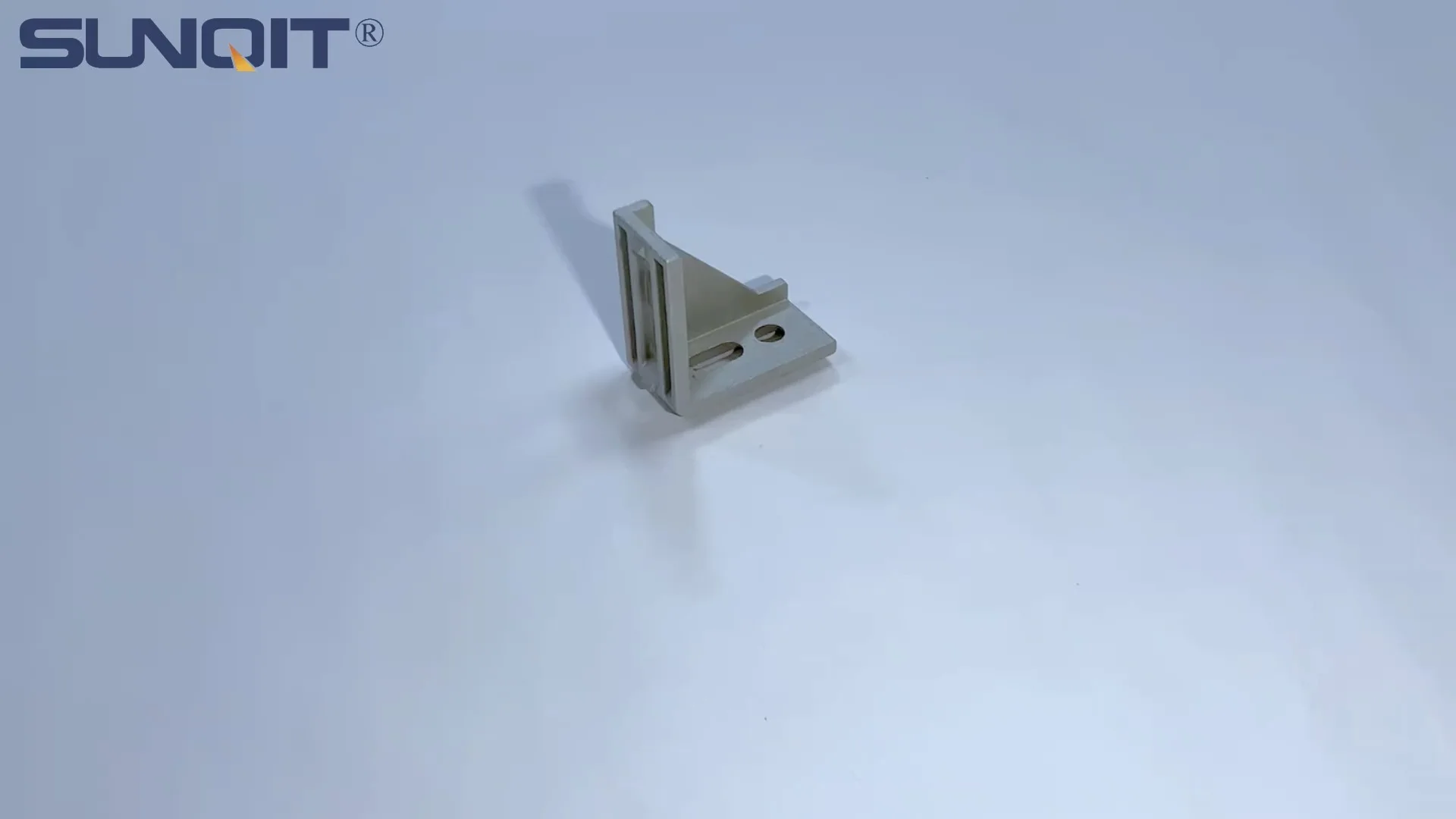
3060 Aluminum Angle Yards
It used for 90° flat connection for 20 series aluminum profile.
Walk into any modern factory, warehouse, or assembly line, and you'll likely spot a silent workhorse holding everything together: aluminum profiles. These unassuming pieces of metal—sleek, strong, and surprisingly versatile—are the backbone of lean manufacturing systems, material racks, workbenches, and so much more. Among the many profiles out there, the 3060 aluminum angle yard stands out as a go-to choice for engineers and facility managers. But what makes it so special? Today, we're diving deep into the world of 3060 aluminum angle yards, breaking down the alloy grades that give them strength and the surface treatments that make them durable. Whether you're building a custom workbench or designing a full-scale production line, understanding these details will help you pick the right profile for the job.
What Are 3060 Aluminum Angle Yards, Anyway?
First things first: let's clarify what we're talking about. A 3060 aluminum angle yard (sometimes called a 3060 aluminum angle profile) is a type of aluminum extrusion with a specific cross-sectional shape: a right angle, where one leg is 30mm wide and the other is 60mm wide. Think of it like a metal L-shape, but precision-engineered for industrial use. These profiles are part of a broader family of aluminum extrusion profiles—hollow or solid bars formed by pushing heated aluminum through a die to create consistent, repeatable shapes.
What makes 3060 angle yards so popular? Their geometry gives them a unique balance of strength and flexibility. The 30mm x 60mm legs provide rigidity for load-bearing tasks, while the angle design allows them to connect seamlessly with other profiles using aluminum profile accessories like brackets, connectors, and end caps. This modularity is key in lean manufacturing, where adaptability and quick reconfiguration are everything. Need to adjust a material rack to fit new inventory? Swap out a section of 3060 angle yard. Want to build a custom workbench with specific dimensions? Start with these profiles as your frame.
Real-World Example: A small electronics manufacturer recently upgraded their assembly line by replacing old steel frames with 3060 aluminum angle yards. The switch cut setup time by 40% because the aluminum profiles were lighter (easier to maneuver) and compatible with pre-made accessories. Plus, the corrosion-resistant surface treatment meant they didn't have to worry about rust affecting sensitive components—win-win.
Alloy Grades: The "DNA" of 3060 Aluminum Angle Yards
If the shape of a 3060 angle yard is its body, the alloy grade is its DNA. Aluminum itself is soft and malleable, so manufacturers mix it with other metals (like silicon, magnesium, or copper) to create alloys with specific properties: strength, corrosion resistance, heat tolerance, or machinability. For 3060 angle yards, three alloy grades dominate the market: 6063, 6061, and 6082. Let's break down each one.
6063 Aluminum: The "Workhorse" Alloy
Chances are, if you've seen a 3060 angle yard in action, it's made from 6063 aluminum. This alloy is the most common choice for extrusions, and for good reason. Its composition—around 0.4% silicon and 0.7% magnesium—strikes a perfect balance between formability and strength. When heated, 6063 flows smoothly through extrusion dies, creating complex shapes (like the 3060 angle) with crisp edges and consistent dimensions. That's why it's ideal for profiles that need to fit together tightly, like those used in modular systems.
But 6063 isn't just easy to extrude; it's also lightweight and corrosion-resistant. Its tensile strength (the maximum stress it can handle before breaking) is around 180 MPa, which is more than enough for most light to medium-duty applications: think workbenches, small material racks, or conveyor side rails. It's also highly weldable and can be anodized to enhance its surface properties (more on that later). For industries like food processing or pharmaceuticals, where cleanliness and corrosion resistance are non-negotiable, 6063 is often the first choice.
6061 Aluminum: When You Need Extra Strength
If your project involves heavier loads or more stress, 6061 aluminum might be the way to go. This alloy cranks up the strength by adding copper (around 0.28%) to the mix, boosting its tensile strength to 310 MPa—nearly double that of 6063. That makes it a favorite for applications where durability is key, like heavy-duty material racks (ever seen a 3-row, 3-floor material rack? Yep, 6061 is probably in there) or structural supports in automated assembly lines.
But with great strength comes a trade-off: 6061 is a bit trickier to extrude than 6063. Its higher copper content makes it stiffer when heated, so it requires more pressure to push through dies. This can make it slightly more expensive, but the extra cost is often worth it for projects that can't afford bending or warping. It's also less corrosion-resistant than 6063, though still better than steel, so it's often paired with protective surface treatments in harsh environments.
6082 Aluminum: The Heavy-Duty Option
For the toughest jobs—think industrial machinery frames or load-bearing racks in warehouses—6082 aluminum takes the crown. With a tensile strength of up to 380 MPa, it's the strongest of the three alloys we're discussing. Its secret? A higher magnesium content (around 1.0%) and a touch of manganese, which work together to create a microstructure that resists deformation under stress. If you're building something that needs to support hundreds of pounds day in and day out, 6082 3060 angle yards are your best bet.
That said, 6082 is the least formable of the three alloys. Its high strength makes it harder to bend or cut without specialized tools, and it's not as widely available as 6063 or 6061. For most everyday projects, 6063 or 6061 will do the job, but when you need to push the limits of what aluminum can handle, 6082 steps up.
Choosing Between Alloys: A Quick Scenario
Imagine you're designing a workbench for a automotive repair shop. The bench needs to hold heavy tools (up to 500 lbs) and withstand occasional impacts from dropped parts. 6063 might flex under that weight, so you'd lean toward 6061 for its extra strength. Now, if the shop also deals with corrosive fluids (like engine oil or cleaning solvents), you'd pair 6061 with a powder coating to boost corrosion resistance. On the flip side, if you're building a lightweight shelving unit for office supplies, 6063 would be more than enough—and cheaper too.
Comparing Alloy Grades: A Side-by-Side Look
To help you visualize the differences, here's a quick comparison of the three main alloys used in 3060 aluminum angle yards:
| Alloy Grade | Tensile Strength (MPa) | Corrosion Resistance | Formability (Extrusion Ease) | Common Uses |
|---|---|---|---|---|
| 6063 | 180-210 | Excellent | Very High | Workbenches, light material racks, conveyor rails, cleanrooms |
| 6061 | 290-310 | Good | Medium | Heavy-duty racks, structural supports, load-bearing frames |
| 6082 | 340-380 | Fair | Low | Industrial machinery, heavy-load racks, outdoor structures |

Surface Treatments: Protecting and Enhancing Your Profile
Alloy grade determines what's inside your 3060 angle yard, but surface treatments determine how it interacts with the outside world. Aluminum naturally forms a thin oxide layer when exposed to air, which helps prevent rust, but in industrial settings, that's often not enough. Surface treatments add a layer of protection, improve appearance, or even add functional properties like electrical conductivity or slip resistance. Let's explore the most common treatments for 3060 aluminum angle yards.
Anodizing: The Gold Standard for Corrosion Resistance
Anodizing is the most popular surface treatment for aluminum profiles, and for good reason. It's an electrochemical process that thickens the natural oxide layer on aluminum, turning it into a hard, porous coating that can be dyed or left natural. Here's how it works: the aluminum profile is submerged in an electrolyte bath (usually sulfuric acid) and used as the anode in an electrical circuit. When current flows, oxygen ions react with the aluminum surface, creating a thicker, more durable oxide layer—typically 5-25 microns thick (for reference, a human hair is about 50 microns thick).
The benefits? Anodized 3060 angle yards are scratch-resistant, corrosion-resistant, and easy to clean. The porous surface can also be dyed in a range of colors (though clear and black are most common in industrial settings), making it great for color-coding work zones or branding. In marine environments or factories with high humidity, anodized 6063 profiles are a no-brainer—they'll stand up to salt spray and moisture without flaking or peeling.
One thing to note: anodizing is a permanent treatment. Unlike paint, it won't chip off over time, but it can be damaged by heavy impacts. For applications where the profile might get scratched (like a warehouse rack used with metal bins), a thicker anodize layer (15+ microns) is worth the extra cost.
Powder Coating: Color, Durability, and Versatility
If you need more color options or a thicker protective layer, powder coating is the way to go. This process involves applying a dry powder (made of resin and pigment) to the aluminum surface using an electrostatic gun, then curing it in an oven at 180-200°C. The heat melts the powder, forming a hard, uniform coating that bonds tightly to the metal.
Powder coating offers two big advantages: color variety and impact resistance. With hundreds of shades available, you can match company branding, color-code workflows (e.g., red for hazardous materials, blue for finished goods), or simply brighten up a drab warehouse. The coating itself is also thicker than anodizing (typically 50-150 microns), making it more resistant to dents and scratches. That's why you'll often see powder-coated 6061 profiles in heavy-duty applications like material racks or outdoor storage units.
The downside? Powder coating adds a slight thickness to the profile, which can affect how tightly it fits with aluminum profile accessories. If you're using precision connectors, you may need to specify a thinner coating (50-80 microns) to ensure a snug fit. It's also less breathable than anodizing, so in very humid environments, trapped moisture can sometimes cause the coating to bubble—though modern powders are much more resistant to this than older formulas.
Electrophoresis: The Smooth Operator
For a ultra-smooth, glossy finish, electrophoresis (also called electrocoating) is a great option. This process is similar to anodizing but uses a paint-based solution instead of acid. The aluminum profile is submerged in a bath of water-based paint, and an electrical current is applied, causing the paint particles to bond to the surface. The result? A thin (10-30 microns), uniform coating with a mirror-like finish.
Electrophoresis is popular in industries where aesthetics matter, like retail displays or high-end workbenches in tech labs. It's also highly corrosion-resistant and can be combined with anodizing for extra protection (though this adds cost). The downside? It's not as durable as powder coating—scratching it can expose the aluminum underneath, and it's harder to repair than a powder coat touch-up.
Mechanical Treatments: When Texture Matters
Sometimes, the goal isn't just protection—it's texture. Mechanical treatments like sandblasting, polishing, or brushing alter the surface of the aluminum to create specific finishes. Sandblasting uses abrasive particles to etch a matte, non-slip surface—great for workbenches where tools might slide. Polishing creates a shiny, reflective finish, often used in architectural applications or display racks. Brushing (using a wire brush or abrasive belt) leaves a linear texture that hides fingerprints and minor scratches, making it ideal for high-touch surfaces like handrails or tool storage.
These treatments are often used as a base for other coatings. For example, a brushed 3060 angle yard might be anodized to add color and corrosion resistance, resulting in a unique, industrial-chic look.

Putting It All Together: Choosing the Right 3060 Angle Yard for Your Project
Now that we've covered alloys and treatments, how do you pick the right 3060 aluminum angle yard for your needs? Start by asking yourself three questions:
- What's the load? If you're supporting heavy equipment, 6061 or 6082 is better. For light to medium loads, 6063 works.
- What's the environment? High humidity or corrosion risk? Go with anodized 6063. Heavy impacts or color needs? Powder-coated 6061.
- How will it connect? If you're using tight-tolerance aluminum profile accessories, anodizing or thin powder coats are better than thick paint.
Let's walk through a real example to tie it all together. Suppose you're designing a workbench for an electronics assembly line. The bench needs to support small tools (light load), resist solder splatter and cleaning chemicals (corrosion risk), and fit with ESD (electrostatic discharge) accessories to protect sensitive components. Here's how you'd choose:
- Alloy: 6063 (plenty strong for light tools, excellent corrosion resistance).
- Surface Treatment: Anodizing (thick enough to resist solder splatter, easy to clean, and compatible with ESD accessories).
- Accessories: Aluminum profile end caps to cover sharp edges, and ESD-safe connectors to prevent static buildup.
Another example: a warehouse needs a 3-row, 3-floor material rack to hold heavy boxes (50 lbs per shelf). The warehouse is in a rainy climate, and the rack will be moved occasionally with a forklift (risk of impacts). For this, you'd pick:
- Alloy: 6061 (higher tensile strength for heavy loads).
- Surface Treatment: Powder coating (thick, impact-resistant layer to handle forklift bumps, corrosion protection for rain).
- Accessories: Heavy-duty brackets and casters (if mobility is needed) to reinforce the structure.

The Future of 3060 Aluminum Angle Yards
As manufacturing continues to evolve—with trends like automation, sustainability, and modularity driving change—3060 aluminum angle yards are evolving too. New alloy formulations are being developed to boost strength while reducing weight (hello, 6082 variants with recycled content). Surface treatments are getting smarter, too: self-healing coatings that repair minor scratches, or antimicrobial treatments for healthcare and food processing environments.
Perhaps most exciting is the rise of digital design tools that let engineers simulate how different alloys and treatments will perform in real-world conditions. Want to see if a powder-coated 6061 angle yard can withstand a 100-lb impact? Plug it into a 3D modeling program and find out—no need for costly prototypes. This technology is making it easier than ever to customize 3060 profiles for niche applications, from aerospace tooling to renewable energy systems.
Final Thoughts: It's All About the Details
At the end of the day, 3060 aluminum angle yards might seem like simple pieces of metal, but their performance hinges on two key details: alloy grade and surface treatment. Choose the right alloy, and your profile will have the strength to handle the job. Pick the right treatment, and it will stand the test of time in harsh environments. Whether you're building a workbench, a material rack, or an entire production line, taking the time to understand these details will save you headaches (and money) down the road.
So the next time you're in a factory or warehouse, take a closer look at those aluminum profiles holding everything together. Chances are, there's a 3060 angle yard in there—quietly doing its job, thanks to the perfect blend of alloy and treatment. And now, you'll know exactly what makes it tick.