- Company Articles
- Products and Technology
- Product knowledge
- Decoding Aluminum Workbench B: Design Philosophy and Functional Benefits

Decoding Aluminum Workbench B: Design Philosophy and Functional Benefits
Related Product
Aluminum Workbench B
Aluminum tube workbench is more flexible and durable, compared with traditional PE/ABS coated steel tube. It is easy to assemble, anti corrosion, rust protection, and recycle use after disassemble.
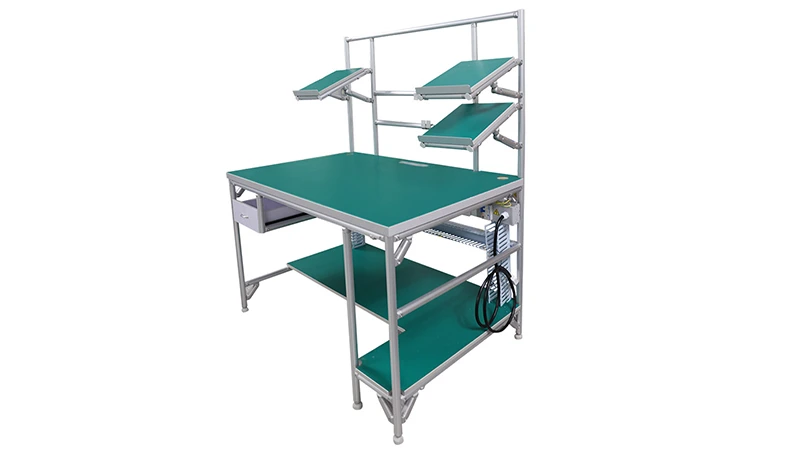
In the bustling heart of any production facility—whether it's a high-tech electronics plant, a busy automotive assembly line, or a precision manufacturing workshop—there's one piece of equipment that quietly holds everything together: the workbench. It's more than just a table; it's the stage where ideas take physical form, where teams collaborate, and where efficiency either thrives or stumbles. For decades, workbenches have been designed with a "one-size-fits-all" mindset, but as manufacturing evolves toward agility and customization, the need for a smarter, more adaptable solution has never been clearer. Enter Aluminum Workbench B—a product that doesn't just serve as a workspace but embodies a philosophy of lean thinking, modularity, and human-centric design. In this article, we'll peel back the layers of what makes Aluminum Workbench B a standout choice, exploring its design principles, real-world functionality, and why it's becoming the backbone of modern production lines.
The Design Philosophy: More Than Metal—A Mindset of Lean and Adaptability
At first glance, Aluminum Workbench B might look like a sleek assembly of aluminum tubes and panels, but its true innovation lies in the philosophy that guides its creation. This isn't just about building a sturdy surface; it's about reimagining how workspaces interact with people and processes. Three core principles drive its design: lean system integration, modular flexibility, and ergonomic intelligence. Let's break them down.
1. Lean System Integration: Eliminating Waste, Amplifying Flow
The term "lean" gets thrown around a lot in manufacturing, but for Aluminum Workbench B, it's not just a buzzword—it's the foundation. Lean system thinking is all about minimizing waste (whether that's time, space, or resources) while maximizing value. Every inch of this workbench is designed with that in mind. For example, traditional workbenches often come with fixed shelves, drawers, or tool holders that can't be adjusted. If a team's workflow changes—say, they start assembling smaller components that need more surface area—those fixed features become obstacles, forcing workers to waste time moving tools or overcrowding the workspace. Aluminum Workbench B solves this by treating waste as the enemy: its modular structure means nothing is permanent. Shelves can be added or removed in minutes, tool rails can be repositioned, and even the height can be adjusted to fit the task at hand. This adaptability ensures that the workbench evolves with the workflow, not against it—exactly what lean system principles demand.
Another key lean principle is "flow"—ensuring materials, tools, and people move through the workspace without unnecessary stops. Aluminum Workbench B's design supports this by prioritizing accessibility. Imagine a scenario where an assembly line worker needs to grab a specific tool 50 times a day. If that tool is stored just out of arm's reach, those extra seconds add up to hours of lost productivity over a week. Aluminum Workbench B addresses this with customizable accessory mounting points along its aluminum profile frame. Tools, bins, or even digital monitors can be positioned exactly where the worker needs them, reducing motion waste and keeping the workflow smooth. It's a small detail, but it's the kind of thoughtfulness that turns a static workbench into a dynamic partner in productivity.
2. Modular Flexibility: Built for Change, Not Just Today
In manufacturing, the only constant is change. A product line might shift from producing 100 units a day to 500, or a team might pivot from assembling circuit boards to testing medical devices. In such environments, a "permanent" workbench becomes a liability. Aluminum Workbench B flips the script with its modular design, centered around high-quality aluminum profile and aluminum pipe accessories. Unlike steel or wooden workbenches, which are welded or bolted into fixed shapes, this workbench is built using a system of interlocking components: aluminum tubes, joints, panels, and brackets that can be disassembled, reconfigured, or expanded with minimal effort.
Let's take a concrete example. Suppose a small electronics manufacturer starts with a single Aluminum Workbench B for prototyping. As their business grows, they need to add a second workstation. Instead of buying an entirely new bench, they can simply purchase additional aluminum profile sections and accessories to extend the original setup into a double workstation. Later, if they need to separate the two (maybe for different product lines), they can disassemble the extension in under an hour. This modularity isn't just about saving money—it's about empowering teams to experiment and adapt without being constrained by their tools. It's the difference between working around your workspace and working with it.
3. Ergonomic Intelligence: Designing for People, Not Just Processes
A workbench can be as lean and modular as possible, but if it doesn't prioritize the people using it, it will fail. Aluminum Workbench B puts ergonomics front and center, recognizing that a comfortable worker is a productive worker. Repetitive strain injuries, fatigue, and discomfort are common in manufacturing settings, often stemming from poorly designed workspaces. This bench tackles those issues head-on with adjustable features and thoughtful proportions.
For starters, the height of Aluminum Workbench B is customizable. Whether a worker is 5'2" or 6'4", they can adjust the legs to a height that keeps their arms at a natural, 90-degree angle while working—reducing strain on shoulders and wrists. The worktop itself is also designed with edge rounding, so there are no sharp corners to catch sleeves or cause bumps during long shifts. Even the material of the worktop plays a role: the aluminum honeycomb panel option is lightweight but rigid, reducing vibration during precision tasks (like soldering or small-part assembly) and minimizing fatigue from leaning or pressing down. These might seem like small touches, but over an 8-hour shift, they add up to happier, healthier teams—and fewer missed workdays due to injury.
Functional Benefits: From the Factory Floor to the Bottom Line
Philosophy is important, but at the end of the day, a workbench needs to deliver results. Aluminum Workbench B doesn't just sound good on paper; its design translates into tangible benefits that impact everything from daily workflow to long-term cost savings. Let's dive into the functional advantages that set it apart from traditional workbenches.
1. Unmatched Durability: Lightweight, but Built to Last
Aluminum has long been prized in manufacturing for its unique combination of strength and lightness, and Aluminum Workbench B leverages this to full effect. The frame is constructed from high-grade aluminum profile—typically 4040 or 3030 series extrusion profiles, known for their rigidity and resistance to bending. Unlike steel, aluminum doesn't rust, making the bench suitable for environments with moisture or chemicals (like automotive repair shops or food processing facilities). Even better, the aluminum pipe accessories (joints, brackets, and connectors) are designed to withstand repeated assembly and disassembly without losing their grip—so you can reconfigure the bench dozens of times, and it will still hold steady.
Consider a scenario where a workbench is used for heavy-duty tasks, like assembling metal components. A wooden bench might warp under the weight over time; a steel bench would be sturdy but so heavy it's impossible to move. Aluminum Workbench B, however, can support up to 300 kg of evenly distributed weight (depending on the configuration) while remaining light enough for two people to reposition if needed. It's the best of both worlds: tough enough for industrial use, but agile enough to adapt to changing floor plans.
2. Customization at Your Fingertips: Build the Bench You Need, When You Need It
No two teams work the same way, and Aluminum Workbench B embraces that diversity with a vast array of customizable options. Want to add a tool rail along the back? Just slide in an aluminum pipe with (hook accessories). Need a shelf for raw materials? Attach a panel using quick-connect brackets. Working with electrostatic-sensitive components? Opt for an ESD (electrostatic discharge) worktop to protect delicate electronics. Even the color of the accessories—from yellow plastic roller track guide rails for visual cues to grey aluminum guide rails for a sleek look—can be tailored to match your facility's aesthetic or workflow needs.
One of the most popular customizations is the addition of caster wheels. While Aluminum Workbench B is available in a "single deck-without caster" version (Workbench E, for stationary use), many teams opt to add locking caster wheels for mobility. This turns the bench into a mobile workstation that can be rolled to different parts of the facility as needed—perfect for cross-functional teams or just-in-time production setups. For example, in a warehouse, a team assembling orders can roll the bench directly to the inventory shelves, reducing the time spent walking back and forth. When the task is done, lock the casters, and the bench stays firmly in place. It's this level of flexibility that makes Aluminum Workbench B more than a workbench—it's a toolkit for productivity.
3. Cost-Efficiency: Investing in Long-Term Value
Let's talk about the elephant in the room: cost. At first glance, Aluminum Workbench B might have a higher upfront price tag than a basic wooden or steel workbench. But manufacturing managers know that the true cost of equipment isn't just the purchase price—it's the total cost of ownership over its lifespan. And here, Aluminum Workbench B shines.
First, its durability means it lasts longer. A wooden bench might need replacement after 3-5 years due to warping or rot; a steel bench could rust or bend under heavy use. Aluminum Workbench B, with its corrosion-resistant frame and wear-resistant accessories, can easily last 10+ years with minimal maintenance. Second, its modularity reduces the need for new purchases. Instead of buying a new bench when your workflow changes, you can reconfigure the existing one using affordable aluminum pipe accessories. Third, its lightweight design lowers shipping and installation costs. Unlike steel benches, which require forklifts or heavy machinery to move, Aluminum Workbench B can be assembled on-site by a small team with basic tools. Over time, these savings add up, making it a smarter investment than cheaper, less adaptable alternatives.

Key Components: The Building Blocks of Aluminum Workbench B
To truly understand Aluminum Workbench B, it helps to look at the individual parts that make it tick. While the bench is sold as a complete unit, its functionality comes from the synergy between high-quality components. Here are the core elements that set it apart:
| Component | Function | Why It Matters |
|---|---|---|
| Aluminum Profile (4040/3030 Series) | Forms the main frame (legs, side rails, and supports). | Lightweight yet rigid; compatible with all aluminum pipe accessories for easy customization. |
| Aluminum Honeycomb Panel Worktop | Provides the working surface; available in standard or ESD versions. | Resistant to scratches and heat; reduces vibration for precision tasks. |
| Aluminum Pipe Accessories (Joints, Brackets) | Connects frame components and adds features like shelves or tool rails. | Quick-connect design allows tool-free assembly and reconfiguration. |
| Plastic Roller Track Guide Rails (Yellow/Grey) | Mounted along edges for sliding materials or components. | Reduces friction, making it easy to move heavy items across the bench. |
| Caster Wheels (Optional) | Attaches to legs for mobility; includes locking mechanisms. | Turns the bench into a mobile workstation, ideal for dynamic floor plans. |
Each component is designed to work seamlessly with the others, creating a system that's greater than the sum of its parts. For example, the aluminum profile's T-slot design allows accessories to be attached anywhere along the frame—no pre-drilled holes required. This means if a team decides they need a tool hook 6 inches to the left of where it was before, they can simply slide the bracket to the new position and tighten a screw. It's this level of detail that makes customization feel effortless, not like a chore.

Real-World Applications: How Aluminum Workbench B Transforms Workflows
Philosophy and components are important, but how does Aluminum Workbench B perform in the real world? Let's look at two case studies that highlight its impact.
Case Study 1: Electronics Manufacturing Plant Streamlines Assembly
A mid-sized electronics manufacturer in Shenzhen was struggling with bottlenecks in their circuit board assembly line. Their old wooden workbenches had fixed shelves that were either too high (wasting vertical space) or too low (causing workers to bend). The team often had to walk to a separate storage rack to grab components, adding unnecessary steps to the process. After switching to Aluminum Workbench B, they reconfigured the setup with:
- Adjustable height legs to match each worker's ergonomic needs.
- Aluminum guide rails along the back to hold tools and small component bins.
- Yellow plastic roller track guide rails on the side to slide finished boards to the next station.
The result? A 20% reduction in assembly time per unit, and workers reported less fatigue at the end of shifts. "Before, we were fighting the workbench," said one team lead. "Now, it's like it's reading our minds—everything we need is right there, exactly where we want it."
Case Study 2: Automotive Repair Shop Enhances Mobility
A car repair shop in Berlin needed workbenches that could move between service bays. Their old steel benches were too heavy to reposition, so mechanics often had to carry tools and parts back and forth. They switched to Aluminum Workbench B with locking caster wheels, allowing them to roll the bench directly to the vehicle being repaired. The addition of a fold-down side shelf (using aluminum pipe accessories) provided extra space for parts when needed, then folded up to save space during storage. "It's like having a mobile tool chest and workbench in one," said the shop manager. "We've cut down on walking time by 30%, and the guys are much happier."
Why Aluminum Workbench B Stands Out: Comparing the Alternatives
To appreciate Aluminum Workbench B's value, it helps to compare it with traditional workbench options. Let's see how it stacks up against wood, steel, and generic aluminum benches.
| Feature | Aluminum Workbench B | Wooden Workbench | Steel Workbench | Generic Aluminum Bench |
|---|---|---|---|---|
| Weight | Light (150-200 kg, depending on size) | Heavy (200-300 kg) | Very Heavy (300+ kg) | Light (similar to Aluminum B) |
| Customization | High (modular accessories, reconfigurable) | Low (fixed design, hard to modify) | Low (welded frame, limited options) | Medium (some accessories, but limited compatibility) |
| Durability | High (rust-resistant, scratch-proof) | Low (prone to warping, scratches, and water damage) | High (but prone to rust without coating) | Medium (thinner aluminum, less rigid) |
| Ergonomics | High (adjustable height, rounded edges) | Low (fixed height, often too tall/short) | Medium (adjustable height, but heavy to move) | Medium (basic adjustability) |
| Cost (Lifespan Consideration) | Mid-range upfront, low long-term (10+ year lifespan) | Low upfront, high long-term (needs replacement every 3-5 years) | High upfront, medium long-term (rust issues after 5-7 years) | Low upfront, high long-term (breaks easily, needs replacement) |
The data speaks for itself: Aluminum Workbench B offers the best balance of durability, customization, and cost-effectiveness. While generic aluminum benches might be cheaper upfront, they lack the rigidity of high-grade aluminum profile and the extensive accessory ecosystem that makes Aluminum Workbench B truly adaptable. Steel and wood, meanwhile, can't compete in terms of mobility or ergonomic flexibility.
Conclusion: A Workbench That Grows With Your Team
Aluminum Workbench B is more than a piece of equipment—it's a statement about how manufacturing should work: agile, people-focused, and unafraid of change. By integrating lean system principles, modular design, and ergonomic intelligence, it transforms the workspace from a static obstacle into a dynamic asset. Whether you're running a small workshop or a large-scale production facility, this bench doesn't just meet your current needs—it anticipates your future ones.
In a world where manufacturing is defined by speed and customization, the tools we use must keep pace. Aluminum Workbench B does more than keep pace; it leads the way, proving that great design isn't just about what a product is, but how it makes people feel and perform. So the next time you walk through a production facility, take a closer look at the workbenches. Chances are, the ones driving efficiency, reducing waste, and keeping teams happy will be the ones with that sleek aluminum frame and endless possibilities: Aluminum Workbench B.