- Company Articles
- Products and Technology
- Product knowledge
- Definition and Functions of End Support for Roller Track Placon Mount with Stop in Material Handling

Definition and Functions of End Support for Roller Track Placon Mount with Stop in Material Handling
Related Product
End Support for Roller Track Placon Mount with Stop
Roller track placon mount work as a connector for roller track and pipe or aluminum profile in rack syetem, it is a necessary parts in rack system which widely used in industrial plant and logistic,warehouse storage.
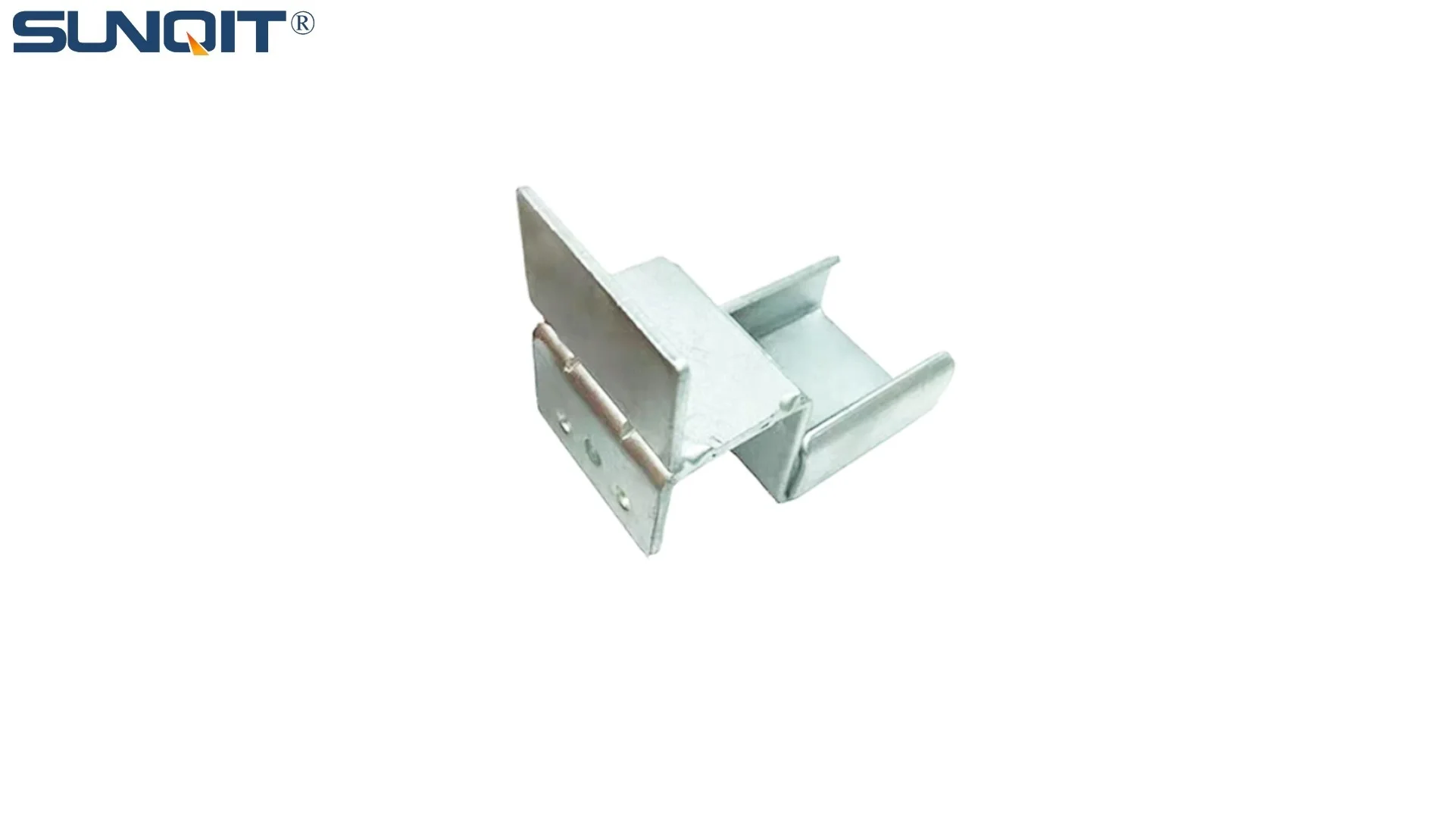
In the bustling world of manufacturing and logistics, where every second counts and precision is non-negotiable, material handling stands as the unsung hero that keeps production lines breathing. Imagine a busy workshop: conveyor belts hum to life, roller tracks glide with boxes and components, and workers move in sync to assemble, sort, and ship products. Amidst all this motion, there's a small yet mighty component that often goes unnoticed—but without it, the entire rhythm could falter. Today, we're shining a light on the End Support for Roller Track Placon Mount with Stop —a quiet guardian of efficiency in material handling.
You might be wondering: "Why focus on such a specific part?" Here's the truth: in lean manufacturing, every detail matters. From the largest conveyor system to the tiniest joint, each element contributes to the "flow" that defines a well-optimized operation. And when it comes to roller tracks—the workhorses of material transport—this end support isn't just a "nice-to-have." It's the difference between smooth, error-free (conveyor) and costly delays, damaged goods, or even workplace hazards. Let's dive into its story.
What Exactly Is an End Support for Roller Track Placon Mount with Stop?
Let's start with the basics. At its core, an End Support for Roller Track Placon Mount with Stop is a specialized component designed to anchor the (end) of a roller track system. But it's not just about support—it's about control. The "placon mount" refers to its mounting style, which is engineered to attach seamlessly to aluminum profiles or aluminum pipes, the building blocks of modern lean systems. And the "with stop" feature? That's the game-changer: a built-in mechanism (often a raised lip, rubber pad, or adjustable stopper) that gently but firmly halts materials as they reach the end of the track.
Think of it as the traffic cop at the end of a busy street. Without it, boxes might slide off the track, components could collide, and workers would spend extra time chasing wayward items instead of focusing on value-adding tasks. With it? Materials glide smoothly, stop precisely where needed, and the entire line keeps moving like a well-rehearsed orchestra.
5 Core Functions That Make It Indispensable
To truly appreciate this component, let's break down what it does day in and day out on factory floors around the world. These functions might seem simple, but their impact ripples through the entire production process.
1. Precision Stopping: No More "Almost There" Moments
In manufacturing, timing is everything. When a component travels down a roller track—whether it's a circuit board in a 3C assembly line or a medical device part—it needs to stop exactly at the workstation (workbench) where a worker is ready to handle it. A slight miscalculation, and the part might overshoot, requiring the worker to step in, adjust, and lose precious seconds.
The "stop" feature in this end support eliminates guesswork. It's calibrated to halt materials with just enough force to prevent movement but not enough to damage sensitive items. For example, in electronics manufacturing, where even a small scratch on an ESD workstation can compromise product quality, this gentle precision is invaluable.
2. Structural Stability: The Backbone of Roller Track Durability
Roller tracks aren't lightweights. They carry everything from small parts to heavy cartons, and over time, the constant stress can take a toll—especially at the ends, where there's no adjacent support. An end support acts like a sturdy bookend, reinforcing the track's structure and preventing bending, warping, or sagging.
This is particularly critical for aluminum roller tracks, which balance strength and weight. Without proper end support, the aluminum profile might flex under load, leading to uneven roller movement or even track failure. By distributing weight evenly and anchoring the track securely to the frame (often made of basic aluminum tube or aluminum profile), this component extends the lifespan of the entire system—aligning perfectly with the "sustainable improvement" ethos of lean solutions.
3. Material Protection: Keeping Products Intact, From Start to Finish
Imagine a line where boxes zip down a roller track, only to slam into a hard stop at the end. Over time, this could crack packaging, damage internal components, or even chip paint on finished goods. The end support with stop avoids this by incorporating shock-absorbing materials (like rubber or plastic) in its stopper design.
For industries like medical device manufacturing, where product integrity is literally a matter of life and death, this protection is non-negotiable. A well-designed end support ensures that delicate instruments arrive at the next station in pristine condition, reducing waste and rework—a key pillar of lean manufacturing.
4. Compatibility: Playing Well With Others in the Lean Ecosystem
Modern manufacturing systems are all about flexibility. A single production line might need to adapt to different product sizes, weights, or workflows overnight. That's why the best end supports are designed to be versatile, compatible with a wide range of roller track types, aluminum pipe accessories, and lean system components.
Whether you're using a 40 steel roller track with yellow wheels for heavy loads or a mini aluminum roller track for small parts, a quality end support should fit seamlessly. It should also work with various mounting options—like placon mounts for rail connection or aluminum profile flat mounts—so you can integrate it into existing setups without major overhauls. This adaptability is what makes it a cornerstone of modular lean systems, where reusability and quick reconfiguration are priorities.
5. Safety First: Reducing Risks for Workers
Last but never least: safety. A loose or missing end support could lead to materials sliding off the track, creating tripping hazards or (crushing) risks for workers. The stop feature also prevents "runaway" items, which might otherwise roll off and cause accidents in busy warehouses.
In environments like automotive assembly plants, where workers are constantly moving around conveyor systems and roller tracks, these safety benefits translate directly to fewer injuries and smoother operations. It's a small investment in peace of mind that pays off in happier, more productive teams.

End Support with Stop vs. Without Stop: A Quick Comparison
| Feature | End Support with Stop | End Support Without Stop |
|---|---|---|
| Primary Purpose | Support + controlled stopping of materials | Only structural support |
| Best For | Workstations, assembly lines, sensitive material transport | Continuous flow systems (e.g., between conveyors) |
| Material Protection | High (prevents collisions) | Low (materials may slide off or collide) |
| Safety Benefit | Reduces risk of falling items | Basic stability, but no stopping control |
| Lean Alignment | High (reduces waste, improves precision) | Moderate (only supports structure) |

Real-World Impact: How It Powers Key Industries
To see this component in action, let's look at a few industries where it makes a tangible difference—many of which are core focus areas for lean solution providers.
3C Assembly: Precision in Every Pixel
In 3C (computers, communications, consumer electronics) manufacturing, production lines move at lightning speed, assembling tiny components into smartphones, laptops, and tablets. Here, roller tracks transport circuit boards, screens, and casings between workstations. An end support with stop ensures that each component lands exactly on the ESD workbench, where a technician can solder, test, or assemble without fumbling. This precision cuts down on assembly errors and speeds up production—critical in an industry where product cycles are measured in months, not years.
Medical Device Manufacturing: Safety Beyond Compliance
Medical device production demands strict adherence to cleanliness and precision. Roller tracks in these facilities often carry sterilized tools, implant components, or diagnostic equipment. The end support's shock-absorbing stop prevents damage to these high-value items, while its compatibility with aluminum profile accessories ensures easy cleaning (no crevices for dirt buildup). For example, when transporting surgical instruments, the stop feature guarantees they arrive at the packaging station in perfect condition, ready for sterilization and shipment.
Warehouse Logistics: Streamlining the Last Meter
In busy warehouses, order fulfillment relies on quick, accurate picking and packing. Flow racks (a type of roller track system) are used to store boxes, with gravity pulling items toward the picking end. An end support with stop at the front of each flow rack lane ensures that boxes don't spill out onto the floor when a worker removes the front item. This keeps aisles clear, speeds up picking times, and reduces the risk of damaged inventory—all of which boost the bottom line for logistics operations.

Why Quality Matters: Choosing the Right End Support
Not all end supports are created equal. A cheap, poorly designed version might save money upfront, but it could cost far more in downtime, repairs, or damaged products later. Here's what to look for when selecting an end support for your roller track:
- Material Quality: Opt for supports made from durable aluminum or stainless steel, which resist corrosion and stand up to heavy use. This aligns with the "reusable" promise of lean systems—invest once, use for years.
- Adjustable Stoppers: Some materials are lighter or more fragile than others. A stopper with adjustable height or pressure lets you tailor the stopping force to your needs, from delicate electronics to rugged automotive parts.
- Easy Installation: Time is money. Look for supports that bolt on quickly with standard tools, compatible with your existing aluminum pipe and roller track accessories. No need for custom modifications!
- Certifications: For industries like medical or aerospace, ensure the component meets safety and quality standards (e.g., ISO certifications). This isn't just about compliance—it's about trust in your process.
At the end of the day, a quality end support is more than a part—it's an investment in your operation's efficiency, safety, and sustainability. It's the kind of detail that turns a good production line into a great one.
The Unsung Hero of Lean Material Handling
As we wrap up, let's circle back to that busy factory floor we imagined earlier. The next time you see a roller track gliding smoothly, or a worker effortlessly grabbing a component from a workstation, take a moment to appreciate the small parts that make it all possible. The End Support for Roller Track Placon Mount with Stop might not have a flashy name, but it's a silent champion of lean manufacturing—keeping materials moving, workers safe, and production lines thriving.
In a world where every second and every cent counts, it's the attention to these "little things" that separates good manufacturers from great ones. So whether you're building a new lean system, upgrading an existing conveyor line, or simply looking to squeeze more efficiency out of your workflow, don't overlook the power of a well-designed end support. After all, in lean manufacturing, success is in the details.