- Company Articles
- Products and Technology
- Product knowledge
- Design Considerations for Custom Free Flow Chain Conveyor Systems

Design Considerations for Custom Free Flow Chain Conveyor Systems
Related Product
Free Flow Chain Conveyor
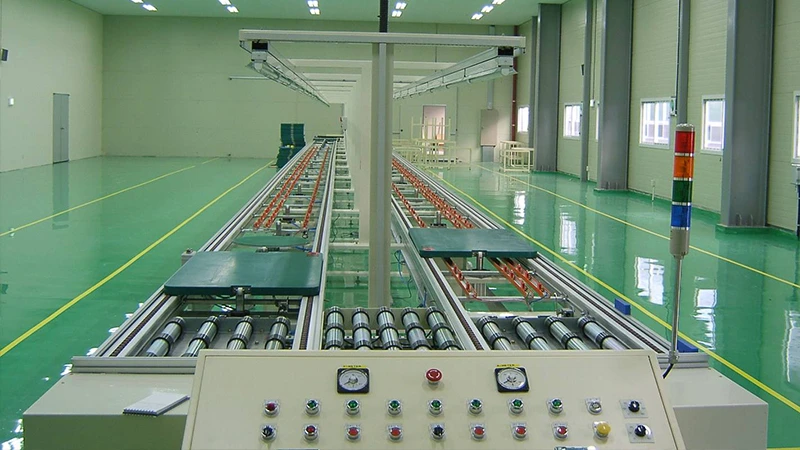
The free flow conveyor system uses a free flow chain that can increase the speed of the tooling board that supports the products. This can improve the efficiency and quality of the production process, as well as reduce the wear and tear of the system.
Introduction: The Backbone of Efficient Production
In the bustling world of manufacturing, where every second counts and efficiency is the name of the game, the right material handling system can make or break a production line. Enter the free flow chain conveyor system—a silent workhorse that keeps products moving, stations connected, and operations running like a well-oiled machine. Unlike off-the-shelf solutions that force your workflow to adapt to their limitations, custom free flow chain conveyors are built to fit *your* unique needs. They're not just pieces of equipment; they're strategic tools that align with lean system principles, minimize waste, and turn chaotic production floors into models of precision. Whether you're assembling electronics, packaging pharmaceuticals, or building automotive parts, a thoughtfully designed conveyor system doesn't just move products—it streamlines every step of the journey, from raw materials to finished goods. Let's dive into the key considerations that will help you design a system that's efficient, durable, and ready to grow with your business.
Understanding Operational Needs: Start with the "Why"
Before you even think about materials or layouts, you need to answer a critical question: What exactly will this conveyor system do? Too often, businesses jump into design without mapping out their operational needs, leading to systems that either overcomplicate processes or fail to keep up with demand. Let's break down the essentials.
First, throughput. How many units need to move through the conveyor per hour? A small bakery might need 100 loaves/hour, while a large-scale automotive plant could require 50 heavy engine blocks. Mismatched throughput means bottlenecks—imagine a conveyor that can only handle 20 units/minute feeding into a packaging station that processes 30. The result? Piles of inventory, frustrated workers, and delayed shipments.
Next, load capacity. Are you moving lightweight circuit boards (5kg each) or steel beams (500kg)? Underestimating weight leads to bent rollers, snapped chains, and frequent breakdowns. Overestimating? You'll pay for unnecessary strength, driving up costs. It's a balancing act—one that starts with weighing your heaviest product and adding a 20% buffer for safety.
Then there's product characteristics. Fragile items like glass panels or medical devices need gentle handling—rough roller tracks could scratch or crack them. Irregularly shaped products might require custom guides to prevent jamming. Even temperature matters: if your facility deals with extreme heat (like a foundry) or cold (a frozen food plant), materials like plastic roller track guide rails might warp or become brittle, while aluminum profile could stand up to the challenge.
Finally, don't forget about your team. Who will interact with the conveyor daily? Operators need clear access to products without straining—ergonomics matter. A conveyor that's too high forces workers to reach, increasing fatigue and error rates. Too low? Bending over all day leads to back injuries. By starting with these questions, you'll lay a foundation that ensures your conveyor works *with* your team, not against them.
Material Selection: Choosing the Right Building Blocks
Once you've mapped your needs, it's time to pick the materials that will bring your conveyor to life. The choices here impact everything from durability and cost to flexibility and maintenance. Let's start with the frame—the skeleton of your system. Two options dominate the market: steel and aluminum profile.
Aluminum profile is a favorite for modern manufacturing, and for good reason. Unlike steel, which is dense and prone to rust, aluminum is lightweight, making installation a breeze. Need to reconfigure a section? Two workers can lift and move aluminum frames without calling in heavy machinery. It's also naturally corrosion-resistant, a must for facilities with high humidity (like food processing plants) or frequent washdowns (pharmaceutical labs). When paired with aluminum profile accessories—think brackets, connectors, and guide rails—you get a modular system that can be tweaked on the fly. Want to add a new branch to the conveyor? Just slot in a few extra aluminum guide rails and secure them with roller track placon mounts. It's like building with industrial Legos.
Steel, on the other hand, is the tough guy in the room. It's stronger than aluminum, making it ideal for ultra-heavy loads (think 1000kg+ components). But that strength comes with downsides: it's heavy, hard to reconfigure, and needs regular painting or coating to fight rust. Unless you're moving military-grade equipment or operating in extreme conditions, aluminum profile often offers a better balance of strength, flexibility, and long-term value.
Then there are the roller tracks—the "muscles" that move products along. Roller materials range from plastic to steel, each with its own pros and cons. Plastic roller track guide rails, available in yellow or grey, are gentle on fragile items and quiet—no more clanging metal on metal. They're also cost-effective and lightweight, but they're not built for heavy loads. Steel rollers, by contrast, can handle hundreds of kilograms, but they're noisy and prone to scratching delicate products. For most mid-weight applications (20-100kg), a mix works best: plastic rollers for product contact and steel frames for support.
To help visualize the tradeoffs, here's a breakdown of aluminum profile vs. steel frames:
| Feature | Aluminum Profile | Steel Frame |
|---|---|---|
| Weight | Lightweight (easy to install/reconfigure) | Heavy (requires equipment for adjustments) |
| Corrosion Resistance | High (ideal for humid/clean environments) | Low (needs coating; rusts without maintenance) |
| Cost | Higher upfront, lower long-term (less maintenance) | Lower upfront, higher long-term (repairs, replacements) |
| Flexibility | Modular with accessories (easy to expand/modify) | Rigid (hard to adapt to new workflows) |
| Best For | Electronics, pharmaceuticals, light-to-medium loads | Heavy machinery, outdoor use, extreme conditions |
** Pro Tip:**Don't overlook the small stuff. Roller track connectors, like placon mounts or swivel roller balls, might seem trivial, but cheap components can derail your system. A loose connector can cause a roller to misalign, leading to jams and damaged products. Invest in high-quality accessories—your future maintenance team will thank you.
Layout Design: Mapping the Flow of Work
You've got your materials picked out—now, how will the conveyor fit into your space? Layout design is where art meets science: it's about creating a path that's efficient, intuitive, and aligned with your production goals. Let's start with the basics: flow patterns.
Linear layouts are the simplest: products move in a straight line from Point A to Point B. They work well for facilities with long, narrow spaces or single-stage production (e.g., a packaging line where products enter one end and exit boxed at the other). But they're not always the most efficient. If your production involves multiple steps—say, assembling, testing, and packaging— a linear conveyor might force products to travel back and forth, wasting time and space.
That's where U-shaped or circular layouts shine. A U-shape brings the start and end of the line closer together, reducing travel time for workers who need to restock materials or retrieve finished goods. Circular layouts, on the other hand, are perfect for continuous processes, like assembly lines where each workstation handles one task before passing the product along. Imagine a car battery production line: components enter the circle, get assembled, tested, and exit—no backtracking, no wasted steps.
Integration with workbenches is another key piece. Your conveyor shouldn't exist in a vacuum; it should connect seamlessly with the stations where workers actually do the hands-on work. For example, a workbench positioned alongside the conveyor allows operators to grab components, assemble them, and place the finished product back on the line—all without taking a step. Ergonomics matter here too: the conveyor should sit at waist height, so workers don't have to bend or stretch. Adjustable height workbenches, paired with aluminum profile legs, let you fine-tune this for each operator, reducing fatigue and boosting productivity.
Bottlenecks are the enemy of good layout design. Even the best conveyor can't fix a workflow where one station takes twice as long as the others. To avoid this, map your process step by step, timing each task. If Station 3 takes 2 minutes to test a product but Station 4 only takes 1 minute, you'll end up with a pile of products waiting at Station 4. The fix? Maybe split Station 3's tasks between two workers, or adjust the conveyor speed to slow down before Station 3, preventing a backlog.
Finally, leave room to grow. A layout that fills every inch of available space might work today, but what happens when you add a new machine next year? Aim for at least 3 feet of clearance on all sides of the conveyor—enough space for workers to move, maintenance teams to repair components, and future expansions to slot in without a complete overhaul.
Integration with Lean Systems: Minimizing Waste, Maximizing Flow
A great conveyor system doesn't just move products—it supports your lean system goals. Lean manufacturing is all about eliminating waste: waste of time, space, inventory, and effort. Your conveyor should be a tool to do just that. Let's see how.
First, continuous flow. Lean principles emphasize keeping products moving, not sitting idle. A well-designed free flow chain conveyor ensures that items never pile up—they move from one station to the next as soon as the previous task is done. For example, if a workbench is assembling circuit boards, the conveyor should deliver components exactly when the operator finishes the last one. No waiting, no stockpiles, just a steady stream of work. This not only reduces inventory waste but also cuts down on the time products spend in the facility, getting them to customers faster.
Then there's space optimization. Traditional conveyor systems can be bulky, taking up valuable floor space that could be used for production or storage. Aluminum profile conveyors, with their slim frames and modular design, let you make the most of every square foot. Wall-mounted sections, overhead tracks, or compact roller track systems can turn unused vertical or horizontal space into functional material flow paths. Even small adjustments, like using swivel roller balls (1 inch or 0.5 inch) for tight corners, keep the conveyor footprint small without sacrificing efficiency.
Waste of motion is another target. If workers have to walk 20 feet to retrieve tools or materials, that's time wasted. By integrating the conveyor with tool storage and workbenches, you cut down on unnecessary movement. For example, a material rack B (3 row and 3 floor) positioned above the conveyor can hold components, so operators grab what they need without leaving their station. The result? More time spent assembling, less time walking.
Finally, quality control. A conveyor that moves too fast might cause operators to rush, leading to errors. Too slow, and you're wasting capacity. By syncing conveyor speed with station cycle times, you create a rhythm that allows for careful, consistent work. Some systems even include built-in stops: when a product reaches a workbench, the conveyor pauses, giving the operator time to inspect or assemble before sending it on. This not only reduces defects but also empowers workers to take ownership of quality—no more "passing the problem down the line."
In short, your conveyor shouldn't just be part of your production process; it should be part of your lean strategy. When design and lean principles align, you're not just building a conveyor—you're building a culture of efficiency.
Safety: Protecting Your Most Valuable Asset—Your Team
All the efficiency in the world means nothing if your conveyor puts workers at risk. Safety should be woven into every design decision, from the height of the rails to the type of casters you choose. Let's start with the basics: guarding. Any conveyor moving at more than 5 feet per minute (or with exposed moving parts) needs guardrails to prevent products from falling off. For elevated conveyors, these rails should be at least 42 inches high—tall enough to stop a misaligned box or a worker's arm from slipping through. Clear, visible signage is a must too: "Keep Hands Clear," "Emergency Stop: Pull to Halt," and "Maximum Load: 50kg" remind everyone to stay safe.
Emergency stops are non-negotiable. These red, easy-to-reach buttons should be placed every 10-15 feet along the conveyor, and they must cut power instantly. In high-risk areas (like where products are loaded/unloaded), consider adding foot pedals or pull cords—sometimes hands are too busy to reach a button. And don't forget to test them regularly: a stuck emergency stop is worse than none at all.
If your conveyor is mobile (on casters for flexibility), stability is key. Swivel stem casters with brakes can lock the system in place during operation, preventing it from rolling away if bumped. Caster accessories like anti-slip pads or heavy-duty caster wheels (rated for the conveyor's total weight) add an extra layer of security. For stationary systems, anti-slip adjustable leveling feet keep the conveyor from wobbling, even on uneven floors—critical for preventing spills or tip-overs.
Ergonomics play a role in safety too. A conveyor that's too high forces workers to stretch, increasing the risk of strains or falls. Adjustable workbenches, paired with aluminum profile legs that can be raised or lowered, let you set the perfect height for each operator. Similarly, roller track heights should align with workbench surfaces, so transferring products from conveyor to bench is a smooth, effortless motion—no lifting, no twisting.
Finally, training. Even the safest conveyor is dangerous in untrained hands. Ensure all workers know how to start/stop the system, use emergency stops, and report issues like jammed rollers or loose connectors. Regular safety meetings, where teams can flag concerns, keep everyone vigilant and invested in keeping the line safe.
Maintenance and Longevity: Keeping the Flow Going
A conveyor system is an investment—and like any investment, it needs care to deliver returns. Neglect maintenance, and you'll be stuck with frequent breakdowns, costly repairs, and frustrated teams. Here's how to keep your system running strong for years.
Accessibility is the first rule. If workers need to disassemble half the conveyor to replace a single roller, maintenance will get delayed. Design your system with easy access in mind: roller track placon mounts that pop off with a wrench, connectors that don't require special tools, and clear pathways to critical components. For example, roller track placon mount brackets should be positioned so that a technician can reach them without crawling under the conveyor.
Regular inspections are next. Create a checklist: daily checks for jammed rollers or loose connectors, weekly lubrication of chains and bearings, monthly tightening of fasteners, and quarterly deep dives into wear parts like swivel roller balls or caster wheels. Even small issues, like a cracked plastic roller track guide rail, can escalate into big problems if ignored. Catching them early saves time and money.
Lubrication is a balancing act. Too little, and moving parts grind together, wearing out quickly. Too much, and grease attracts dust and debris, gumming up the works. Use the manufacturer's recommendations for type and frequency—synthetic lubricants work best for high-speed conveyors, while heavy-duty greases are better for slow-moving, heavy-load systems. And always wipe away excess to keep the conveyor clean.
Quality components matter too. It might be tempting to cut costs with cheap roller track connectors or generic casters, but they'll fail faster. Invest in reputable parts: stainless steel swivel roller balls for corrosion resistance, aluminum profile accessories from trusted suppliers, and casters with sealed bearings to keep out dirt. Remember: a $5 part that lasts 6 months is more expensive than a $10 part that lasts 5 years.
Finally, plan for replacements. Even the best components wear out. Keep a stock of critical spares—rollers, connectors, belts—so you're not waiting for shipments when something breaks. Label parts clearly, and store them near the conveyor for quick access. A little preparation goes a long way toward minimizing downtime.
Future Scalability: Building for Tomorrow
The only constant in manufacturing is change. New products, growing demand, or shifting workflows can turn today's perfect conveyor into tomorrow's bottleneck. That's why scalability should be built into your design from day one.
Modularity is your best friend here. Aluminum profile conveyors, with their interlocking components and aluminum profile accessories, are inherently scalable. Need to add a new section? Just bolt on extra aluminum guide rails and connect them with roller track placon mounts. Want to change the direction? Swap out straight roller track for a curved section with swivel roller balls. It's like adding Lego blocks—no need to rebuild the entire system.
Adjustable components help too. Workbenches with height-adjustable legs, conveyors with variable speed controls, or roller tracks that can be extended with additional rails give you flexibility as needs change. For example, if you start producing larger products, you can widen the conveyor by adding side rails or replace plastic roller track guide rails with taller aluminum ones to keep items centered.
Power and control systems should also be scalable. A basic on/off switch might work today, but tomorrow you might want to integrate sensors, barcode scanners, or automated diverters that sort products into different lanes. Ensure your electrical setup has room for expansion—extra wiring conduits, unused ports on control panels, or space for additional motors. It's cheaper to install these now than to rewire later.
Finally, think about data. Smart conveyors with sensors can track throughput, downtime, and maintenance needs, giving you insights to optimize performance. Even if you don't need these features today, choosing a system with built-in connectivity (like Ethernet ports or wireless capabilities) lets you add them down the line. Data-driven decisions will be key to staying competitive, and your conveyor should be ready to feed that data.
Conclusion: Your Conveyor, Your Success
Designing a custom free flow chain conveyor system is more than a technical task—it's a strategic one. It requires understanding your operational needs, choosing the right materials, and aligning every component with your goals for efficiency, safety, and growth. From the aluminum profile frame that forms its skeleton to the roller track that moves products, every detail impacts how well your production line performs.
Remember, this isn't just about moving products—it's about empowering your team, supporting your lean system, and building a foundation for success. A well-designed conveyor reduces waste, cuts costs, and turns chaos into order. It's the quiet partner that ensures your production line doesn't just run—it *thrives*.
So take the time to plan, to ask questions, and to invest in quality. Your future self—and your bottom line—will thank you. After all, in manufacturing, the best systems aren't just built to work—they're built to evolve, adapt, and keep your business moving forward, one product at a time.