- Company Articles
- Products and Technology
- Product knowledge
- Design Features of Two Way Lean Pipe Joint for Durability and Flexibility

Design Features of Two Way Lean Pipe Joint for Durability and Flexibility
Related Product
Two Way Lean Pipe Joint
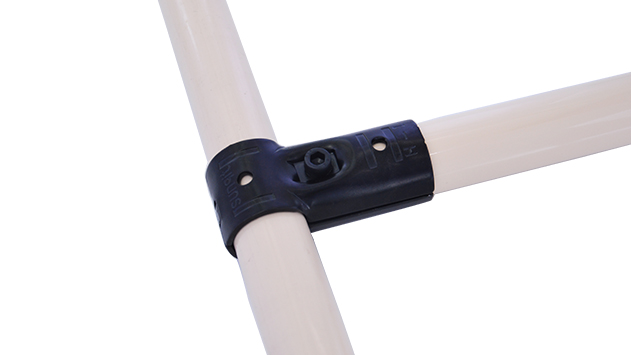
Two way lean pipe joint for 2 pcs 28MM lean pipe connection in straight angle, which used widely in workbench, flow rack, hand trolley frame connection.
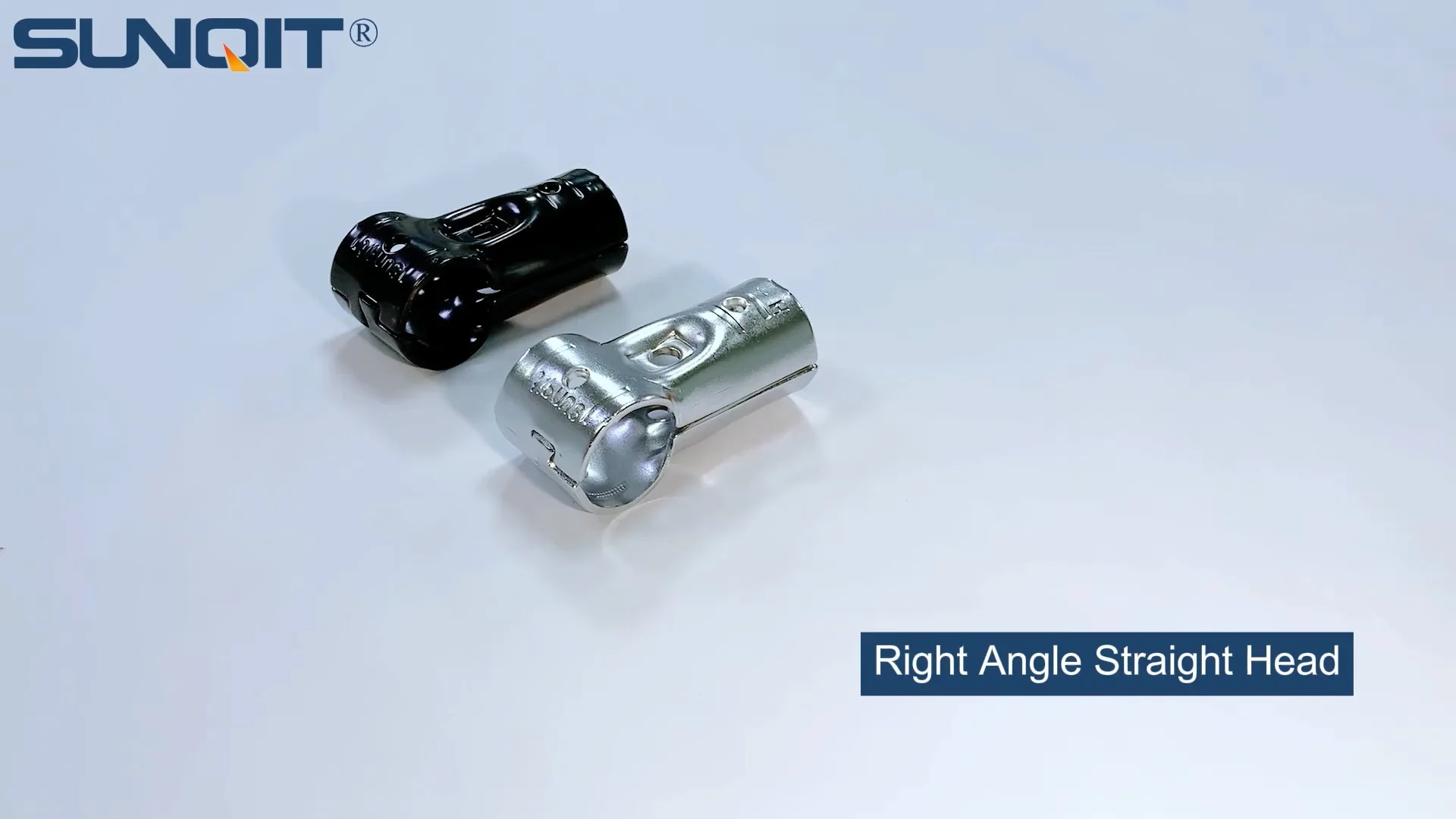
In the fast-paced world of manufacturing and warehouse operations, the ability to adapt quickly while maintaining structural reliability isn't just a luxury—it's a necessity. At the heart of this balance lies the lean system, a philosophy built on minimizing waste, optimizing flow, and fostering continuous improvement. But even the best lean strategies rely on tangible tools, and few tools are as foundational as the lean pipe joint. Among these, the two way lean pipe joint stands out as a quiet workhorse, blending rugged durability with the kind of flexibility that keeps modern workspaces agile. Let's dive into what makes this unassuming component so critical, exploring the design choices that make it a staple in factories, workshops, and distribution centers worldwide.
1. The Role of Lean Pipe Joints in Modern Workspaces
Before we zoom in on the two way joint, let's take a step back to understand where it fits in the bigger picture. Lean pipe systems—often assembled from pipes, joints, and accessories—are the backbone of countless industrial structures: think workbenches where assembly line workers piece together electronics, flow racks that guide components from station to station, and turnover trolleys that shuttle materials across the factory floor. These systems are beloved for their modularity; unlike fixed metal frames or custom-built furniture, they can be reconfigured in hours (or even minutes) to meet changing needs. And at every connection point, you'll find a lean pipe joint holding it all together.
Lean pipe joints come in various configurations—three way, four way, fixed angle, swivel—and each serves a specific purpose. But the two way lean pipe joint is perhaps the most versatile of the bunch. As the name suggests, it connects two pipes at a single point, typically at a 90-degree angle (though some designs allow for slight adjustments). This simplicity is deceptive, though. A well-designed two way joint doesn't just link pipes; it ensures the entire structure can bear weight, resist wear, and adapt when your workflow shifts. It's the difference between a rickety shelf that sags under pressure and a sturdy workbench that lasts for years, even with daily use.
2. Durability by Design: Materials and Structural Engineering
Materials That Withstand the Grind
Durability starts with what a joint is made of, and two way lean pipe joints are engineered to stand up to the harsh realities of industrial environments. Many are crafted from high-grade steel, chosen for its exceptional strength-to-weight ratio. Steel joints can handle heavy loads—think stacks of metal parts or fully loaded bins—without bending or warping. But steel alone isn't enough; exposure to moisture, oils, or chemicals in factories can lead to rust, which weakens the joint over time. That's why most steel joints are coated with a layer of zinc (galvanized) or a tough polymer, creating a barrier against corrosion. Run your hand over a quality two way joint, and you'll feel the smooth, uniform coating that protects it from the elements.
In recent years, aluminum has also emerged as a popular material for lean pipe systems, and two way joints made from aluminum pipe offer their own set of advantages. Aluminum is lighter than steel, making the entire structure easier to move and reconfigure. It's also naturally resistant to corrosion, thanks to a thin oxide layer that forms on its surface when exposed to air. This makes aluminum joints ideal for environments where moisture is a concern—like food processing facilities or outdoor loading docks. Plus, aluminum's malleability allows for intricate designs, ensuring the joint can grip pipes tightly without cracking under stress.
Structural Design: More Than Just a Connection
Even the strongest materials won't save a poorly designed joint. The magic of the two way lean pipe joint lies in how its shape and mechanics distribute force. Let's break it down: when you attach two pipes to a two way joint, the weight of the structure (and whatever it's holding) presses downward on the joint. A well-engineered joint will spread this load evenly across both pipes, preventing stress froming on a single point. This is often achieved through a cylindrical or hexagonal core with threaded holes or clamping mechanisms that bite into the pipes, creating a secure, rigid connection.
Precision is another key factor. Imagine trying to assemble a workbench with a joint that's slightly misshapen—one pipe sits at a 92-degree angle instead of 90, and the other wobbles loosely. Not only would the structure look uneven, but it would also be unstable, prone to shaking or even collapsing under load. High-quality two way joints are machined to tight tolerances, ensuring pipes fit snugly and align correctly every time. This precision isn't just about aesthetics; it's about safety. A joint that's off by even a millimeter can compromise the entire system's integrity.
3. Flexibility: The Secret to Adaptable Workspaces
If durability is about standing strong, flexibility is about staying ready to change. In today's manufacturing landscape, where product lines shift, order volumes spike, and new technologies require updated workflows, rigidity is the enemy. Two way lean pipe joints are designed to be disassembled and reassembled with minimal effort, making them perfect for teams that need to pivot quickly.
Tool-Free Assembly: Speed Without Sacrifice
Gone are the days of fumbling with wrenches or waiting for a maintenance crew to drill holes. Modern two way joints often use a clamping mechanism—think a lever, a setscrew, or a cam lock—that lets workers secure pipes by hand. Twist the lever, and the joint tightens around the pipe; twist it the other way, and it releases. This tool-free design cuts assembly time dramatically. For example, a team reconfiguring a workbench can take it apart, adjust the pipe lengths, and put it back together in under an hour, compared to hours (or days) for a welded steel bench. It's a game-changer for small-batch production or facilities that handle seasonal demand swings.
This flexibility also reduces waste. Instead of scrapping an entire structure when you need a new layout, you can reuse the same pipes and joints to build something new. A flow rack that once held small plastic parts can become a trolley for transporting finished goods, simply by swapping out a few joints and adding casters. It's lean manufacturing in action—minimizing material waste while maximizing resource use.
Compatibility with Lean Pipe and Accessories
A two way joint's flexibility isn't limited to its own design; it also plays well with others. Most are compatible with standard lean pipe diameters (often 28mm or 30mm for steel, or 20mm for aluminum), meaning you can mix and match with other joint types, pipes, and accessories. Need to add a shelf to your workbench? Attach a three way joint to your two way connection. Want to make the bench mobile? Swap out a fixed foot for a caster wheel using a compatible adapter. This interoperability is key to building truly customized systems. A automotive parts manufacturer might use two way joints to build a basic frame, then add roller track and accessories to create a gravity-fed flow rack, ensuring parts glide smoothly to the assembly line.

4. Real-World Performance: Testing the Limits
Design features sound great on paper, but how do they hold up in the real world? Let's consider a typical scenario: a workbench in an electronics factory, used daily by two workers assembling circuit boards. The bench is built with aluminum pipes and two way joints, topped with a plywood surface, and loaded with tools, components, and a small testing device—easily 150kg of weight. Over months of use, the bench is bumped by trolleys, scrubbed clean with industrial cleaners, and occasionally reconfigured to accommodate new board sizes. A poorly designed joint might loosen, causing the bench to wobble; a cheap material might rust or crack. But a quality two way joint? It stays tight, resists corrosion, and keeps the bench level and stable.
Another example: a flow rack in a distribution center, guiding packages down to a sorting station. The rack uses two way joints to connect horizontal and vertical pipes, with roller track mounted between them. Every day, hundreds of boxes slide over the rollers, jostling the structure. The joints must absorb this vibration without coming loose. Thanks to their clamping design and robust materials, two way joints keep the rack aligned, preventing jams and ensuring packages move smoothly.

5. Comparing Two Way Joints to Other Configurations
To truly appreciate the two way joint's strengths, it helps to compare it to other common lean pipe joints. Let's look at how it stacks up against three way joints (which connect three pipes) and fixed-angle joints (which lock pipes at a set angle, no adjustments allowed).
| Feature | Two Way Lean Pipe Joint | Three Way Lean Pipe Joint | Fixed-Angle Lean Pipe Joint |
|---|---|---|---|
| Primary Use Case | Basic frames, straight runs, right-angle connections (e.g., workbench legs, shelf supports) | Branching structures (e.g., adding a side shelf to a rack, T-junctions in flow systems) | Permanent, unchanging structures (e.g., heavy-duty racks, fixed-height platforms) |
| Flexibility | High: Easy to disassemble and reposition; compatible with most accessories | Medium: More versatile than fixed joints but bulkier; harder to repurpose for simple structures | Low: Designed for static use; difficult to adjust without tools |
| Load Capacity | High (up to 200kg per joint, depending on material) | High (similar to two way, but weight distribution varies by design) | Very high (welded or bolted designs often handle 300kg+) |
| Assembly Time | Fast (2-5 minutes per joint, tool-free) | Moderate (5-8 minutes per joint, due to extra connections) | Slow (requires tools; permanent installation) |
| Best For | Agile workspaces with changing needs (small factories, R&D labs, seasonal operations) | Complex systems with multiple branches (distribution centers, large-scale assembly lines) | Stable, long-term setups (warehouses with fixed inventory, heavy machinery bases) |
As the table shows, two way joints excel in scenarios where balance is key—enough strength to handle daily use, enough flexibility to adapt when things change. They're the "utility player" of lean pipe systems, reliable in a wide range of roles without overcomplicating things.
6. Innovations in Two Way Joint Design
Like all industrial components, two way lean pipe joints are evolving. Manufacturers are constantly tweaking designs to boost durability, reduce weight, and improve user experience. One trend is the rise of aluminum joints, which pair well with aluminum pipe to create lighter systems that are easier to maneuver. Aluminum is also naturally resistant to corrosion, making these joints popular in food processing or pharmaceutical facilities where cleanliness is critical.
Another innovation is the integration of ergonomic features. Some joints now have rubberized grips on levers to make tightening easier, or color-coded components to help workers quickly identify pipe sizes. There are even "smart" joints in development, equipped with sensors that alert maintenance teams when a connection loosens—preventing accidents before they happen.
Sustainability is also driving change. Many suppliers now use recycled steel or aluminum in their joints, and some offer take-back programs for old components, ensuring they're recycled rather than landfilled. For companies aiming to reduce their carbon footprint, these eco-friendly options are a selling point.
7. Choosing the Right Two Way Joint for Your Needs
With so many options on the market, how do you pick the right two way joint? Start by asking a few key questions:
- What's the load? If you're building a workbench for light tools, a basic steel joint might suffice. For heavy machinery or stacked pallets, opt for a reinforced design with thicker walls.
- Will it be moved often? If you need to reconfigure weekly, go for a tool-free aluminum joint. If it's a permanent structure, a galvanized steel joint might offer better long-term value.
- What's the environment like? In damp or chemical-heavy areas, aluminum or stainless steel joints are a must. In dry workshops, standard steel with a powder coating should work.
- Do you need compatibility with existing systems? Check pipe diameters and accessory types before buying—most suppliers list compatibility specs online.
Don't underestimate the importance of choosing a reputable lean pipe supplier, either. A cheap, poorly made joint might save you money upfront, but it could cost far more in downtime, repairs, or even injuries if it fails. Look for suppliers that test their joints to industry standards (like ISO certifications) and offer warranties—these are signs of a product built to last.
8. The Bottom Line: Why Two Way Joints Matter
At the end of the day, the two way lean pipe joint is more than just a connector. It's a enabler of lean principles, a tool that lets teams work smarter, adapt faster, and build better. Its durability ensures your structures stand the test of time, while its flexibility keeps your workspace ready for whatever comes next. Whether you're assembling a simple workbench or a complex flow rack system, this unassuming component plays a starring role in keeping your operations efficient, safe, and agile.
So the next time you walk through a factory or warehouse, take a closer look at the racks, benches, and trolleys around you. Chances are, you'll spot a two way lean pipe joint holding it all together—quietly, reliably, and flexibly. It's proof that even the smallest components can make a big difference in the world of lean manufacturing.