- Company Articles
- Products and Technology
- Product knowledge
- Design Flexibility with 3030b EU Standard Aluminum Profile: Custom Frame Solutions

Design Flexibility with 3030b EU Standard Aluminum Profile: Custom Frame Solutions
Related Product
3030B EU Standard Aluminum Profile
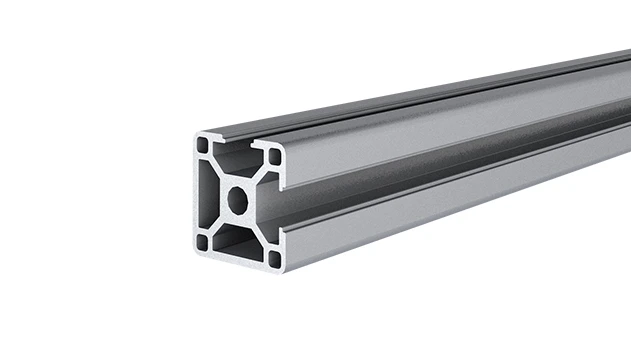
3030 is a 3.00 x 3.00CM fractional 30 series square extrusion T-slot profile with two side open T-slots, each side with 3.00cm face, 2 side with open slot, 2 side with closed face. The profile has align-a-grooves to assist in aligning connecting profiles.
In today's fast-paced manufacturing and workshop environments, the ability to adapt quickly isn't just a luxury—it's a necessity. Whether you're setting up a new assembly line, reconfiguring a workbench for a special project, or scaling up production to meet sudden demand, rigid, one-size-fits-all equipment can feel like trying to fit a square peg into a round hole. That's where modular solutions come in, and at the heart of this adaptability lies the 3030b EU Standard Aluminum Profile. More than just a piece of metal, this aluminum extrusion profile is a building block for innovation, empowering teams to create custom frames that grow, change, and evolve with their needs. Let's dive into how this unassuming profile is revolutionizing flexibility in workshops, factories, and beyond.
What is the 3030b EU Standard Aluminum Profile?
Before we explore its design flexibility, let's get to know the 3030b EU Standard Aluminum Profile up close. Part of the broader family of aluminum extrusion profiles, the "3030b" designation tells us two key things: its dimensions and its compliance with European standards. The profile measures 30mm by 30mm in cross-section—small enough to be lightweight and manageable, yet robust enough to support serious loads. The "EU Standard" tag ensures consistency in dimensions, material quality, and performance, so you know you're working with a product that meets strict industry benchmarks.
Made from high-grade aluminum alloy, typically 6063-T5, this profile is extruded through precision dies to create its signature shape. What sets it apart, though, isn't just its size or material—it's the T-slot design running along its length. These slots, like tiny integrated channels, are the secret to its versatility. They allow aluminum profile accessories—connectors, brackets, panels, and more—to be attached quickly and securely without drilling, welding, or permanent modifications. It's like building with a set of advanced Lego blocks, but for grown-ups who need their creations to withstand real-world stress.
Design Flexibility: More Than Just "One and Done"
Flexibility in manufacturing equipment often gets talked about, but what does it really mean? For most teams, it translates to three things: the ability to customize, the ease of reconfiguration, and the option to scale. The 3030b profile excels in all three, turning abstract ideas into tangible, functional structures with minimal hassle.
Customization: Build It Your Way
Every workspace is unique. A small electronics repair shop might need a compact workbench with built-in tool holders, while a automotive parts manufacturer could require a heavy-duty material rack to store bulky components. The 3030b profile doesn't force you into a predefined mold. Instead, it acts as a blank canvas. Want a workbench with a specific height to reduce worker strain? Cut the profile to length. Need a frame with shelves at odd angles to fit around existing machinery? Use adjustable brackets and connectors. The T-slot system means you can add, remove, or reposition components on the fly—no need to start from scratch when requirements change.
Real Scenario: The Adaptable Assembly Station
A mid-sized electronics company recently landed a contract to assemble two new product lines: one small, delicate sensor and one larger, heavier control panel. Their existing assembly stations were fixed-height and couldn't accommodate both. Using 3030b profiles, they built two modular workbenches. For the sensor line, they added a lower shelf for tools and a (ESD) mat to protect sensitive components. For the control panels, they raised the main surface and attached a side rack for holding bulky wiring harnesses. When the contract ended, they disassembled the stations, reusing the profiles and accessories to build a temporary packing station for a holiday rush. No wasted materials, no downtime waiting for custom equipment—just quick, purposeful adaptation.
Reconfiguration: Change Without Chaos
In traditional setups, changing a workbench or frame often meant calling in a welder, buying new parts, or spending hours with a drill. With 3030b, reconfiguration is as simple as loosening a few screws. Let's say your team realizes a material rack is taking up too much floor space. Instead of replacing it, you can adjust the height of the shelves, narrow the width by removing a section, or even repurpose the profiles to build a mobile trolley. The aluminum profile accessories—like 90° connectors, corner brackets, and end caps—lock into place with friction or simple fasteners, making disassembly and reassembly a one-person job in many cases.
This is a game-changer for lean system environments, where efficiency and waste reduction are priorities. Instead of stockpiling extra frames "just in case," you can adapt existing ones to meet new needs, cutting down on storage costs and material waste. It's flexibility that saves time, money, and frustration.
Scalability: Grow As You Go
Startups and small businesses know this struggle: investing in equipment that's perfect for today, but too small or outdated in six months. The 3030b profile eliminates that dilemma. Need to expand a workbench from 4 feet to 6 feet? Add another section of profile. Want to turn a single-level material rack into a double-decker? Stack profiles vertically with connecting brackets. Since the EU standard ensures compatibility across brands, you can mix and match accessories from different suppliers as you scale, avoiding vendor lock-in.
Even large enterprises benefit. A automotive plant, for example, might start with a small 3030b-based testing rig for a new component. If the component enters mass production, they can replicate the rig dozens of times using the same profiles and accessories, ensuring consistency across the line while keeping costs low.

Key Features That Make the 3030b Profile a Standout
Flexibility doesn't happen by accident—it's built into the 3030b profile's DNA. Here are the features that make it such a reliable partner for custom frame solutions:
- Lightweight Yet Strong: Aluminum is naturally lighter than steel, making the 3030b profile easy to handle during assembly and reconfiguration. Don't let the weight fool you, though—its alloy composition gives it impressive load-bearing capacity, often supporting up to 150-200 kg per linear meter depending on the setup. That's enough for most workbenches, material racks, and light-duty conveyor frames.
- Corrosion Resistance: Aluminum forms a natural oxide layer that protects against rust, making the profile suitable for use in damp environments or cleanrooms where steel might degrade over time. For extra protection, many suppliers offer anodized finishes that durability and give it a sleek, professional look.
- Precision T-Slots: The T-slots are machined to tight tolerances, ensuring a snug fit with accessories. Whether you're using slide-in nuts, drop-in bolts, or spring-loaded connectors, you can trust that components won't shift or loosen during use—critical for safety and reliability.
- Cost-Effective: While high-quality aluminum extrusion profiles aren't the cheapest option upfront, their reusability and low maintenance costs make them a smart long-term investment. Compare that to welded steel frames, which require professional labor to modify and often end up in the scrap heap when no longer needed.
Applications: From Workbenches to Whole Production Lines
The 3030b EU Standard Aluminum Profile isn't limited to one type of project. Its versatility means it pops up in workshops, factories, labs, and even retail spaces. Let's explore some of the most common (and creative) ways it's used:
Workbenches: The Heart of the Workshop
A workbench is more than just a table—it's where ideas become products. With 3030b profiles, you can build a workbench tailored to your tasks. Add a pegboard for tools using T-slot hooks, mount a vice to the frame with brackets, or attach a monitor arm for digital work instructions. For ESD-sensitive environments, like electronics assembly, pair the profile with an ESD workbench top and grounding accessories to protect components from static damage. The best part? If you switch from assembling small parts to large equipment, you can raise the bench height or add a second tier in an afternoon.
Material Racks and Storage Solutions
Keeping parts organized is half the battle in manufacturing. 3030b profiles shine here, too. Build a material rack with adjustable shelves to accommodate boxes of different sizes, or add roller tracks (another type of aluminum profile accessory) to create a gravity-fed flow rack that ensures first-in, first-out (FIFO) inventory management—a cornerstone of lean system practices. Need to move materials around the shop? Mount casters to the base of a 3030b frame to turn a static rack into a mobile trolley, eliminating the need for separate carts.
Lean Manufacturing Cells
Lean manufacturing thrives on minimizing waste and maximizing flow. 3030b profiles help create "cells"—self-contained workstations where teams can complete entire processes without unnecessary movement. For example, a cell might include a 3030b workbench, a nearby material rack, and a small conveyor (built with the same profiles) to move parts to the next stage. If the process changes, the cell can be rearranged in hours, not days, keeping production on track.
Prototyping and Testing Frames
Engineers and designers love the 3030b profile for prototyping. Whether building a mockup of a new machine or a test rig for product durability, the profile allows quick iteration. Attach sensors, cameras, or actuators using T-slot brackets, test the design, and tweak it without starting over. It's a low-risk way to experiment before committing to expensive custom tooling.
Aluminum Profile Accessories: The Icing on the Cake
A profile is only as good as the accessories that bring it to life. The 3030b EU Standard Aluminum Profile works with a vast ecosystem of aluminum profile accessories, each designed to extend its capabilities. Here are some of the most useful ones:
- Connectors: These are the glue that holds everything together. From simple 90° angle brackets for corners to 135° connectors for angled frames, and even 3-way or 4-way connectors for branching structures, there's a connector for every joint. Many are designed to slide into T-slots and tighten with a hex key, making assembly tool-free in some cases.
- Panels and Plates: Attach plywood, acrylic, or aluminum honeycomb panels to the profile to create workbench tops, shelving, or machine guards. Panel mounts and brackets secure the panels in the T-slots, so you can swap them out if they get damaged or if you need a different material.
- End Caps: These small, often overlooked accessories finish off the ends of the profile, preventing snags on clothing or cables and giving the frame a polished look. They're also useful for sealing T-slots in areas where you don't want dust or debris to accumulate.
- Casters and Leveling Feet: Add mobility with lockable casters for trolleys and movable workbenches, or stabilize frames on uneven floors with adjustable leveling feet. Both attach easily to the profile's end caps or base brackets.
- Lighting and Power Accessories: For workbenches or assembly lines, T-slot-compatible LED light bars and power strips can be mounted directly to the profile, keeping cords organized and tools within reach.
How Does the 3030b Profile Compare to Other Sizes?
The 3030b isn't the only aluminum extrusion profile out there. So when should you choose it over smaller profiles like the 2020 or larger ones like the 4040? The answer depends on your project's size, load, and space constraints. Here's a quick comparison to help you decide:
| Profile Type | Dimensions (mm) | Typical Load Capacity (kg/m) | Best For | Key Tradeoff |
|---|---|---|---|---|
| 2020 EU Standard | 20x20 | 50-100 | Small shelves, lightweight frames, DIY projects | Limited load capacity; not ideal for heavy workbenches |
| 3030b EU Standard | 30x30 | 150-200 | Workbenches, material racks, medium-duty frames | Balances strength, weight, and size; versatile for most applications |
| 4040 EU Standard | 40x40 | 250-350 | Heavy machinery frames, industrial conveyor systems | Heavier and bulkier; overkill for small to medium projects |
| 3060 EU Standard | 30x60 | 200-250 | Wide shelves, workbenches with extended surfaces | Wider profile takes up more space than 3030b |
As the table shows, the 3030b hits a sweet spot for most custom frame projects. It's strong enough for workbenches and material racks, lightweight enough for easy handling, and compact enough to fit in tight spaces. Unless you're building something extremely heavy (go with 4040) or ultra-compact (2020), the 3030b is likely the most practical choice.
Why Choose the 3030b Profile for Your Next Project?
At this point, you might be thinking, "This all sounds great, but why not just use steel tubing or wooden frames?" It's a fair question. Here's why the 3030b EU Standard Aluminum Profile often comes out on top:
- Time Savings: Welding steel or cutting and drilling wood takes time and skill. With 3030b profiles and aluminum profile accessories, a team can assemble a basic workbench in under an hour, even with minimal experience.
- Reduced Waste: Traditional frames are often built to fixed dimensions; if you need to change them, you're left with scrap material. The 3030b's modularity means profiles and accessories can be reused indefinitely, cutting down on waste and costs.
- Safety: Aluminum is non-sparking and non-magnetic, making it safer for use in environments with flammable materials or sensitive electronics. Its smooth edges (especially with end caps) also reduce the risk of cuts compared to rough wooden frames or sharp steel edges.
- Aesthetics: Let's not overlook this—3030b profiles have a clean, modern look that can the professionalism of a workshop or lab. Anodized finishes in silver, black, or other colors add a touch of polish that wooden or painted steel frames rarely match.
Conclusion: Building the Future of Flexible Manufacturing
In a world where change is the only constant, the 3030b EU Standard Aluminum Profile isn't just a tool—it's a mindset. It's about embracing adaptability, rejecting "good enough," and empowering teams to create spaces and equipment that work for them, not against them. Whether you're a small business owner setting up your first workshop, a plant manager looking to streamline production, or a designer prototyping the next big thing, this aluminum extrusion profile gives you the freedom to build, modify, and grow without limits.
So the next time you're faced with a rigid, outdated frame that's holding your team back, remember: there's a better way. With 3030b profiles and the right aluminum profile accessories, you're not just building a frame—you're building a solution that can keep up with whatever the future throws at you. And in manufacturing, that's not just flexibility—that's a competitive edge.