- Company Articles
- Products and Technology
- Product knowledge
- Design Principles Behind Parallel Lean Pipe Joints with One Side Rotatory Functionality

Design Principles Behind Parallel Lean Pipe Joints with One Side Rotatory Functionality
Related Product
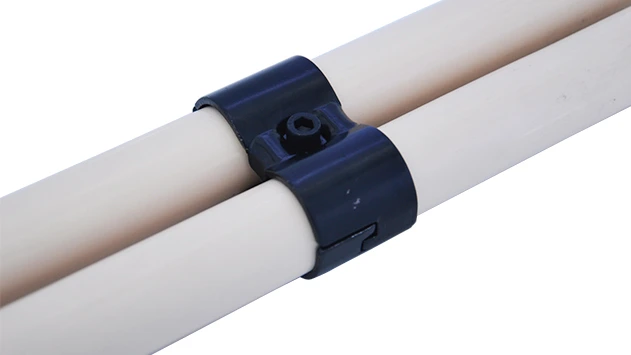
Parallel Lean Pipe Joint
Parallel lean pipe joint used for 2 pcs 28MM lean pipe connection in parallel direction to enhance frame structure, usually for heavy payload requirement for workbench. flow rack, hand trolley.
In the world of lean manufacturing, where efficiency, flexibility, and adaptability are the cornerstones of success, every component plays a silent yet critical role. Among these, the humble lean pipe joint might not grab headlines, but its design can make or break the flow of a production line, the ergonomics of a workstation, or the versatility of a material rack. Today, we're diving deep into a component that's redefining modularity: the
parallel lean pipe joint with one side rotatory functionality
. Far more than just a connector, this joint embodies the lean philosophy—reducing waste, enhancing workflow, and empowering teams to adapt on the fly. Let's unpack the design principles that make it a game-changer for lean systems worldwide.
The Role of Lean Pipe Joints in Modern Manufacturing
Before we zoom into the specifics of one-side rotatory joints, let's ground ourselves in why lean pipe systems matter. At their core,
lean pipe systems
—built from tubes, joints, and accessories—are the backbone of flexible workspaces. They're used to construct everything from workbenches and flow racks to turnover trolleys and conveyor systems. Unlike rigid, fixed infrastructure, lean pipe setups can be reconfigured in hours (not weeks) to adapt to new products, higher demand, or shifting workflows. And at the heart of this flexibility? The joints.
Traditional fixed joints lock pipes into static angles, limiting how a structure can evolve. But in dynamic environments—think electronics assembly lines churning out new smartphone models or automotive plants ramping up for electric vehicles—staticity is a liability. Enter the parallel lean pipe joint with one side rotatory functionality: a design that marries stability with controlled movement, allowing one segment of the pipe to rotate while the other remains fixed. It's like giving a workstation a "wrist" that can swivel to reach materials, adjust to operator height, or reangle for better access—without sacrificing the structural integrity needed to support tools, parts, or products.
Core Design Principles: Balancing Flexibility and Stability
The magic of this joint lies in its ability to solve a classic engineering trade-off: how to add movement without weakening the structure. Let's break down the key design principles that make this possible.
1. Asymmetrical Rotation: Controlled Freedom
Unlike fully rotatory joints (which spin 360 degrees and often require locking mechanisms), the "one side rotatory" design is intentional in its limitation. Only one end of the joint rotates—typically along a 180-degree arc—while the other end remains fixed to the main structure. This asymmetry serves two purposes: first, it prevents over-rotation that could disrupt workflow or strain the pipe; second, it (focuses force) on the fixed side, ensuring the joint can bear heavy loads (often up to 50kg or more, depending on materials) without wobbling.
Imagine a workbench in a production assemble line where operators need to access parts from both the left and right. With a fixed joint, the material rack might be bolted to one side, forcing operators to stretch or twist. With a one-side rotatory joint, the rack can pivot 90 degrees toward the operator, reducing reach time by 30% (a small change that adds up to hours of saved labor over a shift). The rotation is smooth, often aided by internal bearings or low-friction washers, so even repeated use doesn't lead to jamming or stiffness.
2. Material Synergy: Lightweight Strength
The choice of materials is make-or-break for any lean pipe component, and this joint is no exception. Most modern iterations use a combination of
aluminum lean pipe
(for the tubes) and high-grade steel or zinc-plated alloys (for the joint housing). Why aluminum? It's a Goldilocks material: lighter than steel (reducing operator fatigue when reconfiguring setups), more rigid than plastic (supporting heavier loads), and naturally resistant to corrosion (critical in environments with moisture or chemicals). For applications requiring even more durability—like heavy-duty material racks in automotive plants—manufacturers might pair the joint with
stainless steel pipe series
, though this adds weight.
The joint itself often features a plastic or rubberized inner lining at the rotation point. This isn't just for noise reduction (though clanking metal-on-metal is a common factory annoyance); it also acts as a buffer, absorbing vibrations from nearby machinery and preventing metal fatigue over time. For ESD-sensitive environments—like electronics manufacturing where static electricity can fry circuit boards—joints may include conductive materials or be paired with
ESD workbench
setups, ensuring static charges dissipate safely.
3. Modular Compatibility: Play Well with Others
A lean pipe joint is only as useful as its ability to integrate with existing systems. The one-side rotatory design prioritizes modularity, meaning it works seamlessly with standard lean pipe accessories: casters for mobile trolleys, roller tracks for material flow, and even specialized components like swivel roller balls (1 inch or 0.5 inch) for smooth part sliding. This compatibility is intentional—manufacturers design joints to fit the same tube diameters (often 28mm for aluminum lean pipe) and connection standards as fixed joints, so teams don't need to overhaul their entire setup to adopt the rotatory version.
For example, a factory using basic aluminum tubes and internal rotary aluminum joints can swap in a parallel one-side rotatory joint without changing their pipes or tools. This "plug-and-play" approach reduces downtime during upgrades and lowers the learning curve for maintenance teams.
4. Ergonomic Intelligence: Designed for People, Not Just Parts
Lean manufacturing isn't just about efficiency—it's about respecting the humans behind the machines. The one-side rotatory joint is a masterclass in ergonomic design. By allowing work surfaces or material racks to pivot, it reduces the need for operators to bend, stoop, or overreach, cutting down on musculoskeletal injuries (a leading cause of workplace absences in manufacturing).
Consider an ESD workstation where an operator assembles circuit boards for 8 hours a day. With a fixed material rack, they might twist their torso 45 degrees every time they grab a resistor or capacitor. Over weeks, this leads to back strain. With a rotatory joint, the rack swings to face them, keeping their spine neutral. It's a small adjustment, but studies show such ergonomic tweaks can boost productivity by 15% simply by reducing fatigue.

Comparing Joint Types: When to Choose One-Side Rotatory
Not all lean pipe joints are created equal. To understand where the one-side rotatory design shines, let's compare it to common alternatives. The table below breaks down key factors like rotation range, load capacity, and ideal applications.
| Joint Type | Rotation Range | Max Load Capacity (kg) | Best For | Limitations |
|---|---|---|---|---|
| Parallel Fixed Joint | 0° (no rotation) | 100–200 | Static structures (e.g., heavy-duty material racks) | No flexibility; hard to reconfigure |
| One Side Rotatory Joint | 0°–180° (one side only) | 50–120 | Adjustable workstations, dynamic material flow | Lower max load than fixed joints |
| Fully Rotatory Joint | 360° (both sides) | 30–80 | Light tools, display racks | Lowest stability; risk of over-rotation |
As the table shows, the one-side rotatory joint hits a sweet spot: it offers more flexibility than fixed joints without sacrificing as much load capacity as fully rotatory options. This makes it ideal for environments where adaptability and strength are both priorities—like a workbench E (single deck) that needs to support tools while allowing the operator to pivot the material shelf, or a turnover trolley that can angle its load to slide parts onto a conveyor more easily.

Real-World Applications: From Assembly Lines to Labs
To see these design principles in action, let's walk through a few scenarios where the one-side rotatory joint transforms workflows.
Scenario 1: Electronics Manufacturing ESD Workstation
In electronics plants,
ESD workstations
are critical for preventing static damage to sensitive components. These workstations often include shelves for parts, tool holders, and anti-static mats. With a fixed joint, the parts shelf might be positioned 18 inches from the operator's hands, requiring constant reaching. By swapping in a one-side rotatory joint, the shelf can swing 45 degrees inward, bringing parts within arm's reach. The joint's aluminum construction (a key feature of
aluminum lean pipe
) also helps dissipate static, complementing the workstation's ESD protection. Operators report 20% faster assembly times and fewer errors due to reduced distraction from stretching.
Scenario 2: Automotive Parts Turnover Trolley
Automotive plants rely on turnover trolleys to move heavy parts (like brake calipers or engine components) from storage to assembly lines. Traditional trolleys have fixed racks, meaning workers must lift parts over the side to unload them—a risk for back injuries. A trolley fitted with one-side rotatory joints allows the racks to tilt 30 degrees, sliding parts onto the assembly line via roller tracks (another lean pipe accessory). The joint's load capacity (up to 100kg) easily handles the weight, while the controlled rotation ensures parts don't slide too quickly. This reduces lifting strain and cuts unloading time by 40%.
Scenario 3: Pharmaceutical Packaging Material Rack
Pharmaceutical facilities demand strict hygiene and flexibility (since product runs can be short and varied). A material rack B (3 row and 3 floor) using one-side rotatory joints allows each shelf to pivot, making it easier to sanitize hard-to-reach corners (critical for FDA compliance). The aluminum pipe and accessories resist corrosion from cleaning chemicals, while the joint's smooth rotation prevents dust buildup in crevices. When switching between packaging for tablets vs. injectables, workers can reangle shelves to fit different box sizes in minutes, not hours.
Materials Matter: Why Aluminum Lean Pipe Leads the Pack
While we've touched on materials earlier, it's worth diving deeper into why
aluminum lean pipe
is the go-to for most one-side rotatory joint applications. Aluminum offers three unbeatable advantages:
- Weight vs. Strength: Aluminum is 30% lighter than steel but has a comparable strength-to-weight ratio. This makes reconfiguring workstations easier—one person can adjust a rotatory joint setup, whereas steel might require two. For mobile setups (like trolleys with casters), the reduced weight also extends caster lifespan by lowering wear.
- Corrosion Resistance: Unlike steel (which needs painting or galvanizing), aluminum forms a natural oxide layer that resists rust. This is a boon for wet environments (e.g., food processing) or facilities using harsh cleaning agents.
- Sustainability: Aluminum is 100% recyclable, aligning with the growing focus on green manufacturing. Many lean pipe suppliers now offer recycled aluminum options, reducing the carbon footprint of production lines.
For heavier loads (e.g., 200kg+), manufacturers may opt for
stainless steel pipe series
joints, which add durability but sacrifice some of aluminum's ergonomic benefits. The key is matching the material to the application—a balance that lean pipe suppliers often help customers navigate.
Future Trends: Smarter, More Connected Joints
As Industry 4.0 marches on, even humble components like lean pipe joints are getting smarter. Emerging designs integrate sensors into one-side rotatory joints to track usage—how often they're rotated, load levels, and wear patterns. This data feeds into predictive maintenance systems, alerting teams when a joint needs lubrication or replacement before it fails. Imagine a production line where the system automatically flags, "Joint #7 on Workstation 3 has rotated 10,000 times—schedule inspection this week." This reduces unplanned downtime and extends the life of lean systems.
Another trend is the integration of quick-lock mechanisms, allowing operators to adjust rotation angles with the push of a button (no tools needed). This further enhances modularity, making it even easier to adapt workspaces for temporary projects or seasonal demand spikes.
Conclusion: Small Component, Big Impact
The parallel lean pipe joint with one side rotatory functionality is a testament to the power of thoughtful design in lean manufacturing. It's not flashy, but it solves a fundamental problem: how to build systems that are both stable enough to work hard and flexible enough to evolve. By prioritizing asymmetrical rotation, material synergy, modularity, and ergonomics, this joint empowers teams to create workspaces that adapt to people—not the other way around.
Whether you're setting up a new production assemble line, upgrading an ESD workstation, or reimagining your material flow with roller tracks and conveyors, the right joint can turn a static setup into a dynamic, responsive system. And in today's fast-paced manufacturing landscape, that adaptability isn't just a nice-to-have—it's the key to staying competitive.
So the next time you walk through a factory, take a closer look at those unassuming pipes and joints. Chances are, the ones making the work easier, faster, and safer are the ones designed with a little something extra: the quiet genius of one-sided rotation.