- Company Articles
- Products and Technology
- Product knowledge
- Design Principles of Aluminum Side Guards for Flexible Production Lines

Design Principles of Aluminum Side Guards for Flexible Production Lines
Related Product
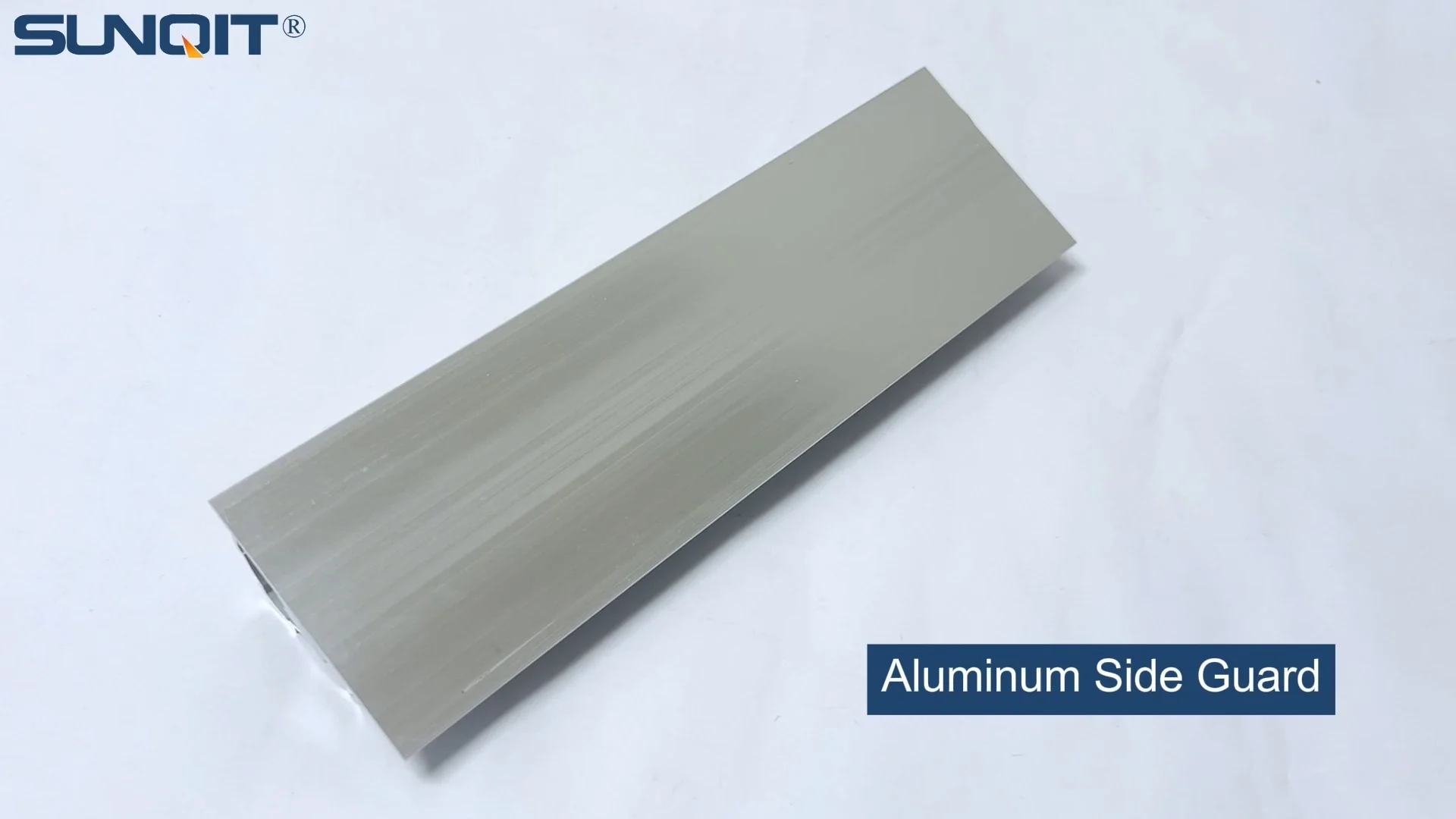
Aluminum Side Guard
Aluminum side guard, it works with a aluminum pipe or a roller track as side guard to prevent material drop,or move to wrong direction.
In the fast-paced world of manufacturing, where production lines shift, adapt, and evolve to meet changing demands, every component plays a silent yet critical role in keeping operations running smoothly. Among these unsung heroes are aluminum side guards—those unassuming barriers that line workbenches, roller tracks, and material racks, quietly ensuring safety, order, and efficiency. But what makes a great aluminum side guard? It's not just about slapping a metal strip onto a frame; it's about intentional design that aligns with the unique needs of flexible production. Let's dive into the core principles that shape these essential tools, exploring how material choice, ergonomics, adaptability, and integration come together to create side guards that don't just protect—they empower.
1. Material Matters: Why Aluminum Leads the Way
When it comes to flexible production, the materials we choose set the foundation for success. Aluminum, particularly aluminum lean pipe and aluminum profile, has emerged as the gold standard for side guards—and for good reason. Unlike heavy stainless steel pipe series or rigid plastic alternatives, aluminum strikes a rare balance of strength, lightness, and versatility that's hard to match.
Consider this: A typical production line might need side guards on a mobile turnover trolley one week and a fixed workbench the next. With aluminum lean pipe, weighing in at a fraction of steel, workers can reposition guards without straining, while still trusting them to withstand daily knocks from tools, parts, or moving carts. And let's talk about corrosion resistance—factor in the occasional spill, humidity, or cleaning routine, and aluminum's natural oxide layer becomes a silent protector, ensuring guards stay functional for years without rust or degradation.
But it's not just the pipe itself; it's the ecosystem of aluminum profile accessories that elevates its utility. From internal rotatary aluminum joints that let guards pivot to fit odd angles, to aluminum guide rail A and B systems that snap into place for quick adjustments, these small components turn basic aluminum pipe into a modular toolkit. Imagine a scenario where a factory reconfigures a roller track to accommodate a new product size—with aluminum side guards, they can simply loosen a joint, adjust the length, and lock it back in, no welding or heavy tools required. That's the flexibility aluminum brings to the table.
2. Ergonomics: Guards That Work With People, Not Against Them
A side guard that protects but slows down workers is a guard that misses the mark. Ergonomics—the science of designing tools for human comfort and efficiency—lies at the heart of effective side guard design. Think about the operator standing at a workbench E (single deck, without caster) for eight hours a day: their arms move in arcs, parts slide across surfaces, and every second wasted reaching around a poorly placed guard adds up.
Height is a prime example. A side guard that's too tall blocks visibility and forces workers to hunch or stretch; too short, and it fails to contain rolling parts. The sweet spot? Aligning guard height with the workbench surface, typically 80–90cm, so it's just high enough to prevent items from slipping off but low enough to keep the workspace visible and accessible. This is where aluminum profile shines—its lightweight nature makes it easy to trim to custom heights, ensuring a perfect fit for any workbench or material rack B (3 row and 3 floor) setup.
Then there's the matter of edges. Sharp metal corners on guards can snag gloves, scratch parts, or even cause minor injuries during line reconfigurations. Modern aluminum side guards address this with rounded edges and smooth finishes, often paired with plastic roller track guide rail yellow or grey strips along the top edge. These soft, durable guides add a layer of protection for both workers and delicate components, turning a potential hazard into a functional feature.

3. Adaptability: Keeping Pace With a Changing Line
Flexible production lines aren't just about moving parts—they're about moving goals. One month, you're assembling small electronics; the next, larger appliances. A side guard that works for a 38 aluminum roller track yellow might not cut it for a 60 steel roller track green. That's why adaptability is non-negotiable.
Modularity is the key here. Aluminum side guards built with t-slot aluminum pipe and aluminum profile accessories thrive in this dynamic environment. Take, for instance, the internal rotatary aluminum joint: this simple connector allows guards to swivel, fold, or extend, making it easy to widen a section for bulkier items or narrow it for tight spaces. Pair that with roller track placon mount connectors, and suddenly your side guard can shift from a fixed barrier on a static workbench to a movable guide along a conveyor—no disassembly required.
Another adaptability win? Color coding. While it might seem trivial, using plastic roller track guide rail yellow for high-traffic areas or grey for low-activity zones helps workers quickly identify zones, reducing confusion during line changes. A factory transitioning from batch production to mixed-model assembly can rely on these visual cues to keep guards aligned with new workflows, ensuring everyone stays on the same page.

4. Safety First, Always: Beyond Compliance
At the end of the day, the primary job of a side guard is to keep people and products safe. But "safe" isn't a one-size-fits-all label—it's a nuanced balance of impact resistance, stability, and visibility. Let's break it down.
Impact resistance is where aluminum's strength-to-weight ratio truly shines. A well-designed aluminum side guard, reinforced with parallel aluminum joint A brackets, can absorb the jolt of a runaway turnover trolley (equipped with caster wheels, of course) without bending or breaking. Compare that to flimsy plastic guards, which might crack on impact, or heavy steel guards that could damage the trolley or the rack itself upon collision.
Stability is equally critical, especially for mobile units. When side guards are mounted on trolleys with caster wheels, they need to stay steady during movement. This is where aluminum foot bases and heavy-duty split foot seats come into play—anchoring the guard to the trolley frame to prevent wobbling, even when navigating tight turns. For fixed setups like workbench E (single deck-without caster), end support for roller track placon mount with stop brackets add an extra layer of security, ensuring the guard stays firmly in place during high-intensity tasks.
4. Integration: Playing Well With Others
A side guard doesn't exist in a vacuum. It shares the production floor with roller tracks, casters, workbenches, and stainless steel swivel roller balls 1 inch—all working together in harmony. A great guard design considers this ecosystem, ensuring seamless integration with existing components.
Take roller tracks, for example. Whether it's a 40 steel roller track yellow wheel or a 38 aluminum roller track black esd with side guide, the side guard must align with the track's height and spacing to prevent items from jamming or falling off during transport. This is where roller track placon mount for aluminum profile flat brackets prove invaluable—they let guards attach directly to the track's aluminum frame, creating a unified system that moves in sync with material flow.
Caster wheels are another integration point. Mobile material trolleys rely on casters for mobility, but adding a side guard can shift the trolley's center of gravity. Smart guard design addresses this by using lightweight aluminum pipe and balancing the guard's weight distribution, ensuring the trolley remains easy to maneuver even with the guard in place. It's a small detail, but it makes a big difference when a worker needs to push a loaded trolley across the factory floor.
| Guard Type | Best For | Key Integration Features | Adaptability Level |
|---|---|---|---|
| Fixed Aluminum Profile Guard | Static workbenches, material rack B | Aluminum foot base, end support brackets | Low (requires tools to adjust) |
| Modular T-Slot Guard | Flexible roller tracks, conveyors | Internal rotatary joints, placon mount connectors | High (tool-free adjustments) |
| Mobile Caster-Mounted Guard | Turnover trolleys, movable workstations | Caster-compatible base, balanced weight design | Medium (adjustable but tied to trolley) |
Case Study: A Day in the Life of an Adaptable Side Guard
Let's put these principles into action with a real-world example. Imagine a mid-sized electronics factory that produces both smartphones and tablets. On Monday, their line is set up for smartphones: small parts, fast-paced assembly, and a 38 aluminum roller track yellow with side guide moving components between stations. The side guards here are low-profile, using 38 aluminum roller track black esd with wheel flange to keep static-sensitive parts secure without blocking visibility.
By Wednesday, the line shifts to tablets—larger, bulkier components that require wider spacing. The team needs to reconfigure the roller track to a 60 steel roller track green and adjust the side guards accordingly. Using modular aluminum lean pipe and internal rotatary aluminum joints, they extend the guards by 15cm, swap out the black ESD wheel flanges for wider yellow ones, and reattach the guards to the track using roller track placon mount center support brackets. The whole process takes under an hour, and production resumes with zero downtime.
Friday brings a rush order for custom accessories, requiring the line to split into two smaller cells. Now, the side guards need to divide the space, creating separate zones for assembly and testing. Thanks to parallel aluminum joint B connectors, the team splits the main guard into two smaller sections, each mounted on casters for easy positioning. By the end of the day, the factory has met all three production goals—all because their aluminum side guards could keep up.
Conclusion: More Than a Guard—A Partner in Productivity
Aluminum side guards may not grab headlines, but they're the backbone of a flexible, efficient production line. By prioritizing material quality (aluminum lean pipe, aluminum profile), ergonomic design, adaptability, safety, and integration, manufacturers can create guards that do more than just protect—they support growth, reduce waste, and empower workers to focus on what matters: building great products.
As production lines continue to evolve, the best side guards will be those that evolve with them—lightweight yet strong, rigid yet flexible, and always ready to meet the next challenge. After all, in the world of flexible manufacturing, the right guard isn't just a barrier—it's a bridge to better, faster, smarter production.