- Company Articles
- Products and Technology
- Product knowledge
- Design Principles of Heavy Duty Split Foot Seats for Flexibility

Design Principles of Heavy Duty Split Foot Seats for Flexibility
Related Product
Heavy Duty Split Foot Seat
M10 aluminum heavy duty split foot deat with foot adjuster for workbench and flow rack.
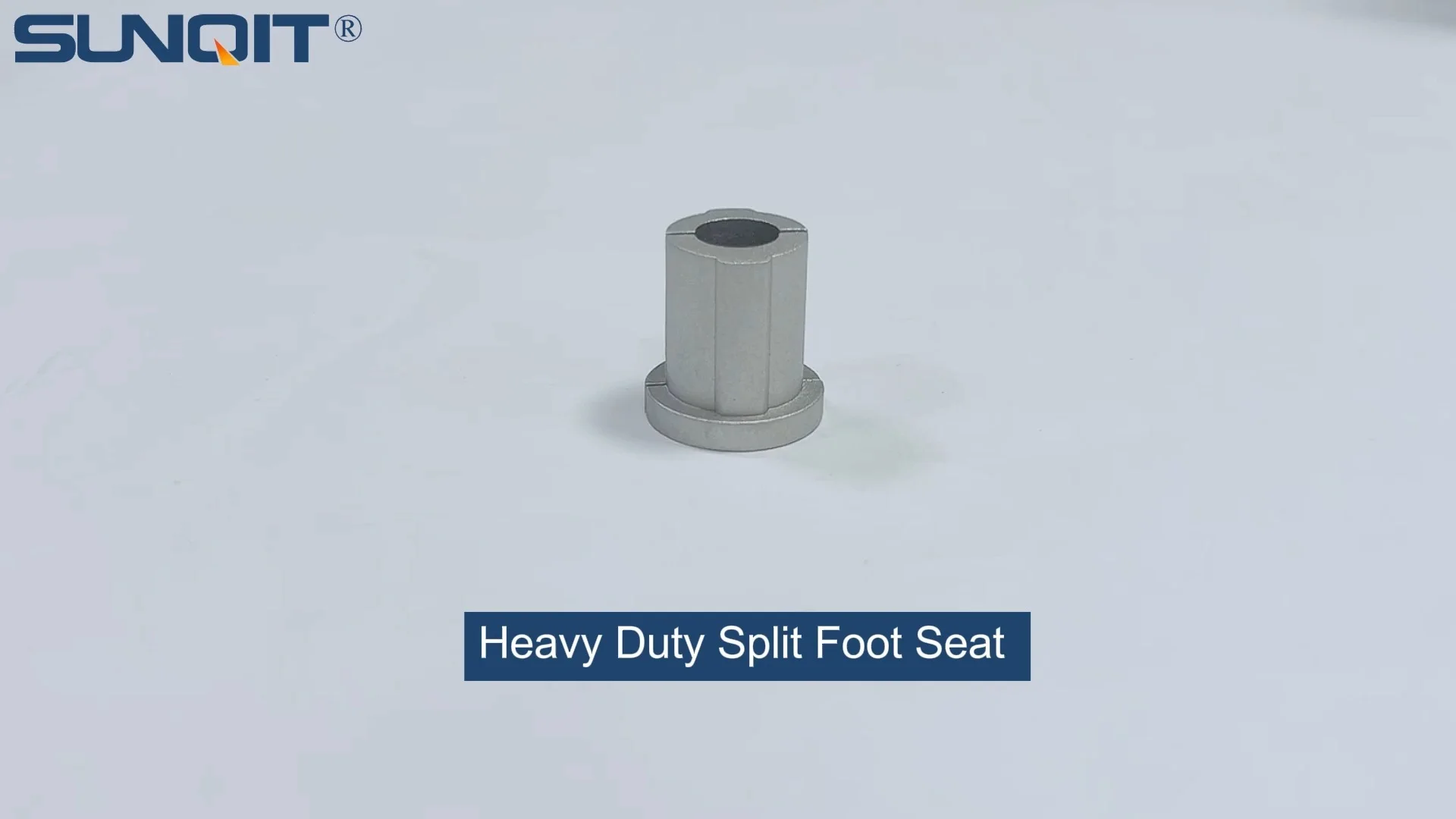
In the hum of a modern manufacturing facility, where production lines shift as quickly as market demands, every component plays a quiet but critical role in keeping operations smooth. Among these unsung heroes are heavy duty split foot seats—unassuming yet indispensable parts that anchor workbenches, stabilize material racks, and enable the flexibility that today's dynamic industries rely on. Unlike fixed foot seats, which lock equipment into rigid positions, split foot seats are engineered to adapt: to adjust heights, accommodate uneven floors, integrate with mobility tools like casters, and scale with evolving workspace needs. But what exactly makes these split designs so flexible? Let's dive into the core design principles that turn a simple support structure into a cornerstone of adaptable industrial setups.
Understanding Heavy Duty Split Foot Seats: Beyond Basic Support
At first glance, a heavy duty split foot seat might look like just another metal bracket. But its design is the result of careful engineering to balance three key goals: stability, durability, and flexibility. Unlike a solid, one-piece foot seat, a "split" design divides the support structure into modular components—typically two or more interconnected parts—that can move, adjust, or reconfigure independently. This split architecture is what sets it apart from fixed alternatives, allowing it to adapt to changing conditions without sacrificing strength.
Consider a typical scenario: a workbench in an electronics assembly line needs to be raised by 50mm to align with a new conveyor system. A fixed foot seat would require disassembly, shimming, or even replacement. A split foot seat, by contrast, might use an adjustable threaded rod or a sliding bracket to raise each side independently, ensuring the workbench remains level and stable. Similarly, in a warehouse with slightly sloped concrete floors, split foot seats can compensate for unevenness by adjusting each leg individually, preventing wobbling that could damage sensitive components or slow down workflows.
But flexibility isn't just about adjustability—it's also about compatibility. Heavy duty split foot seats are designed to work seamlessly with other industrial components, from aluminum profiles to caster wheels. This interoperability turns them into versatile building blocks, capable of supporting everything from lightweight workbenches to heavy material racks loaded with parts. In short, they're not just supports; they're enablers of modular, future-ready workspaces.
Core Design Principles for Flexibility: Building Blocks of Adaptability
To achieve true flexibility, heavy duty split foot seats rely on a handful of foundational design principles. These principles guide material choices, structural layout, and functional features, ensuring the seat can keep up with the demands of dynamic industrial environments.
1. Material Selection: Balancing Strength, Weight, and Workability
The first step in designing a flexible split foot seat is choosing the right materials. Flexibility here doesn't mean flimsiness—in fact, "heavy duty" demands high load-bearing capacity—but rather the ability to be shaped, adjusted, and integrated without compromising durability. Aluminum has emerged as a standout choice, thanks to its unique blend of properties. Unlike steel, which is strong but heavy, aluminum offers a high strength-to-weight ratio, making split foot seats easier to handle during installation and reconfiguration. Its natural resistance to corrosion also ensures longevity in environments where moisture or chemicals are present, such as food processing or automotive plants.
Aluminum profiles, in particular, are a favorite among designers. These extruded shapes—hollow, lightweight, and precise—can be cut, drilled, or welded to create custom split components that fit specific load or size requirements. For example, an aluminum profile with a T-slot design allows for easy attachment of accessories like adjustable leveling feet or caster mounts, eliminating the need for permanent modifications. Compare this to cast iron, which is strong but brittle and difficult to modify, or plastic, which lacks the load capacity for heavy duty applications. Aluminum strikes the perfect balance, making it the material of choice for flexible split foot seats.
2. Modular Construction: The Power of "Building Block" Design
Flexibility thrives on modularity, and split foot seats embrace this by design. Instead of being a single, unchangeable unit, they're built from interchangeable parts that can be mixed, matched, or replaced as needed. This modularity is often enabled by standardized connections, similar to how lean pipe joints allow for quick assembly of workstations and racks. For instance, a split foot seat might feature pre-drilled holes or slots that align with common fasteners, making it easy to swap out a fixed base for a caster-compatible plate or add a reinforcing bracket for heavier loads.
The split itself is a modular feature: by dividing the foot seat into two or more sections, designers allow each part to perform a specific function. One section might handle height adjustment via a threaded rod, while another integrates a locking mechanism to secure the position. If a facility needs to switch from a stationary setup to a mobile one, the split design allows for easy removal of the fixed section and installation of caster and accessories—no need to replace the entire foot seat. This "plug-and-play" approach reduces downtime and costs, as components can be reconfigured rather than replaced.
3. Weight Distribution: Stability Without Rigidity
A flexible foot seat must support heavy loads—often upwards of 500kg per unit—without bending or failing. But flexibility requires more than just strength; it demands that the seat can distribute weight evenly even as it adjusts. Split designs excel here by spreading load across multiple contact points, reducing stress on any single component. For example, a two-piece split foot seat might have two separate pads that rest on the floor, each connected to an adjustable stem. If the floor is uneven, each pad can sit firmly, ensuring the load is shared equally, whereas a single-piece seat might rock on the high point, concentrating weight on one edge.
To visualize how split designs outperform fixed ones in weight distribution and flexibility, let's compare key metrics:
| Design Type | Weight Capacity (kg) | Adjustment Range (mm) | Caster Compatibility | Material Options |
|---|---|---|---|---|
| Split (Aluminum) | 600-1200 | 0-100 | Yes (via adapter plates) | Aluminum, Stainless Steel |
| Fixed (Steel) | 800-1500 | 0 | No (permanent welds) | Steel, Cast Iron |
| Split (Stainless Steel) | 800-1400 | 0-80 | Yes (integrated mounts) | Stainless Steel |
| Fixed (Aluminum) | 400-800 | 0 | No | Aluminum |
The table highlights a clear trend: split designs, even with slightly lower maximum weight capacities than heavy steel fixed seats, offer far more adjustability and compatibility. For dynamic workspaces, this trade-off is well worth it—especially since aluminum split seats can still handle most industrial loads while adding the flexibility to adapt.
4. Adjustability Mechanisms: Fine-Tuning for Every Scenario
At the heart of a split foot seat's flexibility lies its adjustability mechanisms. These are the features that allow it to change height, angle, or position to meet specific needs. The most common mechanism is the threaded rod: a metal rod with spiral grooves that screws into a nut embedded in the foot seat, allowing users to raise or lower the seat by twisting the rod. This simple yet effective design is found in adjustable leveling feet, a staple in industrial setups where precision alignment is key.
But split foot seats take adjustability further by allowing independent movement of their components. For example, a two-piece split seat might have two separate threaded rods, each controlling one half of the base. This means if the floor dips on one side, only that rod needs to be adjusted, keeping the entire structure level. Some advanced designs even incorporate sliding brackets or pivot joints, enabling the foot seat to tilt slightly to match angled surfaces—a game-changer for workspaces with sloped floors or inclined conveyors.
Another critical adjustability feature is the ability to lock settings securely. After making adjustments, a split foot seat must stay in place under load. This is often achieved with locking nuts, cotter pins, or cam levers that prevent the threaded rod from unscrewing or the bracket from sliding. The best designs balance ease of adjustment (requiring minimal tools, ideally just a wrench or even hand-tightening) with foolproof locking to avoid accidental shifts during operation.
5. Compatibility with Accessories: Expanding Functionality
A flexible split foot seat isn't an island—it's part of a larger ecosystem of industrial components. To maximize flexibility, designers ensure it can integrate seamlessly with tools that extend its functionality, such as casters, material racks, or aluminum profiles. For example, many split foot seats come with pre-drilled holes or mounting plates that align with standard caster bolts, allowing users to swap out fixed feet for swivel casters when mobility is needed. This means a workbench can be stationary during assembly, then quickly converted into a mobile trolley for material transport—all without replacing the foot seats.
Aluminum profiles are another key compatibility partner. These extruded aluminum rails, with their T-slot channels, can be bolted directly to split foot seats, creating custom workbenches or material racks that adapt to changing needs. A split foot seat with a T-slot compatible base can attach to aluminum profile accessories like side guards, tool holders, or shelf brackets, turning a basic support into a fully functional workstation. This interoperability is what makes split foot seats so versatile: they don't just support equipment—they enable it to evolve.

Real-World Applications: How Flexibility Drives Efficiency
To see these design principles in action, let's look at two real-world scenarios where heavy duty split foot seats transform workflow efficiency.
Case Study 1: Automotive Assembly Line Adaptation
A major automotive parts manufacturer recently retooled its production line to accommodate a new electric vehicle component. The change required raising 12 workbenches by 75mm to align with a new robotic arm system. With fixed foot seats, this would have taken 2-3 hours per workbench (involving disassembly, adding shims, and re-leveling). Instead, the facility used split foot seats with adjustable leveling feet. Each workbench's height was adjusted in 15 minutes by twisting the threaded rods on the split seats, and the built-in locking nuts ensured stability under the weight of the robotic arms. Total downtime? Just 3 hours for all 12 workbenches—saving over 20 hours of production time.
Case Study 2: Warehouse Material Rack Scaling
A logistics warehouse needed to expand its material storage capacity without adding new racks. Its existing racks used fixed foot seats, limiting them to a single height and load configuration. By retrofitting the racks with split foot seats compatible with aluminum profiles, the warehouse was able to add intermediate shelves at variable heights, doubling storage density. The split design allowed each shelf's supports to be adjusted independently, accommodating different box sizes, and the aluminum profiles made it easy to add dividers and label holders. The result? A 40% increase in storage capacity with zero new rack purchases.

Challenges in Design: Balancing Flexibility and Reliability
Designing a flexible split foot seat isn't without challenges. One of the biggest hurdles is balancing adjustability with reliability. Adding moving parts (like threaded rods or sliding brackets) introduces potential points of failure, so designers must ensure these components are rugged enough to withstand constant use. For example, threaded rods must be made from high-strength steel to avoid stripping under heavy loads, and sliding brackets need smooth, corrosion-resistant surfaces to prevent jamming.
Cost is another consideration. Modular, adjustable designs are often more expensive to manufacture than simple fixed foot seats. However, this upfront cost is typically offset by long-term savings: reduced downtime, fewer replacements, and the ability to adapt to changing needs without buying new equipment. To keep costs in check, many manufacturers offer standardized split foot seat models with a range of adjustability, avoiding the need for custom fabrication for most applications.
Finally, there's the challenge of user-friendliness. A split foot seat with complex adjustment mechanisms might offer maximum flexibility, but if workers struggle to operate it, that flexibility goes unused. The best designs prioritize intuitive controls—clear markings for height settings, ergonomic handles for adjustment, and simple locking mechanisms—ensuring that even less experienced users can make changes quickly and safely.

Future Trends: The Next Frontier of Flexible Foot Seat Design
As industries move toward smarter, more adaptive workspaces, split foot seat design is evolving to keep pace. One emerging trend is the integration of smart sensors that monitor load, alignment, or wear, alerting maintenance teams before issues arise. Imagine a split foot seat with a built-in strain gauge that sends a notification to a tablet when it's nearing maximum capacity, preventing overloading. Another trend is the use of sustainable materials, such as recycled aluminum or bio-based composites, without sacrificing strength or flexibility.
Modularity is also becoming more advanced, with "click-and-connect" systems that allow even faster reconfiguration. Picture a split foot seat where caster mounts or leveling feet snap into place without tools, using quick-release levers instead of bolts. This would make swapping accessories as easy as changing a battery, further reducing downtime.
Finally, customization is becoming more accessible. With advancements in 3D printing and CNC machining, manufacturers can offer split foot seats tailored to specific industry needs—whether it's a medical-grade stainless steel design for cleanrooms or a lightweight aluminum model for aerospace assembly—without the high costs of traditional custom fabrication.
Conclusion: Flexibility as a Foundation for the Future
Heavy duty split foot seats may not grab headlines, but their design principles—material selection, modularity, adjustability, compatibility, and user-centricity—are what make modern industrial spaces adaptable, efficient, and future-ready. By prioritizing flexibility, these unassuming components turn static workbenches into dynamic tools, rigid material racks into scalable storage systems, and fixed workflows into agile operations. As industries continue to evolve, the split foot seat will remain a quiet but critical enabler, proving that sometimes the most powerful innovations are the ones that support change from the ground up.