- Company Articles
- Products and Technology
- Product knowledge
- Design Tips for 40 Aluminum Roller Track Green Layouts in Small Factories

Design Tips for 40 Aluminum Roller Track Green Layouts in Small Factories
Related Product
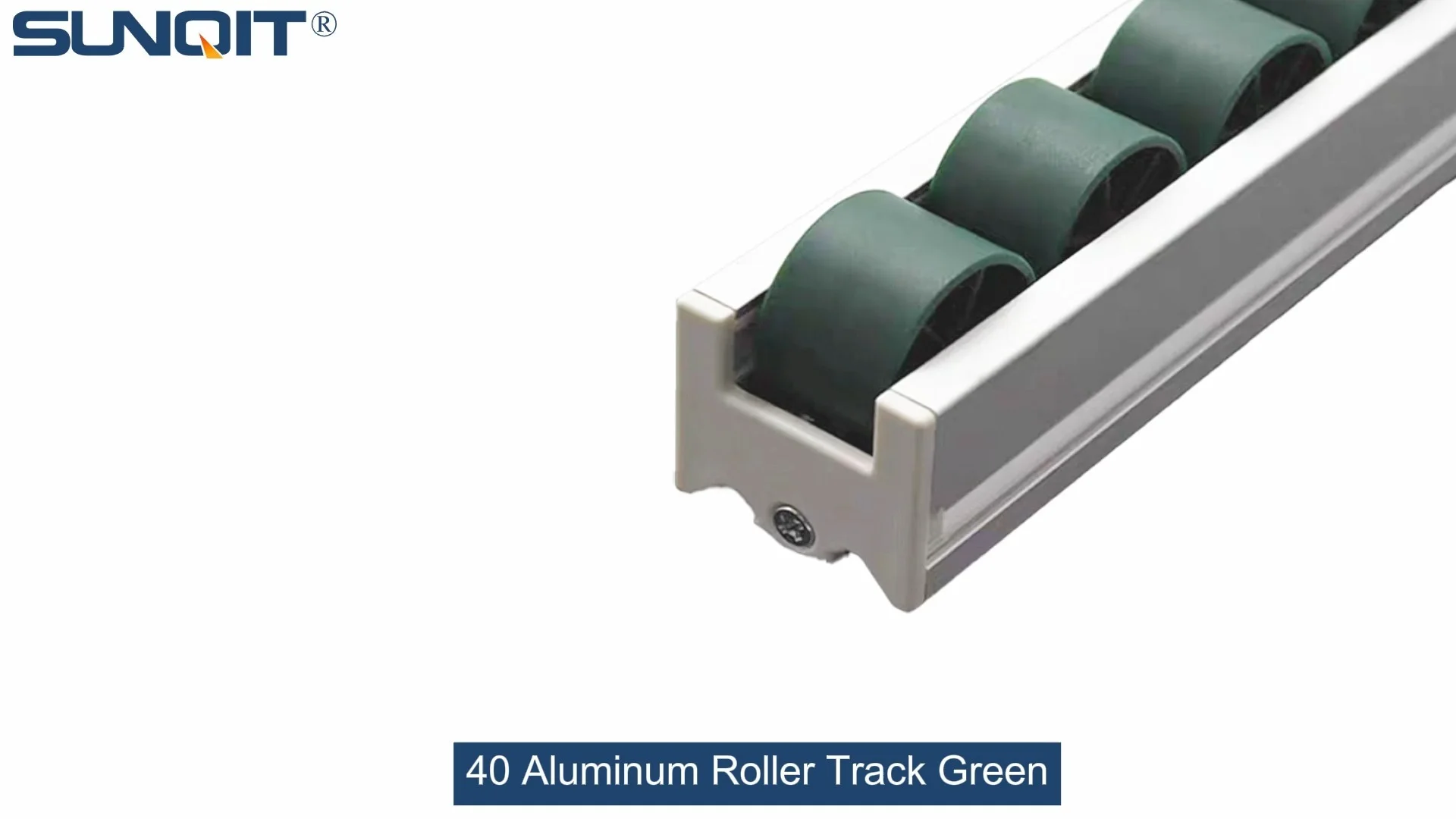
40 Aluminum Roller Track Green
Durable and smooth-running modular roller rails. The system is fully assembled. The roller rail profile contains plastic rollers mounted on steel axles. Aluminum frame with plastic wheel make it anti corrosion,and material convey more smooth.
Design Tips for 40 Aluminum Roller Track Green Layouts in Small Factories
Running a small factory isn't easy. You've got limited space, tight budgets, and the constant pressure to keep up with bigger competitors. But here's the thing: you don't need a huge facility or endless resources to boost efficiency and go green. One of the most effective ways to transform your small factory's layout is by using 40 aluminum roller tracks—they're durable, flexible, and perfect for creating sustainable workflows that save time and money.
In this article, we'll dive deep into how to design green layouts with 40 aluminum roller tracks. We'll cover everything from choosing the right components to integrating them with lean systems, so you can make the most of every square foot in your factory. Whether you're in 3C assembly, medical device manufacturing, or any other small-scale production, these tips will help you build a layout that works for your team and the planet.
Why 40 Aluminum Roller Tracks Are a Game-Changer for Small Factories
Before we get into design tips, let's talk about why 40 aluminum roller tracks are such a great fit for small factories aiming for green layouts. First off, aluminum is a highly sustainable material—it's 100% recyclable, and recycling it uses just 5% of the energy needed to produce new aluminum. That means every time you use 40 aluminum roller tracks, you're reducing your carbon footprint right from the start.
But it's not just about sustainability. These tracks are built to last. Unlike plastic or wooden alternatives, 40 aluminum roller tracks can handle heavy loads without warping or breaking. And since they're modular, you can easily reconfigure them as your production needs change—no need to buy new equipment every time you switch products. That's a huge cost-saver for small factories.
Another big plus is their versatility. 40 aluminum roller tracks work with a wide range of lean components, like flow racks, conveyors, and lean pipe workbenches. This means you can create a fully integrated system that streamlines your entire workflow, from raw material storage to finished product shipping.
Let's not forget about efficiency. Roller tracks make it easy to move parts and products from one station to another with minimal effort. Workers don't have to lift heavy items or walk long distances, which reduces fatigue and increases productivity. And since the tracks are smooth, there's less friction—so you save energy too.
Key Design Principles for 40 Aluminum Roller Track Green Layouts
When designing your layout, there are a few core principles to keep in mind. These principles will help you create a space that's efficient, flexible, and sustainable.
1. Space Optimization
Small factories have limited space, so every inch counts. 40 aluminum roller tracks are compact, so they don't take up too much room. But to maximize space, you need to think vertically as well as horizontally. For example, you can use flow racks with multiple levels to store materials above the production line, or install roller tracks on walls to move parts between floors (if your factory has multiple levels).
Another way to optimize space is to use U-shaped or circular layouts. These layouts minimize the distance between workstations, so workers spend less time moving around. You can connect the workstations with 40 aluminum roller tracks to create a continuous flow of materials.
2. Workflow Efficiency
The goal of any layout is to make work easier for your team. When designing with 40 aluminum roller tracks, focus on creating a smooth, uninterrupted workflow. That means placing materials and tools as close to the workstation as possible. For example, use flow racks (filled with parts) right next to the assembly line, connected by roller tracks so parts can slide directly to the worker.
You should also consider the direction of material flow. In most cases, a one-way flow is best—this prevents bottlenecks and confusion. 40 aluminum roller tracks are perfect for this because they can be set up to guide materials in a specific direction.
3. Flexibility
Small factories often need to switch between products quickly. Your layout should be able to adapt to these changes without major overhauls. 40 aluminum roller tracks are modular, so you can easily add, remove, or rearrange sections. For example, if you need to add a new workstation, you can just connect a new roller track section to the existing layout.
This flexibility also means you can test different layouts without committing to a permanent design. Try a prototype, get feedback from your team, and adjust as needed. Since the components are reusable, you won't waste money on trial and error.
4. Sustainability
Green layouts aren't just about using eco-friendly materials—they're about reducing waste and conserving resources. 40 aluminum roller tracks help with this in several ways. First, their durability means you won't have to replace them often. Second, their modular design allows you to reuse components when reconfiguring. Third, by streamlining your workflow, you reduce energy use and cut down on unnecessary movement (which saves fuel and reduces emissions).
You can also enhance sustainability by using recycled aluminum components. Many suppliers offer 40 aluminum roller tracks made from recycled materials, which further reduces your environmental impact.
Step-by-Step Design Tips for Your 40 Aluminum Roller Track Layout
Now that we've covered the principles, let's walk through the steps to design your layout. Follow these tips to create a space that's efficient, flexible, and green.
1. Assess Your Current Layout
Before you start designing, take a good look at your current layout. What's working? What's not? Talk to your workers—they know the pain points better than anyone. Are there bottlenecks where materials pile up? Do workers have to walk too far to get parts? Are there unused spaces that could be put to better use?
Take measurements of your factory floor and map out the current workflow. Note the location of workstations, storage areas, and equipment. This will help you identify areas where 40 aluminum roller tracks can make the biggest difference.
2. Define Your Workflow Goals
What do you want to achieve with your new layout? Maybe you want to reduce production time by 20%, or cut down on material waste by 15%. Or perhaps you need a layout that can handle 3 different product lines. Be specific about your goals—this will guide every design decision.
For example, if your goal is to reduce worker fatigue, focus on minimizing the distance between storage and workstations. If your goal is to increase flexibility, prioritize modular components that can be easily rearranged.
3. Choose the Right Components
40 aluminum roller tracks are just one part of the puzzle.You'll need to pair them with other lean components to create a fully functional layout. Let's look at some key components:
| Component | How It Works with 40 Aluminum Roller Tracks | Benefits |
|---|---|---|
| Flow Racks | Flow racks use gravity to move materials along roller tracks. Place them near workstations so parts are always within reach. | Reduces material handling time, keeps work areas organized. |
| Conveyors | Conveyors with 40 aluminum roller tracks connect different production stages, allowing continuous material flow. | Eliminates manual transport, increases efficiency. |
| Lean Pipe Workbenches | Workbenches with integrated roller tracks let workers slide parts directly onto the bench. | Improves ergonomics, reduces worker fatigue. |
| Lean Pipe Supports | Use lean pipe to build frames and supports for roller tracks, creating custom structures. | Adds flexibility, allows for unique layouts. |
When choosing components, make sure they're compatible with 40 aluminum roller tracks. Most lean suppliers offer components that work together seamlessly, so you don't have to worry about fitting issues.
4. Design the Layout
Now it's time to put pen to paper (or screen to design software). Start by sketching a rough layout based on your workflow goals. Here are some tips:
- Place high-frequency workstations close together to minimize movement.
- Use roller tracks to create a continuous flow from storage to assembly to shipping.
- Leave enough space for workers to move around comfortably—crowded areas lead to accidents and inefficiency.
- Incorporate storage solutions like flow racks near workstations to keep materials accessible.
Don't forget to consider future growth. Leave some extra space for adding new components later, or design the layout so it can be easily expanded.
5. Test and Iterate
Once you have a design, build a prototype. Use a small section of your factory to test the layout. Have workers use it for a few days and gather feedback. What's easy? What's hard? Are there any bottlenecks?
Based on the feedback, adjust the layout. Maybe you need to move a flow rack closer to the workstation, or add a conveyor to connect two stages. Since the components are modular, changes are quick and easy.
Repeat this process until you're happy with the layout. Remember, lean manufacturing is all about continuous improvement—your layout should evolve as your business grows.
Real-World Examples of Successful 40 Aluminum Roller Track Layouts
Let's look at two small factories that used 40 aluminum roller tracks to transform their layouts. These examples show how these tips can be applied in different industries.
Example 1: Small 3C Assembly Factory
A small 3C assembly factory (producing phone accessories) was struggling with slow production and cluttered work areas. Their old layout had workers walking long distances to get parts, and materials were stored in a separate room.
They decided to redesign their layout using 40 aluminum roller tracks. Here's what they did:
- Installed flow racks along the assembly line, connected by roller tracks. Parts now slide directly to the workers.
- Added lean pipe workbenches with integrated roller tracks, so workers can easily move parts from the flow rack to the bench.
- Used conveyors with 40 aluminum roller tracks to move finished products to the packaging station.
The result? Production time decreased by 25%, and worker fatigue dropped significantly. They also reduced material waste by 18% because parts were no longer damaged during transport.
Example 2: Small Medical Device Manufacturer
A small medical device manufacturer needed a flexible layout to handle their changing product lines. Their old layout was fixed, so they had to shut down production for days whenever they switched products.
They chose 40 aluminum roller tracks for their new layout. Here's how it worked:
- Designed a modular layout with interchangeable roller track sections. Each product line has its own set of components.
- Used lean pipe to build adjustable supports for the roller tracks, so they can change the height and angle as needed.
- Incorporated flow racks that can be moved along the roller tracks to different stations.
Now, switching product lines takes just a few hours instead of days. The factory's productivity increased by 30%, and they saved thousands of dollars in downtime costs.
How to Maximize Sustainability with Your 40 Aluminum Roller Track Layout
We've touched on sustainability earlier, but let's dive deeper into how you can make your layout even greener. Here are some extra tips:
1. Reuse Components Whenever Possible
When you reconfigure your layout, don't throw away old components. 40 aluminum roller tracks, flow racks, and lean pipe workbenches can all be reused. For example, if you no longer need a conveyor section, you can use the roller tracks to build a new flow rack.
2. Recycle Unused Parts
If you have components that you can't reuse, recycle them. Aluminum is 100% recyclable, so you can send old roller tracks to a recycling center instead of a landfill. Many suppliers also offer take-back programs for old lean components, so check with your provider.
3. Use Energy-Efficient Conveyors
If your layout includes conveyors, choose energy-efficient models. Look for conveyors with low-power motors or those that use gravity (like flow racks) instead of electricity. This will reduce your energy bills and your carbon footprint.
4. Reduce Packaging Waste
Roller tracks allow you to move parts without packaging. Instead of putting parts in boxes or bins, you can place them directly on the tracks. This reduces packaging waste and saves money on materials.
5. Optimize Lighting and Heating
A well-designed layout can also help you save energy on lighting and heating. By arranging workstations and roller tracks to maximize natural light, you can reduce the need for artificial lighting. And by grouping workstations together, you can heat or cool smaller areas instead of the entire factory.
Conclusion
Designing a green layout with 40 aluminum roller tracks is a smart move for small factories. These tracks are sustainable, durable, and flexible—perfect for maximizing efficiency and minimizing waste. By following the tips in this article, you can create a layout that works for your team, your budget, and the planet.
Remember, the key to success is to start small, test often, and iterate. Don't try to redesign your entire factory at once. Start with a small section, get feedback, and build from there. With the right components and a little creativity, you can transform your small factory into a lean, green production machine.
If you're looking for custom lean solutions tailored to your factory's needs, consider working with a supplier that specializes in lean systems. They can help you design a layout that fits your unique requirements and ensures you get the most out of your 40 aluminum roller tracks.