- Company Articles
- Products and Technology
- Solution
- Designing a Lean Cell with 40 Roller Track Placon Mount Flat & Flexible Workstations

Designing a Lean Cell with 40 Roller Track Placon Mount Flat & Flexible Workstations
Related Product
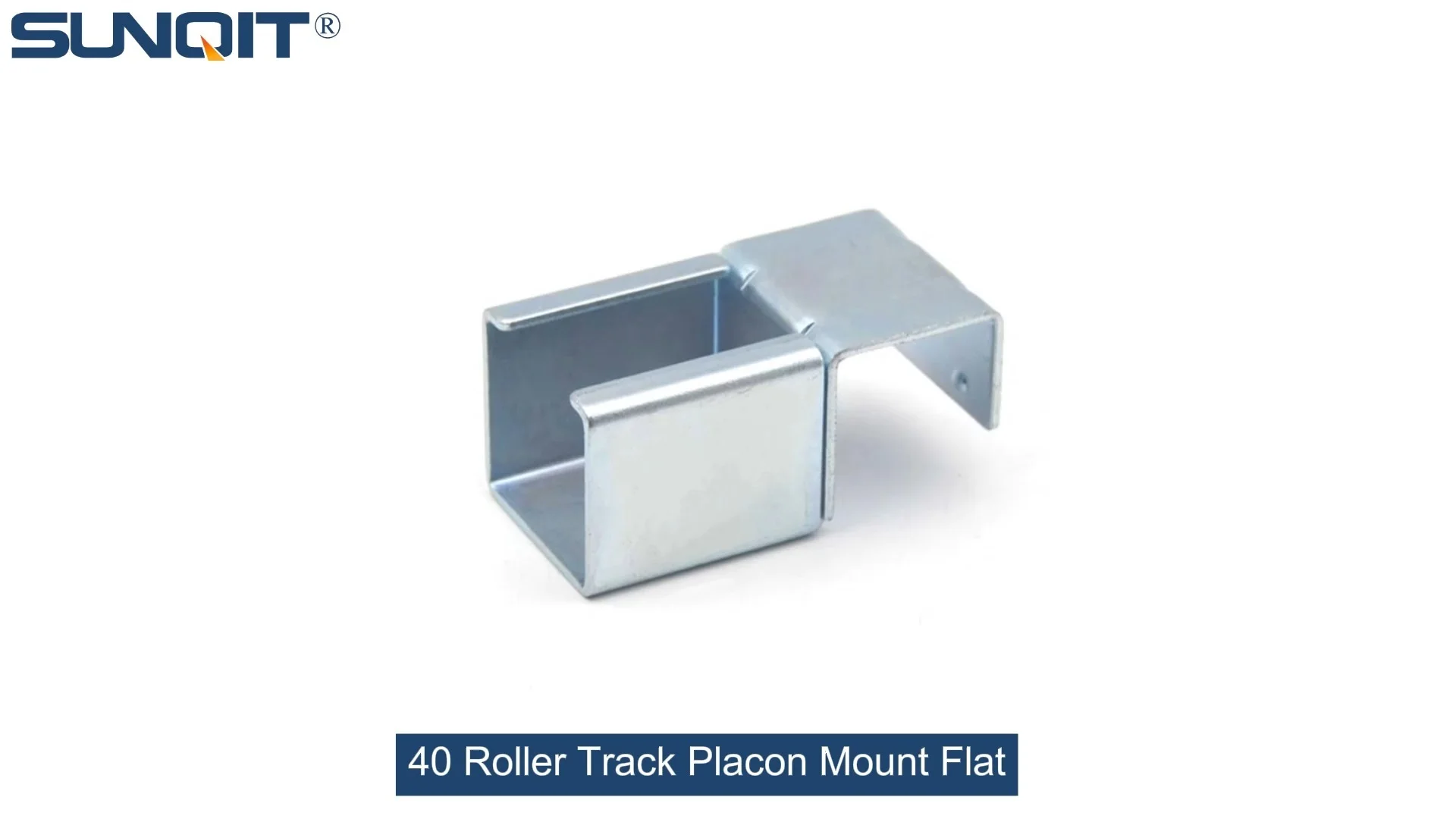
40 Roller Track Placon Mount Flat
Roller track placon mount work as a connector for roller track and pipe or aluminum profile in rack syetem, it is a necessary parts in rack system which widely used in industrial plant and logistic,warehouse storage.
Walk into any thriving manufacturing facility today, and you'll notice a quiet revolution happening on the shop floor. Gone are the days of rigid, one-size-fits-all production lines that creak under the weight of inefficiency and downtime. Instead, there's a new rhythm—smooth, adaptive, and human-centered. This is the rhythm of lean manufacturing, and at its core lies the lean cell: a compact, self-contained unit designed to eliminate waste, boost productivity, and empower workers. But what makes a lean cell truly effective? It starts with choosing the right building blocks. In this guide, we'll explore how to design a high-performance lean cell using two game-changing components: the 40 Roller Track Placon Mount Flat and flexible workstations. Whether you're assembling smartphones, medical devices, or automotive parts, these tools aren't just equipment—they're the foundation of a production system that grows with your needs.
Why Lean Cells Matter: The Pain Points They Solve
Let's start with the reality of modern manufacturing. Production managers today face a triple challenge: meeting tighter deadlines, adapting to smaller batch sizes, and keeping costs in check—all while ensuring workers stay safe and motivated. Traditional production setups often fall short here. Imagine a line where (materials) pile up because the conveyor moves too slowly, or workers waste 20 minutes per shift just walking to retrieve tools. These aren't just minor annoyances; they're profit leaks. A 2023 study by the Manufacturing Excellence Association found that poorly designed work cells can lead to up to 35% of labor hours being spent on non-value-adding activities—time that could be invested in innovation or quality control.
Lean cells address this by bringing everything a team needs into one cohesive space. But not all lean cells are created equal. The difference between a good lean cell and a great one? Flexibility. In an era where a single production line might switch from assembling smartwatches to fitness trackers overnight, rigidity is the enemy. This is where components like the 40 Roller Track Placon Mount Flat and aluminum lean pipe systems shine. They're not just "parts"—they're puzzle pieces that can be rearranged, expanded, or reconfigured without calling in a team of welders or halting production for days.
Key Insight: A lean cell isn't just about moving faster—it's about moving smarter. By reducing unnecessary motion, streamlining material flow, and putting tools within arm's reach, lean cells turn "busy work" into "meaningful work." And when workers feel their environment is designed with their needs in mind, absenteeism drops, and quality rises. It's a win-win.
The Building Blocks: Core Components of Your Lean Cell
Designing a lean cell is like building a custom home: you need strong foundations, versatile framing, and finishes that balance form and function. Let's break down the essential components, with a focus on the stars of the show: the 40 Roller Track Placon Mount Flat and flexible workstations, plus the aluminum lean pipe systems that tie them all together.
40 Roller Track Placon Mount Flat: The "Flow Master" of Material Handling
If the lean cell is the heart of your production line, the 40 Roller Track Placon Mount Flat is its circulatory system. This isn't just any conveyor track—it's engineered for precision and adaptability. Let's start with the basics: "placon mount" refers to its unique mounting system, which allows it to attach directly to aluminum profiles without drilling or welding. This means you can install it in minutes, not hours, and reposition it just as quickly if your workflow changes.
What sets the 40mm width apart? It strikes the perfect balance between load capacity and flexibility. Whether you're moving small electronic components (think: smartphone circuit boards) or heavier parts like automotive sensors, this track handles weights up to 50kg/m with ease. The rollers themselves are a study in durability—made from high-grade steel with precision bearings, they glide smoothly even after years of use. And unlike plastic rollers that warp under heat or heavy loads, these steel rollers maintain their integrity, ensuring consistent performance shift after shift.
But the real magic is in the details. The "flat" design means it sits flush with your workstation surfaces, eliminating tripping hazards and creating a seamless flow from one process to the next. Pair it with accessories like end stops (to prevent from sliding off) or side guides (to keep delicate parts centered), and you've got a material handling system that adapts to your unique products. For example, in a 3C assembly line, where parts are small and lightweight, you might pair the 40 Roller Track with mini aluminum roller track sections to create a multi-tiered flow system. In a medical device facility, where sterility is key, the track's smooth, easy-to-clean surface becomes a critical advantage—no crevices for bacteria to hide.
Flexible Workstations: Where Ergonomics Meets Productivity
A lean cell is only as good as the workstations where your team spends their days. Flexible workstations—built with aluminum lean pipe and ESD (Electrostatic Discharge) components—are designed to put workers first. Let's start with the frame: aluminum lean pipe (also called aluminum lean tube) is lightweight yet surprisingly strong, making it easy to adjust height or add shelves without sacrificing stability. Unlike traditional steel pipes, it won't rust, even in humid environments, and its smooth finish reduces the risk of scratches on delicate parts.
ESD protection is non-negotiable in industries like electronics manufacturing, where a single static charge can fry a $500 circuit board. ESD workbenches and workstations integrate conductive materials and grounding systems that safely dissipate static, protecting both products and workers. But these workstations aren't just about safety—they're about customization. Need a tool rail above the bench? Snap it on. Want a bin for scrap materials? Attach it in seconds. Even the (worktop) is adaptable: choose from anti-fatigue mats for standing workstations, heat-resistant surfaces for soldering tasks, or antimicrobial laminates for medical assembly lines.
Consider this scenario: A team assembling pacemakers needs a workstation that's compact (to fit in a cleanroom), ESD-safe (to protect sensitive electronics), and adjustable (to accommodate workers of different heights). With a flexible workstation built from aluminum lean pipe, they can add a fold-down writing surface for quality checklists, a integrated LED light strip for precision work, and a small 40 Roller Track section to feed parts directly into the assembly area. It's a workstation that grows with the task, not the other way around.
Aluminum Profile Accessories: The "Glue" That Holds It All Together
You could have the best roller track and workstation frame, but without the right accessories, they're just pieces of metal. Aluminum profile accessories—joints, brackets, and connectors—are the unsung heroes of lean cell design. Take the internal rotary aluminum joint, for example. This small but mighty component allows aluminum pipes to rotate 360 degrees, so you can adjust the angle of a shelf or tool holder without disassembling the entire frame. Or the roller track placon mount connector, which links sections of 40 Roller Track Placon Mount Flat with zero gap, ensuring materials glide from one track to the next without jamming.
Another standout is the adjustable leveling foot. Manufacturing floors are rarely perfectly flat, but these feet screw in or out to stabilize workstations, preventing wobbling that could affect precision. And let's not forget casters: adding lockable swivel casters to a workstation turns it into a mobile unit that can be rolled to where it's needed most—ideal for small-batch production or maintenance tasks. The beauty of these accessories? They're universal. A 40mm aluminum profile from one section of your lean cell can connect to a roller track from another, thanks to standardized sizing. It's like playing with a set of industrial Legos, but for grown-ups who mean business.

Step-by-Step: Designing Your Lean Cell from Scratch
Designing a lean cell isn't about throwing components together and hoping for the best. It's a systematic process that starts with understanding your team's needs and ends with a system that evolves with your business. Here's how to do it right.
Step 1: Map the Current State (and Listen to Your Team)
Before you pick up a single piece of aluminum pipe, spend a day on the shop floor. Watch how your team works. Where do they pause? What causes frustration? Maybe the assembler has to reach across a 6-foot table to grab screws, or the material handler is constantly bending to load parts onto a low conveyor. These are your starting points. Jot down: the tasks performed in the cell, the frequency of batch changes, the weight/size of materials, and any safety requirements (like ESD protection or cleanroom standards).
Pro tip: Hold a short workshop with operators, supervisors, and maintenance staff. They'll have insights no spreadsheet can provide. One medical device manufacturer we worked with discovered that their biggest waste wasn't time—it was ergonomic strain. Workers were developing shoulder pain from repeatedly lifting parts into place. This simple observation led them to add a 40 Roller Track Placon Mount Flat section at waist height, reducing lifting and cutting injury rates by 40%.
Step 2: Choose Your Components (Starting with the 40 Roller Track Placon Mount Flat)
Now it's time to select your building blocks. Start with the material flow system—the 40 Roller Track Placon Mount Flat will likely be the backbone here. Ask: What's the maximum weight of the parts moving through the cell? Will the track need to turn corners (if so, pair it with curved sections or ball transfer units)? How much space do you have? The 40mm width is versatile, but if you're moving very heavy parts (over 50kg/m), you might opt for a reinforced version or add support brackets.
Next, design the flexible workstations. For most cells, you'll need 1-3 workstations depending on the process. Key considerations: height adjustability (electric or manual), ESD requirements, and tool storage. Aluminum lean pipe is ideal here because it's easy to modify later. Don't forget accessories like cable management trays (to keep cords from tangling) or tilt-top surfaces (for workers who alternate between sitting and standing).
Step 3: Build, Test, and Tweak (It's Okay to Iterate)
The beauty of using aluminum lean pipe and placon mount components is that you can build the cell in phases. Start with the core structure: frame the workstations, install the 40 Roller Track, and add basic accessories. Then run a small test batch. Does the material flow smoothly? Are tools within easy reach? If a workstation feels cramped, loosen a few joints and adjust the frame—no welding required. One electronics manufacturer we partnered with initially placed their roller track too high, causing workers to stretch. They simply lowered it by 6 inches in 15 minutes, and productivity jumped by 12% in the first week.
Step 4: Train the Team (and Let Them Own the Process)
A lean cell is only as good as the people who use it. Once the cell is up and running, train your team on how to adjust components, troubleshoot minor issues (like a stuck roller), and suggest improvements. Empower them to make small changes—maybe adding a shelf or repositioning the track—to suit their workflow. This ownership is critical. When workers feel they have a say in their environment, they're more likely to take pride in their work and spot opportunities for optimization.

Real-World Impact: Lean Cell Success Stories
Theory is helpful, but nothing beats seeing these systems in action. Let's look at two case studies where 40 Roller Track Placon Mount Flat and flexible workstations transformed production lines.
Case Study 1: 3C Assembly Line (Smartphone Chargers)
A leading electronics manufacturer was struggling with frequent changeovers. Their production line made 12 different charger models, each requiring different tooling and material setups. Changeovers took 2 hours, and the rigid steel conveyor system often jammed when switching between part sizes. They needed a solution that could handle small batches (as few as 50 units) and reduce downtime.
We designed a lean cell with: two flexible workstations (ESD-safe, height-adjustable), a 40 Roller Track Placon Mount Flat loop (10 meters long), and aluminum profile tool carts. The track was paired with quick-change dividers to separate different charger components, and the workstations featured magnetic tool holders that could be reconfigured in minutes. Result? Changeover time dropped to 20 minutes, and the cell produced 30% more units per day with the same number of workers. Best of all, when the company launched a new charger model, they simply added a third workstation and extended the track by 2 meters—no production halt needed.
Case Study 2: Medical Device Kitting (Surgical Instrument Trays)
A medical device company needed to assemble custom surgical trays for hospitals. Each tray contained up to 20 different instruments, and accuracy was critical—missing a single tool could delay surgery. Their old process involved workers walking to 5 different storage racks, leading to errors and fatigue.
The solution: a U-shaped lean cell with a 40 Roller Track Placon Mount Flat as the central "delivery line." Each workstation was equipped with a touchscreen monitor (to display tray contents) and a flow rack (stocked with instruments) fed by the roller track. Aluminum lean pipe dividers kept instruments organized, and ESD workbenches prevented static damage to delicate tools. Workers now stand in one spot, and materials come to them. Error rates fell from 8% to 0.5%, and worker satisfaction scores rose by 25% in the first quarter.

Why Aluminum? The Sustainability and Cost Advantages
You might be wondering: Why use aluminum lean pipe and profiles instead of steel or plastic? The answer lies in three key benefits: sustainability, cost-effectiveness, and adaptability.
First, sustainability. Aluminum is 100% recyclable, and using aluminum lean pipe reduces your carbon footprint compared to steel (which requires more energy to produce and transport). Many manufacturers today are prioritizing eco-friendly practices not just for compliance, but because it matters to their customers and employees. Plus, since aluminum components are reusable—you can disassemble a workstation and rebuild it elsewhere—you're not throwing away materials when your needs change.
Second, cost. While aluminum might have a slightly higher upfront cost than steel, it pays for itself over time. Aluminum doesn't rust, so you won't need to replace corroded pipes in humid environments. Its lightweight nature also reduces shipping costs and makes installation easier (no heavy equipment needed). One automotive supplier calculated that their aluminum lean cell saved them $12,000 over 3 years in maintenance and replacement costs compared to their old steel system.
| Feature | Aluminum Lean Pipe/Flexible Workstations | Traditional Steel/Static Systems |
|---|---|---|
| Changeover Time | Minutes (no tools needed) | Hours/Days (requires welding/modification) |
| Durability | Rust-resistant, 10+ year lifespan | Prone to rust, 5-7 year lifespan |
| Weight | 30% lighter than steel (easier to handle) | Heavy (requires machinery for installation) |
| Sustainability | 100% recyclable, reusable components | Difficult to recycle, often disposed of after use |
Beyond the Basics: Custom Solutions for Unique Challenges
Every manufacturing facility has unique needs. Maybe you work in a cleanroom and need non-shedding materials, or you're in the automotive industry and require heavy-duty components for engine parts. This is where custom solutions come into play. The best lean cell suppliers don't just sell parts—they partner with you to design a system that fits your exact requirements.
For example, a client in the aerospace industry needed a lean cell to assemble satellite components, which required extreme precision and low vibration. We modified the 40 Roller Track Placon Mount Flat with specialized bearings to reduce noise and vibration, and built workstations with anti-magnetic materials. Another client in food packaging needed stainless steel components (instead of aluminum) for washdown environments—we provided stainless steel roller tracks and corrosion-resistant joints to meet their hygiene standards.
The key here is to look for a supplier that offers both standard components and the ability to customize. This ensures you're not paying for features you don't need, but you also won't be limited by off-the-shelf options when your process requires something special.
Conclusion: Building a Lean Cell That Grows With You
Designing a lean cell with 40 Roller Track Placon Mount Flat and flexible workstations isn't just about upgrading your equipment—it's about future-proofing your manufacturing process. In a world where customer demands change overnight and competition grows fiercer by the day, flexibility isn't a luxury; it's survival. These systems give you the ability to pivot quickly, reduce waste, and keep your team engaged and productive.
Remember, the best lean cells aren't static. They evolve. A cell that assembles smartwatches today might assemble VR headsets next year, and with aluminum lean pipe, 40 Roller Track, and flexible workstations, that transition will be seamless. So start small, involve your team, and focus on the basics: material flow, ergonomics, and adaptability. The result? A production line that doesn't just keep up with change—it leads it.
At the end of the day, manufacturing is about people. When you design a lean cell that makes their jobs easier, safer, and more fulfilling, you're not just building a better production system—you're building a better workplace. And that's the true power of lean manufacturing.