- Company Articles
- Products and Technology
- Application Cases
- Designing Custom Solutions with 4040A EU Standard Aluminum Profile: Case Studies

Designing Custom Solutions with 4040A EU Standard Aluminum Profile: Case Studies
Related Product
4040A EU Standard Aluminum Profile
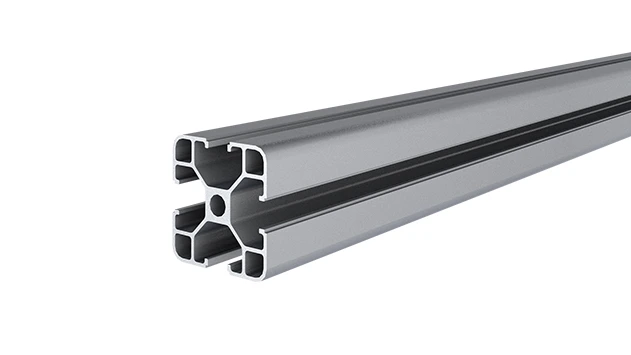
4040A is a 4.00x4.00 CM fractional 40 series square extrusion T-slot profile with four open T-slots, each side with 4.00cm face.
Introduction: The Backbone of Modern Customization
In today's fast-paced manufacturing, warehousing, and logistics environments, the ability to adapt quickly isn't just a luxury—it's a necessity. Whether you're scaling production, reconfiguring a workshop, or optimizing material flow, rigid, one-size-fits-all systems often fall short. This is where modular solutions take center stage, and few materials have proven as versatile as the 4040A EU Standard Aluminum Profile. Renowned for its balance of strength, lightweight design, and compatibility with a wide range of aluminum profile accessories, this profile has become the backbone of custom industrial setups worldwide. Let's dive into real-world case studies that showcase how businesses are leveraging 4040A to solve unique challenges, along with insights into why it's a top choice for lean system suppliers and operators alike.
Why 4040A EU Standard Aluminum Profile Stands Out
Before exploring the case studies, it's worth understanding what makes 4040A a go-to material. First, its composition: made from high-grade aluminum alloy, it offers impressive load-bearing capacity (up to 200kg per linear meter in many configurations) while remaining lightweight, making installation and reconfiguration a breeze—no heavy machinery required. Unlike steel, it resists corrosion, making it suitable for both indoor and semi-outdoor environments, from factory floors to warehouse docks.
But its true power lies in modularity. The 4040A profile features a T-slot design, which means it seamlessly integrates with aluminum profile accessories like connectors, brackets, hinges, and panels. This modularity eliminates the need for welding or specialized tools; assemblies can be put together with simple hand tools, modified on the fly, and even disassembled for reuse. For businesses prioritizing lean principles—minimizing waste, maximizing flexibility—this adaptability is invaluable. It's no wonder lean system suppliers often recommend 4040A as a starting point for custom projects.

Case Studies: Turning Challenges into Solutions
Case Study 1: Ergonomic Workbench for Electronics Assembly
The Client: A mid-sized electronics manufacturer specializing in circuit board assembly. With a growing product line, their existing workstations were struggling to keep up. The fixed-height benches forced workers into awkward postures, leading to increased fatigue and minor errors. Additionally, tool storage was disorganized, wasting valuable time during shifts.
The Challenge: Design a workstation that could adjust to different worker heights, integrate tool storage, and accommodate varying board sizes—all while maintaining ESD (Electrostatic Discharge) protection to safeguard sensitive components.
The Solution: The lean system supplier proposed a custom workbench built around 4040A EU Standard Aluminum Profile. Here's how it came together:
- Frame & Height Adjustment: The main frame used 4040A profiles cut to length, paired with internal rotary aluminum joints to allow height adjustment via hand cranks. This let workers set the bench surface between 75cm and 95cm—critical for ergonomics.
- Worktop & ESD Protection: An aluminum honeycomb panel was mounted on top, grounded via ESD-safe aluminum profile accessories to dissipate static charges.
- Tool Storage: Side-mounted shelves and pegboards, also built with 4040A, provided dedicated spots for screwdrivers, soldering irons, and testers. Small drawers, attached using bracket accessories, kept tiny components organized.
- Portability: Heavy-duty caster wheels with locks were added to the base, allowing the workbench to be moved when reconfiguring the assembly line.
The Outcome: Within three months, the manufacturer reported a 15% reduction in assembly errors and a 20% decrease in worker complaints about discomfort. The adjustable height feature alone cut down on setup time when switching between operators, and the modular tool storage meant tools were always within arm's reach. "We used to spend 10 minutes per shift just hunting for the right screwdriver," said the production manager. "Now, that time goes straight into building products."
Case Study 2: High-Density Flow Rack for Automotive Parts Distribution
The Client: A third-party logistics (3PL) provider managing parts distribution for a major automotive brand. Their warehouse handled over 500 unique small to medium-sized parts, from gaskets to sensor modules. The existing static shelving required pickers to walk long distances, and FIFO (First-In-First-Out) compliance was hard to enforce, leading to occasional stock obsolescence.
The Challenge: Create a storage system that reduced picking time, enforced FIFO, and maximized vertical space without sacrificing accessibility.
The Solution: The lean system supplier designed a multi-tier flow rack using 4040A EU Standard Aluminum Profile as the structural frame. Here's the breakdown:
- Frame Structure: 4040A profiles formed the vertical uprights and horizontal beams, spaced 1.2 meters apart to support 5 levels of storage. The profile's rigidity ensured the rack could handle the weight of stacked parts (up to 80kg per shelf) without bending.
- Flow Tracks: Plastic roller track guide rails (grey, for visibility) were mounted on the shelves, creating a gravity-fed system. Parts were loaded from the back, and as front items were picked, the rest rolled forward—automatically enforcing FIFO.
- Dividers & Labeling: Aluminum profile accessories like slot dividers split each shelf into lanes for different part numbers, while clip-on label holders kept inventory organized.
- Accessibility: The rack was built at a height that allowed picking from both sides (ground level to 1.8m), reducing the need for ladders or reach trucks.
The Outcome: Picking time dropped by 35%, and the 3PL saw a 90% reduction in FIFO violations. The vertical design also freed up 20% of floor space, which was repurposed for a new packing station. "Before, pickers walked 8-10km per shift," noted the warehouse manager. "Now, they're moving half that distance, and we're processing 25% more orders daily."
Case Study 3: Mobile Testing Station for Medical Device Quality Control
The Client: A medical device startup producing portable heart monitors. With production ramping up, their quality control (QC) process was becoming a bottleneck: fixed testing stations meant devices had to be carried from the assembly line to QC, risking damage and slowing throughput.
The Challenge: Develop a mobile testing station that could move directly to the assembly line, integrate testing equipment, and fold down when not in use to save space.
The Solution: Leveraging 4040A's modularity, the lean system supplier created a compact, foldable cart:
- Frame & Foldability: The main frame used 4040A profiles with hinge accessories, allowing the top testing surface to fold down when not in use—reducing the cart's footprint from 120cm x 80cm to 120cm x 40cm.
- Equipment Integration: A lower shelf, built with 4040A and aluminum angle brackets, held a laptop and testing. Cable management clips (another aluminum profile accessory) kept wires tidy and prevented tripping hazards.
- Stability & Mobility: Heavy-duty caster accessories with locking mechanisms ensured the cart stayed put during testing but could be pushed easily by one person.
- Cleanliness: The aluminum surfaces were easy to sanitize, meeting the strict hygiene standards of medical device manufacturing.
The Outcome: The mobile stations cut QC wait times by 40%, as testers could now move directly to finished devices instead of waiting for them to be transported. The foldable design also solved a space crunch in the startup's tight facility. "We used to have to choose between storing testing equipment or raw materials," said the operations director. "Now, we just fold the carts and tuck them away at the end of the day."
Comparing the Case Studies: Key Takeaways
| Client Industry | Core Challenge | 4040A & Accessories Used | Primary Benefit |
|---|---|---|---|
| Electronics Assembly | Ergonomics + Tool Organization | 4040A frame, internal rotary joints, caster wheels, ESD worktop | 15% fewer errors, better worker comfort |
| Automotive Parts Distribution | FIFO Compliance + Space Efficiency | 4040A rack frame, plastic roller track guide rails, dividers | 35% faster picking, 20% more floor space |
| Medical Device Manufacturing | Mobile Testing + Space Saving | 4040A foldable frame, hinge accessories, caster accessories | 40% reduction in QC wait times |
Why 4040A Remains a Favorite Among Lean System Suppliers
These case studies highlight a common thread: 4040A's ability to adapt to diverse needs. But what makes it so appealing to lean system suppliers, who are tasked with turning client challenges into actionable solutions? For one, its consistency. As an EU standard profile, 4040A dimensions are uniform across manufacturers, meaning accessories from different brands (hinges, brackets, wheels) work together seamlessly. This interoperability reduces lead times—suppliers don't have to custom-fabricate parts for every project.
Cost-effectiveness is another factor. While aluminum can be pricier upfront than steel, the modularity of 4040A means systems can be disassembled and repurposed when needs change. A workbench frame from a defunct project, for example, can be cut down and reused to build a small parts rack. Over time, this reduces waste and lowers long-term costs—a key principle of lean management.
Finally, speed. With 4040A, a simple workbench or rack can be assembled in hours, not days. This rapid deployment is critical for businesses facing tight deadlines or unexpected demand spikes. "We once had a client need 10 custom workstations in a week to handle a rush order," recalled a lean system supplier representative. "With 4040A and off-the-shelf accessories, we had them installed in three days. Steel would have taken twice as long."
Conclusion: The Power of Modularity in a Changing World
In an era where flexibility and efficiency are non-negotiable, the 4040A EU Standard Aluminum Profile has proven itself more than just a material—it's a catalyst for innovation. From ergonomic workbenches that keep electronics workers comfortable to flow racks that speed up automotive parts picking, its ability to adapt to unique challenges is unmatched. When paired with the right aluminum profile accessories and a knowledgeable lean system supplier, 4040A doesn't just solve problems; it transforms how businesses operate.
Whether you're a small manufacturer looking to optimize your workshop or a large logistics firm rethinking material flow, the message is clear: modular solutions built on 4040A offer the kind of adaptability that rigid systems can't match. And in a world that never stops changing, that adaptability might just be the most valuable tool in your toolkit.