- Company Articles
- Products and Technology
- Solution
- Designing Custom Storage Solutions with Vertical Lean Pipe Joints

Designing Custom Storage Solutions with Vertical Lean Pipe Joints
Related Product
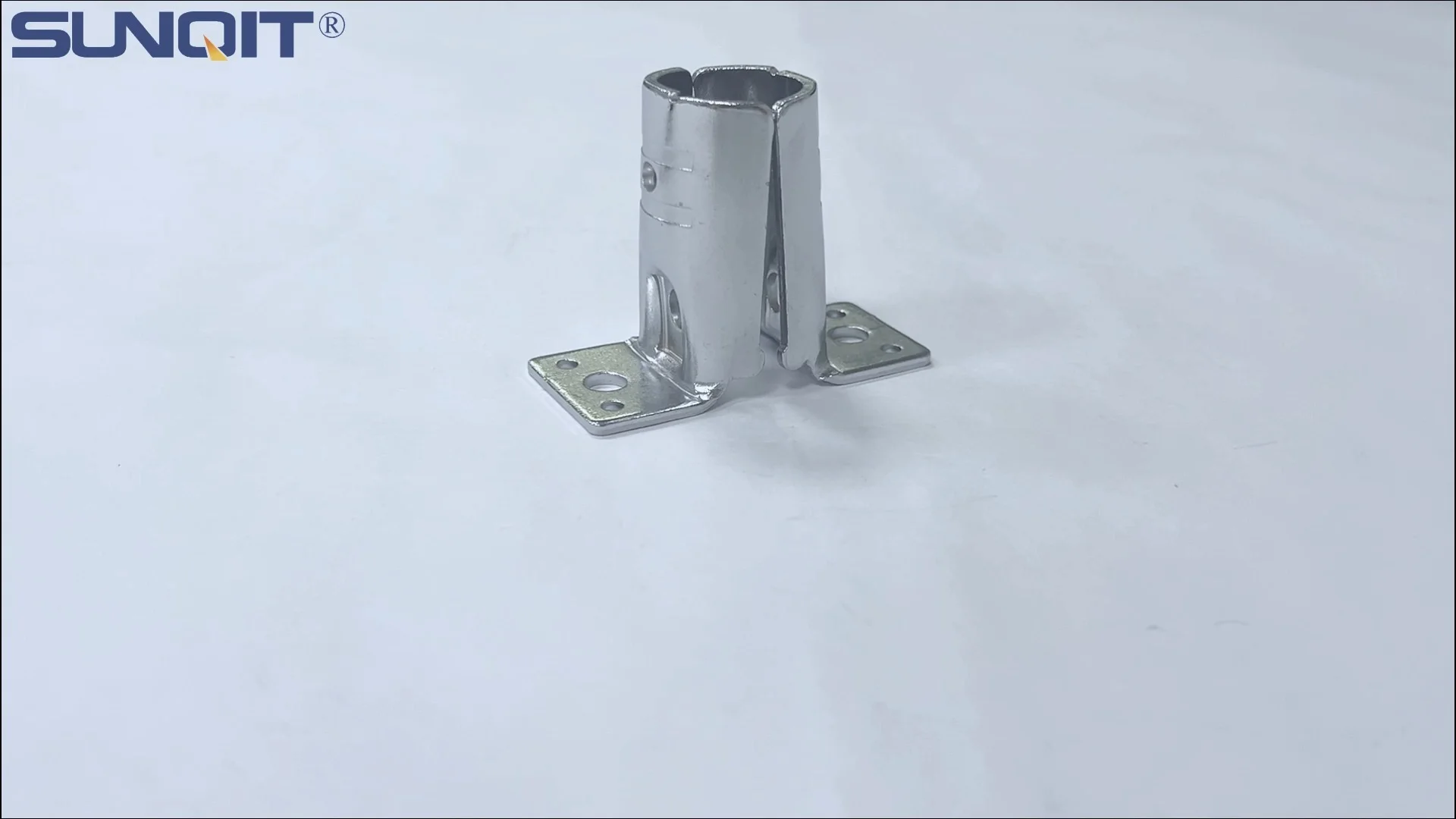
Vertical Lean Pipe Joint
Vertical lean pipe joint is used for 28mm lean pipe fixed on ground and keep it stable.
Walk into any busy workshop, factory floor, or warehouse, and you'll quickly spot the difference between chaos and efficiency. It's in the way tools hang neatly on walls, parts glide smoothly along workstations, and every square foot of space works with the team instead of against them. But achieving that level of organization isn't about luck—it's about intentional design. And at the heart of many of these well-oiled systems? Vertical lean pipe joints. These unassuming connectors are the unsung heroes of custom storage, turning simple pipes into flexible, sturdy structures that adapt to your unique needs. Whether you're building a lean pipe workbench for assembly line workers, a flow rack for fast-moving inventory, or a mobile trolley to shuttle materials across the shop, vertical lean pipe joints make it possible to create exactly what you need—no generic, one-size-fits-nothing solutions required.
Understanding Vertical Lean Pipe Joints: The Building Blocks of Flexibility
Let's start with the basics: What are vertical lean pipe joints, and why do they matter? At their core, these joints are specialized connectors designed to link lean pipes (also called "lean tubes") at vertical angles, forming the backbone of modular storage and workflow systems. Think of them as the "Lego blocks" of industrial design—simple in concept, but infinitely versatile in application. Unlike rigid, welded metal structures that require professional installation and can't be reconfigured, vertical lean pipe joints let you assemble, disassemble, and rearrange your storage solutions with nothing more than a hex key or wrench. That flexibility is a game-changer in environments where needs shift—whether you're scaling up production, introducing new products, or reorganizing to boost efficiency.
Most vertical lean pipe joints are made from durable materials like zinc-plated steel or high-strength plastic, with a coating that resists corrosion and wear. They're engineered to grip lean pipes tightly, ensuring stability even when supporting heavy loads—think toolboxes, bulk parts, or fully loaded shelves. What sets them apart from standard pipe fittings is their focus on vertical alignment: They're shaped to lock pipes into straight, upright positions, creating vertical supports that can be paired with horizontal crossbars, shelves, or brackets to build everything from workbenches to multi-tiered racks. And because they're designed for quick assembly, you don't need to be a master craftsman to use them. A team of two can put together a basic storage rack in under an hour, and if you later realize you need an extra shelf or a taller structure, you can simply loosen the joints, adjust the pipes, and tighten them back up—no cutting, welding, or messy adhesives required.
Why Vertical Orientation Matters for Storage Design
You might be wondering: Why focus on vertical joints specifically? After all, storage systems can be built horizontally too. The answer lies in space efficiency. In most workshops and factories, floor space is a precious commodity—you can't afford to spread out storage systems when every square foot could be used for production, assembly, or workflow. Vertical lean pipe joints let you build up , not just out, maximizing vertical space that would otherwise go unused. A 6-foot-tall rack built with vertical joints uses the same floor footprint as a 3-foot-tall one but doubles your storage capacity. That's especially valuable in tight spaces, like small workshops or crowded warehouse aisles, where going vertical is the only way to keep tools and materials accessible without cluttering the area.
Vertical joints also enhance stability. When you build upward, you need a solid foundation to prevent tipping—imagine a tall bookshelf with wobbly legs, and you'll understand the risk. Vertical lean pipe joints are designed to distribute weight evenly along the length of the pipes, creating a rigid frame that can support heavy loads without swaying. Many joints also feature reinforced gussets or extra locking mechanisms to add strength, making them suitable for everything from lightweight tool storage to heavy-duty material racks holding hundreds of pounds of parts. And because they're paired with lean pipes—typically 28mm or 30mm diameter tubes made from steel with a plastic coating—they strike the perfect balance of strength and weight. Lean pipes are strong enough to bear loads but light enough to move when needed, especially when paired with caster wheels (more on those later).
Key Components: Beyond Joints—Building a Complete System
Vertical lean pipe joints are powerful on their own, but they're just one piece of the puzzle. To design a truly custom storage solution, you'll need to pair them with other components that work in harmony. Let's break down the essentials, from the pipes themselves to the accessories that add functionality.
Lean Pipes: The "Bones" of Your Structure
No joint is useful without a pipe to connect, and lean pipes are the ideal partner for vertical lean pipe joints. These pipes are typically made from cold-rolled steel with a polyethylene (PE) coating, which gives them a smooth, durable finish that resists scratches, dents, and corrosion. The coating also adds a bit of grip, making it easier to attach accessories like hooks, bins, or tool holders without slipping. Lean pipes come in standard lengths (usually 3 meters or 6 meters), but they're easy to cut with a pipe cutter or hacksaw if you need a custom size. This means you can tailor your structure to fit your space exactly—no more trying to make a 4-foot shelf work in a 3.5-foot corner.
One of the biggest advantages of lean pipes is their weight-to-strength ratio. They're lightweight enough to handle during assembly but strong enough to support hundreds of pounds when properly jointed. For example, a single vertical lean pipe supported by two vertical joints can easily hold a shelf loaded with 50-75 pounds of tools or parts. And because they're hollow, they're easier to transport and store when not in use—unlike solid steel bars, which can be cumbersome to move around.
Aluminum Profile: A Sleeker Alternative for Specialized Needs
While lean pipes are the workhorses of most systems, aluminum profile (another key component) is gaining popularity for applications where aesthetics, corrosion resistance, or precision matter. Aluminum profiles are extruded aluminum bars with T-slots running along their length, which let you slide in accessories like brackets, shelves, or handles without drilling holes. They're lighter than steel lean pipes, making them ideal for mobile systems (like carts or portable workbenches), and their smooth, anodized finish gives them a clean, professional look that's perfect for customer-facing areas or cleanrooms.
Vertical lean pipe joints can sometimes be adapted to work with aluminum profiles, but many manufacturers offer specialized aluminum joints that pair better with the T-slot design. If you're building a system that needs to be both durable and visually appealing—say, a workbench in a tech startup's prototyping lab or a display rack in a retail warehouse—aluminum profile might be the way to go. Just keep in mind that it's generally more expensive than lean pipe, so it's best reserved for applications where its unique benefits (lightweight, corrosion resistance, sleek design) justify the cost.
Caster Wheels: Adding Mobility to Your Static Storage
What good is a storage system if it can't move when you need it to? That's where caster wheels come in. These small but mighty accessories turn static racks and workbenches into mobile solutions, letting you roll tools, parts, or even entire workstations to where they're needed most. When paired with vertical lean pipe joints, casters transform fixed storage into flexible workflow assistants—imagine a lean pipe workbench that can be wheeled from the assembly line to the testing area, or a flow rack that follows your team as they move through different production stages.
Not all casters are created equal, though. For industrial use, you'll want to look for heavy-duty options with features like: Swivel capability (to maneuver tight corners), Locking brakes (to keep the system stable when in use), and Shock-absorbing rubber wheels (to protect floors and reduce noise). Most caster wheels attach to the base of vertical lean pipe structures via mounting plates or specialized joints, so you can add them during initial assembly or retrofits later. Just be sure to match the caster weight rating to your system—if you're building a shelf that will hold 300 pounds, opt for casters rated for at least 100 pounds each (since four casters will share the load).
Flow Rack Components: Making Materials Move Smoother
If your storage needs involve moving parts or products from one point to another—like in a warehouse picking area or assembly line—flow rack components are a must. Flow racks use gravity to slide items along roller tracks, so the next part is always at the front, ready to be grabbed. Vertical lean pipe joints play a critical role here by supporting the inclined frame of the flow rack, ensuring the rollers are angled correctly to let items glide smoothly without jamming.
Key flow rack components include roller tracks (plastic or metal rollers mounted on a rail), side guides (to keep items from falling off the sides), and stop plates (to prevent items from sliding too far). These components attach to vertical and horizontal lean pipes via brackets or specialized joints, creating a system that can be customized for different item sizes—from small electronics components to large automotive parts. For example, a flow rack built with vertical lean pipe joints might have three tiers, each with roller tracks angled at 5 degrees, letting workers pick parts from the front while new stock is loaded from the back. It's a simple design, but it drastically reduces the time spent walking to retrieve items, cutting down on fatigue and boosting productivity.
| Component | Primary Use | Key Benefits | Best For |
|---|---|---|---|
| Vertical Lean Pipe Joints | Connecting lean pipes at vertical angles | Quick assembly, reconfigurable, strong grip | All modular storage systems (racks, workbenches, trolleys) |
| Lean Pipes (PE-Coated) | Structural support (vertical/horizontal) | Durable, lightweight, easy to cut/customize | General storage, workbenches, static racks |
| Aluminum Profile | Sleek, corrosion-resistant structures | Lightweight, T-slot accessories, professional finish | Cleanrooms, customer-facing areas, mobile systems |
| Caster Wheels | Mobility for storage systems | Swivel/lock features, floor protection | Mobile workbenches, trolleys, portable racks |
| Flow Rack Roller Tracks | Gravity-fed material movement | Reduces picking time, smooth item flow | Warehouse picking, assembly line parts feeding |

Designing Your Custom Storage System: A Step-by-Step Guide
Now that you know the components, let's walk through how to design a storage system using vertical lean pipe joints. The process is straightforward, but it starts with understanding your needs—skip this step, and you might end up with a system that looks good on paper but fails in real-world use. Here's how to do it right:
Step 1: Assess Your Needs (Space, Load, and Workflow)
Before you buy a single joint or pipe, take time to map out what you need. Ask yourself: What will this system store? (Tools? Parts? Finished products?) How heavy are those items? (A box of screws is light; a power drill is heavier.) Where will the system go? (Against a wall? In the middle of the floor? Under a workbench?) Who will use it? (Assembly line workers? Warehouse staff? Will they need to move it around?) How often will it need to change? (Is this a permanent setup, or will you need to reconfigure it in 6 months?) Answering these questions will help you choose the right materials, size, and features.
For example, if you're designing a lean pipe workbench for an electronics assembly team, you'll need a sturdy top (maybe plywood or metal), shelves for tools, and possibly a pegboard for hanging small parts. If the team moves between stations, adding caster wheels with brakes makes sense. On the other hand, a flow rack for a warehouse might need multiple tiers, roller tracks, and vertical supports tall enough to hold 50-pound boxes without swaying. By starting with your needs, you avoid overbuying (or underbuying) components.
Step 2: Sketch Your Design (Even a Rough One Works)
You don't need to be an artist to sketch your storage system—even a simple diagram on graph paper will help. Draw the space where the system will go, noting dimensions (height, width, depth). Then sketch the structure itself, marking vertical supports (where vertical lean pipe joints will go), horizontal crossbars, shelves, and any accessories like casters or roller tracks. Label the parts: "4 vertical pipes (6ft each)," "8 vertical joints," "2 caster wheels with brakes." This sketch will be your shopping list and assembly guide.
If you're not sure about load capacity, err on the side of caution. Most vertical lean pipe joints can handle more weight than you'll need, but it's better to add extra supports than to risk a shelf collapsing. A good rule of thumb: For every 2 feet of horizontal pipe, add a vertical support. So a 6-foot-long shelf would need 3 vertical supports (one at each end and one in the middle) to prevent sagging.
Step 3: Gather Your Materials and Tools
Once your design is finalized, it's time to gather components. You'll need: Vertical lean pipe joints (enough to connect all vertical pipes), Lean pipes (cut to your desired lengths), Accessories (casters, shelves, roller tracks, etc.), and Basic tools (hex key, wrench, pipe cutter, measuring tape, level). Most lean pipe suppliers sell starter kits with common components, which can save time if you're building a simple system. For custom designs, you can order parts individually—just make sure the joints and pipes are compatible (most use standard 28mm or 30mm pipes, but double-check sizes).
Pro tip: Buy a few extra joints and a spare pipe or two. It's frustrating to get halfway through assembly and realize you're short a joint, and extra parts come in handy for future modifications.
Step 4: Assemble, Test, and Adjust
Now for the fun part: building! Start by assembling the vertical frame. Attach vertical lean pipe joints to the bottom pipes (or caster mounting plates, if using wheels), then slide the vertical pipes into the joints and tighten them until they're snug but not over-tightened (you can always adjust later). Use a level to ensure the vertical pipes are straight—crooked supports will lead to wobbly shelves. Once the frame is up, add horizontal crossbars and shelves, then attach any accessories like roller tracks or tool hooks.
After assembly, test the system: Load it with the items it will store (or weights of similar size) and check for stability. Does it sway? Are the joints holding tight? If something feels off, loosen the joints, adjust the pipes, and retighten. This is the beauty of vertical lean pipe joints—they're forgiving. You don't have to get it perfect on the first try.

Real-World Applications: How Teams Are Using Vertical Lean Pipe Joints Today
To truly understand the impact of vertical lean pipe joints, let's look at how they're being used in real-world settings. These examples show just how versatile and transformative these systems can be.
Case Study 1: A Small Electronics Workshop's Lean Pipe Workbench
A team of 5 engineers at a small electronics startup was struggling with a cluttered workspace. Their old workbench was too small, tools were scattered, and parts bins were constantly overflowing. They needed a solution that would fit their 10x12ft workshop, hold tools, parts, and a laptop, and be mobile enough to move when they needed extra floor space for prototyping.
Using vertical lean pipe joints, they designed a custom workbench: 4 vertical lean pipes (5ft tall) as legs, connected by horizontal crossbars at the top and bottom. They added a plywood top (2ft deep x 6ft wide), a lower shelf for parts bins, and pegboard on the back for hanging tools. To make it mobile, they attached 4 locking caster wheels to the base. Total cost? Under $300 (far cheaper than a prefab industrial workbench), and assembly took 2 hours. Six months later, they needed to add a second shelf for new tools—so they simply loosened the vertical joints, added two more horizontal pipes, and tightened everything back up. No hassle, no extra cost, and the workbench is still going strong.
Case Study 2: A Warehouse Flow Rack for Fast-Moving Parts
A large automotive parts warehouse was losing time to inefficient picking. Workers had to walk 20+ feet to retrieve small parts like screws and washers, and stock was often disorganized, leading to errors. The warehouse manager wanted a system that would bring parts closer to the packing stations and use gravity to keep items moving forward.
The solution? A flow rack built with vertical lean pipe joints. The team used 6 vertical pipes (8ft tall) as supports, connected by horizontal crossbars at 2ft intervals to create 3 tiers. Each tier was fitted with plastic roller tracks (angled at 3 degrees) and side guides to keep parts bins from sliding off. Vertical lean pipe joints ensured the frame was sturdy enough to support the weight of 20+ bins per tier. Now, workers pick parts from the front of the flow rack, and stockers load new bins from the back—items slide forward automatically, so the next bin is always ready. Picking time dropped by 35%, and errors decreased by 20% in the first month. Best of all, when the warehouse added new part sizes, they adjusted the roller track spacing by loosening the joints and repositioning the guides—no need to buy a whole new rack.

Conclusion: Building Storage That Grows With You
In a world where efficiency and adaptability are everything, vertical lean pipe joints offer a simple, affordable way to take control of your storage and workflow. They turn generic spaces into customized environments where tools, parts, and materials are exactly where you need them, when you need them. Whether you're a small workshop owner building your first lean pipe workbench or a warehouse manager designing a fleet of flow racks, these joints put the power of design in your hands—no fancy tools, no expert skills, just flexibility and common sense.
The next time you look at your cluttered workspace, remember: You don't have to accept chaos. With vertical lean pipe joints, a few lean pipes, and a little creativity, you can build storage solutions that work for your team, not against them. And as your needs change—because they always do—your system can change with you. That's the beauty of modular design: It grows as you grow, ensuring you're always ready for whatever comes next.
So grab a sketchpad, measure your space, and start designing. Your future self (and your team) will thank you.