- Company Articles
- Products and Technology
- Product knowledge
- Designing Custom Workstations with Single Side Aluminum Pipe: Tips & Tricks

Designing Custom Workstations with Single Side Aluminum Pipe: Tips & Tricks
Related Product
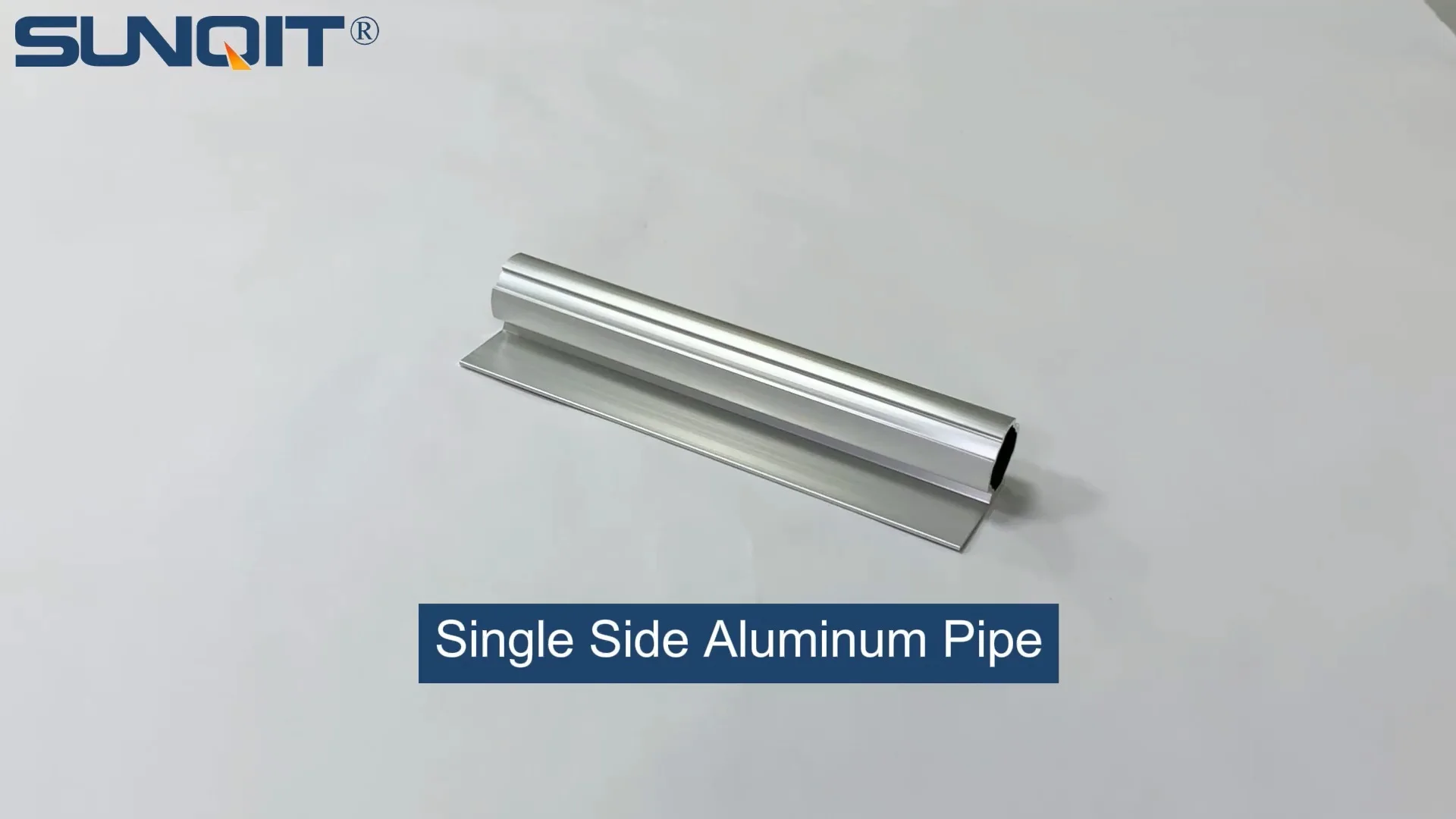
Single Side Aluminum Pipe
The single-sided plane can be installed with a back-mounted material box, and can also be used as a sidewall or partition.
Craft a workspace that fits your needs—no more one-size-fits-all frustration
The Problem with "One-Size-Fits-All" Workstations
Picture this: You walk into your workspace, ready to tackle the day. But as you reach for your tools, you stretch awkwardly—your current workbench is too low. The shelves above are crammed with supplies you rarely use, while the ones you need are buried under a pile of clutter. By mid-morning, your back aches, and you've wasted 10 minutes just hunting for a wrench. Sound familiar?
Most workstations are designed for "the average user," but let's be honest—no one's average. Whether you're assembling electronics, packing orders, or tinkering with prototypes, your workflow is unique. That's where single side aluminum pipe comes in. This unassuming material is a game-changer for anyone tired of fighting with rigid, inflexible setups. It lets you build a workstation that bends to your rhythm, not the other way around.
Why Single Side Aluminum Pipe? The Benefits That Matter
You might be thinking, "Why not just build something with wood or steel?" Good question. Let's break down why single side aluminum pipe stands out:
1. Lightweight but Tough as Nails
Aluminum is naturally lightweight—you can move the frame with one hand during assembly—but don't let that fool you. It's resistant to rust, dents, and corrosion, even in busy workshops or garages. Unlike wood, it won't warp if you spill a drink, and unlike steel, it won't leave your forearms aching after rearranging shelves.
2. Modular Magic: Change It When You Need To
The real beauty? It's modular. With aluminum profile accessories like joints, brackets, and clamps, you can tweak your workstation in minutes. Need a taller shelf? Swap out a short pipe for a longer one. Want to add a tool holder? Screw on a bracket. No saws, no glue, no permanent mistakes. It's like building with grown-up Legos—minus the stepping-on-pieces pain.
3. Budget-Friendly in the Long Run
Sure, a pre-made workstation might seem cheaper upfront, but how long until you outgrow it? With single side aluminum pipe, you invest once and adapt forever. Damaged a joint? replace just that part, not the whole setup. Scaling up? Add more pipes and accessories. It's the opposite of fast fashion—this is workspace slow design, built to last.

Step-by-Step: Designing Your Custom Workstation
Ready to dive in? Let's walk through the process, from brainstorming to building. No fancy tools required—just a tape measure, a pencil, and a little patience.
Step 1: Map Out Your "Pain Points"
Before grabbing a pipe, ask: What's not working now? Spend a day jotting down frustrations. Maybe you're always bending to reach parts on the floor, or your tools are scattered across three different surfaces. Note:
- Which tools do you use constantly (keep these within arm's reach)?
- What items are heavy (store these at waist height to avoid lifting strain)?
- Do you need to move the workstation (hint: caster wheels will be your friend here)?
- How much surface space do you need for your main task (e.g., assembling a 2-foot-wide product)?
Step 2: Measure Twice, Cut Never (But You Probably Won't Cut at All)
Single side aluminum pipe often comes in standard lengths (1m, 2m, 3m), but you can also get custom cuts from suppliers. Measure your workspace carefully—width, depth, ceiling height (if you're adding overhead shelves). Sketch a rough layout on paper, marking where the frame, shelves, and workbench top will go. Pro tip: Use graph paper to scale (1 square = 6 inches) to avoid "oops, that's too big" moments later.
Step 3: Choose Your "Starter Kit" Components
Your workstation will need a few core parts. Here's the basics:
| Component | What It Does | Pro Tip |
|---|---|---|
| Single Side Aluminum Pipe | The "bones" of your workstation—forms the frame, legs, and shelf supports. | Go for 20mm or 30mm diameter for most workbenches; thicker (40mm) if you're storing heavy tools. |
| Aluminum Profile Accessories | Joints, brackets, and clamps that connect pipes. Think T-joints, L-joints, and corner brackets. | Get extra joints—you'll probably add more shelves later. Look for "quick-lock" joints; they tighten by hand, no tools needed. |
| Caster Wheels | Add mobility—perfect if you need to roll the workstation to a assembly line or storage corner. | Choose ones with brakes! You don't want your workstation rolling mid-task. 2-3 inch wheels work for smooth floors. |
| Workbench Top | The surface you'll work on—wood, laminate, or even metal (great for ESD workstations). | Aim for 1.5-2 inches thick if you'll be hammering or using heavy tools; thinner (0.75 inches) is fine for light tasks. |
Step 4: Build, Test, Tweak
Now the fun part! Start with the frame: connect the vertical legs to horizontal pipes using L-joints. If you're adding caster wheels, attach them to the bottom of the legs first (lock the brakes while building to keep things steady). Then add shelves at your pre-planned heights—use T-joints to branch off the main frame. Finally, secure the workbench top with brackets or clamps (no drilling into the pipe needed!).
Once it's built, test it . Spend an hour working at it—grab tools, place parts, mimic your workflow. If something feels off (e.g., a shelf is too high), loosen the joints and adjust. That's the beauty of aluminum: it's forgiving.

Pro Tips to Level Up Your Workstation
You've built the basics—now make it yours with these clever hacks.
Embrace the Lean System Mentality
Lean isn't just for factories—it's about cutting waste. Use your workstation to lean principles: keep only what you need within reach (the "5S" method: Sort, Set in order, Shine, Standardize, Sustain). Add small bins on shelves for screws, washers, or labels. Use hooks (attached with aluminum profile accessories) to hang tools like pliers or tape measures—no more digging through drawers.
Color-Code for Chaos Control
Aluminum profile accessories come in colors—use them! Red brackets for "urgent" tools, blue for parts, yellow for cleaning supplies. It's a visual cue that speeds up your workflow. Bonus: Paint the ends of pipes with nail polish to mark lengths (e.g., red = 1m, green = 2m) for easy sorting later.
Future-Proof with Expandable Design
Leave extra pipe ends or empty joints—you'll thank yourself later. If your team grows, or you take on a bigger project, you can add a side shelf or extend the workbench. One manufacturer we worked with started with a small workstation and expanded it three times in two years—no new frame needed, just extra pipes and accessories.
Ergonomics = Happy (and Healthy) You
A workstation that hurts your body isn't a workstation—it's a punishment. Aim for:
- Workbench height: Elbows bent at 90° when typing/assembling.
- Shelves: Most-used items at eye to waist level.
- Footrest: If you stand, a small platform to alternate feet.

From Frustration to Flow: A Real-Life Example
Take it from Maria, a small-batch electronics assembler in Texas. Her old workstation was a rickety wooden table with a single shelf—"I spent half my day kneeling to grab capacitors from the floor," she laughs. After switching to single side aluminum pipe, she built a 4-foot-wide workbench with:
- Caster wheels to roll between her soldering station and testing area.
- Two shelves (one at eye level for tools, one at waist level for parts bins).
- Aluminum profile accessories to attach a LED light bar (no more squinting at tiny circuits).
Result? "My assembly time dropped by 25%," Maria says. "And my back? No more pain. It's like the workstation was built just for me—because it was."
Ready to Build? Start Small, Think Big
You don't need to rebuild your entire workspace in a day. Start with the basics: a simple frame, a workbench top, and a few shelves. As you use it, you'll figure out what's missing (maybe a tool rail, or a taller shelf). That's the joy of single side aluminum pipe—it grows with you.
So grab that tape measure, sketch your dream setup, and remember: the best workstation isn't the fanciest one. It's the one that makes you think, "Wow, work just got a little easier today."