- Company Articles
- Products and Technology
- Solution
- Designing Flexible Production Lines with 85 Steel Roller Track

Designing Flexible Production Lines with 85 Steel Roller Track
Related Product
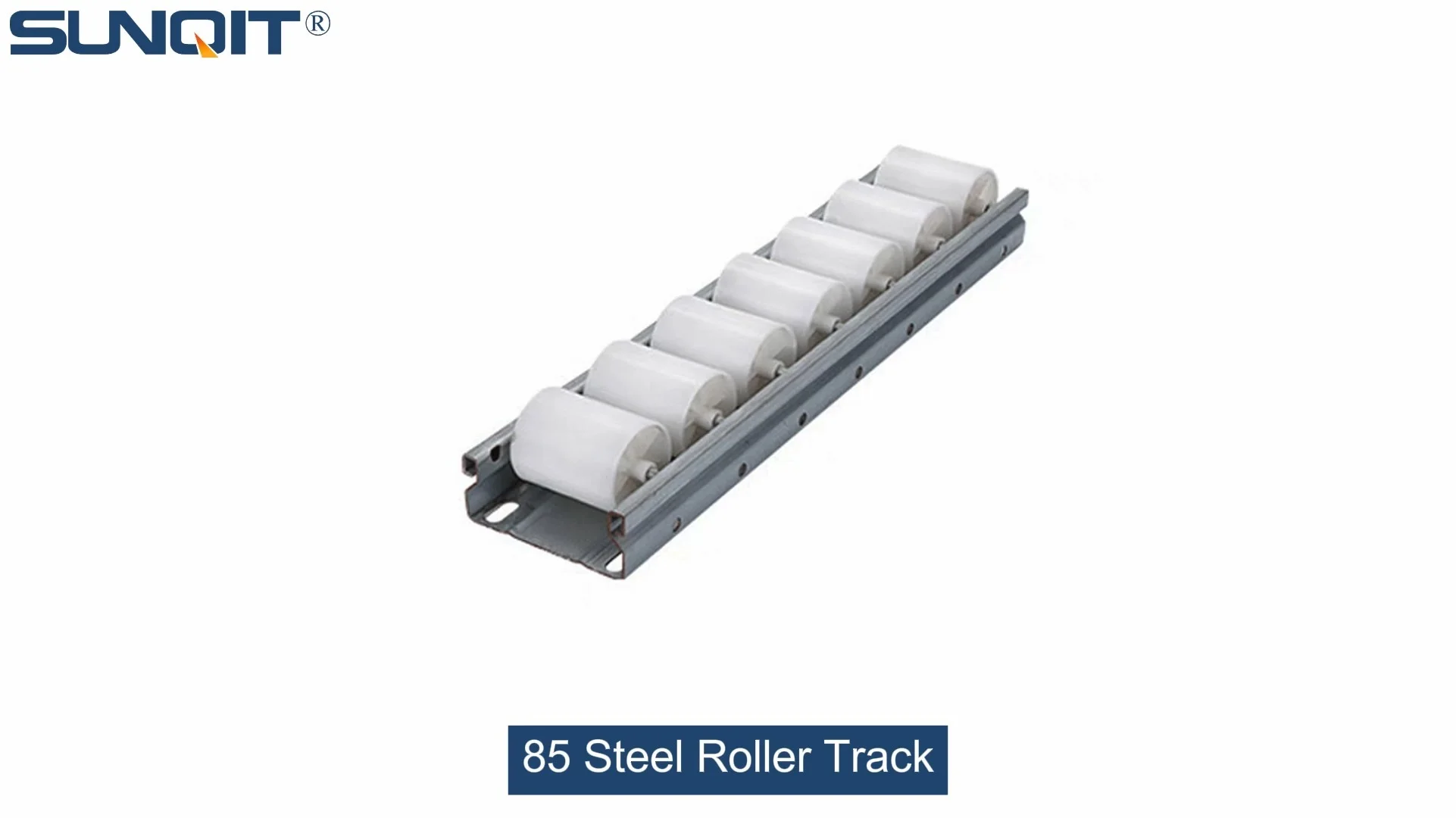
85 Steel Roller Track
85 heavy duty modular system roller track.Its use is focused on the transport of heavy products. Its implantation is carried out by creating a slope for the product to move under the force of gravity.
How a Single Component Transforms Rigid Factories into Adaptive Powerhouses
Why Rigid Production Lines Are Letting Manufacturers Down
Let's start with a scenario most factory managers know too well: You've just invested in a brand-new production line, optimized for your current best-selling product. Six months later, market demand shifts. A new model launches, with different dimensions and assembly steps. Suddenly, that "state-of-the-art" line feels like a straightjacket. Rewiring conveyor belts, reconfiguring workstations, replacing tracks—each adjustment costs time, money, and downtime. By the time you're done, your competitors have already rolled out the next iteration.
This isn't just a hypothetical. In today's manufacturing landscape, where product lifecycles shrink from years to months (especially in 3C and consumer electronics), rigidity is the enemy. Customers want customization; markets demand agility. And that's where flexible production lines step in—not as a buzzword, but as a lifeline.
Here's the truth: A flexible production line isn't just about moving parts around. It's about building a system that grows with your business. One that adapts when your products change, scales when orders spike, and evolves when new technologies emerge. And at the heart of that system? Components designed for adaptability—like the 85 Steel Roller Track.
What Makes 85 Steel Roller Track a Game-Changer?
At first glance, a roller track might seem like a simple piece of hardware. But the 85 Steel Roller Track (often called 85 Staggered Roller Track in industry circles) is anything but basic. Let's break down why it's become a go-to for manufacturers building flexible lines:
1. Staggered Design for Unmatched Versatility
Unlike standard straight roller tracks, the 85 Steel Roller Track features a staggered roller arrangement. Picture this: rollers offset in two rows, creating a zig-zag pattern. Why does this matter? It means the track can handle both small and large items without jamming. A tiny circuit board for a smartphone? It glides smoothly. A bulky car door panel? No problem—the staggered rollers distribute weight evenly, preventing bottlenecks.
2. Built to Last (Even in the Toughest Factories)
Let's talk materials. This track is made from high-grade steel, with a thickness that laughs off daily wear and tear. We're talking about a component that can handle continuous use, heavy loads (up to 300kg per meter, depending on configuration), and even the occasional bump from forklifts. And unlike plastic tracks that warp under heat or aluminum ones that dent easily, steel here means minimal maintenance and a lifespan measured in decades, not years.
3. Adjustability That Saves You from Rework
Remember that earlier scenario with the shifting product lines? With 85 Steel Roller Track, you won't need to replace the entire track. Its modular design lets you adjust length, angle, and even roller spacing on-site. Need to tilt the track for steeper product flow? Swap out the end supports. Adding a curve to navigate around a workstation? Connect two tracks with a joint. It's like building with Lego bricks—only for factories.
4. Quiet, Smooth, and Worker-Friendly
Anyone who's worked on a factory floor knows how deafening old conveyor systems can be. The 85 Steel Roller Track changes that. The steel rollers are precision-machined to reduce friction, so materials glide instead of grinding. Less noise means happier workers, fewer errors, and even compliance with occupational health standards. It's a small detail, but ask any operator: a quieter line is a more productive line.

Building Your Flexible Line: 85 Steel Roller Track + Key Components
A roller track alone won't transform your factory. To build a truly flexible system, you need to pair it with components that share the same "adapt-first" mindset. Let's walk through how the 85 Steel Roller Track plays nice with other workhorses of lean manufacturing:
Lean Pipe: The Backbone of Custom Frames
Think of lean pipe (or aluminum lean pipe, for lighter setups) as the skeleton of your production line. These lightweight, corrosion-resistant tubes are easy to cut, connect, and reconfigure. Pair them with 85 Steel Roller Track, and you've got a workstation frame that can be adjusted in minutes. Need a higher track for taller products? Add an extra lean pipe segment. Want to mount the track at a 15-degree angle? Use a swivel joint. It's modularity at its finest.
Flow Racks: Keeping Materials Moving, Not Waiting
What good is a roller track if materials pile up at the start of the line? Flow racks—those gravity-fed shelving units—work hand-in-hand with 85 Steel Roller Track to create a "first-in, first-out" (FIFO) system. Load components onto the top shelf, and they glide down to the picking station via the track. No more digging through bins, no more wasted time searching for parts. And because the 85 track handles varying weights, you can use the same flow rack for tiny screws one week and larger assemblies the next.
Conveyors: Bridging the Gaps Between Stations
For larger factories, 85 Steel Roller Track often acts as a "local" conveyor, moving parts between adjacent workstations. But when you need to connect stations across the plant, pair it with powered conveyors. The beauty here is compatibility: the track's standardized dimensions mean it can link up with belt conveyors, chain conveyors, or even automated guided vehicle (AGV) systems without custom adapters. It's like having a universal plug for your production line.
| Component | Role in Flexible Line | Why It Works with 85 Steel Roller Track |
|---|---|---|
| Lean Pipe (Aluminum) | Frame construction for workstations/racks | Easy to cut, connect, and reposition; supports track at any height/angle |
| Flow Racks | Material storage with gravity-fed retrieval | Staggered rollers prevent jamming; handles mixed-size inventory |
| Conveyors (Belt/Chain) | Long-distance material transport | Standardized dimensions for seamless integration |
| ESD Workstations | Static-sensitive assembly (e.g., electronics) | Steel track can be grounded; compatible with ESD-safe lean pipe frames |

Real-World Impact: 85 Steel Roller Track in Action
Enough theory—let's look at how manufacturers are actually using 85 Steel Roller Track to solve real problems. These aren't cherry-picked case studies; they're the day-to-day wins we've seen working with clients across industries.
Case 1: 3C Assembly Plant Cuts Changeover Time by 70%
A major 3C manufacturer in Shenzhen was struggling with frequent product launches. Their old rigid line required 16 hours of downtime to reconfigure for new smartphone models. We replaced their fixed conveyor tracks with 85 Steel Roller Track, paired with lean pipe workstations and flow racks. Now, when a new model drops, their team adjusts the track angles, adds/removes lean pipe segments, and swaps out roller guides—all in under 5 hours. The result? They've launched 3 new models this year alone, with zero missed deadlines.
Case 2: Automotive Parts Supplier Scales Production by 40% Without New Equipment
An auto parts supplier in Dongguan faced a dilemma: a sudden 40% spike in orders for brake components, but no budget for a second production line. Their solution? Repurpose their existing line using 85 Steel Roller Track. By adding parallel tracks (using lean pipe to build a dual-lane frame) and integrating flow racks for raw materials, they doubled the line's throughput. The track's high weight capacity handled the heavy brake parts, and the staggered rollers prevented jams during peak hours. Six months later, they're still using the same setup—no new conveyor belts required.
Case 3: Medical Device Maker Improves Cleanliness and Compliance
Medical device manufacturing demands strict cleanliness standards. A client in Suzhou was struggling with their old plastic roller tracks, which trapped dust and were hard to sanitize. Switching to 85 Steel Roller Track solved two problems: the smooth steel surface is easy to wipe down (critical for ISO 13485 compliance), and the staggered design eliminated dust-collecting gaps. Plus, the track's durability meant fewer replacements, reducing the risk of contamination from worn-out parts.

Beyond the Track: Crafting a Truly Custom Lean Solution
Here's the thing about flexible production lines: no two factories are the same. A 3C plant assembling tiny circuit boards has different needs than a heavy machinery shop moving 50kg parts. That's why pairing 85 Steel Roller Track with a custom lean solution is where the real magic happens.
A good lean solution provider doesn't just sell you components—they start by asking questions: What's your biggest bottleneck? How often do your products change? What's your target for changeover time? Then, they design a system around your answers. For example:
- For high-mix, low-volume production (like custom medical devices): A modular setup with quick-disconnect 85 Steel Roller Tracks and portable lean pipe workstations. Roll the track sections into place, lock them down, and start production—no tools needed.
- For high-volume, repetitive tasks (like appliance assembly): A hybrid system with 85 Steel Roller Track for manual workstations and powered conveyors for long-distance transport. Add ESD workbenches (grounded to prevent static damage) and integrated flow racks to keep pace with demand.
- For warehousing and logistics: 85 Steel Roller Track integrated into gravity flow racks for order picking. Staggered rollers ensure boxes glide smoothly, even when loaded with varying weights, reducing picking errors and worker fatigue.
Pro Tip: Look for suppliers who offer "test builds." A reputable lean solution provider will let you prototype a small section of your line—using 85 Steel Roller Track, lean pipe, and flow racks—to test before you commit. It's like test-driving a car before buying: you'll spot issues (like a track angle that's too steep) early, saving headaches later.
Why Choosing the Right Supplier Matters (More Than You Think)
So you're sold on 85 Steel Roller Track. You've mapped out your ideal flexible line. Now, how do you choose a supplier? It's tempting to go with the cheapest option, but in manufacturing, "cheap" often translates to "one-and-done" components that break or can't be reconfigured. Here's what to look for instead:
1. They Understand Your Industry's Nuances
A supplier who specializes in automotive parts might not get the ESD requirements of 3C assembly. Look for a team that asks about your specific industry—whether it's medical, 3C, or logistics—and can point to past projects in your field. For example, we once worked with a client in aerospace who needed roller tracks that could withstand extreme temperatures; generic tracks wouldn't have cut it.
2. They Offer More Than Products—They Offer Partnership
Flexible production lines evolve over time. A good supplier won't just ship you a track and disappear. They'll help you reconfigure it when your needs change, source replacement parts quickly, and even suggest upgrades (like adding sensors to the track for smart manufacturing). Think of them as an extension of your engineering team.
3. They Prioritize Quality Over Cost-Cutting
Steel roller tracks might look similar, but the details matter: the precision of the roller bearings, the thickness of the steel, the quality of the powder coating (to prevent rust). Ask for material certificates, load-test reports, and warranty details. A track that costs 10% more upfront but lasts 5x longer is a bargain in the long run.
The Bottom Line: Flexibility Isn't Optional Anymore
Manufacturing isn't what it was 10 years ago. It's faster, more competitive, and more unpredictable. Rigid production lines—built for a single product, a single moment in time—are no longer viable. The factories thriving today are the ones that can pivot, adapt, and grow without hitting the reset button every six months.
85 Steel Roller Track isn't a silver bullet, but it's a critical piece of the puzzle. Paired with lean pipe, flow racks, and a custom lean solution, it transforms static lines into dynamic systems that keep up with your business. It's about building for the future—not just the next product, but the next challenge, the next opportunity, the next leap forward.
So ask yourself: Is your production line holding you back, or propelling you forward? If it's the former, maybe it's time to start with a single component that can make all the difference.