- Company Articles
- Products and Technology
- Solution
- Designing Flexible Production Lines with Five Way Straight Lean Pipe Joints

Designing Flexible Production Lines with Five Way Straight Lean Pipe Joints
Related Product
Five Way Straight Lean Pipe Joint
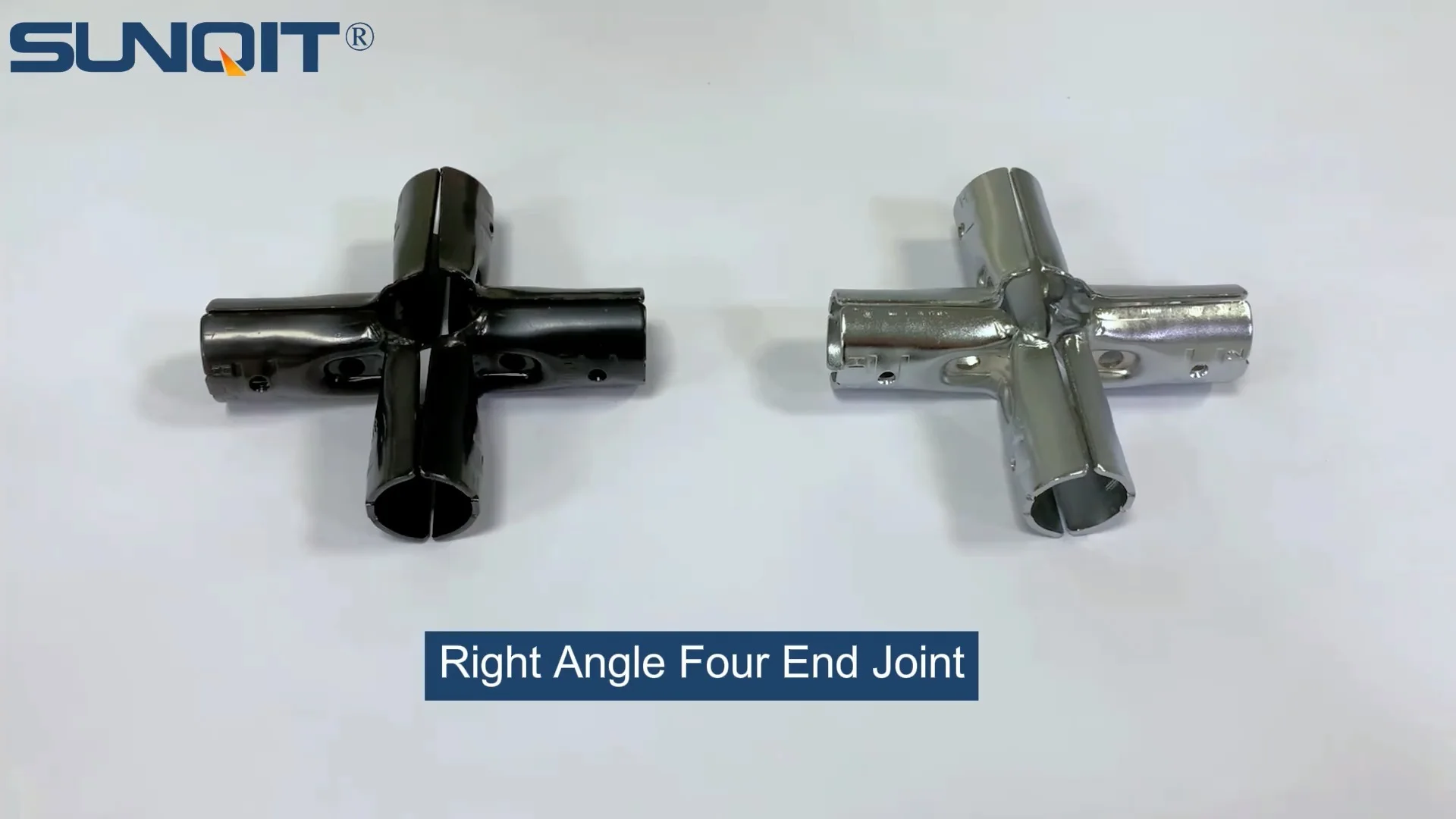
Five way straight lean pipe joint, for 5 pcs 28mm lean pipe connect in straight angle,which used widely in workbench, flow rack, hand trolley frame connection.
How a single component is revolutionizing adaptability in modern manufacturing
The Modern Manufacturing Paradox: Speed vs. Flexibility
Walk into any manufacturing facility today, and you'll likely hear the same refrain from production managers: "We need to move faster, but we also need to change faster." It's a paradox that defines modern manufacturing—consumers demand customized products delivered at record speeds, while market trends shift so quickly that yesterday's bestseller is tomorrow's clearance item. For production teams, this means constantly reconfiguring assembly lines, adjusting workflows, and finding ways to reduce downtime between product runs. The cost of rigidity here is steep: lost opportunities, wasted resources, and frustrated teams stuck rearranging heavy equipment instead of building products.
Enter lean manufacturing—a philosophy built on eliminating waste and maximizing value. But lean isn't just about cutting costs; it's about creating systems that adapt . And at the heart of that adaptability lies a humble yet powerful tool: the lean pipe system. For years, these modular systems—made of pipes, joints, and accessories—have helped factories build workbenches, flow racks, and conveyors that can be reconfigured in hours instead of weeks. But recently, one component has emerged as a game-changer for flexibility: the five way straight lean pipe joint .
Imagine (oops, scratch that—let's talk about ) a production line that can switch from assembling smartwatches to fitness trackers in a single shift. Or a warehouse where a flow rack designed for small parts can be repurposed as a conveyor for larger components by simply adjusting a few connections. That's the promise of the five way straight lean pipe joint. It's not just a piece of hardware; it's a bridge between the need for stability in production and the demand for agility in design. Let's dive into how this unassuming component is reshaping the way manufacturers build, adapt, and thrive.
What Are Lean Pipe Systems, Anyway?
Before we zoom in on the five way joint, let's ground ourselves in the basics. Lean pipe systems—also known as "flexible pipe systems" or "kitchen pipe systems" (a nod to their early use in Japanese factories, where workers repurposed materials like kitchen pipes)—are modular frameworks built from lightweight pipes and connectors. The idea is simple: instead of welding or bolting together fixed structures, you use standardized joints to connect pipes, creating everything from workbenches to material racks that can be disassembled, rearranged, and reused.
Traditional lean pipe systems typically rely on basic joints: T-joints, L-joints, or straight connectors that allow for 2-3 connections per joint. These work well for simple structures, but when you need to build complex, multi-directional setups—like a workbench with integrated tool storage, a flow rack with multiple levels, or a conveyor that splits into two lines—those basic joints start to feel limiting. You end up adding extra pipes, overlapping connections, or even custom brackets, which defeat the purpose of a "lean" system by adding complexity and cost.
That's where the five way straight lean pipe joint comes in. As the name suggests, it allows for five separate pipe connections in a straight line—four in perpendicular directions (up, down, left, right) and one straight through the center. Think of it as a Swiss Army knife for lean systems: one joint that can replace multiple basic connectors, reducing the number of parts needed and increasing the range of possible configurations. Suddenly, building a lean pipe workbench with a side shelf, overhead tool rack, and integrated material bin isn't a puzzle—it's a matter of snapping pipes into the right ports on the five way joint.

Anatomy of a Game-Changer: The Five Way Straight Lean Pipe Joint
At first glance, the five way straight lean pipe joint doesn't look revolutionary. It's a small, often metal or plastic component with five evenly spaced ports, each designed to fit standard lean pipes (typically 28mm or 30mm in diameter). But its genius lies in its simplicity and versatility. Let's break down why it's become a staple for manufacturers aiming to build truly flexible systems.
1. Multi-Directional Connectivity Without Compromise
Most lean pipe joints force trade-offs. A T-joint lets you connect three pipes, but only in a "T" shape. A four-way cross joint adds a vertical connection, but it's bulky and limits how pipes can be aligned. The five way joint eliminates these trade-offs by offering five distinct connection points in a compact design. For example, on a flow rack —used to slide materials from one workstation to another—this means you can add side rails to prevent items from falling off, a bottom shelf for tools, and a top bar for labeling, all using a single joint at each corner. No extra brackets, no awkward angles—just clean, direct connections.
2. Strength Meets Lightweight Design
Flexibility doesn't mean sacrificing durability. Modern five way joints are typically made from high-strength materials like aluminum or reinforced plastic, designed to handle the weight of tools, materials, and even heavy components. Take aluminum lean pipe joints, for instance: they're corrosion-resistant, lightweight (making reconfiguration easier for teams), and strong enough to support hundreds of pounds when properly assembled. This is critical in industries like automotive or electronics, where workbenches and racks often hold heavy machinery or sensitive components.
3. Compatibility with Existing Systems
One of the biggest barriers to adopting new manufacturing tools is compatibility with what's already in place. No factory wants to scrap its entire lean pipe setup for a single new joint. The good news? Five way straight lean pipe joints are designed to work with standard lean pipes and accessories. Whether your facility uses traditional steel pipes, aluminum lean pipe , or even ESD (electrostatic discharge) pipes for sensitive electronics, these joints snap right into place. This backward compatibility means you can upgrade gradually—starting with high-traffic areas like assembly lines or packing stations—without disrupting operations.
4. Reduced Part Count, Reduced Headaches
Every extra joint, bracket, or connector in a lean system adds two things: cost and complexity. A basic workbench built with traditional joints might require 15-20 connectors; with five way joints, that number drops to 8-10. Fewer parts mean faster assembly, lower inventory costs (since you stock fewer types of joints), and less time troubleshooting loose connections. For maintenance teams, this is a lifesaver—fewer parts mean fewer things to tighten, replace, or adjust over time.

Building Blocks of Flexibility: Integrating the Five Way Joint Into Your Lean System
The five way straight lean pipe joint doesn't work in isolation. To design a truly flexible production line, it needs to integrate seamlessly with other lean components. Let's explore how it pairs with common elements like workbenches, flow racks, and conveyors to create systems that adapt to your needs.
From Workbench to Workhorse: Reimagining Assembly Stations
Workbenches are the backbone of any assembly line, but traditional fixed workbenches are a nightmare when product specs change. A workbench built for assembling laptops, for example, might be too narrow for a new tablet model, or too short for workers assembling larger equipment. With five way joints, you can build a lean pipe workbench that grows with your needs.
Here's how it works: Start with a basic frame using five way joints at each corner. The top surface—often a plywood or aluminum panel—sits on horizontal pipes connected to the joints. Need more space? Add an extension by connecting additional pipes to the side ports of the five way joints. Want to add a tool rack above? Use the vertical ports to attach overhead pipes. Need a shelf for components? Connect a lower horizontal pipe to the bottom port. In less than an hour, a single workbench can transform from a laptop assembly station to a workstation for larger devices—no power tools, no welding, just hand-tightened joints.
Flow Racks That Flow with Demand
Flow racks are essential for "first in, first out" (FIFO) material handling, using gravity to slide parts from the loading end to the picking end. But when production volumes spike or part sizes change, standard flow racks often can't keep up. A rack designed for small electronic components, for example, might have narrow lanes that jam when larger parts are added. With five way joints, you can adjust lane width, add dividers, or even stack racks vertically to maximize space.
Consider a material rack B (3 row and 3 floor) —a common setup for storing parts in batches. Using five way joints at each vertical support, you can easily add or remove horizontal rails to adjust the height of each floor. If a new part is taller than expected, simply loosen the joints, slide the rails up, and retighten. No need to buy a new rack; just reconfigure the existing one. For high-volume days, you can even add side extensions to create temporary overflow lanes, then remove them when demand drops. It's flexibility that keeps pace with your workflow, not the other way around.
Conveyors That Adapt to the Product, Not the Other Way Around
Conveyors are the arteries of a production line, moving parts between workstations. But traditional belt or roller conveyors are fixed in place—changing their path or length requires cutting, welding, or calling in a technician. Lean pipe conveyors, built with five way joints and roller track components, solve this problem.
Imagine a conveyor that needs to split into two lines to feed two assembly stations. With five way joints, you can create a "Y" shape by connecting three roller tracks to a single joint—one input, two outputs. If later you need a straight line again, just disconnect the two output tracks and reattach a single straight track. For inclines or declines, use the vertical ports on the five way joint to adjust the height of the roller track, ensuring parts flow smoothly without jamming. Even better, since lean pipe conveyors are lightweight, a small team can reconfigure the entire system in a morning, minimizing downtime between product runs.

Traditional vs. Lean Pipe Systems: A Reality Check
Still skeptical that a few pipes and joints can make a meaningful difference? Let's look at the numbers. Below is a comparison of traditional fixed production lines and lean pipe systems built with five way joints, based on data from manufacturing facilities that have made the switch.
| Category | Traditional Fixed Production Lines | Lean Pipe Systems with Five Way Joints |
|---|---|---|
| Reconfiguration Time | 3-5 days (requires welding, drilling, and heavy equipment) | 2-4 hours (hand tools only, no specialized labor) |
| Cost of Reconfiguration | $5,000-$15,000 (custom parts, labor, downtime) | $200-$500 (reusing existing pipes/joints, minimal labor) |
| Adaptability to New Products | Low (requires significant redesign for size/weight changes) | High (adjust pipe lengths, joint positions, and accessories) |
| Waste Reduction | Minimal (fixed structures often lead to overstocked parts or unused space) | Significant (right-sized storage, reduced inventory, less unused space) |
| Worker Satisfaction | Low (frustration with rigid setups, downtime during changes) | High (empowers teams to adjust workspaces to their needs) |
The data speaks for itself: lean pipe systems with five way joints aren't just more flexible—they're more cost-effective, too. The average manufacturer reports saving 30-40% on reconfiguration costs alone, not to mention the value of reduced downtime and increased productivity.
Real-World Impact: How One Factory Cut Downtime by 60%
Let's step into the shoes of Maria, a production manager at a mid-sized electronics manufacturer in Ohio. Six months ago, her team was struggling to keep up with demand for their new line of wireless earbuds. The problem? Their assembly line was built with fixed steel workbenches and conveyors, and every time the design team tweaked the earbud case (which happened weekly), the line had to shut down for 2-3 days to reconfigure workstations. "We were losing $10,000 a day in downtime," Maria recalls. "And the team was burned out from constantly moving heavy equipment instead of building products."
Maria's solution? She partnered with a lean pipe supplier to rebuild the line using aluminum lean pipes, five way joints, and roller track components. The transformation was immediate. The first test came three weeks later, when the design team increased the size of the earbud case by 15%. Instead of shutting down for days, Maria's team spent 90 minutes adjusting the workbench heights (using five way joints to raise the top surfaces) and widening the conveyor lanes (by repositioning roller tracks connected to five way joints). "We didn't just save time—we saved morale," Maria says. "The team went from dreading design changes to embracing them, because they knew they could adapt the line in minutes, not days."
Today, Maria's line reconfigures for new designs in under two hours, and downtime has dropped by 60%. "The five way joint was the secret sauce," she adds. "It let us build a system that's as flexible as our design team is creative. We're not just building earbuds faster—we're building a factory that can keep up with the future."
Beyond the Joint: Choosing the Right Materials and Accessories
The five way straight lean pipe joint is powerful, but its effectiveness depends on pairing it with the right pipes, accessories, and materials. Let's break down the key components to consider when building your flexible production line.
Pipes: Aluminum vs. Steel vs. Stainless Steel
Lean pipes come in three main materials, each with its own strengths:
- Aluminum lean pipe : Lightweight (easy to reconfigure), corrosion-resistant, and compatible with ESD (electrostatic discharge) environments—critical for electronics manufacturing. Aluminum pipes are also recyclable, aligning with sustainability goals.
- Steel (PE-coated) lean pipe : Durable and cost-effective, with a plastic coating that protects parts from scratches. Ideal for heavy-duty applications like automotive manufacturing.
- Stainless steel pipe series : Heat-resistant and easy to clean, making them perfect for food processing or pharmaceutical facilities where hygiene is key.
For most flexible production lines, aluminum lean pipe is the top choice, thanks to its balance of weight, strength, and adaptability. And when paired with five way joints, it creates a system that's both sturdy and easy to reconfigure.
Accessories That Enhance Flexibility
Even the best joints and pipes need the right accessories to maximize functionality. Here are a few must-haves:
- Roller track and accessories : Like swivel roller balls 1 inch or plastic roller track guide rail yellow , these components turn static racks into dynamic flow systems, letting parts glide smoothly from one station to the next.
- Casters and accessories : Adding caster wheels to workbenches or trolleys turns fixed stations into mobile units, perfect for moving materials where they're needed most.
- Workbench accessories : Items like workbench E (single deck-without caster) provide a stable surface, while tool hooks, bin holders, and ESD mats (for sensitive electronics) turn basic workbenches into fully equipped stations.
- Connectors and brackets : Components like roller track placon mount for aluminum profile flat or lean pipe clamp ensure secure, wobble-free connections between pipes and accessories.
The key here is to choose accessories that are modular and compatible with your five way joints. Look for suppliers that offer a full range of components, so you're not stuck with mismatched parts when you need to reconfigure.
Installation and Maintenance: Keeping Your System Flexible for Years
One of the biggest advantages of lean pipe systems is how easy they are to install and maintain—no specialized training required. Here's a quick guide to keeping your system in top shape:
Installation Tips for Maximum Flexibility
- Start with a "rough draft" : Before tightening joints, assemble the structure loosely to test the configuration. This lets you adjust pipe lengths or joint positions without fully disassembling.
- Use torque wrenches (sparingly) : Most joints only need to be hand-tightened. Over-tightening can strip threads or damage pipes, making future reconfigurations harder.
- Label joints and pipes : For complex setups, label which pipes connect to which joints (e.g., "Workbench A, Left Front Joint"). This speeds up reconfigurations and reduces errors.
Maintenance: Simple Steps for Longevity
- Inspect joints monthly : Check for loose connections or worn threads. Tighten as needed—loose joints can cause wobbling, which leads to premature wear.
- Clean pipes and accessories : Wipe down aluminum pipes with a mild detergent to prevent dust buildup. For stainless steel, use a non-abrasive cleaner to maintain corrosion resistance.
- replace worn parts promptly : Components like caster wheels or roller balls wear out over time. Keep a small inventory of spare parts to avoid downtime.
With minimal effort, a lean pipe system built with five way joints can last 5-10 years, adapting to countless product changes and workflow adjustments along the way.
The Future of Manufacturing: Lean, Flexible, and Ready to Adapt
As manufacturing continues to evolve—driven by automation, customization, and global competition—the need for flexible systems will only grow. The five way straight lean pipe joint isn't just a tool for today; it's a foundation for tomorrow. It represents a shift from "build it once and hope for the best" to "build it to change."
For production managers, this means less time worrying about downtime and more time focusing on innovation. For workers, it means more control over their workspace and less frustration with rigid systems. For businesses, it means staying competitive in a market where adaptability isn't just a nice-to-have—it's a survival skill.
So, whether you're building a new production line from scratch or retrofitting an existing one, don't overlook the power of the five way straight lean pipe joint. It's a small component, but it's proof that in manufacturing, the most impactful solutions often come from reimagining the basics. After all, the future of production isn't about building faster lines—it's about building lines that can become faster, smarter, and more flexible, one joint at a time.