- Company Articles
- Products and Technology
- Product knowledge
- Differences Between Rotating and Fixed Two Way Lean Pipe Joints

Differences Between Rotating and Fixed Two Way Lean Pipe Joints
Related Product
Two Way Lean Pipe Joint
Two way lean pipe joint for 2 pcs 28MM lean pipe connection in straight angle, which used widely in workbench, flow rack, hand trolley frame connection.
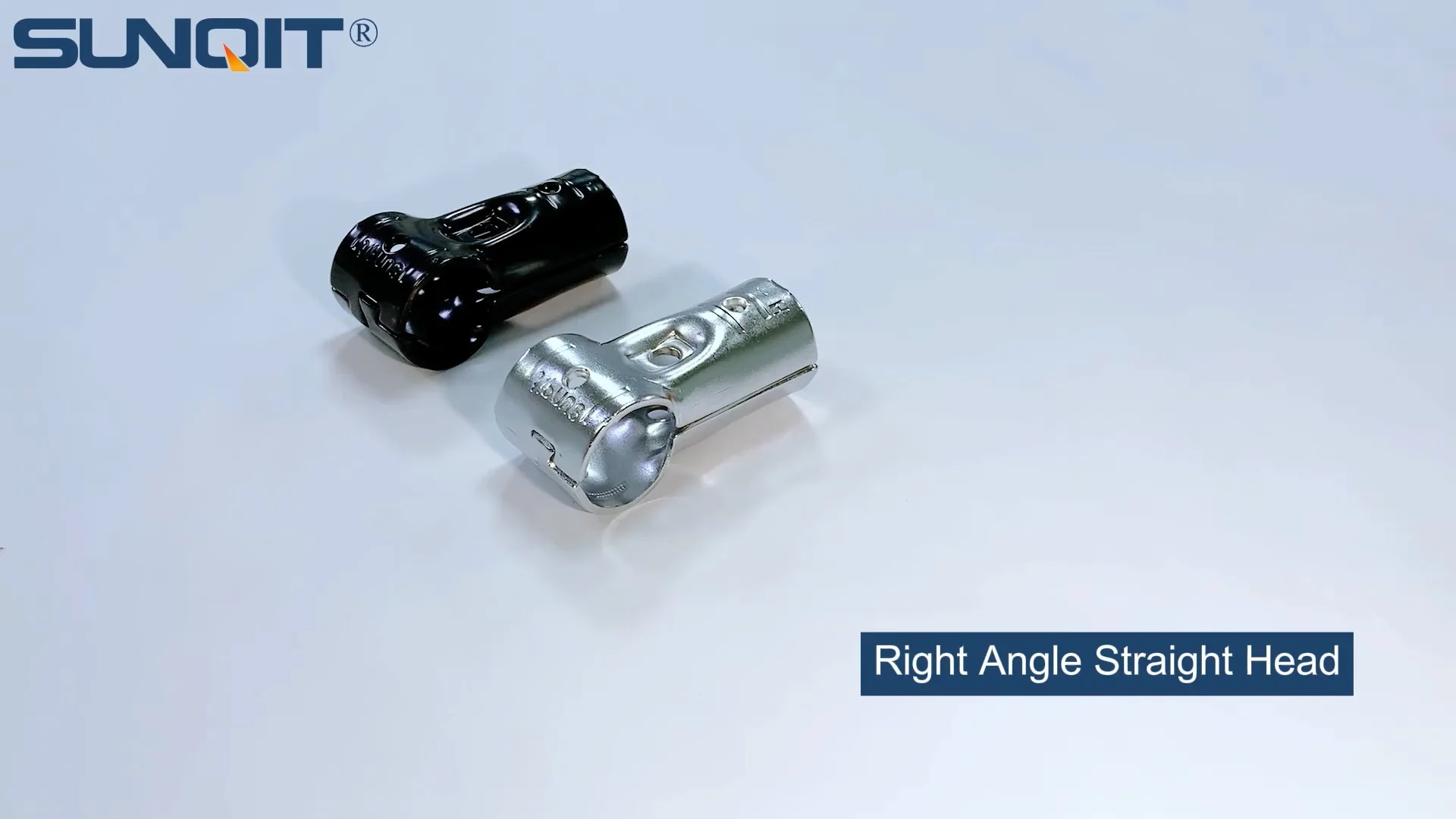
Understanding the backbone of efficient lean manufacturing setups
Introduction: The Unsung Heroes of Lean Pipe Systems
In the world of manufacturing, where every second and every square inch of space counts, lean pipe systems have become the silent architects of efficient workflows. These modular systems—built from simple pipes and joints—allow factories, warehouses, and assembly lines to customize workbenches, material racks, conveyors, and trolleys to their exact needs. But if lean pipes are the "bones" of these setups, then the joints are the "joints" in the truest sense: they hold everything together, determine flexibility, and ultimately shape how well a system adapts to changing production demands.
Among the many types of lean pipe joints, two stand out for their frequency of use and impact on system functionality: fixed two-way lean pipe joints and rotating two-way lean pipe joints . At first glance, they might seem similar—both connect two pipes at a junction—but their differences are night and day when it comes to real-world application. Choosing the wrong one can lead to wobbly workbenches, inefficient material flow, or even safety hazards. So, let's dive deep into what makes these two joints unique, when to use each, and how they shape the performance of your lean system.
What Are Fixed Two-Way Lean Pipe Joints?
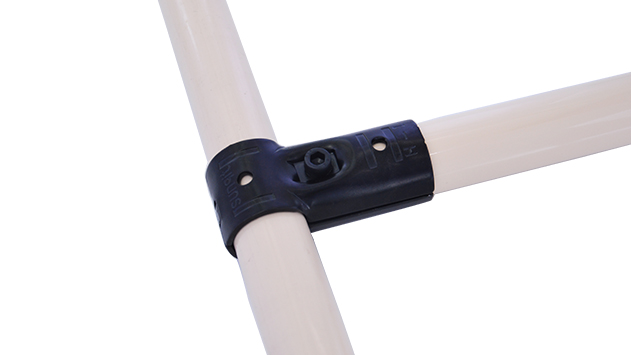
Imagine building a bookshelf that never needs to be rearranged. You want the shelves to stay perfectly level, the frame to hold heavy books without creaking, and the structure to feel solid under pressure. That's the mindset behind fixed two-way lean pipe joints. As the name suggests, these joints create a permanent, non-adjustable connection between two lean pipes, locking them into a fixed angle (usually 90 degrees, though some can be customized for other angles like 45 or 180 degrees).
Anatomy of a Fixed Two-Way Lean Pipe Joint
Fixed joints are all about rigidity. They typically consist of a metal core (often steel or cast iron) coated in chrome or zinc for corrosion resistance, with two hollow cylindrical ends designed to fit snugly over the ends of lean pipes. The magic lies in how they secure the pipes: most use set screws (small bolts that tighten against the pipe) or compression rings that grip the pipe when the joint is tightened with a wrench. Once installed, the pipes can't rotate, pivot, or shift—they're locked in place as if they were welded, but without the permanence of welding (you can still disassemble them with tools if needed, though it's not quick).
Common materials for fixed joints include:
-
Chrome-plated steel
: Durable and cost-effective, ideal for general industrial use.
-
Stainless steel
: Resistant to rust and chemicals, perfect for cleanrooms or food processing environments.
-
Aluminum
: Lightweight but strong, often used in applications where weight matters, like mobile trolleys (though aluminum fixed joints are less common than steel ones).
When to Use Fixed Two-Way Lean Pipe Joints
Fixed joints shine in situations where stability is non-negotiable. Think about a workbench in an electronics assembly line: the surface needs to stay steady while workers solder tiny components, and the legs can't shift under the weight of tools and circuit boards. A fixed joint here ensures the workbench frame remains rigid, preventing vibrations that could ruin delicate work.
Other common uses include:
-
Static material racks
(like
material rack B (3 row and 3 floor)
from your keyword list): When storing heavy boxes or parts that don't need to be repositioned, fixed joints keep shelves level and prevent sagging.
-
Conveyor frames
: The structural supports under a conveyor belt need to stay aligned to keep the belt moving smoothly—fixed joints prevent misalignment that could jam the system.
-
Assembly line workstations
: Where tools, bins, and parts are arranged in a fixed layout for repetitive tasks, fixed joints ensure the setup doesn't shift over time.
What Are Rotating Two-Way Lean Pipe Joints?
Now, picture a different scenario: a warehouse where workers need to adjust the angle of a roller track to feed parts into different assembly stations throughout the day. Or a turnover trolley that sometimes carries long pipes and sometimes small boxes, requiring the side rails to pivot out of the way. That's where rotating two-way lean pipe joints come in. These joints add a critical element missing from fixed joints: movement . They allow one or both connected pipes to rotate around the joint's axis, making the system adjustable on the fly.
Anatomy of a Rotating Two-Way Lean Pipe Joint
Rotating joints are engineering marvels of simplicity. At their core, they have a similar two-pipe design to fixed joints, but with a rotating mechanism between the two ends. This mechanism can be as simple as a pin that allows swiveling or as sophisticated as a ball-bearing system for smooth, friction-free movement. Most rotating joints also include a locking feature—like a thumb screw or lever—that lets you "freeze" the joint in a specific position once you've adjusted the angle. This way, you get the best of both worlds: flexibility when you need it, stability when you don't.
Materials for rotating joints often prioritize smooth movement and corrosion resistance:
-
Aluminum
: Lightweight and resistant to rust, aluminum rotating joints are popular for clean environments and applications where frequent adjustment is needed (they're easier to move than steel).
-
Stainless steel
: Used in heavy-duty settings, like automotive manufacturing, where the joint might be exposed to oil, grease, or high temperatures.
-
Plastic composites
: For lightweight, low-cost applications (though these are less common for industrial use due to lower load capacity).
When to Use Rotating Two-Way Lean Pipe Joints
Rotating joints are all about adaptability. Take a roller track in a packaging facility: during the morning shift, workers might need the track angled downward to let boxes slide into a labeling station; in the afternoon, they might tilt it upward to feed boxes into a sealing machine. A rotating joint at the track's base lets them adjust the angle in seconds, without tools, keeping the line running smoothly.
Other key applications include:
-
Turnover trolleys and racks
: Trolleys that carry irregularly shaped parts often need adjustable side rails to secure loads—rotating joints make this possible.
-
Adjustable workbenches
: Some workbenches (like
workbench e (single deck-without caster)
with add-ons) use rotating joints to tilt the work surface for ergonomic typing or drawing.
-
Dynamic material flow systems
: In lean manufacturing, where workflows change based on production demands, rotating joints let teams reconfigure material racks or conveyors without rebuilding the entire system.

Key Differences: Fixed vs. Rotating Two-Way Lean Pipe Joints
To truly understand how these joints differ, let's break them down side by side. The table below compares their core features, from functionality to cost, to help you see which one fits your needs:
| Feature | Fixed Two-Way Lean Pipe Joint | Rotating Two-Way Lean Pipe Joint |
|---|---|---|
| Functionality | Creates a rigid, non-adjustable connection; pipes cannot rotate or pivot. | Allows pipes to rotate around the joint's axis; can be locked in place after adjustment. |
| Load Capacity | Higher static load capacity (often 200-500 lbs per joint) due to rigid design. | Lower load capacity (typically 100-300 lbs per joint) due to moving parts reducing structural integrity. |
| Best For | Static systems: workbenches, fixed material racks, structural frames. | Dynamic systems: adjustable roller tracks, turnover trolleys, reconfigurable workstations. |
| Installation Complexity | Moderate: Requires tools (wrench, hex key) to tighten set screws or compression rings. | Easy to moderate: Some have tool-free adjustment (thumb screws), others need basic tools. |
| Maintenance Needs | Low: No moving parts; occasional cleaning to prevent rust (for steel joints). | Moderate: Requires periodic lubrication of moving parts; check for wear on bearings or locking mechanisms. |
| Cost | Lower: Simpler design with fewer parts (typically $5-$15 per joint). | Higher: More complex mechanisms (typically $10-$30 per joint). |
| Compatibility | Works with most lean pipes (steel, aluminum, stainless steel) and aluminum profile systems. | Best with lightweight pipes (aluminum, plastic-coated steel); may struggle with heavy stainless steel pipes. |
As you can see, the choice between fixed and rotating joints boils down to one question: Does your system need to stay the same, or adapt over time? If you're building something that will be used the same way day in and day out, fixed joints are the workhorses you need. If you anticipate reconfiguring, adjusting angles, or moving parts of the system, rotating joints are worth the extra cost and maintenance.

How to Choose Between Fixed and Rotating Joints: A Practical Guide
Even with the table above, choosing between fixed and rotating joints can feel overwhelming. To simplify, ask yourself these five questions before making a decision:
1. Will the joint's position ever need to change?
If you're building a workbench for a quality control station where the tools and bins will always be in the same spot, fixed joints are the way to go. But if you're designing a material rack that might need to hold taller boxes next quarter, or a roller track that feeds into different machines, rotating joints give you the flexibility to adapt without rebuilding the entire system.
2. How much weight will the joint need to support?
A fixed joint can easily handle the weight of a fully loaded workbench (500+ lbs), but a rotating joint might start to wobble or seize under that load. Be honest about your load requirements—check the manufacturer's specs for both the joint and the lean pipe itself (aluminum pipe, for example, has a lower weight capacity than steel). When in doubt, overestimate: a joint that's too weak can lead to collapsed structures and injured workers.
3. What's your budget for the system?
Rotating joints cost 2-3x more than fixed ones, and those costs add up quickly in a large system. If you only need adjustability in a few spots, mix and match: use fixed joints for the majority of the structure and rotating joints only where movement is necessary. For example, a turnover trolley might have fixed joints for the frame and rotating joints for the side rails that hold parts.
4. What's the environment like?
In damp or corrosive environments (like food processing or chemical plants), stainless steel rotating joints are a must—their moving parts won't seize up from rust. In dry, general industrial settings, chrome-plated fixed joints are durable and affordable. Avoid plastic rotating joints in high-heat areas; the plastic can warp, making the joint lock up or slip.
5. Who will be using and maintaining the system?
If your team includes maintenance workers who can lubricate rotating joints every month, go for adjustability. But if the system will be used by operators with little technical training, fixed joints are safer—no one can accidentally knock a rotating joint out of alignment, and there's less risk of misuse.
Real-World Applications: How the Right Joint Transforms Workflows
To see these differences in action, let's look at two case studies from actual manufacturing floors:
Case Study 1: Automotive Parts Assembly Line (Fixed Joints)
A major auto parts manufacturer needed workbenches for assembling brake calipers. The workbenches needed to hold heavy tools, a vice, and bins of small parts—all while remaining steady enough for workers to torque bolts to precise specifications. The plant engineers chose fixed two-way lean pipe joints for the bench frames, paired with steel lean pipe and a plywood top. The result? Workbenches that have stayed level for over five years, with no signs of sagging or wobbling. The fixed joints ensured the frames could handle the constant vibration from power tools, and the rigid structure reduced errors in torque application—saving the company from costly rework.
Case Study 2: Electronics Packaging Facility (Rotating Joints)
A electronics company produces both smartphones and tablets, which come in different-sized boxes. Their packaging line uses roller tracks to move boxes from the assembly area to the shipping department. In the morning, they run smartphones (small boxes); in the afternoon, tablets (larger, heavier boxes). Using rotating two-way lean pipe joints at the base of the roller tracks allows workers to adjust the track angle—steeper for small boxes to speed up flow, gentler for large boxes to prevent jamming. This simple adjustment saves 20 minutes per shift compared to switching out entire tracks, and the rotating joints have held up to daily use for over a year with minimal lubrication.
Common Misconceptions About Lean Pipe Joints
Even experienced manufacturers fall prey to myths about lean pipe joints. Let's debunk a few:
Myth 1: "Rotating joints are always better because they're more versatile."
Not true! Versatility comes with trade-offs: higher cost, lower load capacity, and more maintenance. If you never need to adjust the joint, rotating joints are just a waste of money. A fixed joint will last longer, require less upkeep, and be more stable in the long run.
Myth 2: "Fixed joints are outdated—modern lean systems use rotating joints everywhere."
Lean manufacturing is about efficiency, not trends. Many of the most efficient lean systems use a mix of fixed and rotating joints, with fixed joints forming the backbone for stability. There's no shame in using fixed joints—they're a tried-and-true solution for static applications.
Myth 3: "All lean pipe joints are interchangeable."
Nope! Joints are designed for specific pipe diameters (1 inch, 0.5 inch, etc.) and materials. A joint made for aluminum lean pipe won't fit stainless steel pipe, and a 1-inch joint will be loose on a 0.5-inch pipe. Always check the pipe diameter and material before buying joints—mixing and matching leads to unstable systems.
Conclusion: The Right Joint for a Stronger Lean System
Fixed and rotating two-way lean pipe joints might seem like small components, but they play a huge role in the success of your lean system. Fixed joints provide the rock-solid stability needed for static workbenches and material racks, while rotating joints add the flexibility to adapt to changing production needs. By understanding their differences—functionality, load capacity, cost, and maintenance—you can make choices that boost efficiency, reduce downtime, and keep your team safe.
Remember, there's no "better" joint—only the right joint for the job. Take the time to assess your workflow, load requirements, and budget, and don't be afraid to mix and match. After all, lean manufacturing is about continuous improvement, and the best lean systems are built with the same adaptability in mind.
So, the next time you're designing a workbench, material rack, or conveyor system, give a little thought to the joints holding it all together. They might not be the most glamorous part of your setup, but they're the unsung heroes keeping your operation running lean, mean, and efficient.