- Company Articles
- Products and Technology
- Product knowledge
- Differences Between Standard and Heavy-Duty Roller Track Placon Mount Center Support Bracket

Differences Between Standard and Heavy-Duty Roller Track Placon Mount Center Support Bracket
Related Product
Roller Track Placon Mount Center Support Bracket
Roller track placon mount work as a connector for roller track and pipe or aluminum profile in rack syetem, it is a necessary parts in rack system which widely used in industrial plant and logistic,warehouse storage.
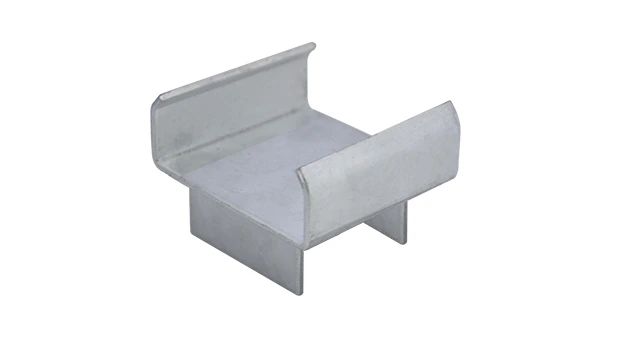
If you've ever walked through a busy factory floor, a warehouse shipping area, or even a 3C product assembly line, you've probably seen those smooth, rolling tracks that move materials from one station to another. Those are roller tracks —the unsung heroes of efficient production and logistics. But what keeps those tracks stable, especially when they're carrying heavy loads or operating non-stop? That's where the roller track placon mount center support bracket comes in. It's like the backbone of the roller track system, ensuring everything stays aligned and secure.
But not all support brackets are created equal. Just as a bicycle needs different frame strengths for casual rides vs. mountain biking, roller track brackets come in "standard" and "heavy-duty" versions, each designed for specific jobs. In this article, we'll break down the key differences between these two types, so you can pick the right one for your factory, warehouse, or assembly line. Whether you're setting up a new flow rack for small parts or upgrading a conveyor system for bulky goods, understanding these differences will save you time, money, and headaches down the line.
First, Let's Get Clear: What Exactly Is a Roller Track Placon Mount Center Support Bracket?
Before diving into the differences, let's make sure we're on the same page. A roller track is a series of rollers mounted on a frame, used to move items smoothly—think of the tracks in a warehouse where boxes glide from one end to another. The "placon mount" part refers to how the bracket attaches to the track and the supporting structure (like an aluminum profile or a metal frame). The "center support" means it's placed in the middle of the track to prevent sagging, especially over longer distances.
So, the bracket's job is simple but critical: hold the roller track steady, bear the weight of the materials moving over it, and keep everything aligned so rollers spin freely without jamming. Now, let's see how standard and heavy-duty brackets stack up.
Key Differences: Standard vs. Heavy-Duty Roller Track Placon Mount Center Support Bracket
To make it easy, let's compare them side by side. Here's a table breaking down the main areas where they differ:
| Feature | Standard Roller Track Placon Mount Center Support Bracket | Heavy-Duty Roller Track Placon Mount Center Support Bracket |
|---|---|---|
| Material & Thickness | Typically made of aluminum or light steel, with a thickness of 1.5–2mm. Lightweight and cost-effective. | Uses thicker aluminum (3–4mm) or high-grade steel, sometimes with reinforced edges. Built for durability under stress. |
| Weight Capacity | Supports lighter loads: usually 30–50 kg per linear meter. Ideal for small parts, electronics components, or lightweight packages. | Handles heavy loads: 100–200 kg per linear meter (or more, depending on design). Perfect for bulky items like automotive parts or large medical equipment. |
| Design & Structure | Simpler design with basic mounting holes. May have a single support arm and minimal reinforcement. | Beefed-up structure: wider base, double support arms, or cross-bracing to distribute weight evenly. Some have gussets (triangular supports) for extra strength. |
| Application Scenarios | Best for low-to-medium intensity operations: 3C assembly lines (phone/tablet parts), small parts storage, or light warehouse picking. | Used in high-intensity, heavy-load environments: automotive manufacturing, heavy machinery assembly, or logistics centers moving large pallets. |
| Installation & Maintenance | Easy to install with basic tools (like a hex key). Low maintenance—just occasional cleaning to remove dust or debris. | May require more secure mounting (e.g., bolts instead of clips) and periodic checks for tightness, especially under constant heavy use. |
| Cost | More budget-friendly, making it a good choice for startups or lines with limited load requirements. | Higher upfront cost, but saves money long-term by reducing replacement needs in heavy-use settings. |

Diving Deeper: Why These Differences Matter in Real-World Use
Numbers and specs are helpful, but let's look at how these differences play out in actual factories and warehouses. After all, the right bracket isn't just about "heavy" vs. "light"—it's about matching your daily operations.
1. Material: Aluminum vs. Steel (and Thickness Matters)
Standard brackets often use aluminum because it's lightweight and corrosion-resistant—great for clean environments like 3C assembly lines where electronics are sensitive to rust. But aluminum can bend if pushed too hard. For example, if you're moving small circuit boards along a flow rack , a standard 1.5mm aluminum bracket works perfectly. It's light enough to adjust the track's position easily (since lean pipe systems value flexibility) and strong enough for those tiny parts.
Heavy-duty brackets, though, might use 3mm steel or reinforced aluminum. Imagine an automotive factory moving engine blocks: those parts can weigh 100kg or more. A thin aluminum bracket would sag over time, leading to misaligned rollers and jams. The heavy-duty bracket's thicker material and reinforced edges act like a strong backbone, keeping the track straight even under constant pressure.
2. Weight Capacity: When "Good Enough" Isn't Enough
Let's say you run a medical device warehouse. You need to move two types of items: small sterile kits (light) and large MRI machine components (heavy). For the sterile kits, a standard bracket supporting 40kg/m is fine—they glide smoothly, and the bracket never feels strained. But the MRI components? They're 150kg each. Using a standard bracket here would be risky: the track could sag, causing the component to get stuck, or worse, damage the equipment (and delay shipments).
Heavy-duty brackets solve this by spreading the weight across a stronger structure. Their double support arms or cross-bracing mean the load isn't concentrated on one point. It's like the difference between using a single bookshelf bracket for a few paperbacks vs. a reinforced bracket for a row of encyclopedias—you wouldn't skimp on the latter, right?
3. Application Scenarios: Matching the Bracket to Your Industry
Different industries have different needs, and the bracket you choose should fit like a glove. Let's look at a few examples:
- 3C Assembly (e.g., phone manufacturing): Workers handle small parts like screens, batteries, and circuit boards. These are lightweight, so standard brackets on lean pipe workbenches work well. The brackets are easy to adjust when reconfiguring the line for a new phone model—lean manufacturing at its best!
- Automotive Production: Car doors, engines, and axles are heavy. A heavy-duty bracket on the roller track ensures these parts move safely from welding to painting stations. No sagging, no jams—just smooth, continuous production.
- Warehouse Logistics for E-Commerce: During peak seasons, you might switch from small packages (standard bracket) to bulk orders (heavy-duty). Some warehouses even mix both bracket types on the same track—standard in light zones, heavy-duty in heavy zones—to balance cost and performance.
4. Installation & Maintenance: Time Is Money
Standard brackets are a dream for quick setups. If you're launching a new startup line for smartwatch components, you can install them in hours with basic tools—no need for specialized equipment. And since they're lightweight, repositioning the track (a common lean system practice) is a breeze. Maintenance? Just wipe off dust occasionally, and they're good to go.
Heavy-duty brackets take a bit more effort upfront. They might need bolts instead of clips, and you'll want to torque them properly to ensure they don't loosen under heavy loads. But here's the trade-off: they rarely need replacement. A standard bracket in a heavy-use area might bend after a year, requiring you to shut down the line for repairs. A heavy-duty bracket? It could last 5+ years with just annual checks. For factories running 24/7, that downtime saved is priceless.

How to Choose: 3 Questions to Ask Yourself
Still unsure whether to go standard or heavy-duty? Ask these three questions to narrow it down:
- What's the maximum weight of the items I'll be moving? If it's under 50kg/m, standard is probably fine. Over 100kg/m? Heavy-duty is a must.
- How often will the track be used? A line that runs 8 hours/day with light loads vs. 24/7 with heavy loads—guess which needs heavy-duty brackets?
- Is my operation likely to grow or change? If you think you'll need to handle heavier items in the future, invest in heavy-duty now to avoid upgrading later. It's like buying a slightly bigger suitcase for a trip—you'll be glad you have the extra space.
The Bottom Line: It's About Balance
Standard and heavy-duty roller track placon mount center support brackets aren't rivals—they're teammates, each excelling in their own lane. Standard brackets are the go-to for light, flexible operations where cost and adjustability matter most. Heavy-duty brackets are the workhorses, stepping up when loads are heavy and reliability is non-negotiable.
And remember, the best systems often mix both. A lean solution isn't about overspending on heavy-duty brackets everywhere—it's about matching the right tool to the job. Whether you're assembling smartphones, shipping medical supplies, or building cars, choosing the right bracket ensures your roller track runs smoothly, your workers stay productive, and your bottom line stays healthy.
So next time you're setting up or upgrading a roller track system, take a moment to think about the bracket. It might seem like a small part, but it's the difference between a system that works for you and one that holds you back. After all, in manufacturing and logistics, the little things often make the biggest difference.