- Company Articles
- Products and Technology
- Installation And Maintenance
- Disassembling Gusset Alp 3030: Supporting Lean's Reusability Goals

Disassembling Gusset Alp 3030: Supporting Lean's Reusability Goals
Related Product
Gusset ALP 3030
The 3030 bracket/Gusset is an external fastening method that creates a 90 degree connection. 3030 means this size is used for 30 series aluminum profile with a quick connection by bolt and nut.
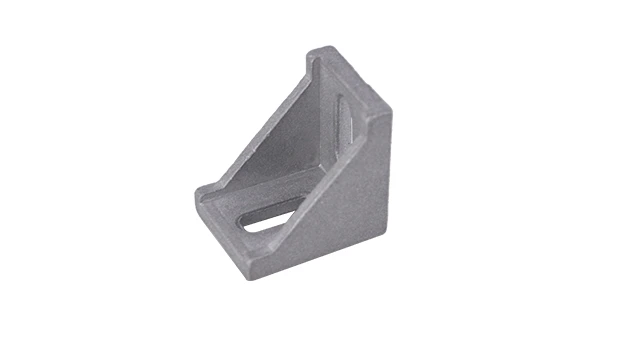
In the world of lean manufacturing, where every component, process, and decision is scrutinized for efficiency and waste reduction, it's often the smallest parts that make the biggest difference. Today, we're diving into one such unsung hero: the Gusset Alp 3030. At first glance, it might seem like just another aluminum bracket—unassuming, lightweight, and easy to overlook. But scratch the surface, and you'll find a component that embodies lean's core principle of reusability, turning rigid, one-and-done structures into flexible, adaptable systems that grow with your business. Let's unpack why this tiny gusset matters, how it supports lean's sustainability goals, and why it's become a staple for manufacturers committed to doing more with less.
Lean Reusability: More Than Just a Buzzword
Before we get into the nitty-gritty of Gusset Alp 3030, let's ground ourselves in what "lean reusability" really means. At its core, lean manufacturing is about eliminating waste—whether that's time, materials, or resources. Reusability takes this a step further by designing systems and components that can be repurposed, reconfigured, or reused across multiple applications, rather than being discarded after a single use. It's the difference between building a workbench that lasts for one project and then gets scrapped, versus building a workbench that can be taken apart, adjusted, and turned into a material rack, a turnover trolley, or even a conveyor support frame six months later.
Why does this matter? For starters, it's good for the bottom line. Reusing components cuts down on procurement costs for new equipment and reduces disposal fees for old materials. But it's also a sustainability play. The EPA estimates that manufacturing accounts for 25% of global waste, and much of that comes from short-lived, non-reusable equipment. By prioritizing reusability, manufacturers shrink their carbon footprint and align with increasingly strict environmental regulations. And let's not forget flexibility: in today's fast-paced market, where production lines shift overnight to meet new demand, a reusable system lets you adapt without overhauling your entire setup.
The challenge? Reusability doesn't happen by accident. It requires intentional design—components that are modular, durable, and easy to assemble/disassemble without damage. Which brings us to Gusset Alp 3030. This small bracket is a masterclass in that intentional design, and it's become a cornerstone of modern lean system setups.
Meet Gusset Alp 3030: The Unsung Hero of Modular Assembly
Let's start with the basics: What is Gusset Alp 3030? In short, it's a lightweight aluminum bracket engineered to reinforce connections between 3030 aluminum profiles—the workhorses of lean system structures. 3030 profiles (named for their 30mm x 30mm cross-section) are everywhere in manufacturing: they form the frames of workbenches, the shelves of material racks, the sides of turnover trolleys, and even the supports for roller tracks. But to build stable, load-bearing structures with these profiles, you need strong, reliable connections. That's where Gusset Alp 3030 comes in.
Unlike traditional steel brackets that require welding, drilling, or permanent bolts, Gusset Alp 3030 is designed for the T-slot system—the hallmark of modular aluminum profiles. T-slots are the longitudinal grooves running along the length of the profile, and they let you slide in accessories (like gussets, end caps, or pipe clamps) and secure them with simple screws or bolts. This means Gusset Alp 3030 attaches in minutes, no special tools required, and just as importantly, it detaches just as easily without bending, warping, or damaging the profile or the gusset itself.
Let's break down its key features: First, material. It's made from high-grade aluminum alloy (typically 6063-T5, the same as most aluminum profiles), which strikes the perfect balance between strength and weight. Aluminum is also naturally corrosion-resistant, so it holds up in harsh factory environments—think humidity, oil, or occasional spills. Second, design. The gusset has a triangular shape (hence "gusset," which refers to a reinforcing plate at a joint) with pre-drilled holes that align with the T-slots of 3030 profiles. This triangular design distributes weight evenly across the joint, preventing stress cracks or bending under load. And third, compatibility. It works seamlessly with other 3030 aluminum profile accessories, from 3030 aluminum profile end caps (which finish the ends of profiles to prevent snags) to lean pipe joints (which connect aluminum profiles to lean pipes for added versatility).
But here's the kicker: because it's so easy to install and remove, Gusset Alp 3030 turns any structure it's part of into a "kit of parts" rather than a fixed object. That workbench you built last year? With a few twists of a screwdriver, you can take off the gussets, adjust the profile lengths, and rebuild it as a material rack. The material rack? Disassemble it, swap out some profiles, and use the same gussets to build a workstation for a new production line. This isn't just reusability—it's sustainable adaptability .

How Gusset Alp 3030 Drives Lean Reusability: A Closer Look
1. Modular Assembly = Less Waste
Traditional manufacturing setups often rely on custom-built, welded steel frames. These are strong, but they're also permanent. If your production needs change—say, you need a wider workbench or a taller material rack—you can't adjust the frame. You have to cut it up, weld new pieces, or worse, throw it away and buy a new one. Each time you do that, you're wasting materials (the old frame), labor (cutting/welding), and money (new steel).
Gusset Alp 3030 eliminates this waste by enabling modular assembly. Since it connects profiles without permanent fasteners, you can take apart a structure, reuse the gussets and profiles elsewhere, and only replace what's necessary. A study by the Lean Enterprise Institute found that manufacturers using modular aluminum systems with components like Gusset Alp 3030 reduced equipment waste by 40% compared to those using welded steel. That's because 80% of the components in a modular setup can be reused in new configurations.
2. Durability = Longer Lifespan
Reusability only works if components hold up to repeated assembly and disassembly. A cheap plastic bracket might work once, but after a few takes, it'll crack or strip. Gusset Alp 3030, made from tough aluminum alloy, is built to last. Its T-slot connection relies on friction and mechanical force, not adhesives or plastic tabs, so the screw holes don't wear out, and the bracket itself doesn't degrade over time. We've heard from manufacturers who've reused the same Gusset Alp 3030 brackets across five different projects over seven years—something you'd never get with a disposable steel bracket.
3. Compatibility = Ecosystem of Reuse
Reusability isn't just about a single component—it's about how that component plays with others. Gusset Alp 3030 is part of a larger ecosystem of aluminum profile accessories, which means you're not limited to reusing it in the same type of structure. Let's say you have a workbench E (single deck, without casters) built with 3030 profiles and Gusset Alp 3030 brackets. When you no longer need the workbench, you can:
- Remove the gussets and use them to reinforce a material rack B (3 row, 3 floor) in the warehouse.
- Pair the same gussets with lean pipe joints to connect the 3030 profiles to aluminum lean pipes, building a custom conveyor support frame.
- Add casters (using caster accessories) and reconfigure the profiles with the gussets to create a turnover trolley for moving parts between stations.
This cross-compatibility turns your inventory of components into a toolbox, where every piece has multiple uses. It's like having a set of LEGO bricks for manufacturing—you're limited only by your imagination, not by the component's design.

Real-World Impact: Case Studies in Reusability
Numbers and features are great, but let's look at how Gusset Alp 3030 plays out on the factory floor. We spoke with two manufacturers—one in automotive parts, one in electronics assembly—to hear their experiences.
Case Study 1: Automotive Parts Manufacturer Saves $20K Annually
A mid-sized automotive parts plant in Michigan was struggling with frequent production line changes. They'd build custom steel workbenches for each new part (e.g., brake calipers, door handles), but when the project ended, the workbenches would sit unused or get scrapped. In 2022, they switched to a modular setup using 3030 aluminum profiles, Gusset Alp 3030 brackets, and 3030 aluminum profile end caps.
Within a year, they'd reused components from 15 old workbenches to build 12 new material racks, 8 turnover trolleys, and 5 inspection stations. The Gusset Alp 3030 brackets were key here—they allowed workers to disassemble the workbenches in under an hour (vs. 4+ hours to cut up steel frames) and reassemble them without damaging the parts. The result? They saved $20,000 in new equipment costs and reduced steel waste by 600 pounds. "We used to see workbenches as 'single-use,'" said the plant manager. "Now, we see them as a collection of parts we can keep using. The gussets are the glue that makes that possible."
Case Study 2: Electronics Plant Cuts Setup Time by 75%
An electronics manufacturer in Texas needed to set up temporary production lines for seasonal demand (e.g., holiday gadget rushes). Previously, they'd rent or buy new steel racks and workstations, which took days to assemble and then had to be stored or sold at a loss afterward. In 2023, they invested in a modular system with Gusset Alp 3030 and aluminum lean pipes.
For their 2023 holiday rush, they built 20 workstations using Gusset Alp 3030 to reinforce the joints. When the rush ended, they disassembled the workstations in a day, stored the profiles and gussets, and reused 90% of the components to build a temporary testing area for a new product line in Q1 2024. Setup time for the testing area dropped from 3 days to 6 hours, and they avoided $15,000 in rental costs. "The gussets make disassembly so easy that even our line workers can do it—no need for a maintenance crew with welding torches," noted the operations director. "That speed lets us pivot faster, which is everything in this industry."
Gusset Alp 3030 vs. Traditional Brackets: A Reusability Showdown
To really understand the impact of Gusset Alp 3030, let's compare it to two common alternatives: welded steel brackets and plastic snap-on brackets. The table below breaks down how they stack up on key reusability metrics:
| Metric | Welded Steel Brackets | Plastic Snap-On Brackets | Gusset Alp 3030 (Aluminum) |
|---|---|---|---|
| Installation Time | 1-2 hours (requires welding) | 10-15 minutes (snaps into place) | 5-10 minutes (screws into T-slots) |
| Disassembly | Destructive (requires cutting/welding; bracket is ruined) | Non-destructive but fragile (snaps often break during removal) | Non-destructive (screws removed; bracket remains intact) |
| Reuse Cycles | 1 (cannot be reused after welding) | 2-3 (snaps degrade with use) | 10+ (aluminum resists wear; screws can be retightened) |
| Cost Over Time (per use) | High (single use + disposal fees) | Medium (low upfront cost but frequent replacement) | Low (high upfront cost but reusable for years) |
| Environmental Impact | High (steel production emits CO2; waste sent to landfill) | Medium (plastic non-biodegradable; frequent replacement = more waste) | Low (aluminum recyclable; minimal waste from reuse) |
The takeaway? While plastic brackets are cheaper upfront, they lack the durability for long-term reuse. Welded steel is strong but destroys reusability entirely. Gusset Alp 3030 hits the sweet spot: it's durable enough for repeated use, easy to install/remove, and built to last—making it the clear choice for lean operations focused on reusability.
Beyond the Bracket: Gusset Alp 3030 and the Future of Lean
As manufacturers face mounting pressure to reduce waste and operate sustainably, components like Gusset Alp 3030 are becoming less of an "option" and more of a necessity. But their impact goes beyond individual factories. The modular, reusable systems they enable are paving the way for a circular economy in manufacturing—one where equipment is designed to be disassembled, repaired, and reused, rather than discarded.
Looking ahead, we're seeing even more innovation in this space. Some suppliers are adding RFID tags to gussets and profiles, so manufacturers can track components across their lifecycle—knowing exactly how many times a Gusset Alp 3030 has been reused, which structures it's been part of, and when it might need maintenance. Others are experimenting with recycled aluminum alloys for gussets, further reducing the carbon footprint of production.
But perhaps the biggest shift is cultural. Lean used to be about cutting costs; now, it's about creating value—for customers, for employees, and for the planet. Gusset Alp 3030 embodies that shift. It's a small part, but it's a reminder that sustainability and efficiency don't have to be trade-offs. In fact, they're two sides of the same coin: a reusable component is an efficient component, and an efficient component is a sustainable one.
Final Thoughts: The Power of Small Components in Lean Systems
Gusset Alp 3030 might not grab headlines, but it's a quiet revolution in lean manufacturing. By prioritizing modularity, durability, and compatibility, it turns rigid structures into flexible, reusable assets—reducing waste, cutting costs, and giving manufacturers the agility to thrive in a fast-changing world. It's proof that lean reusability isn't about grand gestures; it's about the small, intentional choices in design that add up to big impact.
So the next time you walk through a factory, take a closer look at those aluminum profiles and brackets. Chances are, there's a Gusset Alp 3030 holding them together—and behind that tiny bracket, a story of sustainability, adaptability, and the endless potential of reusability. In the end, lean isn't just about making things better. It's about making things that can keep getting better. And with components like Gusset Alp 3030, that future is already here.