- Company Articles
- Products and Technology
- Product knowledge
- DIY vs. Prefabricated T-Slot Rubber Seal Covers: Which Saves Time and Money?

DIY vs. Prefabricated T-Slot Rubber Seal Covers: Which Saves Time and Money?
Related Product
T-slot Rubber Seal Cover
The rubber T-slot seal cover prevents dust and debris buildup, covers wires in the T-slot channel, and adds an extra layer of protection to applications. It rolls into the T-slot, making it easy to assemble.
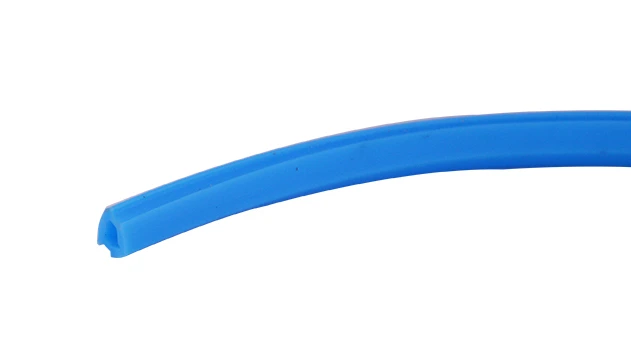
If you've ever built something with aluminum extrusion profiles—whether it's a workbench for your garage, a shelving unit for your workshop, or a custom production line—you know the little details matter. The smooth edges, the tight fits, the way everything comes together to feel sturdy and professional. But there's one small component that often gets overlooked until the last minute: the T-slot rubber seal cover. Those thin strips of rubber that slide into the T-slots of aluminum profiles, hiding sharp edges, keeping out dust, and giving your project that finished look.
Here's the dilemma: Do you buy prefabricated T-slot rubber seal covers, ready to snap into place? Or do you go the DIY route, buying bulk rubber and cutting it yourself? It's a question of time, money, and pride—after all, there's something satisfying about building every part of a project with your own two hands. But is that satisfaction worth the extra hours (or headaches)? Let's dive in.
First Things First: Why T-Slot Rubber Seal Covers Matter
Before we compare DIY and prefabricated options, let's talk about why these little covers are non-negotiable. Aluminum extrusion profiles are designed with T-slots—long, narrow channels that let you attach accessories like brackets, shelves, or handles. But those slots are also open, leaving sharp metal edges exposed. Run your hand along an uncovered T-slot, and you might end up with a nasty cut. Over time, dust, debris, and even small tools can fall into the slots, gumming up the works and making it harder to slide accessories in later.
T-slot rubber seal covers solve both problems. They cushion the edges, protect your hands (and any materials sliding across the profile), and act as a barrier against dust. They also make your project look polished. Think about it: A workbench with exposed T-slots looks like a half-finished project. Add those rubber covers, and suddenly it feels like something you'd buy from a professional supplier—not cobbled together in your garage.
And let's not forget functionality. If you're using your aluminum profile for a production line or a material rack, loose debris in T-slots can jam up moving parts. A good seal cover keeps everything clean, so your roller tracks glide smoothly and your accessories stay secure. In short, skimping on T-slot covers might save you a few bucks upfront, but it could cost you in safety, maintenance, and pride down the line.
The DIY Route: Pros, Cons, and the Hidden Costs of "Saving Money"
What You'll Need (Spoiler: More Than You Think)
Let's say you decide to DIY. Maybe you're on a tight budget, or you enjoy the challenge. What does that actually entail? First, you'll need to buy bulk rubber. You can find rolls of T-slot-compatible rubber online or at hardware stores—usually sold by the meter. Then you'll need tools: a sharp utility knife or scissors, a straightedge, measuring tape, and maybe a marker. Oh, and patience. Lots of patience.
Here's how the process typically goes: Measure the length of each T-slot on your aluminum profiles. Unroll the rubber, mark the length, and cut. Then test-fit it into the slot. If it's too long, trim a little more. If it's too short, you've wasted a piece of rubber and have to start over. Sound simple? Maybe for a single 1-meter profile. But what if you're building a workbench with 10 profiles, each with 2-3 T-slots? Suddenly, that "quick" DIY task turns into an afternoon project.
The Cost Breakdown: Is DIY Really Cheaper?
At first glance, DIY seems like a no-brainer for cost. A 10-meter roll of generic T-slot rubber might cost $20, while prefabricated covers could run $5-$8 per meter. Do the math: 10 meters of DIY rubber is $20, prefab is $50-$80. That's a $30-$60 savings! But wait—there's more to the cost than just the rubber itself.
First, waste. If you're new to cutting rubber, you'll probably mess up a few pieces. A 10cm mistake here, a cut there—suddenly, that 10-meter roll only covers 8 meters of slots. Now you have to buy another roll, erasing your savings. Then there's the cost of tools. If you don't already own a sharp utility knife, a metal straightedge, or a measuring tape, you'll need to buy those too. A decent utility knife is $15, a straightedge is $10—now your "cheap" DIY project is up to $45, and you haven't even started cutting.
And let's not forget time. Time is money, right? If you spend 3 hours measuring, cutting, and fitting DIY covers, and you value your time at $20/hour, that's $60 in "hidden" labor costs. Now your DIY project is $45 (materials/tools) + $60 (time) = $105—more than the $50-$80 you would have paid for prefab. Ouch. Suddenly, that initial savings doesn't look so great.
Quality Control: When "Good Enough" Isn't Good Enough
Even if you manage to cut the rubber to the right length, there's the issue of fit. Prefabricated T-slot rubber seal covers are designed to snap tightly into specific profile sizes (like 2020, 3030, or 4040 aluminum profiles). They're made with precise dimensions, so they don't slip out or bulge. DIY rubber, on the other hand, is often generic. Maybe it's a little too thick, so it's hard to push into the slot. Maybe it's too thin, so it falls out when you bump the profile. Or maybe your cuts are uneven, leaving gaps where dust can sneak in.
I learned this the hard way a few years back when I built a garage workbench using 4040 aluminum profiles. I bought a bulk roll of "universal" T-slot rubber, thinking, "How hard can it be?" Turns out, the rubber was slightly wider than the T-slot, so I had to stretch it to fit. A month later, the rubber had shrunk back, leaving gaps. Dust collected in the slots, and when I tried to add a shelf bracket, it got stuck on the uneven rubber. I ended up ripping all the DIY covers out and buying prefabricated ones. Lesson learned: "Good enough" often isn't when it comes to small, critical components.

Prefabricated T-Slot Rubber Seal Covers: The "Set It and Forget It" Option
What You Get (Beyond Just Rubber)
Prefabricated T-slot rubber seal covers are exactly what they sound like: rubber strips cut to standard lengths (usually 1m, 2m, or 3m), designed to fit specific aluminum profile sizes. They're made by manufacturers who specialize in aluminum profile accessories, so they know exactly how tight the fit should be, what type of rubber works best (UV-resistant, temperature-resistant, etc.), and how to package them so they arrive undamaged.
When you order prefab covers, you're not just buying rubber—you're buying consistency. Every piece is the same length, the same thickness, and the same quality. No more guessing if the next strip will fit. No more wasted material. And because they're designed for your specific profile (say, 3030 aluminum extrusion profile), they slide into the T-slot with a satisfying "click" and stay put.
The Cost Breakdown: Paying for Convenience
Yes, prefabricated covers cost more upfront. A 1-meter strip for a 4040 profile might cost $6, compared to $2 for DIY rubber. But let's recalculate the total cost, including time and tools. If you order 10 meters of prefab covers at $6/meter, that's $60. No need for extra tools (you might need scissors to trim a little, but that's it). And installation? Snap each strip into place in 30 seconds per meter. For 10 meters, that's 5 minutes of work. At $20/hour, that's $1.67 in labor costs. Total: $60 + $1.67 = $61.67. Compare that to the DIY total of $105, and prefab suddenly looks like the cheaper option.
Plus, prefab covers often come with perks. Many suppliers offer color options (black, gray, yellow) to match your project. Some are made with EPDM rubber, which resists UV rays and extreme temperatures—important if your project is outdoors or in a hot workshop. DIY rubber, on the other hand, is often generic and may crack or fade over time, meaning you'll have to replace it sooner.
When Prefab Makes Sense (Hint: Most of the Time)
Prefabricated T-slot rubber seal covers shine in three scenarios: when you're working with standard profile sizes, when you need consistency, or when you're short on time. If you're building a workbench with 2020 or 4040 profiles—the most common sizes—prefab covers are readily available and affordable. If you're building multiple identical projects (like 10 workbenches for a small factory), prefab ensures every single one looks the same. And if you're on a deadline (say, you need that workbench ready for a weekend project), prefab lets you skip the cutting and get straight to assembly.

DIY vs. Prefabricated: The Ultimate Comparison Table
| Factor | DIY T-Slot Rubber Seal Covers | Prefabricated T-Slot Rubber Seal Covers |
|---|---|---|
| Upfront Material Cost | Lower ($2-$3 per meter for bulk rubber) | Higher ($5-$8 per meter) |
| Total Cost (Including Tools/Time) | Higher ($10-$15 per meter when factoring in tools, waste, and labor) | Lower ($5-$9 per meter, including installation time) |
| Time Investment | High (30-60 minutes per 10 meters, including measuring and cutting) | Low (5-10 minutes per 10 meters for installation) |
| Quality Consistency | Low (Uneven cuts, inconsistent fit, potential gaps) | High (Precision-cut, designed for specific profiles, tight fit) |
| Durability | Variable (Depends on rubber quality; generic rubber may fade/crack) | High (Often made with UV-resistant EPDM rubber for long life) |
| Customization | High (Can cut to odd lengths or use unique colors) | Low (Limited to standard lengths and colors, though some suppliers offer custom cuts) |
Real-World Stories: DIY Disasters and Prefab Wins
Case Study 1: The DIY Enthusiast Who Lost a Weekend
Mark, a hobbyist woodworker, decided to build a custom workbench using 4040 aluminum profiles. He wanted it to be "perfect," so he opted for DIY T-slot rubber seal covers. He bought a 10-meter roll of rubber, a new utility knife, and a metal ruler. Three hours later, he'd cut 8 meters of covers—but only 5 meters actually fit. The rubber kept stretching as he cut, leading to uneven lengths. By the end of the day, he was frustrated, his hands ached from cutting, and he still needed 3 more meters of covers. He ended up ordering prefabricated covers the next morning. "I could have built the entire workbench in the time I wasted on those stupid rubber strips," he said.
Case Study 2: The Small Business Owner Who Chose Prefab
Lina runs a small electronics repair shop and needed 5 workbenches for her team. She considered DIY covers to save money but quickly realized time was her biggest constraint—she needed the workbenches up and running in a week. She ordered prefabricated T-slot rubber seal covers and 3030 aluminum extrusion profiles from a local supplier. The covers arrived in 2 days, and her team installed all 5 workbenches (with covers) in 3 hours. "I could have saved $50 by doing DIY, but that would have taken me 2 full days," Lina said. "Time is money when you're paying employees to wait for workbenches. Prefab was a no-brainer."
When to DIY (Yes, There Are Exceptions)
I don't want to make it sound like DIY is always a bad idea. There are cases where it makes sense. For example:
- Odd-sized profiles: If you're using a non-standard aluminum profile (like a custom extrusion), prefab covers might not exist. DIY is your only option.
- Unique colors: Maybe you want neon green covers to match your brand. Prefab suppliers usually stick to black, gray, or white. DIY lets you dye bulk rubber (though that's another layer of complexity).
- Small projects: If you're building a single shelf with 2 meters of T-slots, DIY might take 10 minutes and cost $4. Prefab would cost $12 and 2 minutes. The time difference is negligible, and the savings feel worth it.
- Learning experience: If you're new to aluminum profiles and want to understand every part of the process, cutting your own covers can be a useful skill-builder (just don't expect perfection on the first try).
Final Verdict: Prefabricated Wins for Most Projects
At the end of the day, the choice between DIY and prefabricated T-slot rubber seal covers comes down to this: Are you building a project for fun, or do you need it to be functional, professional, and done on time? For most people—hobbyists, small business owners, even DIY enthusiasts—prefabricated covers are worth the extra cost. They save time, ensure quality, and avoid the frustration of wasted materials and uneven fits.
Think of it this way: You wouldn't build your own roller track or caster wheels from scratch, would you? You'd buy them from a supplier because they're precision-made and designed to work with your project. T-slot rubber seal covers are no different. They're a small component, but they make a big difference in how your project looks and functions.
So, next time you're planning a project with aluminum extrusion profiles, skip the DIY rubber cutting. Order prefabricated T-slot rubber seal covers. Spend the time you save building something awesome instead of wrestling with a utility knife and a roll of rubber. Your hands (and your project) will thank you.