- Company Articles
- Products and Technology
- Product knowledge
- Do Suction Cup Anti-Slip Foot Adjusters Work on All Floor Types?

Do Suction Cup Anti-Slip Foot Adjusters Work on All Floor Types?
Related Product
Suction Cup Anti-slip Foot Adjuster
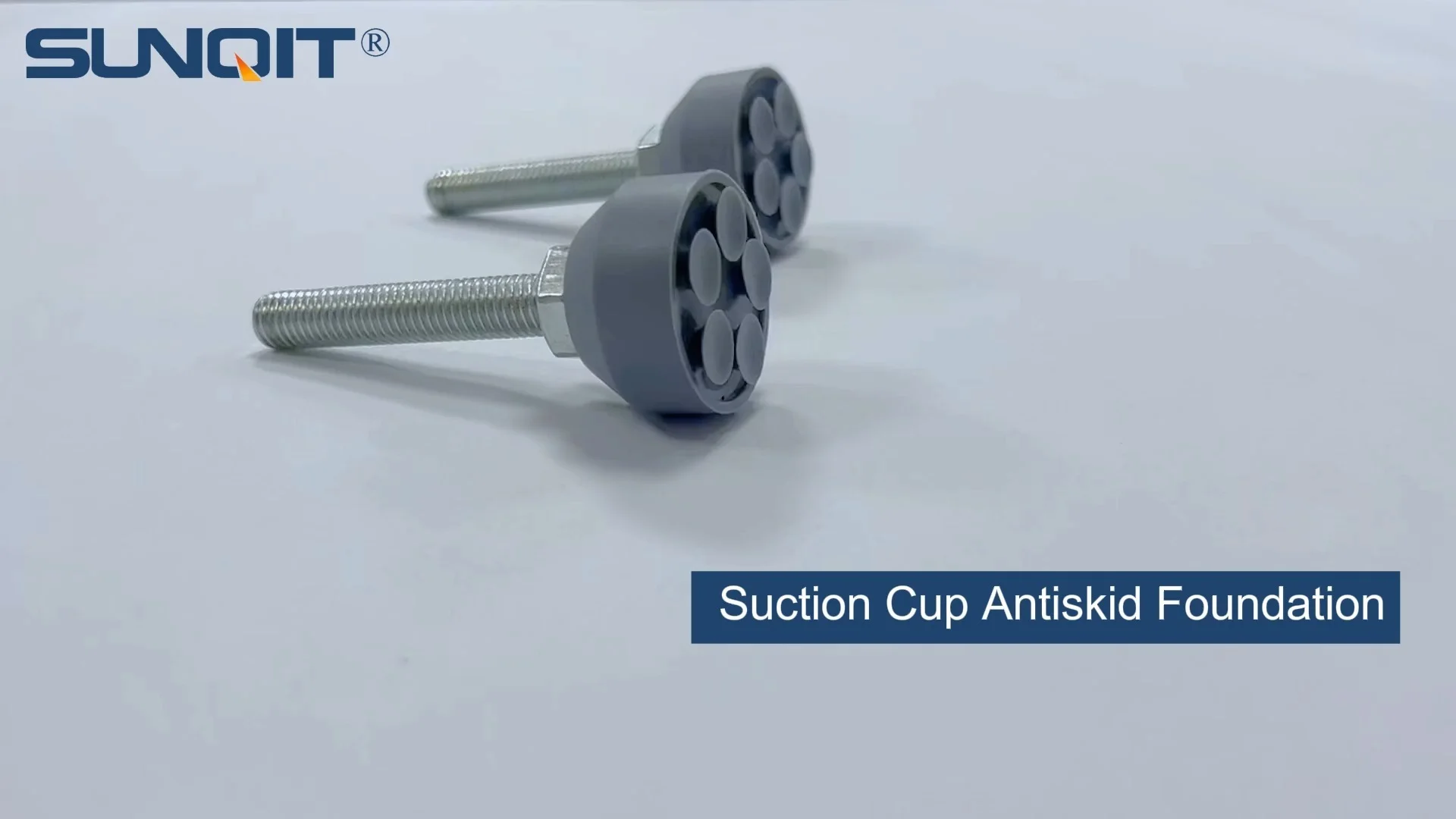
D=35mm suction cup anti-slip foot adjusterï¼screw M10*55ï¼with a blot, used for workbench, flowrack pipe contact with groud.
The Problem of Wobbly Workspaces: Why Stability Matters
Walk into any production assemble line, warehouse, or workshop, and you'll likely spot a common tool: the lean pipe workbench. These versatile setups are the backbone of efficiency, holding everything from circuit boards to heavy machinery parts. But there's a silent enemy lurking in many of these spaces—instability. A workbench that rocks with the slightest nudge, a cart that drifts when you're loading materials, or a station that shifts mid-task isn't just annoying; it's a productivity killer and a safety hazard.
Consider Maria, a line operator at a small electronics factory. Last month, she was assembling a delicate sensor on her lean pipe workbench when the surface wobbled. Her hand slipped, and the sensor scraped against the table edge, ruining hours of work. "It felt like walking on a boat," she later told her supervisor. "I couldn't focus because I was always waiting for the next shake."
Stability isn't just about comfort—it's about consistency. In industries where precision matters, even a millimeter of movement can throw off measurements, damage parts, or lead to errors that cascade down the production line. And let's not forget safety: a wobbly workbench increases the risk of tools or materials falling, potentially causing injuries. This is where anti-slip solutions come into play, and among them, suction cup anti-slip foot adjusters have gained a reputation as a quick fix. But do they live up to the hype? Can they really grip securely on every type of floor you might encounter?
What Are Suction Cup Anti-Slip Foot Adjusters, Anyway?
Before diving into their performance, let's get clear on what these tools actually are. Suction cup anti-slip foot adjusters are small, often unassuming devices attached to the bottom of equipment—think workbenches, carts, or racks. Their design is deceptively simple: a sturdy base (usually metal or hard plastic) topped with a rubber or silicone suction cup, and a threaded rod that lets you adjust the height. Twist the rod, and the foot extends or retracts, leveling the equipment and pressing the suction cup firmly against the floor.
The magic (if you can call it that) lies in the suction cup itself. When pressed down, it expels air, creating a vacuum seal between the cup and the floor. This seal, combined with the friction of the rubber against the surface, is supposed to lock the equipment in place. Unlike caster wheels, which are all about mobility, these foot adjusters are built for staying put . They're a favorite among facility managers because they're affordable, easy to install, and don't require complex tools—just a wrench to tighten them into place.
But here's the catch: the suction cup's effectiveness depends entirely on the floor it's pressed against. A smooth, non-porous surface might form a tight seal, but what happens if the floor is rough, porous, or covered in carpet? That's the question we're here to answer.

How They Work: The Science of the Suction Seal
To understand why floor type matters, let's break down the physics of a suction cup. When you press the cup against a surface, you're squeezing out the air between the cup and the floor. This creates a low-pressure zone inside the cup. The higher atmospheric pressure outside then pushes down on the cup, holding it in place. For this to work well, two things need to happen: the cup must make full contact with the floor (no gaps for air to seep in), and the floor must be smooth enough to let the seal form.
Rubber is the material of choice for the suction cups because it's flexible and grippy. It conforms to minor imperfections in the floor, helping maintain that seal. The adjustable rod adds another layer: by letting you level the equipment, it ensures all four (or more) feet make even contact, so no single foot is bearing too much weight and popping the seal.
But here's where floor texture throws a wrench in the works. Imagine pressing a suction cup against a mirror—easy, right? The smooth glass lets the cup form a tight seal. Now try pressing it against a brick wall. The rough surface has gaps and ridges, so air leaks back in, and the suction fails. Floors in industrial settings are rarely as extreme as brick walls, but they're far from uniform. Let's take a closer look at how suction cup foot adjusters perform on the most common floor types.

Testing the Grip: Suction Cups on 5 Common Floor Types
To get real-world insights, we visited three facilities with different floor types and tested suction cup anti-slip foot adjusters on a standard lean pipe workbench. Here's what we found:
1. Sealed Concrete Floors: The Gold Standard
First stop: a large automotive parts warehouse with sealed concrete floors. These floors are common in industrial settings because they're durable and easy to clean. The surface was smooth, with only minor scuffs from years of forklift traffic. We attached four suction cup foot adjusters to a lean pipe workbench, adjusted the height to level it, and pressed down firmly.
The result? The workbench stayed put. We pushed, pulled, and even tried to rock it side to side—it didn't budge. When we lifted the workbench slightly to break the seal, we heard a satisfying "pop" as air rushed back into the cups. "This is why we swear by these," said the warehouse foreman, pointing to similar adjusters on his tool carts. "Concrete's like a magnet for them. Once they're down, you'd need a crowbar to move the bench."
Why does sealed concrete work so well? It's non-porous, so air can't seep through the floor itself, and the smooth surface allows the suction cup to form a continuous seal. Even minor scratches or stains didn't affect the grip—though we did notice that oil spills (a common warehouse hazard) weakened the seal. A quick wipe with a degreaser fixed that, though.
2. Tile Floors: Smooth but Slippery When Wet
Next, we visited a food processing plant with glazed ceramic tile floors. Tile is popular here because it resists moisture and bacteria, but it's also notoriously slippery when wet. We set up the same lean pipe workbench in a dry corner first. The suction cups gripped instantly, just like on concrete. But then we moved to a section near the washing stations, where the floor was damp from recent cleaning.
Big difference. The suction cups still stuck, but with less force. When we pushed the workbench, it slid about an inch before stopping. "Water breaks the seal," explained the plant's maintenance tech, who was watching. "The cup can't push out all the moisture, so there's always a tiny layer between the rubber and the tile. It's like trying to stick a suction cup to a wet window."
Glazed tile is smooth, but its glossy finish can also be a problem if it's dirty. We tested with a floor that had a layer of dust, and the cups barely held—proof that cleanliness matters as much as the floor type itself.
3. Hardwood Floors: Beauty vs. Practicality
Hardwood floors are less common in industrial settings, but you'll find them in smaller workshops, design studios, or offices with hybrid workspaces. We tested in a custom furniture shop where the lean pipe workbench doubled as a drafting table. The floor was polished oak, free of major scratches but with visible grain.
The suction cups attached easily, but we noticed something odd: after an hour, the workbench had shifted slightly. The cause? The wood's natural texture. Even polished hardwood has tiny grooves from the grain, which let air slowly leak into the suction cups over time. "We had to readjust them every morning," the shop owner told us. "They'd start tight, but by lunch, the bench would have a little wiggle again."
Another concern: hardwood is softer than concrete or tile. Pressing the suction cups too hard can leave indentations, especially if the cups are old or made of stiff rubber. The shop owner showed us a small circular mark on the floor where a previous adjuster had been left in place for months. "That's why we use felt pads under them now," he said. "Better safe than sorry."
4. Carpeted Floors: The Achilles' Heel
If sealed concrete is the gold standard, carpet is the kryptonite. We tested in an office supply warehouse with low-pile industrial carpet (the kind designed to withstand heavy foot traffic). The result was… underwhelming. The suction cups pressed into the carpet fibers, but there was no seal—air simply escaped through the gaps between the fibers. When we pushed the workbench, it slid across the carpet like it was on ice.
"We tried these once and gave up," said the warehouse manager. "Carpet's too fuzzy. The cups can't get a grip. We switched to caster wheels with brakes instead—at least those dig into the fibers a bit." Even high-pile carpet was worse; the cups sank in, making the workbench even more unstable. If your workspace has carpet, suction cup foot adjusters are likely not the solution.
5. Vinyl Floors: A Middle Ground
Finally, we tested in a retail stockroom with luxury vinyl plank (LVP) floors. LVP mimics hardwood but is cheaper and more water-resistant, making it a popular choice for commercial spaces. The surface was smooth but had a slight "grain" texture for slip resistance. The suction cups gripped here better than on hardwood but not as well as on concrete. We could move the workbench with moderate force, but it didn't slide freely like on carpet.
"They're okay, but not great," said the stockroom clerk. "If we're loading heavy boxes, we still use a caster wheel cart with brakes. The adjusters work for light stuff, though—like when we're sorting inventory." The key here was the texture: the LVP's subtle grooves helped with friction but hindered the suction seal. It was a trade-off between grip and air leakage.

Floor Type Showdown: A Quick Reference Table
| Floor Type | Surface Texture | Porosity | Suction Cup Performance | Key Considerations |
|---|---|---|---|---|
| Sealed Concrete | Smooth, minimal texture | Non-porous | Excellent | Best performance; clean oil/grease for optimal grip. |
| Glazed Tile | Very smooth, glossy | Non-porous | Good (dry); Fair (wet/dirty) | Moisture or dust weakens the seal; avoid on wet surfaces. |
| Hardwood | Smooth with natural grain grooves | Minimally porous | Fair | Slow air leakage through grain; risk of indentations. |
| Carpet (Low/High Pile) | Textured, fibrous | Highly porous (fibers trap air) | Poor | Seal cannot form; ineffective for stability. |
| Vinyl (LVP) | Smooth with subtle slip-resistant texture | Non-porous | Good | Texture aids friction but slightly reduces suction; works for light to medium loads. |
Common Misconceptions: What People Get Wrong About Suction Cups
Now that we've seen how they perform, let's bust some myths. The biggest misconception? "They work everywhere." As we saw, carpet is a dealbreaker, and even hardwood or wet tile can let you down. Another myth is that "once they're on, you never have to touch them again." Not true—suction cups wear out. The rubber hardens over time, losing flexibility, and cracks or tears can form, breaking the seal. Maria's factory learned this the hard way: they installed adjusters on 10 workbenches and forgot about them for two years. By the time they checked, half the cups were cracked, and the workbenches were wobbling again.
Then there's the belief that "tighter is better." Cranking the adjusters until the suction cups are squashed flat might seem like a good idea, but it actually weakens the seal. Over-compression can distort the cup's shape, creating gaps where air can leak in. Think of it like overinflating a balloon—push too hard, and it pops (or in this case, loses grip).
Suction Cups vs. Other Anti-Slip Solutions: When to Choose Which
Suction cup foot adjusters aren't the only game in town. Let's compare them to two common alternatives: caster wheels with brakes and rubber pads.
Caster Wheels with Brakes: These are great for mobility. If you need to move your workbench or cart regularly, caster wheels let you roll it into place, then lock the brakes. But brakes rely on friction between the wheel and the floor, not suction. On smooth floors like tile or sealed concrete, they might not grip as tightly as suction cups. On carpet, though, they often work better—brake pads can dig into fibers to prevent sliding. The downside? They add height to equipment, which might be an issue in tight spaces.
Rubber Pads: These are simple, cheap, and effective on most floors. They work by increasing friction, not suction, so they're less finicky about surface texture. But they're not adjustable—if your floor is uneven, you'll still have a wobbly workbench. They also wear out quickly on rough floors, leaving behind black marks.
So when should you pick suction cups? If you need adjustability (to level uneven equipment) and work on smooth, dry, non-porous floors (like sealed concrete or dry tile), they're hard to beat. For carpet, frequent movement, or uneven surfaces, caster wheels with brakes or rubber pads might be better.
Tips for Getting the Most Out of Your Suction Cup Foot Adjusters
If you've decided to go with suction cup anti-slip foot adjusters, here's how to ensure they perform their best:
- Keep floors clean: Dust, oil, or water breaks the seal. Wipe floors with a damp cloth before installing, and clean spills immediately.
- Check the cups regularly: Inspect for cracks, hardening, or tears every month. replace cups that look worn—they're cheap, and it's better than risking instability.
- Don't over-tighten: Tighten until the cup makes full contact, but stop when you feel resistance. Over-squeezing distorts the cup.
- Level first, then seal: Adjust the height to level the equipment before pressing the cups down. A crooked bench won't let all cups seal evenly.
- Avoid extreme temperatures: Rubber hardens in cold and softens in heat. If your workspace gets very hot or cold, opt for cups made of silicone, which is more temperature-resistant.
Conclusion: Not a One-Size-Fits-All Solution, but a Powerful Tool
So, do suction cup anti-slip foot adjusters work on all floor types? The short answer is no. They excel on smooth, non-porous surfaces like sealed concrete and dry tile, where they form tight, long-lasting seals. On hardwood, they're fair but require regular readjustment. On carpet, they're all but useless. But that doesn't make them a bad solution—just a specific one.
Think of them as a specialized tool, not a universal fix. For Maria's electronics factory with sealed concrete floors, they might be exactly what she needs to stabilize her lean pipe workbench and avoid another sensor disaster. For the furniture shop with hardwood, they could work with regular checks and felt pads. But for the carpeted office supply warehouse, it's back to the drawing board (or caster wheels).
At the end of the day, the key is to match the solution to the environment. Suction cup anti-slip foot adjusters won't solve every stability problem, but in the right setting, they're a quiet hero—keeping workspaces steady, workers focused, and production lines running smoothly. And isn't that what every workspace needs?