- Company Articles
- Products and Technology
- Product knowledge
- Dual-Lock Brake vs Single-Lock: Swivel Stem Caster Wheel Options

Dual-Lock Brake vs Single-Lock: Swivel Stem Caster Wheel Options
Related Product
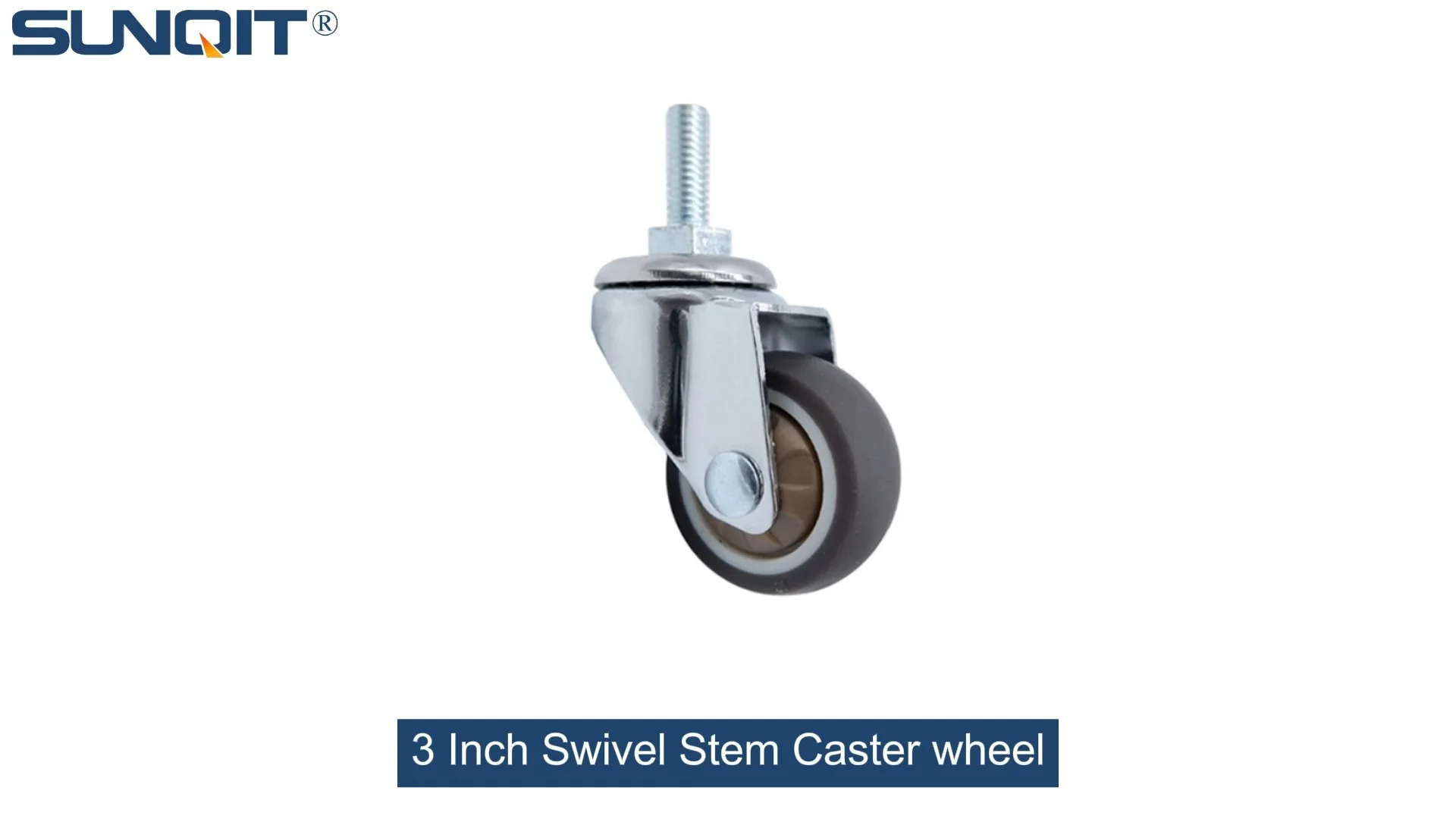
Swivel Stem Caster wheel
360 Degree Swivel Stem Caster. Threaded-post mount design, castors diameter 3 inch.Each swivel caster wheels loading 70KGS. Heavy enough and widely suit for carts, chairs, cabinet, flow rack, workbench, turnover rolley.
In the bustling world of manufacturing, warehousing, and workshop operations, every small component plays a quiet but vital role in keeping the wheels of productivity turning—quite literally when it comes to caster wheels. These unassuming devices are the unsung heroes of material handling, enabling seamless movement of everything from heavy machinery to lightweight workbenches. But not all casters are created equal, and when it comes to swivel stem caster wheels, one decision looms large for facility managers and lean system enthusiasts alike: dual-lock or single-lock? This choice isn't just about mechanics; it's about safety, efficiency, and the very flow of your daily workflow.
The Backbone of Mobility: Swivel Stem Caster Wheels in Modern Workspaces
Before diving into the brake debate, let's take a moment to appreciate what makes swivel stem caster wheels so indispensable. Designed with a rotating head (the "swivel") and a stem that mounts to equipment, these casters allow for 360-degree movement, making tight turns and precise positioning a breeze. Whether you're reconfiguring a production line, moving a workbench to a new station, or transporting materials across a warehouse, their flexibility is unmatched.
In lean system environments—where efficiency and waste reduction are paramount—swivel stem casters aren't just accessories; they're strategic tools. A well-chosen caster minimizes downtime spent maneuvering equipment, reduces physical strain on workers, and ensures that every inch of your workspace is used optimally. But here's the catch: not all brakes are built to support these goals equally. Enter the single-lock and dual-lock dilemma.
Single-Lock Swivel Stem Casters: Simplicity with a Purpose
Single-lock swivel stem casters are the workhorses of simplicity. As the name suggests, they feature a single braking mechanism—typically a foot-operated pedal—that locks the wheel's rotation. When engaged, the brake pad presses against the wheel, preventing it from rolling. However, the swivel head remains free to rotate, allowing the caster to pivot even when the wheel is locked.
How They Work: The Basics
Imagine a standard office chair caster, but sturdier. Step on the pedal, and the wheel stops rolling; step again, and it releases. This straightforward design makes single-lock casters easy to use, even for workers wearing heavy boots or gloves. Their simplicity also translates to lighter weight and fewer moving parts, which can be a boon for applications where every pound counts.
The Pros: Why Choose Single-Lock?
Cost-Effective: With fewer components, single-lock casters are generally more affordable than their dual-lock counterparts. For small businesses or teams on a tight budget, this can make a significant difference when outfitting multiple workbenches or trolleys.
Lightweight & Agile: Their streamlined design reduces overall weight, making equipment easier to push or pull. This is especially useful for frequent repositioning—think of a workbench that needs to shift between assembly stations multiple times a day.
Low Maintenance: Fewer parts mean fewer things to break. Routine upkeep typically involves cleaning debris from the wheel and lubricating the swivel joint, tasks that can be handled by in-house maintenance teams without specialized tools.
The Cons: Where Single-Lock Falls Short
Limited Stability: Since the swivel head isn't locked, the equipment can still shift or pivot if bumped. On uneven floors, this might lead to unintended movement, which is a safety hazard in environments with heavy machinery or delicate materials.
Not Ideal for Precision Work: In lean system setups where equipment must stay in exact positions (e.g., aligning with a conveyor belt), a single-lock caster's swivel play can disrupt workflow. Workers might spend extra time readjusting positions, eating into productivity.
Best For:
Single-lock casters shine in low-to-medium risk environments with smooth floors and infrequent stationary periods. Examples include: small workshops using lightweight workbenches, mobile storage racks, or trolleys that are moved often but locked only temporarily during loading/unloading.

Dual-Lock Swivel Stem Casters: Double the Lock, Double the Security
Dual-lock swivel stem casters take stability to the next level by locking two components: the wheel's rotation and the swivel head. This dual-action braking ensures the caster stays fixed in both direction and position, making it the gold standard for precision and safety.
How They Work: The Mechanics
Dual-lock mechanisms vary by design, but most use a single foot pedal that engages two brakes simultaneously. One brake stops the wheel from rolling, while a second—often a metal plate or pin—locks the swivel head into place. Some models feature separate pedals for each function, giving users the flexibility to lock just the wheel or both. Either way, the result is a caster that feels anchored to the floor when engaged.
The Pros: Why Dual-Lock Reigns Supreme for Critical Applications
Maximum Stability: By locking both wheel and swivel, dual-lock casters prevent all movement, even on sloped or uneven floors. This is a game-changer for environments where equipment must stay perfectly aligned, like assembly lines or medical device manufacturing facilities.
Enhanced Safety: Unintended movement is a leading cause of workplace accidents, from tipped machinery to tripped workers. Dual-lock casters eliminate this risk, giving teams peace of mind when working with heavy loads or fragile components.
Lean System Compatibility: In lean system supplier recommendations, dual-lock casters are often prioritized for high-efficiency setups. When every second counts, knowing your equipment won't shift mid-process reduces waste and keeps workflows on track.
The Cons: The Trade-Offs
Higher Cost: The added complexity of dual-lock mechanisms makes these casters pricier upfront. For businesses outfitting dozens of units, this can add up—but many find the investment worthwhile for the safety and efficiency gains.
Heavier & Bulkier: More components mean more weight, which can make equipment harder to move when unlocked. This is less of an issue for machinery that stays in place most of the time but considering for frequently repositioned tools.
Increased Maintenance: With two braking systems, there's more to maintain. Brake pads, swivel locks, and linkages may need periodic adjustment or replacement, especially in high-use industrial settings.
Best For:
Dual-lock casters are non-negotiable in high-stakes environments: manufacturing plants with strict assembly tolerances, laboratories handling sensitive materials, or warehouses with uneven concrete floors. They're also ideal for heavy-duty equipment like workbenches with built-in tools or conveyor-fed production stations.

Side-by-Side: Single-Lock vs Dual-Lock at a Glance
| Feature | Single-Lock | Dual-Lock | Best For |
|---|---|---|---|
| Brake Functionality | Locks wheel rotation only | Locks wheel rotation + swivel head | N/A |
| Stability | Moderate (swivel may pivot) | High (fully fixed position) | Dual-Lock: Precision work; Single-Lock: Casual use |
| Cost | Lower (simpler design) | Higher (dual mechanisms) | Single-Lock: Budget constraints; Dual-Lock: Safety priority |
| Weight | Lighter (fewer parts) | Heavier (extra braking components) | Single-Lock: Frequent movement; Dual-Lock: Stationary focus |
| Maintenance | Low (minimal parts to service) | Moderate (dual brake systems) | Single-Lock: Small teams; Dual-Lock: Industrial settings with maintenance staff |
| Ideal Floors | Smooth, even surfaces | Uneven, sloped, or rough floors | N/A |

Beyond the Brake: Key Factors to Guide Your Choice
Choosing between single-lock and dual-lock isn't just about the brake itself. To make the right call, consider these additional factors:
Load Capacity
Both caster types come in varying load ratings, but dual-lock models often support heavier weights due to their reinforced braking systems. Check the manufacturer's specs to ensure the caster can handle your equipment's total weight (including tools and materials).
Floor Type
Smooth concrete or vinyl floors are forgiving for single-lock casters, but rough or cracked surfaces demand the stability of dual-lock. For example, a warehouse with pitted floors might see single-lock equipped workbenches "walk" slightly when locked, while dual-lock units stay put.
Workflow Frequency
Ask: How often is the equipment moved? If it's wheeled once a day and locked for hours, dual-lock's stability is worth the investment. If it's shifted hourly, single-lock's lightweight agility will save time and effort.
Caster Accessories
Don't overlook caster accessories that can enhance performance. For single-lock casters, brake pedal extensions make locking easier for workers with limited mobility. For dual-lock, replaceable brake pads extend lifespan and reduce maintenance costs. A reputable caster supplier can help you pair the right accessories with your chosen brake type.
Real-World Impact: How the Right Caster Transforms Workflow
To illustrate the difference, let's look at two scenarios:
Scenario 1: The Small Electronics Workshop
A family-run electronics repair shop uses lightweight workbenches to service devices. They move benches twice daily to clean floors but lock them during 4-hour repair sessions. Single-lock casters are perfect here: affordable, easy to maneuver, and sufficient for their smooth shop floor. The team rarely needs precise alignment, so the swivel play isn't an issue. Over a year, they save $500+ by choosing single-lock over dual-lock for their 8 workbenches.
Scenario 2: The Automotive Assembly Line
A large auto manufacturer operates a lean system where car parts move along a conveyor belt to assembly stations. Each station uses a heavy workbench with tools calibrated to align with the conveyor. Dual-lock casters are non-negotiable: if a workbench shifts even 2 inches, parts misalign, causing delays and defects. The initial higher cost is offset by reduced waste and fewer reworks—saving the company tens of thousands annually.
Final Thoughts: It's About Balance
At the end of the day, the choice between single-lock and dual-lock swivel stem caster wheels boils down to balance: balancing cost vs. safety, agility vs. stability, and simplicity vs. precision. For lean system suppliers and facility managers, it's about understanding your team's daily challenges—whether that's a worker struggling to keep a workbench steady or a production line grinding to a halt due to misalignment.
Remember, there's no "one size fits all." Some workspaces might even mix both types: dual-lock for critical stations and single-lock for auxiliary equipment. The key is to assess your unique needs, consult with a trusted caster supplier, and prioritize the factors that matter most to your workflow. After all, in the world of material handling, the right caster isn't just a part—it's a partner in productivity.