- Company Articles
- Products and Technology
- Product knowledge
- Duplex Aluminum Pipe Joint: A Must-Have for Flexible Workstations

Duplex Aluminum Pipe Joint: A Must-Have for Flexible Workstations
Related Product
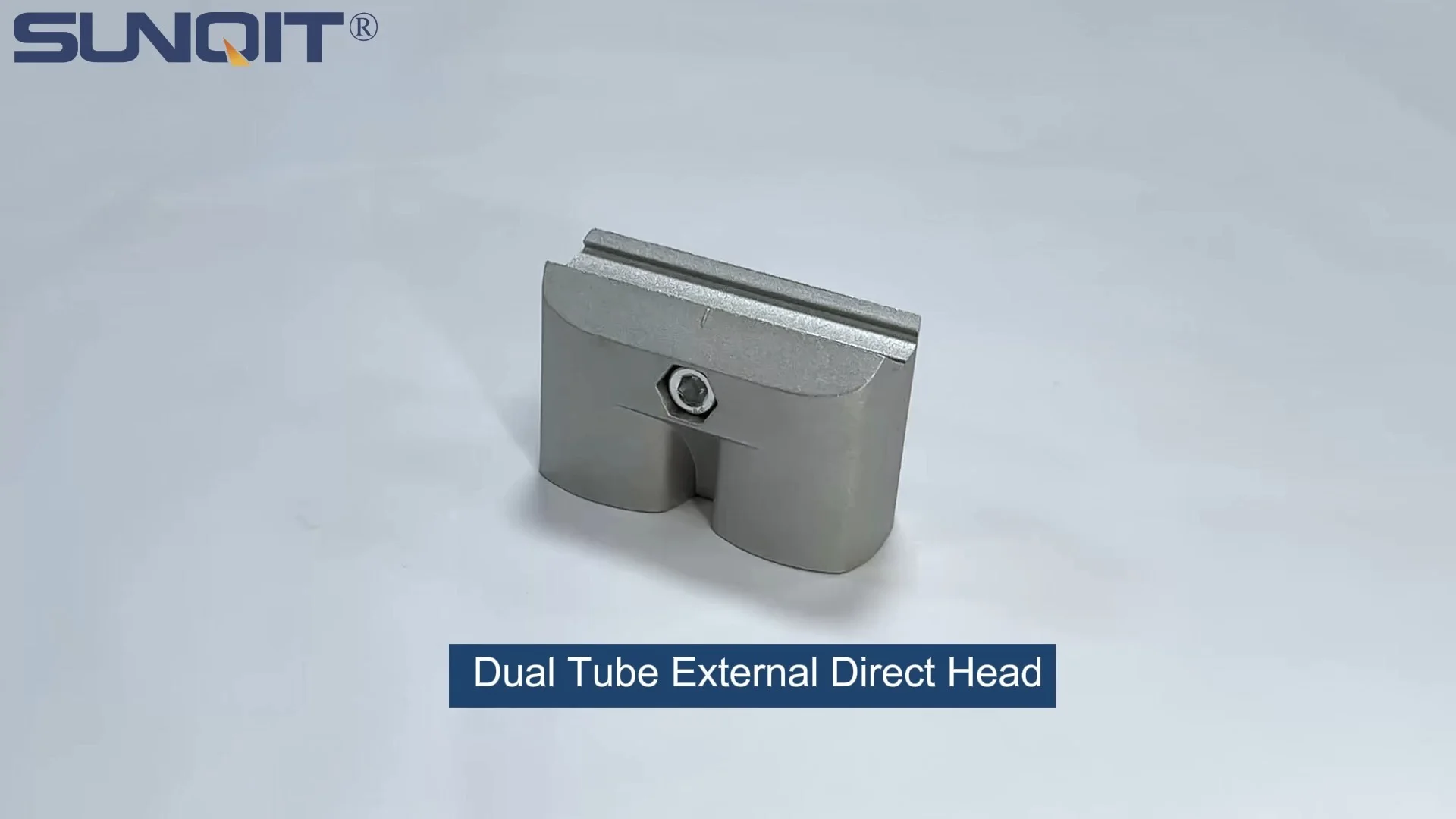
Duplex Aluminum Pipe Joint
Duplex Aluminum pipe joint used for one pcs 28pcs aluminum pipe and one pcs of 28mm duplex pipe connection in straight angle.
The Evolution of Workstations – Why Flexibility Matters More Than Ever
In today's fast-paced manufacturing world, the rules of the game have changed. Gone are the days of mass-producing the same product for years on end. Now, customers demand customization, markets shift overnight, and production lines need to pivot at a moment's notice. Whether you're running a small electronics assembly shop or a large automotive parts plant, one thing is clear: rigid, one-size-fits-all workstations are no longer just inefficient—they're a liability.
Think about it: A traditional fixed workstation, bolted to the floor and built with heavy steel or wood, might work for a single product line. But when your team needs to switch from assembling smartphone components to laptop parts, or from packaging small widgets to large machinery, that "permanent" setup becomes a roadblock. Disassembling it takes hours (if not days), wasting labor and halting production. And if you need to scale up or rearrange your floor plan to improve workflow? Forget it—you're essentially starting from scratch.
This is where flexibility comes in. Modern workstations need to be more than just tables and shelves; they need to be living, breathing systems that adapt to your team's needs. They should assemble quickly, reconfigure easily, and grow with your business. And at the heart of this flexibility? A humble yet powerful component: the duplex aluminum pipe joint.
Meet the Duplex Aluminum Pipe Joint: The Unsung Hero of Flexible Setups
You've probably heard of aluminum profiles, roller tracks, and workbenches—they're the visible stars of any workstation. But what holds them all together? That's where the duplex aluminum pipe joint steps in. It's the quiet force that turns a pile of aluminum pipes and accessories into a fully functional, adaptable workspace.
At its core, a duplex aluminum pipe joint is a connecting component designed to link aluminum pipes, profiles, and accessories with minimal effort. Unlike traditional welding or bolted connections, which require tools, expertise, and time, this joint simplifies the process. Picture a sleek, lightweight piece of aluminum with precision-engineered slots and locking mechanisms. Slide an aluminum profile into one end, another into the other, tighten a small lever or screw, and boom—they're locked in place. Need to adjust the angle? Loosen the lever, rotate the joint, and retighten. It's that simple.
But don't let its simplicity fool you. This little joint is a workhorse. It's built to handle the daily grind of manufacturing—from the constant movement of roller tracks to the weight of tools and materials on a workbench. And because it's made of aluminum, it's resistant to rust, corrosion, and wear, ensuring your workstation stays sturdy and reliable for years.

What Makes the Duplex Aluminum Pipe Joint Stand Out? Key Features
So, why choose a duplex aluminum pipe joint over other connecting options? Let's break down its standout features:
1. Unmatched Flexibility: Workstations That Bend, Not Break
Traditional lean pipe joints (like the ones used with PE-coated steel pipes) are often rigid, limiting you to fixed angles (90°, 45°, etc.). The duplex aluminum joint? It's a chameleon. Many models offer 360-degree rotation, letting you angle pipes horizontally, vertically, or anywhere in between. Need a workbench with a sloped surface for easier access? Done. Want a material rack that tilts to feed parts onto a roller track? No problem. This flexibility means your workstation isn't just a static structure—it's a tool that adapts to how your team works , not the other way around.
2. Durability That Keeps Up with Your Workflow
Aluminum isn't just lightweight; it's tough. Unlike plastic joints (which crack under heavy loads) or steel joints (which rust in humid environments), duplex aluminum joints hold their own. They're resistant to corrosion, even in factories with high moisture or chemical exposure. And because aluminum has natural shock-absorbing properties, they can handle the occasional bump or jolt from moving equipment or heavy tools without bending or warping.
3. Tool-Free (or Minimal-Tool) Installation: Save Time, Skip the Headaches
Remember the last time you tried to assemble furniture with a tiny Allen wrench and confusing instructions? Traditional workstation setups can feel the same—requiring drills, wrenches, and a team of people to get right. Duplex aluminum pipe joints simplify this. Most models use a quick-lock lever or a basic hex key (included with the joint) for installation. A single worker can assemble a basic workbench in under an hour, and reconfiguring it takes even less time. No more waiting for the maintenance team or fumbling with complex tools—your operators can make changes themselves, right when they need to.
4. Compatibility: Works with Your Existing Aluminum Ecosystem
Chances are, you already have aluminum profiles, pipes, or accessories in your facility. The duplex aluminum pipe joint plays well with others. It's designed to fit standard aluminum profile sizes (like 2020, 3030, or 4040) and works seamlessly with aluminum pipe accessories—casters for mobility, end caps for safety, or even roller track guide rails to create smooth material flow. This compatibility means you don't have to replace your entire setup to go flexible; just swap out the joints and start building.
5. Load Capacity: Strong Enough for Real-World Use
Flexibility is great, but what if the joint can't hold the weight? Duplex aluminum joints are engineered to balance flexibility with strength. Depending on the model and size, they can support anywhere from 50kg to 120kg per connection. That's enough to hold heavy tools on a workbench, stacks of materials on a rack, or even a fully loaded turnover trolley. And because the locking mechanism distributes weight evenly across the joint, you won't have to worry about sudden collapses or wobbly structures.

How Does It Stack Up? Duplex vs. Traditional Joints
Still on the fence? Let's compare the duplex aluminum pipe joint to two common alternatives: traditional lean pipe joints (PE-coated steel) and stainless steel joints. The table below breaks down key factors to help you decide.
| Feature | Duplex Aluminum Pipe Joint | Traditional Lean Pipe Joint (PE-Coated Steel) | Stainless Steel Joint |
|---|---|---|---|
| Material | Aluminum alloy | Steel with PE coating | Stainless steel |
| Flexibility | 360° rotation, adjustable angles | Fixed angles (90°, 45°, etc.) | Limited rotation, rigid |
| Installation Time | 5–10 minutes per connection (tool-free or minimal tools) | 15–20 minutes per connection (requires wrenches) | 20–30 minutes per connection (requires welding or heavy tools) |
| Load Capacity | 50–120kg per joint | 80–150kg per joint | 100–200kg per joint |
| Corrosion Resistance | High (aluminum is naturally corrosion-resistant) | Medium (PE coating can chip, exposing steel) | High (stainless steel resists rust) |
| Weight | Light (100–200g per joint) | Medium (250–350g per joint) | Heavy (400–600g per joint) |
| Best For | Flexible workstations, lean systems, frequent reconfigurations | Fixed setups, low-cost projects, light to medium loads | Heavy-duty industrial use, high-moisture environments |
As you can see, the duplex aluminum joint strikes a sweet spot between flexibility, ease of use, and durability. It's not the heaviest hitter (stainless steel wins there), but for most modern workstations—where adaptability is key—it's the clear choice.

Building Your Dream Workstation: How Duplex Joints Work with Aluminum Profile and Accessories
Enough theory—let's get practical. How do you actually use a duplex aluminum pipe joint to build a workstation? Let's walk through a real-world example: creating a mobile assembly workbench with integrated roller track for material flow.
Step 1: Gather Your Materials
You'll need: aluminum profiles (we'll use 4040 EU standard aluminum profile for stability), duplex aluminum pipe joints, a workbench top (aluminum honeycomb panel for lightweight strength), caster wheels (for mobility), roller track (to feed parts to the workbench), and aluminum pipe accessories like end caps and side guards.
Step 2: Build the Frame
Start by assembling the workbench frame. Cut four aluminum profiles to your desired height (say, 90cm for a standing workbench). Use duplex joints to connect the vertical profiles to horizontal ones at the top and bottom, forming a rectangle. The beauty here? If you later decide you need a taller bench, you can simply swap out the vertical profiles for longer ones—no cutting or welding required.
Step 3: Add Mobility with Casters
Attach caster wheels to the bottom corners using duplex joints (or dedicated caster mounts). Lockable casters let you move the bench easily when reconfiguring, then lock it in place during use. Again, if you later want to switch to fixed feet, just unscrew the casters and replace them with aluminum foot bases—no permanent changes.
Step 4: Install the Workbench Top
Lay the aluminum honeycomb panel on top of the frame. Use duplex joints with board holders to secure it in place. The joints let you adjust the panel's position slightly, ensuring it's level and stable. Add side guards along the edges to prevent tools from sliding off.
Step 5: Integrate Roller Track for Material Flow
Finally, attach a roller track to one side of the workbench using aluminum guide rails and duplex joints. This track will let parts slide smoothly from a nearby material rack to the assembly area, reducing the need for workers to bend or reach. Adjust the angle of the track using the joints to control the speed of material flow—steeper for heavier parts, gentler for delicate components.
The result? A fully functional workbench that took one person less than two hours to build. And if next month you need to add a second shelf, or reposition the roller track, or even split the bench into two smaller tables? Just loosen the duplex joints, rearrange, and retighten. No hassle, no downtime.
Duplex Joints and Lean Systems: A Match Made in Manufacturing Heaven
If you're familiar with lean manufacturing, you know its core principles: eliminate waste, optimize flow, and empower teams to improve continuously. The duplex aluminum pipe joint isn't just a tool for building workstations—it's a lean system enabler. Here's how:
Eliminating Waste (Muda) in Setup Time
Traditional workstations require time-consuming setup and teardown. With duplex joints, changeover time drops dramatically. A team that once spent 4 hours reconfiguring a line for a new product can now do it in 30 minutes. That's 3.5 hours of productive work saved—time that can be spent assembling, testing, or shipping products instead of moving metal.
Optimizing Flow with Adaptable Layouts
Lean systems thrive on smooth material and information flow. A workstation that's fixed in place can create bottlenecks—for example, forcing workers to walk extra steps to retrieve parts. With duplex joints, you can rearrange roller tracks, material racks, and workbenches to match the natural flow of your process. Need to bring a quality control station closer to assembly? Move it. Want to create a U-shaped line to reduce walking distance? Do it. The joint lets your layout evolve with your process improvements.
Empowering Teams to Own Their Workspace
Lean isn't just about processes—it's about people. When workers can adjust their own workstations without waiting for maintenance, they take ownership of their space. A line operator might realize that tilting the roller track by 10° reduces errors, or that raising the workbench by 5cm eases back strain. With duplex joints, they can make those changes on the spot, turning small insights into big improvements.
Real-World Results: How Companies Are Winning with Duplex Joints
Don't just take our word for it. Let's look at two companies that switched to duplex aluminum pipe joints and saw tangible benefits.
Case Study 1: Electronics Manufacturer Cuts Changeover Time by 75%
A mid-sized electronics company producing printed circuit boards (PCBs) struggled with frequent product changes. Their old workstations, built with welded steel, took 8 hours to reconfigure between PCB models. After switching to aluminum profiles and duplex joints, they reduced changeover time to 2 hours. The team now handles twice as many product variants monthly, with no increase in labor costs.
Case Study 2: Automotive Supplier Reduces Floor Space by 30%
An automotive parts supplier was running out of factory space. Their fixed material racks and workbenches took up valuable square footage, leaving little room for new equipment. By replacing rigid racks with duplex-joint-based systems, they reconfigured their layout to stack materials vertically and consolidate workstations. The result? 30% more floor space, allowing them to add a new production line without expanding their facility.
Pro Tips: Getting the Most Out of Your Duplex Aluminum Pipe Joints
To ensure your duplex aluminum pipe joints perform their best for years, follow these simple tips:
- Don't overtighten: The locking mechanism is designed to hold securely with moderate force. Overtightening can strip threads or warp the joint.
- Inspect regularly: Check joints monthly for signs of wear, especially if they're used in high-vibration areas. Tighten any loose connections and replace damaged joints promptly.
- Clean with mild soap: Aluminum resists corrosion, but dirt and grime can hide wear. Wipe joints with a damp cloth and mild soap to keep them in top shape.
- Match joint size to load: Don't use a small joint for heavy loads. Check the manufacturer's specs to ensure you're using the right model for the job.
- Train your team: Show operators how to adjust joints safely. The more comfortable they are with reconfiguring, the more likely they are to suggest improvements.
The Future of Workstations: Why Duplex Aluminum Joints Are Here to Stay
As manufacturing continues to evolve—with smaller batches, faster product cycles, and a focus on sustainability—the demand for flexible workstations will only grow. The duplex aluminum pipe joint isn't a passing trend; it's a foundational technology for the factories of tomorrow.
Consider this: Industry 4.0 and smart manufacturing rely on connected, adaptable systems. A workstation built with duplex joints can integrate with sensors (to track usage), IoT devices (to monitor performance), and even collaborative robots (cobots) that work alongside humans. When your setup can change as quickly as your data, you're not just keeping up—you're leading.
And let's not forget sustainability. Aluminum is 100% recyclable, and duplex joints reduce waste by eliminating the need for disposable fasteners or one-time-use welding materials. In a world where eco-conscious manufacturing is becoming a competitive advantage, this matters.
Invest in Flexibility – Your Workstation (and Bottom Line) Will Thank You
At the end of the day, a workstation is more than just a place to work. It's a reflection of how you value your team, your processes, and your ability to adapt. Rigid setups trap you in the past; flexible systems built with duplex aluminum pipe joints propel you forward.
Whether you're building a single workbench or redesigning your entire production line, the duplex aluminum pipe joint offers something no traditional component can: freedom. Freedom to change, to grow, and to turn challenges into opportunities. So why wait? Start small—swap out a few joints, build a test workstation, and see the difference for yourself. We're willing to bet you'll wonder how you ever worked without it.