- Company Articles
- Products and Technology
- Solution
- Duplex Aluminum Pipe Joint: Cost-Effective Solution for Production Lines

Duplex Aluminum Pipe Joint: Cost-Effective Solution for Production Lines
Related Product
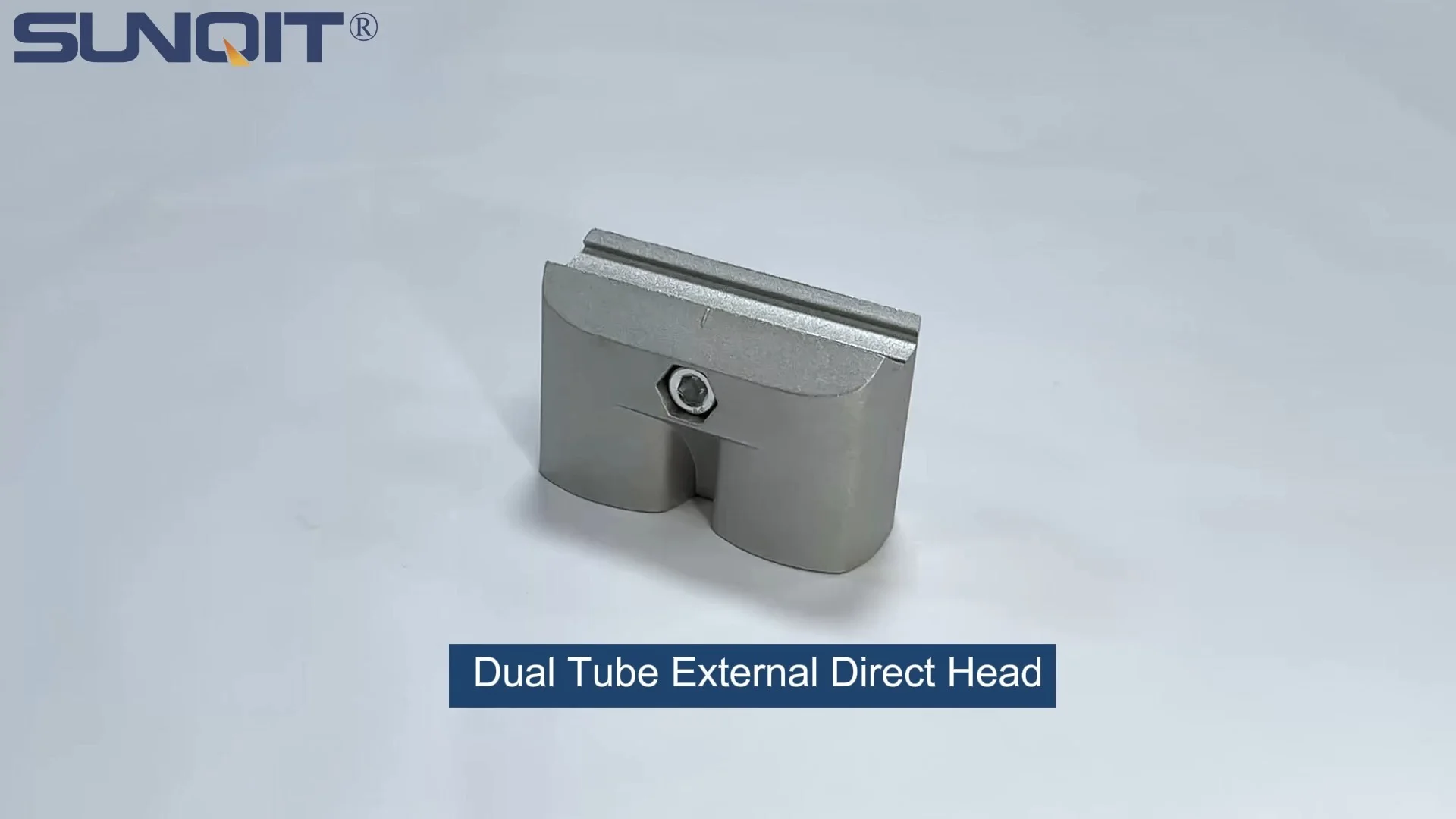
Duplex Aluminum Pipe Joint
Duplex Aluminum pipe joint used for one pcs 28pcs aluminum pipe and one pcs of 28mm duplex pipe connection in straight angle.
Picture this: It's Monday morning on the factory floor. The production manager, Raj, is reviewing last week's metrics, and his brow furrows. A bottleneck in the assembly line—caused by a rigid, outdated workbench that couldn't adapt to a new product's dimensions—has thrown the schedule off by 15%. The maintenance team spent two days disassembling and rebuilding the setup, and the finance department is already asking about the overtime costs. Sound familiar? For many manufacturers, rigid, hard-to-modify production systems are a constant source of frustration, eating into profits and slowing down innovation. But what if there was a solution that let you build, adapt, and rebuild your production line components in hours, not days—without sacrificing durability or breaking the bank? Enter the duplex aluminum pipe joint: a small but mighty component that's quietly revolutionizing how factories design their lean systems.
What Exactly Is a Duplex Aluminum Pipe Joint?
Let's start with the basics. A duplex aluminum pipe joint is a connecting component designed to link aluminum lean pipes, aluminum profiles, and other structural elements in production line setups. Unlike traditional steel joints that require welding, drilling, or heavy tools, these joints are engineered for simplicity: they clamp onto aluminum pipes with precision, creating sturdy connections that can be adjusted or disassembled in minutes. Think of them as the "Lego bricks" of the manufacturing world—versatile, user-friendly, and infinitely reconfigurable.
But what makes them "duplex"? The term refers to their dual functionality: they can connect two pipes at various angles (90°, 45°, 135°, etc.) and often feature internal rotary mechanisms that allow for (fine adjustments) even after assembly. This flexibility is a game-changer. For example, if you need to tilt a workbench shelf by 10° to improve ergonomics, a duplex joint lets you do that without replacing the entire structure. Traditional steel joints? They'd require cutting and rewelding—if they could be adjusted at all.
Materials matter here, too. These joints are made from high-grade aluminum alloy, which gives them a unique balance of strength and lightness. Aluminum is naturally resistant to corrosion, so unlike steel, you won't have to worry about rust weakening the joints over time—even in humid or dusty factory environments. And because aluminum is lighter than steel (about 1/3 the weight), handling and installing these joints is easier on your team, reducing the risk of workplace injuries and cutting down on assembly time.
The Cost-Effective Edge: Why Duplex Joints Make Financial Sense
At first glance, you might think: "Aluminum? That sounds more expensive than steel or plastic." It's true that the upfront cost of a duplex aluminum joint is slightly higher than a basic plastic joint, but when you factor in long-term savings, the math flips dramatically. Let's break down the cost benefits step by step.
1. Reduced Labor Costs: Build Faster, Adapt Faster
Time is money, especially on the factory floor. Traditional production setups with steel pipes and welded joints require skilled labor—think welders, electricians, or specialized technicians. Assembling a single workbench might take 4-6 hours, and if you need to reconfigure it later? Add another 3-4 hours of labor. With duplex aluminum pipe joints, the equation changes. Because they're tool-free (most use hand-tightened clamps or simple Allen keys), even a line operator with basic training can assemble a workbench in under an hour. Need to adjust the height of a flow rack to accommodate taller bins? Loosen the joints, reposition the pipes, retighten—and you're done in 15 minutes. A recent case study from a automotive parts manufacturer found that switching to duplex joints reduced assembly time for their production cells by 62%, cutting labor costs by $45,000 annually.
2. Durability That Lowers Maintenance Bills
Steel joints rust. Plastic joints crack under heavy loads. Duplex aluminum joints? They're built to last. The aluminum alloy used in these joints has a tensile strength of 120-150 MPa (that's strong enough to support the weight of a small car, in case you're wondering), and their corrosion resistance means they won't degrade in damp or chemical-exposed environments. A food packaging plant in Ohio, for example, replaced their steel roller track connectors with duplex aluminum versions three years ago. Before, they were replacing rusted steel connectors every 6 months at $200 per replacement. Now? They haven't replaced a single aluminum joint. That's a savings of $4,800 over three years—just on connector maintenance.
3. Reusability: Invest Once, Use Again (and Again)
Here's where the "lean" in lean system really shines. In traditional setups, if your product line changes—say, you shift from manufacturing small electronics to larger appliances—you often have to scrap old workbenches, racks, and conveyors. They're too rigid to adapt, so they end up in the scrapyard. Duplex aluminum joints change that. Because they're modular, you can disassemble a workbench, take the joints and aluminum lean pipes, and rebuild them into a turnover trolley or a flow rack. A furniture manufacturer in North Carolina did exactly that last year: when they introduced a new line of office chairs, they repurposed 80% of their old workbench components (using the same duplex joints) to build material racks for the new product. The cost to adapt? $1,200 in new aluminum pipes. The cost to buy new racks? $12,000. That's a 90% savings.
4. Lightweight Design = Lower Shipping and Installation Costs
Aluminum's light weight isn't just about ease of assembly—it also cuts costs upstream. When you order pre-built steel workbenches, you're paying to ship not just the bench, but the heavy steel frame and joints. Aluminum lean pipes and duplex joints, by contrast, are lightweight enough to ship in bulk, reducing freight costs by 30-40%. A medical device manufacturer in California reported that switching to aluminum-based systems reduced their annual shipping costs for production line components by $18,000. And because the components are lighter, you don't need forklifts or heavy machinery to move them around the factory floor—saving on equipment rental and operator time.

How Duplex Joints Transform Key Production Line Components
It's one thing to talk about cost savings in theory, but let's get specific. How do duplex aluminum pipe joints make a difference in the tools and systems manufacturers use every day? Let's take a look at three critical areas: workbenches, flow racks, and roller tracks.
Workbenches: From "One-Size-Fits-All" to "Built for Your Team"
The workbench is the heart of any assembly line. It's where operators spend 8+ hours a day, so ergonomics and adaptability are key. Traditional workbenches are often fixed: same height, same shelf positions, same everything. If an operator is 5'2" and the next is 6'1", someone's going to end up with back pain. With duplex aluminum joints, you can build a workbench that adjusts to each operator. Need to lower the main surface by 4 inches for Maria, who prefers standing? Loosen the joints on the legs, adjust, retighten. Want to add a side shelf for tools on Juan's station? Grab a few aluminum pipes, a duplex joint, and clamp it on in 10 minutes. A electronics manufacturer in Texas took this a step further: they built modular workbenches with duplex joints that can be split into two smaller benches when production runs are low, or combined into a longer line when demand spikes. No more idle workbenches taking up floor space—just flexibility.
Flow Racks: Keeping Materials Moving Without the Headaches
Flow racks are essential for lean manufacturing, ensuring materials move smoothly from storage to assembly. But traditional flow racks with steel roller tracks are a nightmare to modify. If you need to change the angle of the rollers to speed up or slow down material flow, you're looking at drilling new holes or welding new brackets. Duplex aluminum joints simplify this. The roller track connectors on aluminum flow racks attach via duplex joints, so you can adjust the slope of the track by loosening the joints and tilting the frame. A pharmaceutical packaging plant in Illinois used this feature to solve a common problem: their plastic roller track guide rails (grey, in case you're curious) were moving bottles too slowly during morning shifts (when the factory was cool) and too quickly in the afternoon (when temperatures rose, causing the plastic to expand). By adding duplex joints to the track supports, they could (fine-tune) the angle by 2-3° throughout the day, keeping bottle flow consistent. The result? A 98% reduction in jams and a 12% increase in throughput.
Roller Tracks: Smooth Transitions, Even in High-Volume Lines
Roller tracks are the arteries of a production line, moving parts from one station to the next. But when tracks are misaligned—even by a fraction of an inch—parts get stuck, leading to downtime. Duplex aluminum joints solve this with their precision engineering. The joints connect roller track segments with minimal play (less than 0.5mm), ensuring a smooth, continuous surface for parts to glide over. A automotive assembly plant in Michigan replaced their steel roller track placon mount brackets with duplex aluminum versions and saw a 40% reduction in part jams. "Before, we'd have a jam every 2 hours," said the plant manager. "Now? Maybe once a week. And when we need to add a new branch to the track for a new product line? We just clamp on a few more joints and pipes. It's that easy."

Duplex Aluminum vs. the Competition: A Head-to-Head Comparison
You might be thinking, "Okay, duplex aluminum joints sound great, but how do they stack up against other options like traditional steel joints or PE-coated lean pipe joints?" Let's break it down with a side-by-side comparison.
| Feature | Duplex Aluminum Pipe Joint | Traditional Steel Joint | PE-Coated Lean Pipe Joint |
|---|---|---|---|
| Material | High-grade aluminum alloy | Mild steel (often coated for rust resistance) | Plastic-coated steel core |
| Weight (per joint, average) | 150-200 grams | 400-500 grams | 250-300 grams |
| Assembly Time (per connection) | 2-5 minutes (no tools required for basic setups) | 30-60 minutes (requires welding/drilling) | 5-10 minutes (requires hex keys) |
| Reusability | Unlimited (can be disassembled/reassembled repeatedly) | Low (welded joints are permanent; drilling weakens steel) | Moderate (plastic coating can crack after 3-5 reassemblies) |
| Corrosion Resistance | Excellent (aluminum oxide layer prevents rust) | Poor (rusts without regular coating maintenance) | Good (plastic coating resists moisture, but steel core can rust if coating is damaged) |
| Load Capacity (per joint) | Up to 500 kg (depending on pipe diameter) | Up to 800 kg (but welded connections are brittle under stress) | Up to 300 kg (plastic coating weakens under heavy loads) |
| Long-Term Cost (10-year lifespan) | Low (no maintenance, reusable) | High (replacement every 2-3 years due to rust; labor for welding) | Moderate (replacement every 4-5 years due to coating wear) |
As the table shows, duplex aluminum joints outperform steel and PE-coated options in nearly every category that matters to manufacturers: weight, assembly time, reusability, and long-term cost. Steel joints might have higher load capacity on paper, but their brittleness and need for permanent installation make them impractical for dynamic production lines. PE-coated joints are a step up from steel, but their plastic coating limits durability and load capacity. Duplex aluminum joints strike the perfect balance: strong enough for heavy-duty use, light enough for easy handling, and flexible enough to grow with your business.

Real-World Impact: How Manufacturers Are Winning with Duplex Joints
Numbers and tables are great, but nothing tells the story like real-world examples. Let's look at two manufacturers that transformed their operations with duplex aluminum pipe joints.
Case Study 1: A Small Electronics Manufacturer Saves Big on Space and Time
Precision Tech, a family-owned electronics manufacturer in Oregon with 50 employees, was struggling with limited floor space. Their production line for circuit boards was spread across three fixed workbenches, leaving little room for their new testing station. The team considered expanding their facility, but the cost—$250,000 for a 1,000 sq. ft. addition—was prohibitive. Instead, they turned to duplex aluminum joints. They replaced their fixed steel workbenches with modular aluminum workbenches (using duplex joints) that could be folded up and stored when not in use. They also built a mobile testing cart using aluminum lean pipes and duplex joints, which could be wheeled between stations as needed. The result? They freed up 300 sq. ft. of floor space without expanding, and assembly time for their circuit board line dropped from 4 hours per batch to 2.5 hours. "We went from tripping over equipment to having a setup that feels like it was custom-built for our space," said the owner, Tom. "And the best part? We did it for $12,000—less than 5% of the cost of expanding."
Case Study 2: A Food Processing Plant Cuts Maintenance Costs by 70%
FreshBite Foods, a food processing plant in Georgia, was spending $35,000 annually on maintaining their steel flow racks and roller tracks. The high humidity in the plant caused steel components to rust, and the plastic roller track guide rails (yellow, in their case) were cracking under the weight of heavy ingredient bins. They switched to aluminum profile accessories and duplex aluminum joints, replacing all steel components with aluminum equivalents. Within a year, their maintenance costs plummeted to $10,500—a 70% reduction. "We used to have a maintenance tech dedicated just to fixing rusted joints and replacing cracked plastic rails," said the plant engineer, Lisa. "Now, that tech is free to work on other projects, and our production line runs smoother than ever. The aluminum joints don't rust, and the roller tracks glide like they're brand new, even after a year of use."
Choosing the Right Duplex Aluminum Pipe Joint for Your Needs
Not all duplex aluminum pipe joints are created equal. When shopping for these components, there are a few key factors to keep in mind:
1. Load Capacity: Know Your Weight Limits
Duplex joints come in different sizes (often rated by pipe diameter: 28mm, 30mm, 40mm, etc.), and each size has a maximum load capacity. A joint designed for a small workbench shelf won't hold up under the weight of a fully loaded flow rack. Check the manufacturer's specs: most reputable suppliers will list the maximum vertical and horizontal load each joint can handle. When in doubt, size up—it's better to have a joint with extra capacity than to risk failure.
2. Adjustability: Look for Internal Rotary Features
Not all duplex joints offer the same level of adjustability. Some are fixed-angle (e.g., only 90° or 45°), while others have internal rotatory mechanisms that let you set angles incrementally (e.g., 85°, 95°, etc.). If your production line requires precise alignment (like roller tracks for small parts), opt for joints with internal rotary adjustments—they'll save you hours of frustration.
3. Compatibility: Match Joints to Your Pipes and Profiles
Duplex joints are designed to work with specific types of aluminum lean pipes and aluminum profiles. A joint made for a 28mm aluminum pipe won't fit a 40mm aluminum profile, so double-check compatibility before ordering. Many suppliers offer sample kits that include a few joints and pipes, so you can test the fit before committing to a large order.
4. Supplier Reliability: Go with a Trusted Lean System Supplier
Finally, choose your supplier wisely. A cheap, low-quality joint might save you a few dollars upfront, but it could fail under load, leading to downtime or even injuries. Look for suppliers with a track record in the industry, positive customer reviews, and clear warranty policies. A good lean system supplier will also offer technical support—helping you design your setup and troubleshoot any issues that arise.
The Future of Lean Manufacturing: It's in the Joints
As manufacturers face increasing pressure to adapt to shorter product lifecycles, smaller batch sizes, and higher customer expectations, flexibility isn't just a nice-to-have—it's a survival skill. Duplex aluminum pipe joints embody this flexibility, offering a cost-effective way to build production systems that can keep up with the pace of change. They're not just components; they're tools that empower manufacturers to innovate, reduce waste, and stay competitive in a fast-moving market.
So, back to Maria, the production manager we met earlier. After switching to duplex aluminum joints, her team can now reconfigure their workbench setups in under 2 hours. Downtime due to rigid systems is a thing of the past, and the finance department? They're now asking about the extra profits from the increased throughput. "It's like night and day," she says. "We used to dread product changes. Now? We embrace them—because we know our setup can adapt just as quickly as our ideas."
If you're tired of rigid, costly production systems holding your business back, it might be time to take a closer look at duplex aluminum pipe joints. They're small, they're simple, and they just might be the key to unlocking the flexible, cost-effective lean system you've been waiting for. After all, in manufacturing, the strongest systems aren't the ones that never change—they're the ones that change with you.