- Company Articles
- Products and Technology
- Product knowledge
- Duplex Aluminum Pipe Joint: Definition, Structure & Working Principle

Duplex Aluminum Pipe Joint: Definition, Structure & Working Principle
Related Product
Duplex Aluminum Pipe Joint
Duplex Aluminum pipe joint used for one pcs 28pcs aluminum pipe and one pcs of 28mm duplex pipe connection in straight angle.
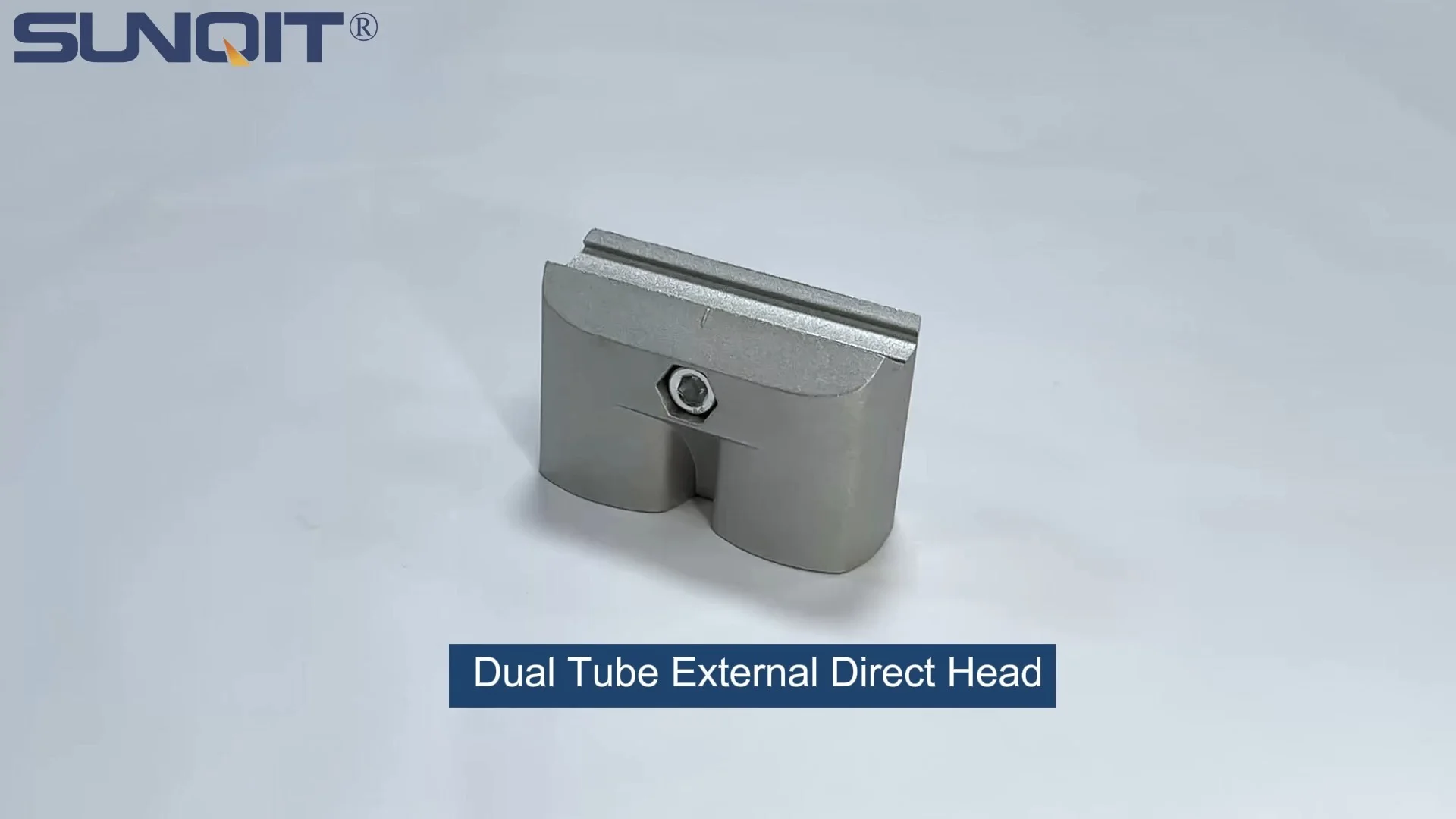
Walk into any modern manufacturing facility, and you'll notice a common thread: efficiency isn't just a goal—it's the lifeblood of the operation. From the way materials glide across roller tracks to the stability of workbenches where precision matters most, every component plays a role in keeping the workflow smooth. Yet, some of the most critical parts are the ones you might overlook at first glance. Take, for example, the duplex aluminum pipe joint. It's not flashy, but without it, the flexible, modular structures that power lean systems—think workbenches, material racks, and turnover trolleys—wouldn't hold together. In this article, we'll pull back the curtain on this unsung hero, exploring what it is, how it's built, and why it's become indispensable in today's fast-paced production environments.
What Is a Duplex Aluminum Pipe Joint?
At its core, a duplex aluminum pipe joint is a specialized connector designed to link aluminum pipes (often part of aluminum lean pipe systems) into sturdy, customizable structures. The term "duplex" hints at its dual nature: it balances strength with flexibility, making it ideal for both fixed and semi-adjustable setups. Unlike rigid steel joints that require welding or complex tools, or plastic connectors that lack durability, duplex aluminum pipe joints are engineered to offer the best of both worlds—lightweight yet robust, easy to assemble yet reliable under pressure.
Imagine a small electronics manufacturer that needs to reconfigure its assembly line every few months to accommodate new product designs. With traditional steel frames, this would mean hiring welders, purchasing new materials, and losing valuable production time. But with aluminum lean pipe and duplex joints, the team can disassemble, adjust, and rebuild the line in hours, not days. That's the power of the duplex aluminum pipe joint: it turns static workspaces into dynamic, adaptable ecosystems that grow with your business.
But it's not just about flexibility. These joints are also built to last. Made from high-grade aluminum alloys (often 6061-T6, known for its strength and corrosion resistance), they stand up to the daily wear and tear of factory life—spills, impacts, and constant use. And because aluminum is naturally resistant to rust, they're a smart choice for environments where moisture or chemicals are present, from food processing plants to automotive workshops.
The Anatomy of a Duplex Aluminum Pipe Joint: Structure Breakdown
To truly appreciate how a duplex aluminum pipe joint works, let's take a closer look at its structure. While designs can vary slightly between manufacturers, most duplex joints share a few key components that make them tick. Think of it as a puzzle where each piece has a specific job, working together to create a secure, functional connection.
1. The Outer Body: Durability Meets Design
The outer body is the "shell" of the joint, typically crafted from a single piece of extruded aluminum. This process—using aluminum extrusion profile techniques—ensures uniformity and strength, with no weak points from seams or welds. The body is often cylindrical or hexagonal, with precision-machined ports (holes) where the aluminum pipes insert. These ports are sized to fit standard aluminum lean pipe diameters (common sizes include 28mm or 30mm, though custom options exist), creating a snug, vibration-resistant fit.
Many duplex joints also feature a matte or anodized finish. Anodizing isn't just for looks—it's a protective layer that hardens the aluminum surface, making it scratch-resistant and even more corrosion-proof. For workers who handle the joints regularly, this means less time spent on maintenance and more time focused on the task at hand.
2. Internal Locking Mechanism: The "Duplex" Secret
Here's where the "duplex" magic happens: the internal locking mechanism. Unlike simple slip-on connectors, duplex joints use a dual-action system to secure pipes. Most designs include a combination of a threaded bolt and a cam lever, or a spring-loaded pin and a rotating collar. When you insert an aluminum pipe into the joint, you tighten the bolt (or flip the lever), which compresses a rubber or metal gasket inside the port. This creates two points of friction: one from the gasket gripping the pipe, and another from the bolt locking the mechanism in place. The result? A connection that's both strong and easy to release when you need to reconfigure.
Some advanced models even include "internal rotary" features, allowing the joint to swivel 360 degrees before locking into place. This is a game-changer for setups like material racks or turnover trolleys, where you might need pipes to angle slightly for optimal material flow. For example, a material rack B (3 row and 3 floor) in a warehouse can use duplex joints with rotary mechanisms to tilt shelves, making it easier for workers to access items without bending or stretching.
3. Reinforcement Ribs: Strength Where It Counts
Ever noticed how a bicycle frame has extra tubing at the joints? That's to distribute weight and prevent bending. Duplex aluminum pipe joints use a similar principle with reinforcement ribs—small, raised ridges on the outer body that strengthen the connection points. These ribs are strategically placed around the ports and the base of the joint, ensuring that when the structure bears weight (say, a fully loaded workbench with tools and materials), the stress is spread evenly, not concentrated on a single spot.
For a real-world example, consider a heavy-duty workbench in an automotive repair shop. The bench holds engine parts, tools, and a vice, totaling hundreds of pounds. Without reinforcement ribs, the joints might warp or crack under the load. But with ribs, the duplex joints distribute that weight across the entire frame, keeping the bench stable and safe for years.
4. Compatibility Features: Playing Well With Others
A great duplex aluminum pipe joint doesn't work in isolation—it's part of a larger ecosystem of aluminum pipe accessories. That's why most joints are designed to pair seamlessly with other components, from caster wheels for mobile trolleys to roller track guide rails for material flow systems. For instance, the joint might have pre-drilled holes or slots that align with aluminum profile accessories like brackets or clips, making it easy to add shelves, hooks, or tool holders without extra hardware.
Take the plastic roller track guide rail (yellow or grey, depending on your preference). These rails are often mounted to aluminum frames using brackets that attach directly to duplex joints. The joint's standardized design ensures a perfect fit, so you don't have to worry about mismatched parts or wobbly rails. It's this compatibility that makes aluminum lean pipe systems so versatile—you're not just buying a joint; you're investing in a toolkit for endless possibilities.

How It Works: The Working Principle of Duplex Aluminum Pipe Joints
Now that we know what a duplex aluminum pipe joint is made of, let's dive into how it actually works. At its simplest, the working principle is about creating a secure, reversible connection between two or more aluminum pipes. But the details—how it achieves that connection, and why it's more effective than other options—are where the innovation lies.
Step 1: Insertion & Alignment
The process starts with inserting the ends of two aluminum pipes into the joint's ports. Most joints are designed for a "press-fit" initial connection—meaning the pipe slides in with minimal effort but stays in place until locked. This is thanks to the precision machining of the ports, which are slightly smaller than the pipe's outer diameter (a tolerance of 0.1–0.2mm). This tight fit prevents the pipe from wobbling, even before the locking mechanism is engaged.
Alignment is key here. Many duplex joints have visual indicators—like etched lines or colored markers—to help users line up the pipes at the desired angle (90 degrees, 45 degrees, etc.). For example, if you're building a square workbench, the joint might have a small arrow that points to a corresponding mark on the pipe, ensuring the corners are perfectly right-angled. This reduces guesswork and ensures consistency across the entire structure.
Step 2: Locking In Place
Once the pipes are aligned, it's time to lock the joint. As mentioned earlier, most duplex joints use a dual-action locking system. Let's take a common design: the cam lever and bolt combination. The user tightens a bolt (usually with a hex key or even just a hand twist, depending on the model), which pulls a cam inside the joint downward. The cam, in turn, presses a rubber O-ring or metal clamp against the pipe's outer surface, creating friction. At the same time, the bolt itself applies axial pressure, compressing the joint around the pipe.
The result? A connection that can withstand both vertical loads (like the weight of a material rack stacked with boxes) and lateral forces (like a worker leaning against a workbench). Tests show that a well-locked duplex joint can hold up to 500kg of static weight per connection—more than enough for most industrial applications.
Step 3: Adjustment & Disassembly (When Needed)
One of the biggest advantages of duplex aluminum pipe joints is their reversibility. Unlike welded steel joints, which are permanent, or glued plastic joints, which break when disassembled, duplex joints can be adjusted or taken apart without damage. To release the lock, simply loosen the bolt or flip the cam lever. The O-ring or clamp relaxes, and the pipe slides out smoothly. This makes it easy to:
- Reconfigure structures: Move a workbench from one side of the factory to another, or adjust the height of a material rack to fit taller boxes.
- replace parts: If a pipe gets bent or a joint wears out, swap it out in minutes without replacing the entire frame.
- Scale up or down: Add extra shelves to a rack during peak season, then remove them when demand slows.
This flexibility is a cornerstone of lean manufacturing principles—minimizing waste (in this case, wasted time and materials) and maximizing efficiency. It's why so many lean system suppliers recommend duplex aluminum pipe joints as the backbone of their setups.

Why Duplex Aluminum Pipe Joints Stand Out: Comparing the Options
To truly understand the value of duplex aluminum pipe joints, it helps to see how they stack up against other common connectors. Let's compare them to three alternatives: standard steel joints, plastic connectors, and single-action aluminum joints. The table below breaks down key factors like cost, durability, ease of use, and compatibility.
| Feature | Duplex Aluminum Pipe Joint | Standard Steel Joint | Plastic Connector | Single-Action Aluminum Joint |
|---|---|---|---|---|
| Material | Aluminum alloy (6061-T6) | Mild steel | ABS or nylon | Basic aluminum |
| Weight (per unit) | 150–200g | 400–500g | 50–80g | 100–130g |
| Max Load Capacity | 300–500kg (static) | 600–800kg (static) | 50–100kg (static) | 150–250kg (static) |
| Assembly Time | 1–2 minutes (no tools needed for basic setups) | 10–15 minutes (requires welding or bolts) | 30 seconds–1 minute (snap-on) | 2–3 minutes (single locking mechanism) |
| Corrosion Resistance | High (anodized finish) | Low (prone to rust without coating) | High (but prone to UV damage) | Medium (no specialized finish) |
| Reusability | Excellent (can be disassembled/reused 50+ times) | Poor (welded joints are permanent) | Fair (locks wear out after 10–15 uses) | Good (20–30 uses before wear) |
| Compatibility with Aluminum Lean Pipe | Excellent (designed for aluminum pipes and accessories) | Poor (requires adapters) | Good (but limited to lightweight pipes) | Good (but less secure for heavy loads) |
| Cost (per unit) | Mid-range ($5–$10) | High ($10–$15, plus welding costs) | Low ($1–$3) | Mid-low ($3–$6) |
As the table shows, duplex aluminum pipe joints strike a balance that's hard to beat. They're not the cheapest option (that's plastic), but they're far more durable. They're not the strongest (that's steel), but they're lightweight and easy to work with. And when you factor in reusability and compatibility with aluminum pipe accessories, they often end up being the most cost-effective choice over time.
Take the example of a furniture manufacturer that needs 50 joints to build material racks. Plastic connectors might cost $150 upfront, but they'll need replacing every 6 months, adding up to $300 a year. Steel joints would cost $750 plus welding fees, and if the racks need to change, they're useless. Duplex aluminum joints, at $500 upfront, would last 5+ years and can be reused when the factory expands. Over time, they save money, time, and headaches.

Real-World Applications: Where Duplex Aluminum Pipe Joints Shine
Duplex aluminum pipe joints aren't just theoretical—they're hard at work in factories, warehouses, and workshops around the world. Let's explore a few common applications where they make a tangible difference.
1. Workbenches: The Heart of the Workshop
Workbenches are where the magic happens—whether it's assembling circuit boards, packing orders, or repairing machinery. A good workbench needs to be sturdy (to support tools and materials), customizable (to fit the task), and ergonomic (to keep workers comfortable). Duplex aluminum pipe joints excel here, allowing you to build workbenches of any size or shape, with add-ons like shelves, tool hooks, and even integrated roller tracks for easy material movement.
Consider the "Workbench E (single deck-without caster)" from many lean system suppliers. This basic model uses duplex joints to connect aluminum pipes into a frame, with a plywood or aluminum honeycomb panel top. Need extra storage? Add a lower shelf using a few more joints and pipes. Want to mount a monitor arm? Drill a hole in the top and secure it with a pipe clamp attached to the joint. It's a blank canvas, and the duplex joints are the paintbrushes that let you create exactly what you need.
2. Material Racks: Organizing Chaos
Material racks—like the "Material Rack B (3 row and 3 floor)"—are essential for keeping warehouses and factories organized. They store everything from raw materials to finished products, and they need to be both accessible and space-efficient. Duplex aluminum pipe joints make it easy to build racks with adjustable shelf heights, so you can fit tall boxes on the bottom and small parts bins on top.
But it's not just about storage—it's about flow. Many material racks use swivel roller balls (1 inch or 0.5 inch) or roller tracks to let materials glide from one shelf to another. These components attach directly to the aluminum frame via brackets that connect to duplex joints. The result? A rack that doesn't just hold materials but helps move them, reducing the time workers spend lifting and carrying.
3. Turnover Trolleys: Moving Materials with Ease
Turnover trolleys are the workhorses of material handling, shuttling goods from storage to assembly lines and back. They need to be lightweight (to push easily) yet strong (to carry heavy loads), and their design often needs to match the shape of the items they transport (think car parts, electronic components, or even bakery trays). Duplex aluminum pipe joints are perfect for this, as they let you build custom trolleys with features like side guards, adjustable shelves, and caster wheels (swivel or fixed, depending on your needs).
For example, a bakery might use a trolley with aluminum guide rails and swivel roller balls to transport trays of pastries. The duplex joints ensure the frame is sturdy enough to hold the weight, while the lightweight aluminum keeps the trolley easy to maneuver through tight kitchen aisles. And if the bakery starts making larger cakes, they can quickly adjust the shelf heights using the same joints—no need for a whole new trolley.
Choosing the Right Duplex Aluminum Pipe Joint: What to Look For
Not all duplex aluminum pipe joints are created equal. To get the most out of your investment, there are a few key factors to consider when choosing a supplier or specific model. Let's break them down.
1. Material Quality: Not All Aluminum Is the Same
The best duplex joints are made from high-grade aluminum alloys, like 6061-T6. This alloy has a tensile strength of around 310 MPa (megapascals)—strong enough to hold up under heavy loads without bending. Avoid joints made from "recycled" or low-grade aluminum, which may have impurities that weaken the structure over time. A quick way to check quality? Look for suppliers who specify the alloy and provide material test reports (MTRs) upon request.
2. Finish: Anodized vs. Unfinished
Anodized duplex joints are worth the extra cost. The anodizing process creates a hard, protective layer on the aluminum surface, making it resistant to scratches, corrosion, and even chemicals. Unfinished joints may look similar at first, but they'll start to dull, stain, or pit after a few months in a busy factory. For environments like food processing or marine applications, some suppliers even offer "stainless steel swivel roller balls" or stainless steel-coated joints for extra protection—but for most cases, anodized aluminum is more than sufficient.
3. Compatibility: Check the Pipe Size
Duplex joints are designed to fit specific pipe diameters. The most common size for aluminum lean pipe is 28mm, but some systems use 30mm or even 40mm pipes. Before buying, double-check that the joint's ports match your pipe size. A mismatch can lead to loose connections, wobbling structures, or even safety hazards. Reputable aluminum pipe suppliers will clearly list the compatible pipe sizes for each joint, so don't hesitate to ask for clarification.
4. Locking Mechanism: Cam Lever vs. Bolt-On
Duplex joints come with two main types of locking mechanisms: cam lever (tool-free) and bolt-on (requires a hex key or screwdriver). Cam lever joints are faster to assemble—great for setups that need frequent reconfiguration. Bolt-on joints offer a tighter, more secure lock—better for heavy loads or structures that rarely change. Choose based on your needs: if you're building a permanent workbench, bolt-on might be better. If you're creating a temporary assembly line, cam lever could save time.
5. Supplier Support: More Than Just a Part
Finally, don't underestimate the importance of a reliable supplier. The best aluminum pipe suppliers don't just sell joints—they offer technical support, replacement parts, and even design assistance. If you're unsure how to build a specific structure, a good supplier can provide blueprints or recommend compatible accessories (like roller track placon mounts or caster wheels). They'll also stand behind their products, offering warranties or refunds if a joint fails prematurely.
The Future of Duplex Aluminum Pipe Joints: Innovation in Lean Manufacturing
As manufacturing continues to evolve—with trends like automation, modular production, and sustainability taking center stage—duplex aluminum pipe joints are evolving too. Suppliers are experimenting with new designs, like internal rotary aluminum joints that allow for 360-degree rotation without losing strength, or lightweight yet super-strong models made from aluminum-lithium alloys (even lighter than traditional aluminum). There's also a push for smarter joints—incorporating RFID tags to track inventory or sensors to monitor load levels, alerting workers if a shelf is overloaded.
But even as technology advances, the core appeal of duplex aluminum pipe joints remains the same: they're simple, reliable, and adaptable. In a world where businesses need to pivot quickly, reduce waste, and stay competitive, these unassuming connectors are more than just parts—they're partners in progress. They turn the chaos of manufacturing into order, the static into dynamic, and the impossible into possible.
Final Thoughts: The Quiet Hero of the Factory Floor
The next time you walk through a factory, warehouse, or workshop, take a moment to look at the structures around you. The workbenches where products are born, the racks that keep materials organized, the trolleys that keep things moving—chances are, they're held together by duplex aluminum pipe joints. These small, unassuming components may not get the glory, but they're the backbone of efficient, flexible, and sustainable manufacturing.
Whether you're a small business owner looking to upgrade your workspace or a large manufacturer aiming to streamline operations, investing in quality aluminum lean pipe, aluminum pipe accessories, and duplex joints is a decision that pays dividends. It's not just about building structures—it's about building a better way to work. And in the end, that's what lean manufacturing is all about: finding the right tools, the right systems, and the right partners to help you do more with less.
So here's to the duplex aluminum pipe joint—the quiet hero that keeps our factories moving, our workspaces adapting, and our businesses growing. It may not be the star of the show, but without it, the show simply couldn't go on.