- Company Articles
- Products and Technology
- Product knowledge
- Duplex Aluminum Pipe Joint for 3C Assembly: Precision & Durability

Duplex Aluminum Pipe Joint for 3C Assembly: Precision & Durability
Related Product
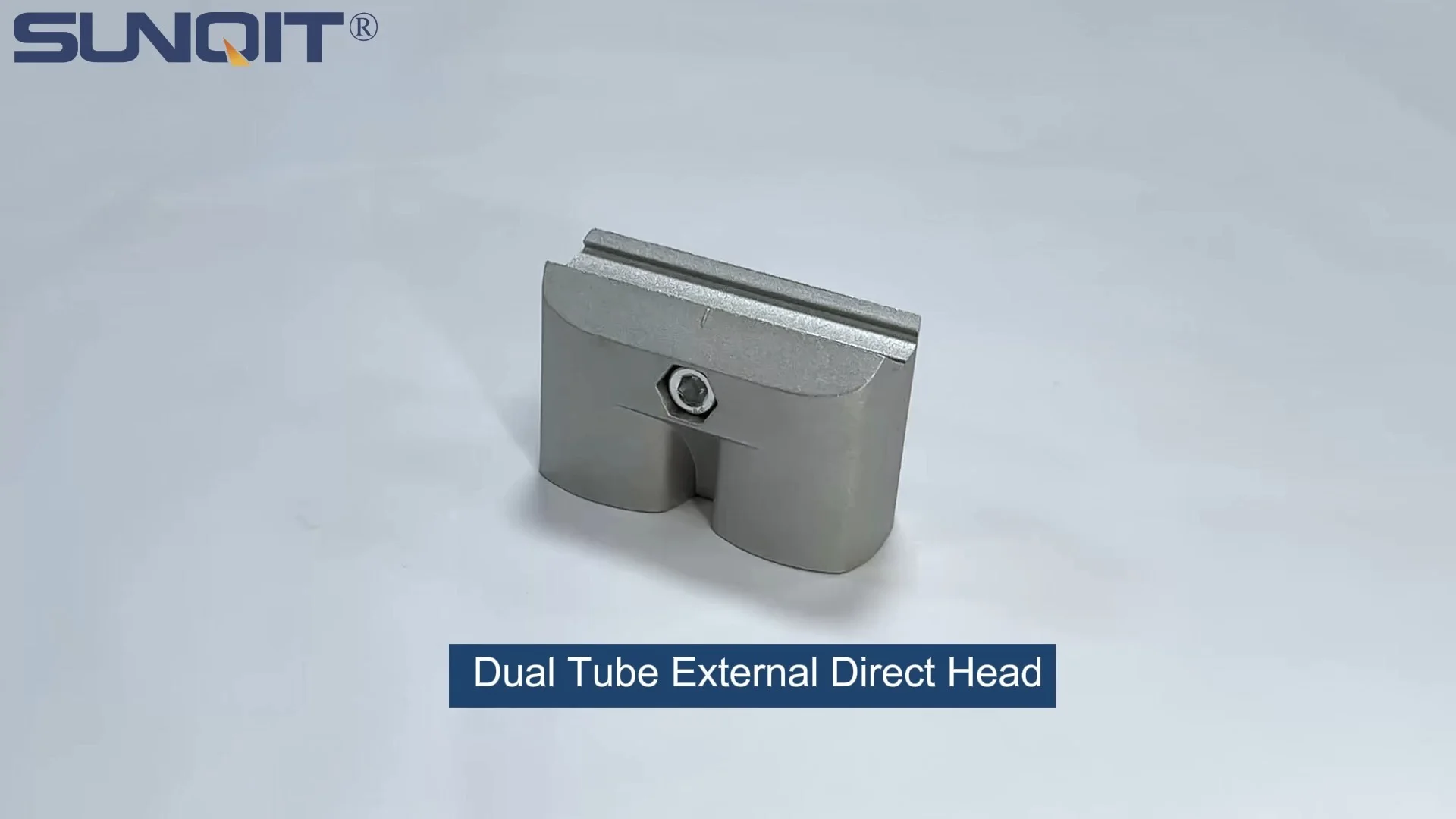
Duplex Aluminum Pipe Joint
Duplex Aluminum pipe joint used for one pcs 28pcs aluminum pipe and one pcs of 28mm duplex pipe connection in straight angle.
The 3C Industry's Race for Adaptable, Precision-Driven Assembly Solutions
Walk into any 3C manufacturing plant—whether it's churning out the latest smartphones, sleek laptops, or high-tech wearables—and you'll immediately sense the urgency. Production lines hum with activity, components zip along conveyors, and workers in anti-static gear handle tiny, delicate parts with pinpoint accuracy. But behind this seamless chaos lies a hidden challenge: the need to balance speed with flexibility. 3C products evolve at a breakneck pace; a new phone model can render last year's assembly setup obsolete in months. Rigid, one-size-fits-all workstations? They're the enemy of progress here.
Add to that the demand for precision. A single misaligned component on a circuit board can mean the difference between a functional device and a costly recall. And let's not forget ESD (Electrostatic Discharge) protection—static electricity is a silent killer of sensitive electronics, making ESD workstations non-negotiable. So, what's the solution? How do manufacturers build assembly lines that are precise enough for micro-components, durable enough for 24/7 operation, and adaptable enough to pivot with product launches?
Enter the unsung hero of modern 3C assembly: the duplex aluminum pipe joint. Paired with aluminum profiles, this unassuming component is quietly revolutionizing how factories design workbenches, flow racks, and ESD workstations. It's not just a "part"—it's the backbone of lean, responsive production systems that keep pace with the 3C industry's relentless innovation.
Duplex Aluminum Pipe Joints: What Are They, and Why Do They Matter?
Let's start with the basics. A duplex aluminum pipe joint is a connecting piece designed to link aluminum profiles—those lightweight, T-slot extrusions that form the skeleton of everything from workbenches to material racks. What makes "duplex" joints special? Unlike single-piece or plastic joints, they feature a dual-locking mechanism that combines a tight mechanical fit with enhanced stability. Think of them as the "double-secure" fasteners of the assembly world: twist, lock, and rest easy knowing your structure won't wobble, shift, or loosen—even under the stress of daily use.
But their magic isn't just in locking strength. These joints are engineered for precision . When you're building a workbench where a technician will solder 0.5mm circuit components, the last thing you need is a surface that tilts or vibrates. Duplex joints ensure aluminum profiles align perfectly, down to fractions of a millimeter. And because they're made from high-grade aluminum alloy, they're lightweight yet surprisingly tough—resistant to corrosion, scratches, and the wear-and-tear of factory life. No more rusted steel joints or brittle plastic connectors that crack after a few reconfigurations.

Precision: Why "Close Enough" Isn't Good Enough in 3C Assembly
Imagine trying to thread a needle while standing on a rocking boat. That's what assembling 3C components feels like without a precise workstation. Microchips, connectors, and sensors are getting smaller every year; some are no larger than a grain of rice. To handle these, workbenches and flow racks must offer rock-solid stability. Even a 1mm misalignment in a roller track can cause components to jam, slowing down production and increasing error rates.
Duplex aluminum pipe joints tackle this head-on. Their design eliminates "play" between connected aluminum profiles. When you lock two profiles together with a duplex joint, there's no wiggle room—no subtle shifting that accumulates over time. This is critical for tasks like automated screwdriving or optical inspection, where even the smallest vibration can throw off measurements. One electronics manufacturer in Shenzhen reported a 23% reduction in assembly errors after switching to duplex joint-based workbenches, citing "consistent alignment" as the key factor.
And let's talk about repeatability. When you need to replicate a workstation design across 50 production lines, precision ensures every setup is identical. Traditional welded steel frames? They're prone to warping during fabrication, leading to "close but not quite" duplicates. Duplex joints, paired with standardized aluminum profiles, make consistency a given. Just measure, cut, connect, and you're done—no guesswork, no rework.

Durability: Built to Outlast the Grind of 24/7 Production
3C factories don't sleep. Many run three shifts, seven days a week, to meet global demand. That means assembly equipment is under constant stress: workbenches heavy tooling, flow racks bear the weight of component bins, and turnover trolleys get pushed, pulled, and parked dozens of times a day. A flimsy joint here or there? It won't just fail—it'll fail spectacularly, bringing a line to a halt and costing thousands in downtime.
Aluminum's natural strength-to-weight ratio is a starting point, but the duplex joint's design takes durability further. The dual-locking mechanism distributes stress evenly across the connection, preventing weak points. Unlike plastic joints, which degrade under UV light or chemical exposure (common in factories using cleaning agents), aluminum duplex joints resist corrosion and maintain their integrity for years. One supplier I spoke with mentioned a client still using their duplex joints after eight years of daily use—no cracks, no looseness, just consistent performance.
Even in harsh environments, like ESD workstations that require frequent cleaning with anti-static solutions, these joints hold up. Their smooth, anodized finish repels liquids and resists scratching, ensuring they don't become breeding grounds for dust or bacteria—critical in cleanroom settings.

From Workbenches to Flow Racks: Real-World Applications in 3C Assembly
Duplex aluminum pipe joints aren't just theoretical—they're transforming real assembly lines. Let's dive into a few key applications where they shine:
1. ESD Workstations: Protecting Sensitive Electronics
ESD workstations are the first line of defense against static damage. They require conductive surfaces, grounding straps, and stable frames that don't generate static themselves. Aluminum profiles are naturally conductive, making them ideal for ESD setups, but the joints matter too. Plastic joints can accumulate static; steel joints are heavy and prone to rust. Duplex aluminum joints? They're non-corrosive, conductive, and lightweight—perfect for building ESD workstations that are both safe and easy to reconfigure. Add an aluminum honeycomb panel top for a flat, static-dissipative surface, and you've got a workstation ready for handling circuit boards and microchips.
2. Flow Racks: Keeping Components Moving Smoothly
Flow racks are the arteries of 3C assembly, feeding components to workers in a "first in, first out" order. Their roller tracks must slope at a precise angle to ensure items glide without jamming or sliding too fast. Duplex joints make building these racks a breeze. Need to adjust the angle of a roller track? Loosen the joints, reposition, and relock—no welding, no drilling. And because the joints maintain alignment, the roller tracks stay level, preventing components from veering off course. A laptop manufacturer in Chengdu replaced its old steel flow racks with aluminum profile/duplex joint setups and saw a 35% reduction in component jams, along with faster changeovers when switching between laptop models.
3. Modular Workbenches: Adapting to New Tasks Overnight
Remember the "Workbench E (single deck-without caster)" from the keyword list? It's a perfect example of how duplex joints enable modularity. A basic workbench can start as a simple flat surface, but with duplex joints, you can add shelves, tool holders, overhead lighting, or even integrate a small conveyor—all without altering the core frame. When a new product requires a different layout, just disassemble the old setup and rebuild. One factory manager joked, "We used to need a welder and a day to reconfigure a bench; now, two workers do it in an hour with hex keys."
Why Duplex Aluminum Pipe Joints Beat Traditional Alternatives
Still on the fence? Let's stack duplex aluminum pipe joints against common alternatives. The table below compares key factors that matter in 3C assembly:
| Feature | Duplex Aluminum Pipe Joints | Plastic Snap-Fit Joints | Welded Steel Frames |
|---|---|---|---|
| Precision Alignment | ±0.1mm tolerance; no play between profiles | ±1mm tolerance; prone to loosening over time | ±0.5mm but warps during welding |
| Durability | 8+ years of heavy use; corrosion-resistant | 1–2 years; degrades in harsh environments | 10+ years but heavy and hard to modify |
| Reconfigurability | Tool-free disassembly; reusable | Often break when disassembled; single-use | Permanent; requires cutting/welding to modify |
| Weight | Lightweight (aluminum); easy to move | Light but flimsy | Heavy; requires machinery to reposition |
| ESD Compatibility | Conductive; suitable for ESD workstations | Insulative; can generate static | Conductive but prone to rust (which disrupts grounding) |
The verdict? For 3C manufacturers prioritizing precision, durability, and adaptability, duplex aluminum pipe joints are the clear winner. They bridge the gap between strength and flexibility, offering the best of both worlds.
The Future of 3C Assembly: Lean, Lightweight, and Duplex-Driven
As 3C products shrink in size and grow in complexity, the demand for smarter assembly solutions will only intensify. Factories are already moving toward "lights-out" automation, where robots work alongside humans, and AI optimizes production flows. In this environment, rigid systems will be left behind. What's needed are modular, connected setups that can evolve with technology—and that's where duplex aluminum pipe joints and aluminum profiles truly shine.
Think of it as building with digital-age Legos: strong enough to support heavy machinery, flexible enough to rebuild on the fly, and precise enough for the smallest components. Whether it's a custom ESD workstation for semiconductor testing or a flow rack tailored for smartwatch components, duplex joints make it possible to design, build, and adapt—without sacrificing performance.
So, the next time you unbox a new gadget, take a moment to appreciate the unseen heroes behind it. The duplex aluminum pipe joints may not be as glamorous as the device itself, but they're the reason it rolled off the production line quickly, reliably, and ready to connect the world.