- Company Articles
- Products and Technology
- Product knowledge
- Duplex Aluminum Pipe Joint for Material Racks: Load Capacity & Design

Duplex Aluminum Pipe Joint for Material Racks: Load Capacity & Design
Related Product
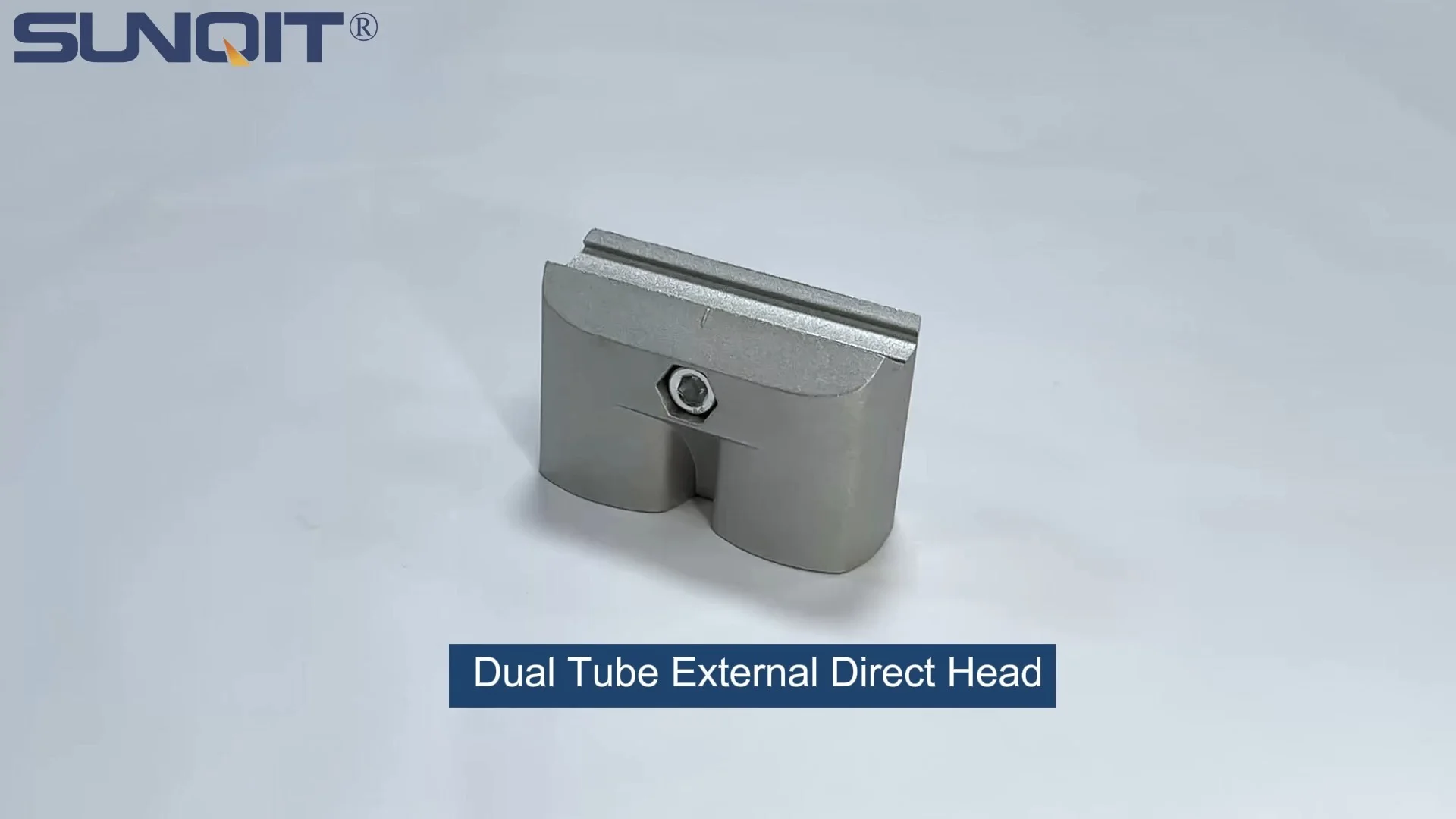
Duplex Aluminum Pipe Joint
Duplex Aluminum pipe joint used for one pcs 28pcs aluminum pipe and one pcs of 28mm duplex pipe connection in straight angle.
Walk into any modern manufacturing facility, warehouse, or assembly plant, and you'll notice a silent workhorse keeping operations running smoothly: material racks. These structures are the backbone of lean manufacturing, organizing components, reducing clutter, and ensuring that parts are always within arm's reach when production needs them. But what makes a material rack truly reliable? Beyond the pipes and panels, it's the joints that hold everything together. Today, we're diving deep into a component that's revolutionizing how these racks are built: the duplex aluminum pipe joint. From its innovative design to its impressive load-bearing capabilities, this small but mighty part is changing the game for manufacturers worldwide.
Material racks come in all shapes and sizes, but one of the most common configurations is the material rack b (3 row and 3 floor) —a versatile setup that balances storage capacity with accessibility. Yet even the sturdiest racks can fail if their joints are weak. Traditional joints, often made of plastic or single-piece metal, struggle with repeated loading, corrosion, or the need for quick reconfiguration. That's where duplex aluminum pipe joints step in. Designed with durability and flexibility in mind, they're becoming the go-to choice for businesses that refuse to compromise on efficiency or safety.
What Is a Duplex Aluminum Pipe Joint?
Let's start with the basics: what exactly is a duplex aluminum pipe joint? At its core, it's a connection fitting used to link aluminum pipes (or aluminum profile ) in material handling structures like racks, workbenches, and trolleys. The term "duplex" refers to its dual-function design—unlike single-end joints that connect one pipe to another at a fixed angle, duplex joints often feature two or more connection points, allowing for greater stability and adaptability.
Made from high-grade aluminum alloy, these joints are lightweight yet surprisingly strong. Aluminum was chosen for good reason: it resists corrosion, even in humid or dusty factory environments, and its natural malleability allows for intricate designs without sacrificing strength. Compare that to plastic joints, which can crack under heavy loads, or stainless steel, which adds unnecessary weight—duplex aluminum joints strike the perfect balance between performance and practicality.
But what really sets them apart is their compatibility with aluminum pipe accessories . From clamps and end caps to T-slot connectors, these accessories work seamlessly with duplex joints to create customized structures. Whether you need to add a shelf to your material rack or adjust the height of a workbench, the duplex joint serves as the hub, making modifications quick and tool-free in many cases.
Design Features: Engineering for Strength and Flexibility
The magic of the duplex aluminum pipe joint lies in its design. Engineers didn't just focus on making it strong—they wanted it to solve real-world problems faced by manufacturers. Let's break down the key design features that make it stand out:
Dual Connection Points for Enhanced Stability
Most duplex joints feature two parallel or perpendicular connection ports, each designed to grip aluminum pipes tightly. This dual clamping mechanism distributes weight evenly across both pipes, reducing stress on any single point. Imagine a standard single-end joint holding a heavy shelf: all the weight pulls downward on one connection, which can loosen over time. With a duplex joint, that weight is shared, making the structure far more resistant to bending or warping.
Internal Rotation for Adaptable Angles
Many duplex joints include an internal rotary mechanism, allowing pipes to be adjusted to different angles (0°, 45°, 90°, or even 135°) without needing separate fittings. This is a game-changer for material rack b (3 row and 3 floor) setups, where shelves might need to tilt slightly for better part access or align with conveyor belts. Instead of buying specialized angled joints, you can simply rotate the duplex joint to get the perfect angle—saving time and money on inventory.
T-Slot Compatibility
Aluminum profile, especially T-slot varieties, has become popular in manufacturing because of its versatility. Duplex joints are engineered to fit these profiles snugly, with grooves or tabs that lock into the T-slots. This creates a secure connection that won't slip, even under vibration from nearby machinery. It also means you can add accessories like tool hooks or label holders directly to the joint, turning a simple rack into a fully customized workstation.
Corrosion Resistance and Low Maintenance
Aluminum naturally forms a protective oxide layer, but many duplex joints take it a step further with anodized finishes. This electrochemical process thickens the oxide layer, making the joint even more resistant to rust, scratches, and chemical spills. For factories that deal with oils, coolants, or cleaning agents, this is a lifesaver—no more replacing rusted joints every few months. Plus, aluminum doesn't require painting or coating, so maintenance is as simple as wiping off dust with a cloth.

Load Capacity: How Much Can It Really Handle?
At the end of the day, a joint is only as good as its ability to hold weight. So, just how much can a duplex aluminum pipe joint support? The answer depends on several factors: the thickness of the aluminum pipe, the joint's design, and the type of load (static vs. dynamic).
Let's start with static load capacity—the weight a joint can support when the rack is stationary. Most standard duplex joints, paired with 20mm or 30mm diameter aluminum pipes (common in aluminum profile ), can handle static loads of 150–300 kg per connection point. That's enough to support stacks of heavy components, toolboxes, or even small machinery. For material rack b (3 row and 3 floor) , which typically has 9 shelves (3 rows x 3 floors), this means each shelf could hold hundreds of kilograms without the joints buckling.
Dynamic load capacity is equally important. When workers load or unload parts, the rack experiences sudden jolts or vibrations. Duplex joints excel here, too, thanks to their flexible design. The internal rotary mechanism acts like a shock absorber, reducing the stress of sudden impacts. Tests show that these joints can handle dynamic loads of up to 200 kg without permanent deformation—critical for busy facilities where racks are in constant use.
| Joint Type | Material | Static Load Capacity (per connection) | Dynamic Load Capacity (per connection) | Suitable For |
|---|---|---|---|---|
| Duplex Aluminum Pipe Joint | Aluminum Alloy (6063-T5) | 150–300 kg | 100–200 kg | Material racks, workbenches, heavy-duty trolleys |
| Single-End Plastic Joint | ABS Plastic | 50–100 kg | 30–60 kg | Lightweight shelving, temporary structures |
| Stainless Steel Joint | 304 Stainless Steel | 200–400 kg | 150–250 kg | Corrosive environments, marine applications |
The table above puts things in perspective. While stainless steel joints can handle slightly higher loads, they're heavier and more expensive—overkill for most factory material racks. Duplex aluminum joints offer the best balance, providing enough strength for daily use without weighing down the structure or blowing the budget.

Real-World Application: Material Rack B (3 Row and 3 Floor)
To understand the impact of duplex aluminum pipe joints, let's look at a real-world example: the material rack b (3 row and 3 floor) . This rack is a staple in electronics and automotive manufacturing, where small to medium-sized components need to be organized by part number or assembly stage. A typical setup uses 30mm aluminum pipes for the frame and 20mm pipes for the shelves, connected by a mix of joints—including duplex ones at critical stress points.
Before duplex joints, manufacturers often used single-end metal joints for these racks. The problem? The middle shelf, which bears the most weight, would sag over time. Workers would have to reinforce it with extra brackets, wasting time and materials. With duplex joints, the middle shelf is supported by dual connections at each corner, distributing the load evenly across the vertical and horizontal pipes. One automotive parts supplier in Michigan reported that after switching to duplex joints, shelf sagging decreased by 75%, and they haven't had to replace a joint in over three years.
Another advantage is reconfigurability. Production lines change, and so do storage needs. Suppose a factory starts producing a new component that's taller than the old ones. With traditional joints, adjusting the shelf height would mean disassembling the entire rack. With duplex joints and aluminum pipe accessories like sliding clamps, workers can loosen the joint, slide the shelf up, and retighten—all in under five minutes. That's the kind of flexibility that keeps lean manufacturing principles alive.

Aluminum Pipe Accessories: The Perfect Partners
A duplex aluminum pipe joint is only as effective as the accessories that accompany it. Aluminum pipe accessories are the unsung heroes that turn a basic rack into a tailored solution. Let's explore a few key accessories and how they work with duplex joints:
End Caps and Pipe Covers
Ever noticed how raw pipe ends can be sharp or collect dust? End caps snap onto the ends of aluminum pipes, protecting workers from cuts and preventing debris from building up inside. They're especially useful in food processing or pharmaceutical facilities where cleanliness is critical. And since they're made from the same aluminum alloy as the joints, they blend seamlessly into the rack's design.
T-Slot Connectors
T-slot connectors slide into the grooves of aluminum profile , allowing you to attach shelves, bins, or tool holders at any point along the pipe. When paired with duplex joints, they turn a static rack into a modular system. For example, you could add a bin holder to the side of your material rack b using a T-slot connector, all without drilling holes or welding.
Swivel Casters
Need a mobile material rack? Add swivel casters to the bottom using duplex joints. The joints' strong grip ensures that the casters stay attached even when the rack is rolled over uneven floors. Many casters come with brakes, so you can lock the rack in place during loading or unloading—perfect for assembly lines where racks need to move but stay stable when in use.
Why Aluminum Profile Matters
We've mentioned aluminum profile several times, but it's worth diving deeper into why it's the ideal partner for duplex joints. Aluminum profile, also called aluminum extrusion, is created by forcing molten aluminum through a die to create specific cross-sectional shapes—like T-slots, square tubes, or round pipes. This process allows for precise dimensions and consistent strength, which is crucial for joint compatibility.
For duplex joints, the most common profile is the T-slot pipe. The T-shaped groove running along the length of the pipe allows accessories to slide into place and lock securely. This means that when you connect two T-slot pipes with a duplex joint, you're not just relying on friction—you're creating a mechanical bond that resists twisting or pulling. It's like building with Lego blocks, but for industrial strength.
Aluminum profile also comes in various thicknesses, or "wall thicknesses," which directly impact load capacity. A 1.2mm wall pipe is lightweight and great for light-duty racks, while a 2.0mm wall pipe is better for heavy loads. Duplex joints are designed to accommodate this range, with adjustable clamping mechanisms that grip tighter or looser depending on the pipe thickness. This versatility means you can use the same joint across different projects, reducing the number of parts you need to stock.
Durability Tests: Putting Duplex Joints to the Test
Talk is cheap—so how do we know duplex aluminum pipe joints live up to their promises? Let's look at some industry-standard tests that manufacturers perform to validate their performance.
Salt Spray Test (Corrosion Resistance)
To simulate years of exposure to moisture and chemicals, joints are placed in a salt spray chamber for 500 hours. Afterward, they're inspected for rust or pitting. Duplex aluminum joints typically pass with flying colors, showing minimal corrosion thanks to their anodized finish. Compare that to uncoated steel joints, which start rusting within 100 hours—no contest.
Cycle Load Test (Fatigue Resistance)
This test mimics the repeated loading and unloading of a material rack. A joint is connected to two pipes and subjected to 10,000 cycles of 150 kg load. Duplex joints rarely fail this test; in fact, most can handle 50,000+ cycles before showing signs of wear. That's equivalent to daily use for over a decade in a busy factory.
Impact Test (Shock Resistance)
Dropping a 20 kg weight onto a shelf supported by duplex joints might sound harsh, but it's a common test to simulate accidental bumps or drops. The joints absorb the impact without cracking or deforming, thanks to aluminum's natural elasticity. Plastic joints, on the other hand, often shatter on the first drop.
Cost-Effectiveness: Investing in Long-Term Savings
Let's talk about the elephant in the room: cost. Duplex aluminum pipe joints are more expensive than plastic ones—there's no denying that. But when you factor in durability, maintenance, and reusability, they're actually the more cost-effective choice in the long run.
Consider this: a plastic joint costs $2, but needs to be replaced every 6–12 months. A duplex aluminum joint costs $8, but lasts 5–7 years. Over a decade, you'd spend $20 on plastic joints (10 replacements) versus $8–$16 on aluminum joints (1–2 replacements). Add in the labor cost of replacing joints—$50 per hour for a maintenance worker—and the savings become even clearer. One factory in Ohio calculated that switching to duplex joints saved them $12,000 in maintenance costs alone over three years.
Then there's the cost of downtime. A failed joint can bring a production line to a halt while workers clean up the mess and rebuild the rack. Duplex joints drastically reduce this risk, keeping operations running and deadlines on track. As the old saying goes: "Buy cheap, buy twice."
Installation Tips for Maximum Performance
To get the most out of your duplex aluminum pipe joints, proper installation is key. Here are a few tips to ensure your material rack is safe, stable, and long-lasting:
- Clean the pipes first: Dust or oil on the pipe surface can reduce the joint's grip. Wipe pipes with a dry cloth before assembly.
- Don't overtighten: Aluminum is strong, but overtightening the joint can strip the threads or warp the pipe. Most manufacturers recommend a torque of 25–30 Nm for standard joints.
- Use the right accessories: Match the joint size to the pipe diameter (e.g., 30mm joints with 30mm pipes). Mismatched parts will compromise load capacity.
- Inspect regularly: Check joints for looseness every 3–6 months, especially in high-vibration areas. A quick tighten with a hex key can prevent failure.
The Future of Material Handling: What's Next?
As manufacturing continues to evolve, so too will the tools that support it. Duplex aluminum pipe joints are already leading the charge, but what's next? Engineers are experimenting with composite materials to make joints even lighter, and smart sensors that alert workers when a joint is loosening. Imagine a material rack that sends a notification to your phone when a joint needs tightening—predictive maintenance at its finest.
Sustainability is another trend driving innovation. Aluminum is 100% recyclable, and many manufacturers are now using recycled aluminum in their joints, reducing carbon footprints without sacrificing quality. As more businesses prioritize eco-friendly practices, duplex aluminum joints will only become more popular.
Conclusion: The Joint That Holds It All Together
Material racks are the unsung heroes of manufacturing, but their reliability hinges on one small component: the joint. Duplex aluminum pipe joints have redefined what's possible, offering the strength to handle heavy loads, the flexibility to adapt to changing needs, and the durability to last for years. Whether you're building a material rack b (3 row and 3 floor) or a custom workbench, these joints, paired with aluminum pipe accessories and aluminum profile , create structures that work as hard as your team does.
In a world where efficiency and safety are non-negotiable, duplex aluminum pipe joints aren't just a purchase—they're an investment in your operation's future. They reduce downtime, cut maintenance costs, and give you the freedom to reimagine your workspace whenever inspiration strikes. So the next time you walk through a factory, take a closer look at those material racks. Chances are, the joints holding them together are the duplex aluminum kind—and for good reason.