- Company Articles
- Products and Technology
- Product knowledge
- Duplex Aluminum Pipe Joint in 3C Manufacturing: Flexibility & Adaptability

Duplex Aluminum Pipe Joint in 3C Manufacturing: Flexibility & Adaptability
Related Product
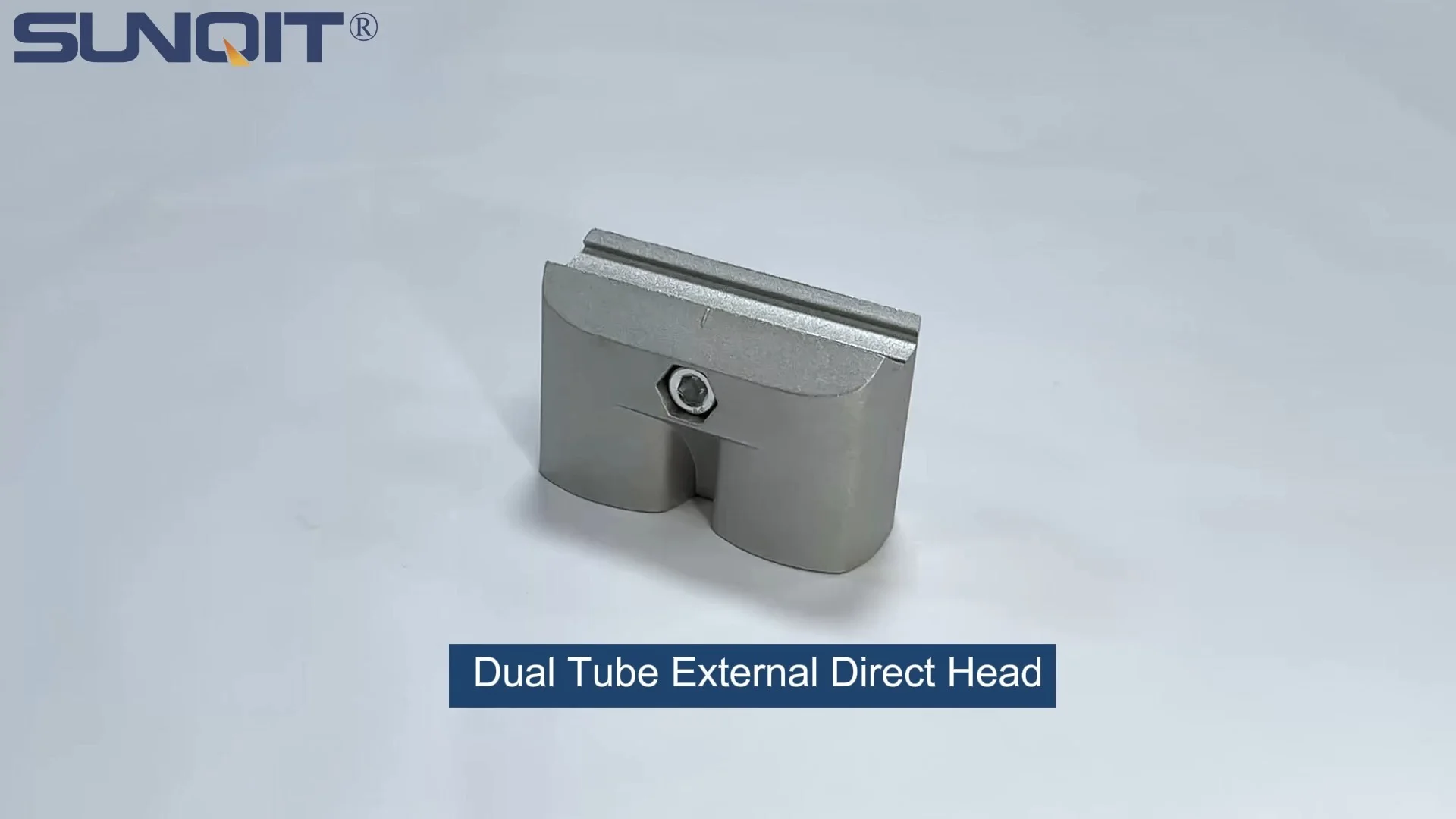
Duplex Aluminum Pipe Joint
Duplex Aluminum pipe joint used for one pcs 28pcs aluminum pipe and one pcs of 28mm duplex pipe connection in straight angle.
The Fast-Paced World of 3C Manufacturing: A Call for Flexible Solutions
Walk into any modern 3C manufacturing facility—where computers, communications devices, and consumer electronics come to life—and you'll immediately sense the energy. Assembly lines hum with precision, workers move in synchronized rhythms, and every corner of the floor seems optimized for speed. But beneath this efficiency lies a hidden challenge: the industry's relentless pace of innovation. New smartphone models launch yearly, smartwatch designs evolve quarterly, and each iteration demands fresh production setups, tighter tolerances, and the ability to reconfigure workspaces overnight.
For manufacturers, this constant change is a double-edged sword. On one hand, it's the lifeblood of staying competitive; on the other, it's a logistical nightmare. Traditional production systems—think fixed steel workbenches, welded material racks, or custom-machined fixtures—weren't built for agility. Reconfiguring a single assembly station could take days, involving welding torches, heavy tools, and teams of technicians. Downtime eats into profits, and rigid setups struggle to keep up with the need to scale production or pivot to new product lines.
This is where modular solutions step in, and at the heart of this revolution lies a seemingly unassuming component: the duplex aluminum pipe joint . Paired with aluminum lean pipe and a suite of aluminum profile accessories , this unassuming connector is redefining how 3C manufacturers build, adapt, and scale their production lines. It's not just about saving time—it's about creating systems that can evolve as quickly as the products they help build.
For manufacturers, this constant change is a double-edged sword. On one hand, it's the lifeblood of staying competitive; on the other, it's a logistical nightmare. Traditional production systems—think fixed steel workbenches, welded material racks, or custom-machined fixtures—weren't built for agility. Reconfiguring a single assembly station could take days, involving welding torches, heavy tools, and teams of technicians. Downtime eats into profits, and rigid setups struggle to keep up with the need to scale production or pivot to new product lines.
This is where modular solutions step in, and at the heart of this revolution lies a seemingly unassuming component: the duplex aluminum pipe joint . Paired with aluminum lean pipe and a suite of aluminum profile accessories , this unassuming connector is redefining how 3C manufacturers build, adapt, and scale their production lines. It's not just about saving time—it's about creating systems that can evolve as quickly as the products they help build.
What Is a Duplex Aluminum Pipe Joint? Breaking Down the Basics
Let's start with the basics: What makes a duplex aluminum pipe joint different from the steel or plastic connectors of the past? At its core, it's a modular fastening system designed to connect aluminum pipes (or profiles) quickly, securely, and with minimal tools. The "duplex" in its name hints at its dual functionality—many models combine fixed and rotational capabilities, allowing for both rigid structures and flexible, adjustable components in a single joint.
Crafted from high-grade aluminum alloy, these joints are lightweight yet surprisingly strong. Unlike heavy steel connectors that require bolts, nuts, and wrenches to assemble, duplex aluminum joints often use a simple twist-lock mechanism or quick-release levers. This means a single worker can assemble a basic workbench frame in under 30 minutes, compared to hours with traditional welding or bolted steel.
But what truly sets them apart is their compatibility with a vast ecosystem of accessories. From roller track guides for material flow to ESD (Electrostatic Discharge) safe components for sensitive electronics assembly, duplex joints act as the "glue" that holds modular systems together. They're designed to work seamlessly with aluminum lean pipes, which themselves offer benefits like corrosion resistance, lightweight handling, and easy customization. In short, they're the building blocks of a lean system —one that prioritizes efficiency, adaptability, and waste reduction.
Crafted from high-grade aluminum alloy, these joints are lightweight yet surprisingly strong. Unlike heavy steel connectors that require bolts, nuts, and wrenches to assemble, duplex aluminum joints often use a simple twist-lock mechanism or quick-release levers. This means a single worker can assemble a basic workbench frame in under 30 minutes, compared to hours with traditional welding or bolted steel.
But what truly sets them apart is their compatibility with a vast ecosystem of accessories. From roller track guides for material flow to ESD (Electrostatic Discharge) safe components for sensitive electronics assembly, duplex joints act as the "glue" that holds modular systems together. They're designed to work seamlessly with aluminum lean pipes, which themselves offer benefits like corrosion resistance, lightweight handling, and easy customization. In short, they're the building blocks of a lean system —one that prioritizes efficiency, adaptability, and waste reduction.

Flexibility in Action: How Duplex Joints Transform Assembly Lines
Flexibility is more than just a buzzword in 3C manufacturing—it's a survival skill. Consider a scenario where a manufacturer receives a rush order for a new tablet model. The existing assembly line, set up for smartphones, needs to be reconfigured to accommodate larger screens and different battery components. With traditional steel workbenches, this would mean days of downtime: disassembling old stations, welding new frames, and testing stability. With duplex aluminum pipe joints, the process looks entirely different.
Tool-Free Reconfiguration: Workers can loosen the joints with a simple hex key or even by hand, adjust the height or width of the workbench, and re-tighten in minutes. No welding, no cutting, no specialized labor. This drastically reduces downtime—what once took 48 hours can now be done in under 4 hours.
Modular Add-Ons: Need to add a roller track to feed components directly to the assembly station? Duplex joints easily attach to aluminum profiles, allowing workers to snap in roller track sections without drilling or modifying the existing frame. The same goes for tool holders, cable management clips, or ESD mats—accessories simply click into place, customizing the workstation to the task at hand.
Scalability: As production demand grows, manufacturers can scale up by adding more sections to existing frames. A single workbench can be extended into a double-wide station, or a roller track can be lengthened to connect multiple assembly lines. Since duplex joints are standardized, components from different batches or even suppliers work together seamlessly, eliminating compatibility headaches.
Tool-Free Reconfiguration: Workers can loosen the joints with a simple hex key or even by hand, adjust the height or width of the workbench, and re-tighten in minutes. No welding, no cutting, no specialized labor. This drastically reduces downtime—what once took 48 hours can now be done in under 4 hours.
Modular Add-Ons: Need to add a roller track to feed components directly to the assembly station? Duplex joints easily attach to aluminum profiles, allowing workers to snap in roller track sections without drilling or modifying the existing frame. The same goes for tool holders, cable management clips, or ESD mats—accessories simply click into place, customizing the workstation to the task at hand.
Scalability: As production demand grows, manufacturers can scale up by adding more sections to existing frames. A single workbench can be extended into a double-wide station, or a roller track can be lengthened to connect multiple assembly lines. Since duplex joints are standardized, components from different batches or even suppliers work together seamlessly, eliminating compatibility headaches.

Adaptability: Meeting the Unique Demands of 3C Production
3C manufacturing isn't just about speed—it's about precision and specialization. Different products require different environments: ESD-safe zones for circuit board assembly, cleanrooms for camera module production, and ergonomic workstations for long shifts. Duplex aluminum pipe joints excel here by adapting to these unique demands.
ESD Compatibility: Many duplex joints are available with ESD-safe coatings or conductive aluminum alloys, critical for handling sensitive electronics like microchips or OLED screens. When paired with ESD-rated aluminum lean pipes and workbench surfaces, they create a grounded system that prevents static buildup, reducing the risk of costly component damage.
Ergonomic Adjustments: Worker comfort directly impacts productivity, especially in high-volume 3C plants. Duplex joints allow for easy height adjustments of workbenches or conveyor systems, ensuring that each operator can customize their station to avoid strain. A worker assembling small circuit boards might lower their bench to waist height, while someone handling larger devices could raise it—all without replacing the entire structure.
Cleanroom Readiness: For precision manufacturing (e.g., camera lens assembly), cleanrooms require equipment that's easy to sanitize and free of crevices where dust can accumulate. Duplex joints, with their smooth aluminum surfaces and minimal gaps, are far easier to clean than bolted steel joints with (threaded) crevices. Some models even feature sealed connections to prevent particle buildup, making them ideal for ISO-classified environments.
ESD Compatibility: Many duplex joints are available with ESD-safe coatings or conductive aluminum alloys, critical for handling sensitive electronics like microchips or OLED screens. When paired with ESD-rated aluminum lean pipes and workbench surfaces, they create a grounded system that prevents static buildup, reducing the risk of costly component damage.
Ergonomic Adjustments: Worker comfort directly impacts productivity, especially in high-volume 3C plants. Duplex joints allow for easy height adjustments of workbenches or conveyor systems, ensuring that each operator can customize their station to avoid strain. A worker assembling small circuit boards might lower their bench to waist height, while someone handling larger devices could raise it—all without replacing the entire structure.
Cleanroom Readiness: For precision manufacturing (e.g., camera lens assembly), cleanrooms require equipment that's easy to sanitize and free of crevices where dust can accumulate. Duplex joints, with their smooth aluminum surfaces and minimal gaps, are far easier to clean than bolted steel joints with (threaded) crevices. Some models even feature sealed connections to prevent particle buildup, making them ideal for ISO-classified environments.

Comparative Analysis: Duplex Aluminum vs. Traditional Joints
To truly understand the impact of duplex aluminum pipe joints, it helps to see how they stack up against traditional options. Below is a comparison of duplex aluminum joints with two common alternatives: welded steel joints and plastic snap-fit joints.
As the table shows, duplex aluminum joints strike a balance between durability, flexibility, and cost-effectiveness—making them uniquely suited to the fast-changing demands of 3C manufacturing.
| Feature | Duplex Aluminum Pipe Joint | Traditional Welded Steel Joint | Plastic Snap-Fit Joint |
|---|---|---|---|
| Assembly Time (Basic Workbench) | 30–60 minutes (tool-free or minimal tools) | 4–6 hours (requires welding equipment/labor) | 1–2 hours (snaps together, but less stable) |
| Reconfigurability | High—easily disassembled and reconfigured | Low—permanent; requires cutting/welding to modify | Medium—can be disassembled, but prone to wear after 3–5 uses |
| Weight (per Joint) | 150–200g (lightweight aluminum) | 500–800g (heavy steel) | 50–100g (light plastic, but less durable) |
| Durability | High—resistant to corrosion; lasts 5+ years with regular use | High—steel is strong, but prone to rust in humid environments | Low—plastic degrades under UV light/heat; cracks under heavy loads |
| ESD Compatibility | Yes (conductive alloys/coatings available) | Yes (steel is conductive), but heavy and hard to reconfigure | No (insulating; can build static charge) |
| Long-Term Cost | Medium upfront; low over time (reusable, minimal maintenance) | High upfront (labor/welding); high over time (hard to repurpose) | Low upfront; high over time (frequent replacement needed) |
Real-World Impact: Case Studies from the 3C Floor
Numbers tell part of the story, but real-world examples bring it to life. Let's look at two case studies where duplex aluminum pipe joints transformed 3C production lines.
Case Study 1: Smartphone Manufacturer Reduces Downtime by 70%
A leading Asian smartphone manufacturer was struggling with frequent product launches. Each new model required reconfiguring 20+ assembly workstations, leading to 2–3 days of downtime per launch. After switching to duplex aluminum pipe joints and aluminum lean pipes, they reduced reconfiguration time to just 4 hours per line. Workers could adjust workbench heights, add roller tracks for component flow, and install ESD mats without specialized tools. Over a year, this translated to 24 fewer days of downtime and a 15% increase in overall production output.
Case Study 2: Smartwatch Producer Scales Production with Modular Roller Tracks
A European smartwatch producer faced a surge in demand during the holiday season. Their existing fixed conveyor system couldn't keep up, and expanding with traditional steel roller tracks would have taken 6 weeks and required shutting down part of the line. Using duplex joints and aluminum roller tracks, they built a temporary parallel line in 3 days, connecting it to the main line with modular roller track connectors. The system was disassembled and repurposed for a new product line after the holiday rush, with zero waste.
Case Study 1: Smartphone Manufacturer Reduces Downtime by 70%
A leading Asian smartphone manufacturer was struggling with frequent product launches. Each new model required reconfiguring 20+ assembly workstations, leading to 2–3 days of downtime per launch. After switching to duplex aluminum pipe joints and aluminum lean pipes, they reduced reconfiguration time to just 4 hours per line. Workers could adjust workbench heights, add roller tracks for component flow, and install ESD mats without specialized tools. Over a year, this translated to 24 fewer days of downtime and a 15% increase in overall production output.
Case Study 2: Smartwatch Producer Scales Production with Modular Roller Tracks
A European smartwatch producer faced a surge in demand during the holiday season. Their existing fixed conveyor system couldn't keep up, and expanding with traditional steel roller tracks would have taken 6 weeks and required shutting down part of the line. Using duplex joints and aluminum roller tracks, they built a temporary parallel line in 3 days, connecting it to the main line with modular roller track connectors. The system was disassembled and repurposed for a new product line after the holiday rush, with zero waste.
Beyond the Factory Floor: The Ripple Effects of Lean Systems
The benefits of duplex aluminum pipe joints extend far beyond the assembly line. They're a cornerstone of lean manufacturing principles, which focus on eliminating waste—whether that's time, materials, or labor. By reducing downtime, minimizing scrap (aluminum is 100% recyclable), and enabling reusable systems, manufacturers not only cut costs but also reduce their environmental footprint.
They also empower workers. When employees can quickly adjust their workstations to fit their needs, morale improves, and turnover decreases. In a industry where skilled labor is scarce, this is invaluable. Additionally, the modular nature of these systems makes training new workers easier—assembling a workstation with duplex joints is intuitive, reducing the learning curve for new hires.
They also empower workers. When employees can quickly adjust their workstations to fit their needs, morale improves, and turnover decreases. In a industry where skilled labor is scarce, this is invaluable. Additionally, the modular nature of these systems makes training new workers easier—assembling a workstation with duplex joints is intuitive, reducing the learning curve for new hires.
Looking Ahead: The Future of Modular Manufacturing
As 3C manufacturing continues to evolve—with trends like AI-driven automation, personalized electronics, and shorter product lifecycles—the demand for flexible systems will only grow. Duplex aluminum pipe joints are poised to play a central role in this future. Innovations like smart joints with built-in sensors (to monitor stability or track usage) or 3D-printed custom accessories are already in development, promising even greater customization and efficiency.
For manufacturers, the message is clear: rigidity is a liability. In a world where change is the only constant, modular systems built on duplex aluminum pipe joints offer a path to resilience. They're not just tools—they're investments in the ability to adapt, grow, and thrive in an industry that waits for no one.
For manufacturers, the message is clear: rigidity is a liability. In a world where change is the only constant, modular systems built on duplex aluminum pipe joints offer a path to resilience. They're not just tools—they're investments in the ability to adapt, grow, and thrive in an industry that waits for no one.
Conclusion: Building the Factory of Tomorrow, Today
The duplex aluminum pipe joint may seem like a small component, but its impact on 3C manufacturing is profound. By combining flexibility, durability, and compatibility, it's enabling manufacturers to build production lines that can keep pace with innovation—reconfiguring overnight, scaling on demand, and adapting to the unique challenges of modern electronics assembly.
Whether it's reducing downtime during product launches, improving worker ergonomics, or creating ESD-safe environments for sensitive components, duplex joints are more than just connectors—they're the foundation of the lean, agile factories of the future. For 3C manufacturers looking to stay competitive in a fast-paced market, the choice is clear: embrace modularity, or risk being left behind.
Whether it's reducing downtime during product launches, improving worker ergonomics, or creating ESD-safe environments for sensitive components, duplex joints are more than just connectors—they're the foundation of the lean, agile factories of the future. For 3C manufacturers looking to stay competitive in a fast-paced market, the choice is clear: embrace modularity, or risk being left behind.