- Company Articles
- Products and Technology
- Product knowledge
- Duplex Aluminum Pipe Joint in Automotive Manufacturing: Applications & Benefits

Duplex Aluminum Pipe Joint in Automotive Manufacturing: Applications & Benefits
Related Product
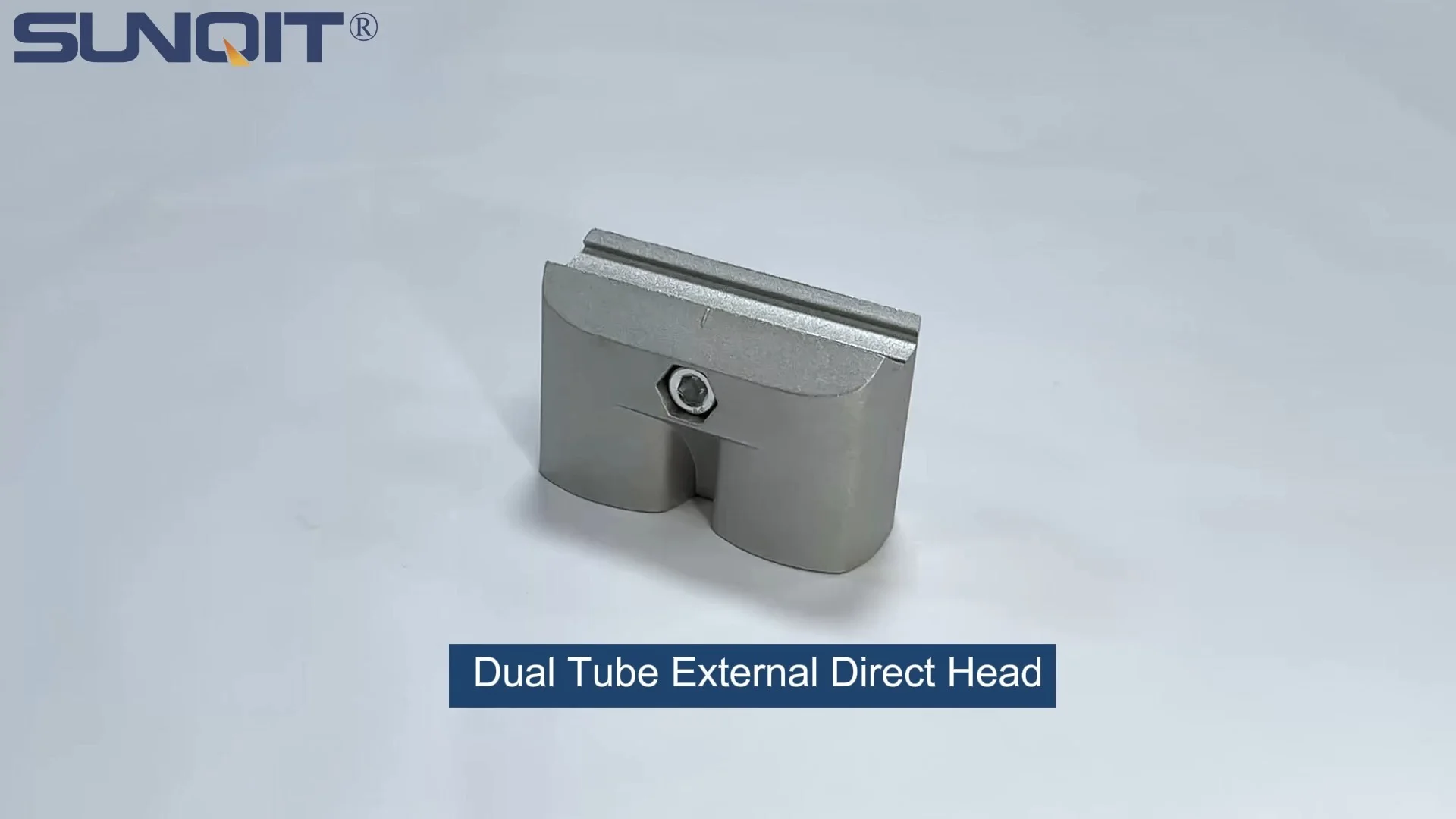
Duplex Aluminum Pipe Joint
Duplex Aluminum pipe joint used for one pcs 28pcs aluminum pipe and one pcs of 28mm duplex pipe connection in straight angle.
In the fast-paced world of automotive manufacturing, where precision, efficiency, and adaptability are non-negotiable, every component plays a role in keeping production lines moving. From the robots assembling engines to the workbenches where technicians inspect wiring harnesses, the tools and structures that form the backbone of these facilities directly impact productivity, safety, and bottom-line results. Among these unsung heroes are duplex aluminum pipe joints—modular, durable connectors that have quietly revolutionized how automotive plants design, build, and reconfigure their workspaces. In this article, we'll dive deep into what makes these joints indispensable, their critical applications in automotive manufacturing, and the tangible benefits they bring to lean systems, workbenches, flow racks, and beyond.
What Are Duplex Aluminum Pipe Joints?
Before we explore their role in automotive settings, let's start with the basics: What exactly are duplex aluminum pipe joints? At their core, these are specialized connectors designed to link aluminum extrusion profiles—hollow, lightweight tubes with standardized cross-sections—into rigid yet flexible structures. The term "duplex" here refers to their dual functionality: they offer both structural stability and rotational flexibility, allowing for 360-degree adjustment during assembly while locking securely into place once positioned. Unlike traditional fixed joints, which require welding or permanent fasteners, duplex aluminum joints use a combination of internal springs, locking pins, and friction-based mechanisms to create strong, tool-free connections between pipes.
Crafted from high-grade aluminum alloys (often 6061 or 6063, known for their strength-to-weight ratio), these joints are engineered to withstand the rigors of factory environments—think constant vibration, heavy loads, and exposure to oils, coolants, and cleaning agents. They're also compatible with a wide range of aluminum extrusion profiles, from basic round tubes to T-slot profiles with grooves for attaching accessories like shelves, brackets, or tool holders. This versatility makes them a cornerstone of modular industrial systems, where adaptability is key to keeping up with evolving production needs.
The Role of Duplex Aluminum Pipe Joints in Lean Manufacturing Systems
To understand why duplex aluminum pipe joints have become a staple in automotive manufacturing, we need to zoom out to the broader context of lean manufacturing. Lean systems—pioneered by Toyota and now adopted globally—focus on eliminating waste, streamlining workflows, and maximizing value for customers. At the heart of lean is the principle of "kaizen," or continuous improvement, which demands that production lines, workstations, and material handling processes can evolve quickly in response to feedback, new product designs, or shifts in demand.
This is where duplex aluminum pipe joints shine. Traditional manufacturing setups often rely on fixed, welded steel structures or custom-built workbenches that are expensive to modify or replace. If a new car model requires a taller workstation, or a production bottleneck demands a reconfigured flow rack, these rigid systems force manufacturers into costly overhauls or temporary, inefficient workarounds. Duplex aluminum joints, by contrast, enable "lean by design": they allow teams to build, disassemble, and rebuild structures in hours rather than weeks, without specialized tools or skilled labor. A flow rack that once fed parts to Station A can be reconfigured to serve Station B in the afternoon; a workbench designed for assembling door panels can be adjusted to accommodate dashboard components by evening. This agility turns lean's abstract principles into tangible, daily improvements.

Applications in Automotive Manufacturing: Where Duplex Joints Make a Difference
In automotive plants, duplex aluminum pipe joints aren't just theoretical tools for lean systems—they're hard at work in nearly every corner of the facility. Let's break down their most critical applications, from the assembly line to material storage, and see how they solve real-world challenges.
1. Assembly Line Workstations: Ergonomics Meets Flexibility
Walk through any automotive assembly line, and you'll notice a symphony of movement: technicians installing components, robots welding frames, and parts flowing seamlessly from one station to the next. At the center of this chaos are workstations—custom-built areas where human workers perform precise tasks, from wiring harness connections to quality inspections. These workstations must be ergonomically optimized (to reduce strain and injuries) and adaptable (to accommodate different worker heights, tool layouts, or part sizes).
Duplex aluminum pipe joints are the backbone of these workstations. Using aluminum extrusion profiles and duplex joints, manufacturers can build adjustable-height workbenches with modular shelves, tool hooks, and ESD (electrostatic discharge) mats—critical for handling sensitive electronics like EV batteries or infotainment systems. For example, a workstation assembling electric vehicle battery packs might need to switch between different battery sizes for sedans vs. SUVs. With duplex joints, the workbench's height can be adjusted by simply releasing the joints, sliding the aluminum pipes to the new position, and relocking them. No welding, no cutting, no downtime. This flexibility isn't just about convenience; it's about reducing worker fatigue and cutting down on errors, which directly impacts product quality.
Case in point: A leading European automaker recently reconfigured 200+ assembly workstations using duplex aluminum joints and aluminum extrusion profiles. The result? A 35% reduction in time spent adjusting workbench heights, a 20% drop in reported ergonomic injuries, and the ability to train new workers 40% faster—all because the workstations could be tailored to individual operator preferences in minutes.
2. Flow Racks: Keeping Parts Moving, Without the Bottlenecks
In automotive manufacturing, "just-in-time" (JIT) production is king. Parts must arrive at the assembly line exactly when they're needed—not too early (cluttering the workspace) or too late (stalling production). Flow racks—tilted shelves with roller tracks that allow parts to glide forward as the front bin is emptied—are the unsung heroes of JIT. They ensure a steady, first-in-first-out (FIFO) flow of components, from screws and clips to larger parts like brake calipers or dashboard assemblies.
Duplex aluminum pipe joints are ideal for building these flow racks, thanks to their ability to create sturdy, customizable structures that integrate seamlessly with roller tracks and accessories. Unlike wooden or steel flow racks, which are heavy and hard to modify, aluminum flow racks built with duplex joints are lightweight enough to be moved by two workers yet strong enough to support hundreds of pounds of parts. The joints allow for easy adjustment of shelf angles (to control part glide speed), the addition of dividers (to separate different part types), or the extension of rack height (to accommodate taller bins).
Consider a transmission assembly line where parts arrive in plastic bins. A flow rack built with duplex joints can be designed with varying roller track angles: steeper angles for lightweight bins (to ensure they glide quickly) and gentler angles for heavier bins (to prevent jamming). If the plant switches to a new bin size, the rack's dividers can be repositioned in minutes using the joints, avoiding the need to replace the entire rack. This adaptability ensures that flow racks keep up with changing part designs, a common occurrence in automotive manufacturing as models are updated yearly.
3. Turnover Trolleys: Moving Heavy Loads Safely and Efficiently
Beyond the assembly line, automotive plants rely on turnover trolleys to transport parts between warehouses, staging areas, and production lines. These trolleys must be durable enough to handle heavy loads (think engine blocks or chassis components), maneuverable in tight spaces, and easy to clean (to maintain hygiene standards, especially in paint shops or cleanrooms).
Duplex aluminum pipe joints excel here, too. By connecting aluminum extrusion profiles with duplex joints, manufacturers can build custom trolleys with reinforced frames, swivel casters (another key accessory in the automotive toolkit), and foldable shelves. The aluminum construction keeps the trolley lightweight (reducing strain on workers pushing them), while the joints ensure the frame remains rigid even under heavy loads. For example, a trolley designed to carry glass windshields might feature a padded aluminum frame built with duplex joints, allowing for easy adjustment of the padding positions to fit different windshield sizes. When not in use, the trolley can be disassembled or folded to save storage space—a critical advantage in crowded plants.
4. Material Storage Racks: Maximizing Space, Minimizing Waste
Automotive plants deal with a staggering variety of parts, from tiny fasteners to large body panels. Storing these parts efficiently is a constant challenge, especially as plants expand or introduce new models. Traditional steel storage racks are bulky, expensive, and hard to reconfigure if storage needs change. Duplex aluminum pipe joints offer a smarter alternative: modular storage racks that can grow, shrink, or change shape as needed.
Using aluminum extrusion profiles and duplex joints, manufacturers can build racks with adjustable shelving heights, allowing them to store tall items (like bumpers) on one shelf and small boxes (like screws) on the next. The joints also make it easy to add accessories like wire mesh panels (to prevent small parts from falling through) or label holders (to improve inventory visibility). Unlike steel racks, which rust over time (especially in humid environments like paint shops), aluminum racks with duplex joints are corrosion-resistant, ensuring a longer lifespan and lower maintenance costs.

The Tangible Benefits: Why Automotive Manufacturers Choose Duplex Aluminum Pipe Joints
By now, it's clear that duplex aluminum pipe joints are versatile—but what specific benefits do they deliver that make them worth the investment? Let's break down the advantages, from cost savings to safety improvements, that have made them a go-to choice for automotive leaders.
1. Durability: Built to Last in Harsh Environments
Automotive plants are tough places for equipment. From exposure to oils, coolants, and cleaning chemicals to constant vibration from machinery, structures must withstand daily wear and tear. Duplex aluminum pipe joints, made from high-grade aluminum alloys, are naturally resistant to corrosion—a critical advantage over steel, which rusts without regular painting or coating. The joints' locking mechanisms are also designed to withstand repeated use; even after hundreds of adjustments, they maintain their grip, ensuring structures remain stable and safe.
Consider a study by a leading automotive supplier, which compared the lifespan of steel vs. aluminum flow racks in a transmission assembly plant. The steel racks began showing signs of rust after 18 months and required replacement after 3 years. The aluminum racks, built with duplex joints, were still in use after 7 years, with only minor wear on the roller tracks. Over time, the aluminum racks proved 40% cheaper than steel when accounting for replacement and maintenance costs.
2. Cost Efficiency: Lower Upfront and Long-Term Costs
At first glance, aluminum extrusion profiles and duplex joints may seem more expensive than basic steel pipes or wooden structures. But when you factor in installation, modification, and replacement costs, they're often far more economical. Steel structures require welding, which demands skilled labor and specialized equipment. Wooden structures are cheap upfront but prone to warping, splintering, and pest damage, leading to frequent replacements. Duplex aluminum joints, by contrast, can be assembled by any worker with minimal training—no welding, no cutting, no expensive tools. This slashes installation time (and labor costs) by up to 60% compared to steel.
Modification costs are even more compelling. If a steel workbench needs to be widened, it might require cutting and rewelding, costing thousands of dollars and days of downtime. With duplex joints, the same modification takes an hour and costs nothing but labor. Over the lifespan of a structure, these savings add up—especially in automotive plants, where reconfigurations are frequent.
3. Safety: Lightweight Yet Strong, Reducing Workplace Risks
Workplace safety is a top priority in automotive manufacturing, where heavy machinery and repetitive tasks put workers at risk of injuries. Duplex aluminum pipe joints contribute to safer workspaces in two key ways: their lightweight design reduces strain, and their stability minimizes accidents.
Aluminum is 30% lighter than steel, so structures built with aluminum extrusion profiles and duplex joints are easier to move, adjust, or disassemble. This reduces the risk of back injuries or strains when workers need to reposition a workbench or trolley. Additionally, the joints' secure locking mechanisms prevent unexpected collapses, even under heavy loads. Unlike wooden shelves, which can splinter and fail suddenly, aluminum structures with duplex joints show gradual wear (e.g., loosening joints), giving workers time to repair them before accidents occur.
4. ESD Compatibility: Protecting Sensitive Electronics
As automotive manufacturing shifts toward electric vehicles (EVs), the need to protect sensitive electronic components—batteries, circuit boards, sensors—from electrostatic discharge (ESD) has never been greater. ESD can damage microchips, leading to costly failures in finished vehicles. Duplex aluminum pipe joints, when paired with ESD-safe aluminum extrusion profiles and accessories (like conductive casters or ESD mats), create workstations and flow racks that dissipate static electricity, keeping components safe.
For example, an EV battery assembly workstation built with duplex joints can integrate ESD grounding wires into the aluminum frame, ensuring any static charge from workers or tools is safely directed to the floor. This is far more reliable than ESD coatings on wooden workbenches, which wear off over time and require frequent reapplication. With aluminum, ESD protection is built into the structure itself, reducing the risk of costly component failures.

Duplex Aluminum vs. Traditional Joints: A Comparative Analysis
To truly appreciate the value of duplex aluminum pipe joints, it helps to see how they stack up against traditional alternatives like welded steel joints, plastic connectors, and wooden brackets. The table below compares key factors like cost, weight, durability, and flexibility across these options.
| Feature | Duplex Aluminum Pipe Joints | Welded Steel Joints | Plastic Connectors | Wooden Brackets |
|---|---|---|---|---|
| Material | High-grade aluminum alloy | Mild steel | ABS or polypropylene | Plywood or pine |
| Weight (per joint) | 150-300g | 500-800g | 50-100g | 200-400g |
| Assembly Time | 5-10 minutes (tool-free) | 30-60 minutes (requires welding) | 10-15 minutes (snap-fit or screws) | 20-30 minutes (screws, glue) |
| Reconfigurability | High (unlimited adjustments) | Low (requires cutting/welding) | Medium (limited by plastic strength) | Low (screws strip, wood splits) |
| Corrosion Resistance | High (naturally resistant) | Low (requires coating) | High (but prone to UV damage) | Low (prone to rot, warping) |
| Load Capacity | High (up to 500kg per joint) | Very high (up to 1000kg per joint) | Low (up to 50kg per joint) | Medium (up to 150kg per bracket) |
| ESD Compatibility | High (with conductive profiles) | Medium (requires grounding) | Low (insulative, unless coated) | Low (insulative) |
| Cost (per joint) | $8-15 | $5-10 (plus welding labor) | $2-5 | $3-8 |
| Lifespan | 7-10 years | 5-7 years (with coating) | 1-3 years (prone to cracking) | 2-4 years (prone to wear/rot) |
As the table shows, duplex aluminum joints strike a unique balance between strength, flexibility, and cost that traditional options can't match. While welded steel offers higher load capacity, it's heavy, hard to modify, and costly to install. Plastic and wooden joints are cheap but lack durability and versatility. For automotive manufacturers prioritizing lean principles, worker safety, and long-term cost savings, duplex aluminum pipe joints are the clear choice.
Future Trends: Duplex Aluminum Joints in the Age of Smart Manufacturing
The automotive industry is evolving faster than ever, driven by trends like electric vehicles, autonomous driving, and Industry 4.0 (the integration of IoT, AI, and data analytics into manufacturing). As plants become smarter and more connected, duplex aluminum pipe joints are evolving to keep pace. Here are two key trends to watch:
1. Integration with IoT Sensors
Future automotive plants will rely on real-time data to optimize workflows—tracking part flow, monitoring workstation usage, and predicting maintenance needs. Duplex aluminum pipe joints are being designed to integrate with small, wireless IoT sensors that can measure temperature, vibration, or load weight. For example, a flow rack built with sensor-equipped joints could alert managers when a shelf is overloaded (preventing collapse) or when parts are running low (triggering a restock). This "smart structure" technology turns passive workspaces into active data sources, further enhancing lean efficiency.
2. Sustainable Manufacturing
Automakers are under increasing pressure to reduce their environmental footprint, from carbon emissions to waste. Aluminum is 100% recyclable, and recycling it requires just 5% of the energy needed to produce new aluminum. Duplex aluminum pipe joints, made from recycled aluminum, align with this sustainability push. Additionally, their modular design reduces waste: when a structure is no longer needed, the joints and pipes can be disassembled and reused elsewhere, rather than ending up in a landfill. As plants strive for carbon neutrality, aluminum's recyclability will make duplex joints even more attractive.
Conclusion: The Backbone of Modern Automotive Manufacturing
In the high-stakes world of automotive manufacturing, where every second counts and efficiency is measured in fractions of a percent, duplex aluminum pipe joints are more than just connectors—they're enablers of progress. They turn lean manufacturing principles from buzzwords into daily reality, allowing plants to adapt, innovate, and thrive in an industry defined by constant change. Whether it's building ergonomic workstations that reduce injuries, flow racks that keep parts moving, or smart structures that integrate with Industry 4.0 technology, these joints deliver tangible value: lower costs, higher productivity, safer workspaces, and a more sustainable future.
As automotive manufacturing continues to evolve—with electric vehicles, autonomous systems, and smarter factories on the horizon—one thing is clear: duplex aluminum pipe joints will remain at the heart of it all. They're not just tools for building structures; they're tools for building the future of mobility. And for automotive manufacturers looking to stay ahead, that's a future worth investing in.