- Company Articles
- Products and Technology
- Product knowledge
- Duplex Aluminum Pipe Joint in Communication Equipment Production Lines

Duplex Aluminum Pipe Joint in Communication Equipment Production Lines
Related Product
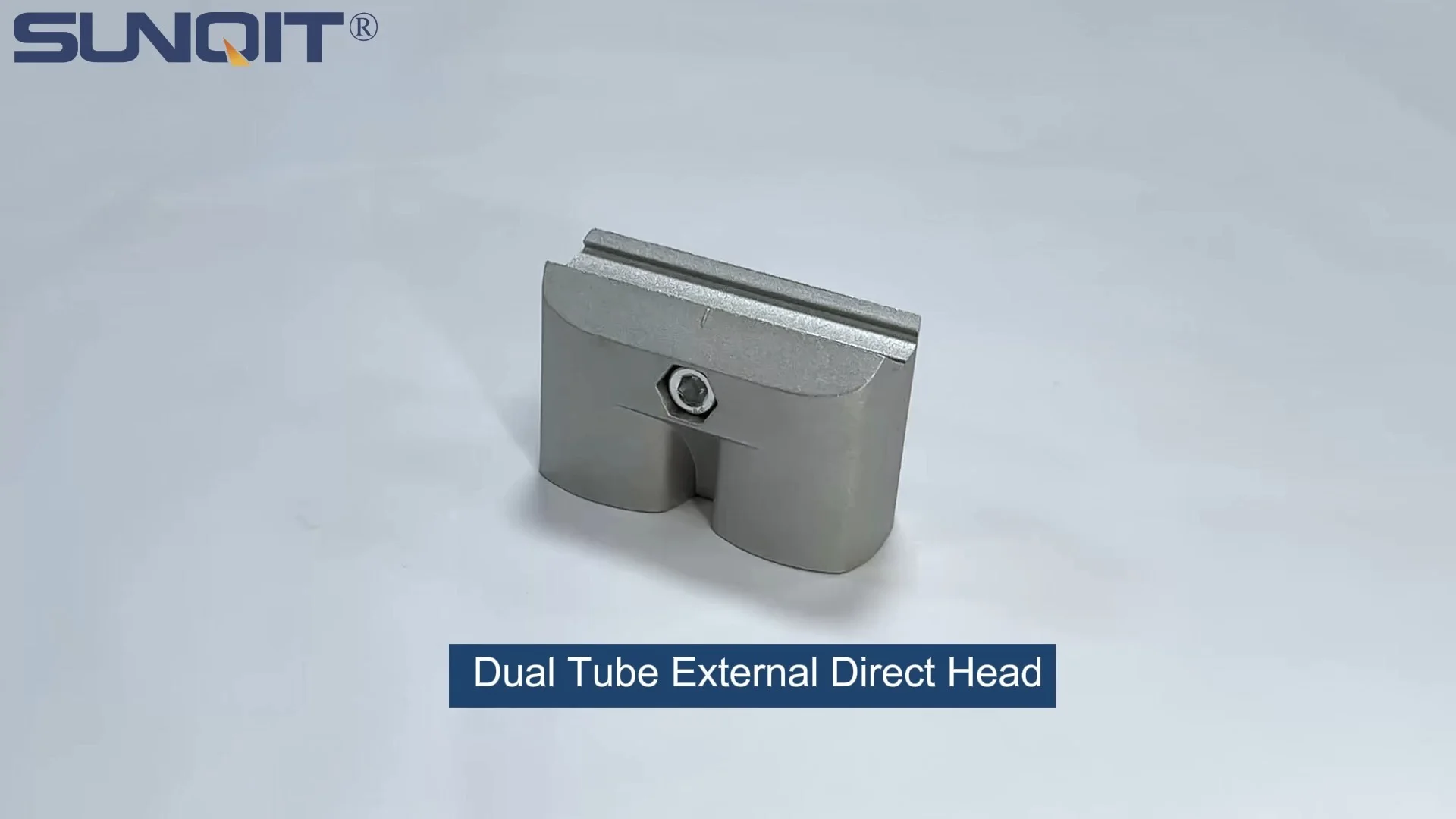
Duplex Aluminum Pipe Joint
Duplex Aluminum pipe joint used for one pcs 28pcs aluminum pipe and one pcs of 28mm duplex pipe connection in straight angle.
The Backbone of Modern Communication: Why Production Lines Matter
In today's hyper-connected world, communication equipment—think routers, 5G base stations, fiber-optic transceivers, and IoT gateways—keeps the global digital ecosystem running. These devices aren't just pieces of hardware; they're the invisible threads weaving together smart cities, remote workforces, and real-time data exchange. But behind every sleek, high-performance gadget lies a production line that demands precision, speed, and adaptability. As technology evolves at a breakneck pace—with new standards, smaller components, and custom configurations—manufacturers face a critical challenge: how to build production lines that can keep up without sacrificing quality or efficiency.
Consider this: A single 5G base station requires over 1,000 individual parts, from microchips to metal enclosures. Assembling these components demands workstations that adjust to different operator heights, flow racks that safely transport delicate PCBs, and conveyors that move materials without jostling sensitive electronics. Traditional production setups, often built with rigid steel frames and welded structures, struggle here. They're slow to set up, hard to reconfigure, and heavy, making them ill-suited for the fast pivots modern communication tech requires. This is where modular solutions, and specifically the duplex aluminum pipe joint, step in to transform the game.
From Rigid to Responsive: The Rise of Modular Production Systems
For decades, manufacturing relied on fixed, one-size-fits-all production lines. Welded steel workbenches, bolted-down flow racks, and immovable conveyors were the norm. But in an industry where a new router model might require a 20% smaller chassis or a base station needs a redesigned cooling system, rigidity becomes a liability. Enter modular systems—flexible, scalable setups built from interchangeable parts that can be reconfigured in hours, not weeks. At the heart of these systems are lightweight materials like aluminum profile and versatile connectors, which prioritize adaptability without compromising strength.
Aluminum profile, in particular, has become a favorite in manufacturing circles. Unlike steel, it's corrosion-resistant, easy to handle, and recyclable—qualities that align with both practical and sustainability goals. But even the best aluminum profiles are only as good as the joints that hold them together. Traditional single-point connectors often lack the stability needed for heavy-duty tasks, while overly complex joints slow down assembly. This is where the duplex aluminum pipe joint emerges as a game-changer: a component designed to balance strength, speed, and flexibility, making it ideal for the demands of communication equipment production.

The Duplex Aluminum Pipe Joint: Design That Delivers
What Makes It "Duplex"?
At first glance, a duplex aluminum pipe joint might look like just another connector, but its design holds the key to its performance. The term "duplex" refers to its dual-locking mechanism, which combines a primary clamp for structural stability and a secondary adjustment screw for fine-tuning. This two-part system ensures a secure fit between aluminum pipes and profiles, even under the constant vibration of conveyor belts or the weight of stacked components. Unlike single-joint designs that can loosen over time, the duplex joint's double reinforcement minimizes wobble, a critical feature when assembling workbenches for delicate circuit board soldering or flow racks for transporting fragile fiber-optic modules.
Material Matters: Aluminum's Winning Traits
Crafted from high-grade 6063 aluminum alloy—known for its excellent strength-to-weight ratio and corrosion resistance—the duplex joint is built to last. Communication equipment production lines often operate in controlled environments, but even small amounts of moisture or chemical exposure (from cleaning agents, for example) can degrade lesser materials. Aluminum's natural oxide layer acts as a barrier, preventing rust and ensuring the joint maintains its integrity over years of use. And at just 150 grams per unit, it keeps the overall weight of modular setups low, making reconfiguration a one-person job instead of a team effort.
Tool-Free Assembly: Speed Without Sacrifice
One of the biggest pain points in traditional production line setup is the need for specialized tools. Wrenches, welders, and drills slow down assembly and create bottlenecks when changes are needed. The duplex aluminum pipe joint eliminates this hassle with its tool-free design. A simple twist of the primary clamp locks the joint onto the aluminum pipe, while the secondary screw tightens with a standard hex key (included with most kits). This means a team can assemble a basic workbench in under an hour or reconfigure a flow rack in 30 minutes—no prior training required. For communication manufacturers racing to meet product launch deadlines, this speed is invaluable.

Putting It to Work: Applications in Communication Production
Workbenches: Where Precision Meets Comfort
Assembly workbenches are the heartbeat of communication equipment production. Technicians spend hours here, soldering tiny components, testing signal strength, and inspecting for defects. A poorly designed workbench can lead to fatigue, errors, and even damage to sensitive parts. With duplex aluminum pipe joints, workbenches become customizable powerhouses. Height-adjustable legs let operators set the surface at elbow level, reducing strain on shoulders and wrists. Accessories like tool hooks, ESD-safe mats, and LED task lights can be added via secondary joints, turning a basic table into a specialized workstation. When a new product requires a larger workspace, the bench can be extended by adding extra aluminum pipes and joints—no need to replace the entire setup.
Flow Racks: Keeping Materials Moving
Efficiency in production hinges on how smoothly materials flow from one station to the next. In communication equipment manufacturing, this means moving everything from PCBs (printed circuit boards) to plastic housings to coiled cables. Flow racks, with their sloped roller tracks, use gravity to keep items moving, but they need to adapt to different component sizes. A 5G router housing, for example, is bulkier than a Wi-Fi module, requiring deeper rack lanes. Duplex joints make adjusting these racks a breeze: loosen the primary clamp, reposition the aluminum profile side rails, and retighten. The joint's stability ensures the rack doesn't shift under the weight of stacked materials, while its lightweight design keeps the entire structure easy to move if the production layout changes.
Conveyor Integration: Stability for Sensitive Components
Conveyors are the arteries of production lines, carrying partially assembled units between soldering, testing, and packaging stations. For communication equipment, which often includes fragile components like laser diodes or glass fiber connectors, conveyor stability is non-negotiable. Duplex aluminum pipe joints play a role here too, reinforcing the frames that support conveyor belts or roller tracks. Their dual-locking mechanism reduces vibration, preventing components from shifting or falling off mid-transit. And when a conveyor needs to be extended or rerouted (say, to add a new testing station), the joints allow sections to be disconnected and reconnected in minutes—far faster than cutting and rewelding steel frames.

Traditional vs. Duplex: A Clear Advantage
To truly appreciate the duplex aluminum pipe joint, it helps to see how it stacks up against traditional alternatives. Below is a comparison of key factors that matter most in communication equipment production lines:
| Feature | Traditional Steel Joints | Duplex Aluminum Pipe Joints |
|---|---|---|
| Assembly Time | 4–6 hours (requires welding/drilling) | 30–60 minutes (tool-free, click-and-lock) |
| Weight | Heavy (500+ grams per joint) | Lightweight (150 grams per joint) |
| Reconfigurability | Fixed (requires cutting/welding to modify) | Adjustable (reposition in minutes with no tools) |
| Durability | Prone to rust; welds weaken over time | Corrosion-resistant; aluminum oxide layer protects against wear |
| Cost Over Time | High (frequent replacements, downtime for modifications) | Low (reusable, minimal downtime, long lifespan) |
The data speaks for itself: duplex aluminum pipe joints aren't just a marginal improvement—they're a paradigm shift in how production lines are built and maintained. For communication manufacturers, this translates to lower operational costs, faster time-to-market for new products, and a workforce that can adapt to change without frustration.
Real-World Impact: A Case Study
To put these benefits into context, let's look at a hypothetical but realistic example: CommLink Innovations , a mid-sized manufacturer of fiber-optic transceivers. Two years ago, CommLink's production line relied on welded steel workbenches and fixed flow racks. When a major client requested a custom transceiver model with a smaller form factor, the team faced a problem: the existing workbenches were too large for the new assembly process, and the flow racks couldn't accommodate the smaller component trays. Redesigning the line with traditional steel would take 6 weeks and cost $45,000—time and money CommLink didn't have.
Instead, CommLink switched to a modular system built around duplex aluminum pipe joints, aluminum profiles, and compatible accessories. The results were striking: the new workbenches, tailored to the smaller transceivers, were assembled in 2 days. The flow racks were reconfigured in 4 hours by adjusting the aluminum profile spacing using the duplex joints. Total cost? $18,000—less than half the original estimate. Six months later, when another client needed a high-power variant of the transceiver, the line was reconfigured again in just 3 days. "We used to dread product changes," says Maria Gonzalez, CommLink's production manager. "Now, with the duplex joints, we see them as opportunities to showcase our flexibility. Our clients notice the difference—and so does our bottom line."
Looking Ahead: The Future of Modular Production
The communication equipment industry isn't slowing down. As 6G development accelerates and the Internet of Things expands, production lines will face even greater demands for customization and speed. Modular systems, anchored by components like the duplex aluminum pipe joint, are poised to lead this charge. Future innovations could include smart joints with built-in sensors to monitor tension or temperature, alerting maintenance teams before a failure occurs. Or 3D-printed aluminum accessories that snap onto duplex joints, allowing for hyper-specific tool mounts or component holders.
Sustainability is another key driver. Aluminum is 100% recyclable, and modular systems generate less waste than traditional setups (no scrap steel from welding, no need to discard entire workbenches when a new model launches). For manufacturers aiming to reduce their carbon footprint, the duplex joint's reusability and aluminum's eco-friendly profile are significant selling points.
Conclusion: Building for Tomorrow, Today
Communication equipment production lines are the unsung heroes of our connected world. They don't just assemble devices—they enable the innovation that keeps us linked, informed, and productive. In this high-stakes environment, rigidity is a liability, and adaptability is essential. The duplex aluminum pipe joint, with its clever dual-locking design, lightweight aluminum construction, and tool-free assembly, embodies the flexibility modern manufacturing demands. Whether it's building a workbench that adjusts to a technician's height, a flow rack that adapts to new component sizes, or a conveyor system that grows with demand, this small but mighty component is proving that the future of production isn't about building bigger lines—it's about building smarter, more responsive ones.
For manufacturers ready to embrace change, the message is clear: the duplex aluminum pipe joint isn't just a part. It's a partner in progress—one that turns the challenges of today's communication equipment production into the opportunities of tomorrow.