- Company Articles
- Products and Technology
- Product knowledge
- Duplex Aluminum Pipe Joint in Medical Device Assembly: Precision Requirements

Duplex Aluminum Pipe Joint in Medical Device Assembly: Precision Requirements
Related Product
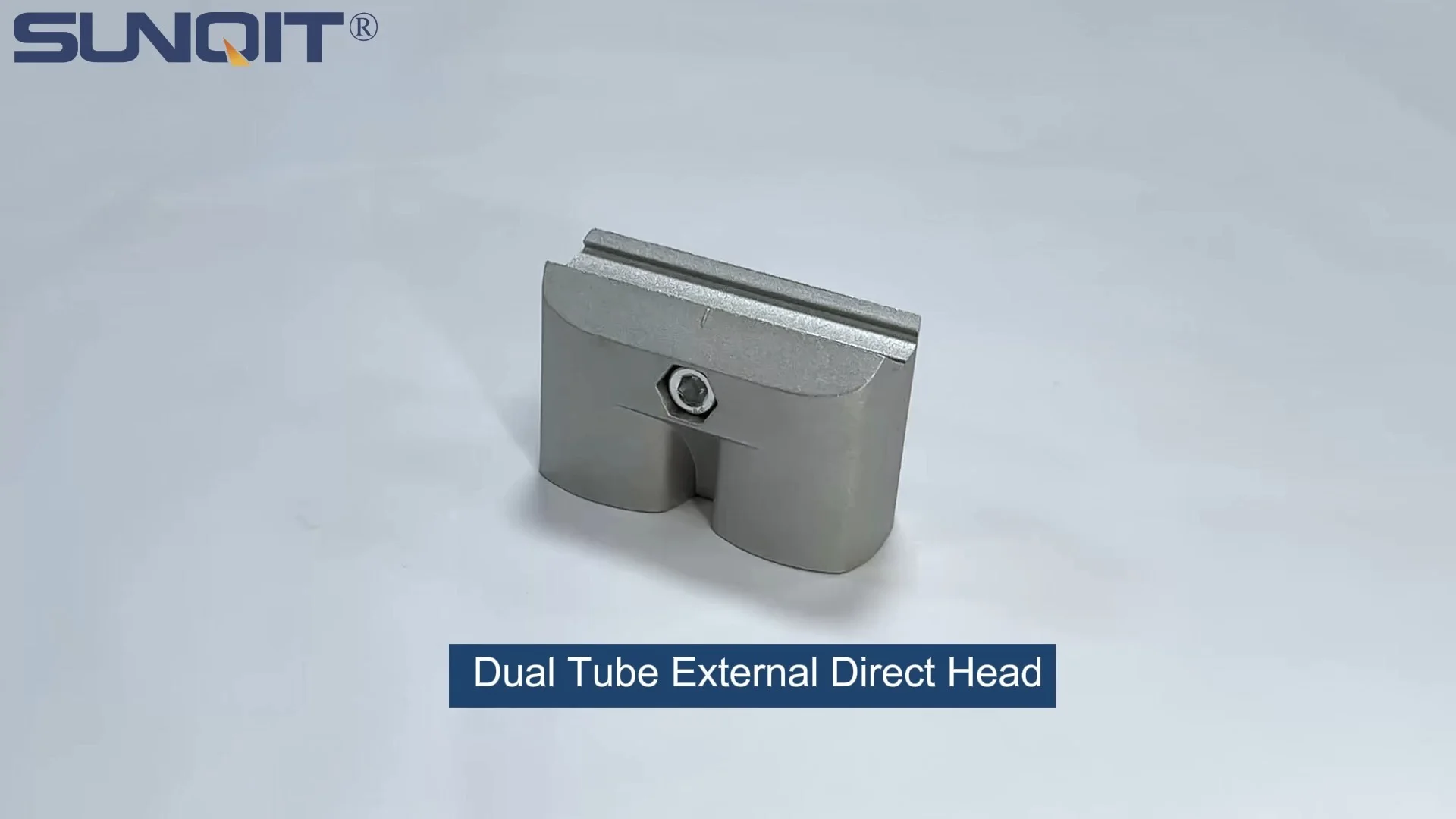
Duplex Aluminum Pipe Joint
Duplex Aluminum pipe joint used for one pcs 28pcs aluminum pipe and one pcs of 28mm duplex pipe connection in straight angle.
In the world of medical device manufacturing, where the line between success and failure can be measured in fractions of a millimeter, precision isn't just a buzzword—it's the backbone of every life-saving tool, diagnostic instrument, and surgical device that reaches healthcare professionals and patients. From the tiniest catheter to complex imaging machines, every component must align, function, and endure with unwavering accuracy. At the heart of this intricate ecosystem lies a component that often goes unnoticed but plays a pivotal role in ensuring assembly line stability and operational efficiency: the duplex aluminum pipe joint. This unassuming yet critical part, when paired with compatible systems like aluminum profiles and lean workflows, becomes a cornerstone of reliable, high-precision medical device production.
The Stakes of Precision in Medical Device Assembly
To understand why the duplex aluminum pipe joint matters, let's first ground ourselves in the reality of medical device assembly. Unlike consumer electronics or automotive parts, where minor defects might lead to inconvenience or recalls, a miscalibration or weak connection in a medical device can have dire consequences. Imagine a surgical robot's arm wobbling during a delicate procedure, or a diagnostic machine delivering inconsistent readings due to a loose framework—these scenarios aren't just hypothetical; they're why regulatory bodies like the FDA and ISO enforce such stringent standards for manufacturing processes.
Medical device assembly lines are unique in their demands. They require environments that balance sterility (often in cleanrooms), ergonomic design (to reduce operator fatigue), and adaptability (to accommodate frequent product iterations). Workflows must be lean, minimizing waste while maximizing repeatability. And the physical structures that support these workflows—workbenches, material racks, conveyor systems—must be both rigid enough to prevent vibration and flexible enough to reconfigure as production needs evolve. This is where the choice of components, especially those that hold the assembly line together, becomes critical.
Understanding the Duplex Aluminum Pipe Joint: More Than Just a Connector
What Is a Duplex Aluminum Pipe Joint?
At its core, a duplex aluminum pipe joint is a specialized connector designed to link aluminum pipes or profiles in a way that balances strength, adjustability, and corrosion resistance. Unlike standard pipe fittings, which might prioritize cost or simplicity, duplex joints are engineered with dual functionality in mind: they can withstand static loads (like the weight of heavy machinery) while allowing for controlled movement or disassembly when needed. This "duplex" nature—stability plus flexibility—makes them ideal for dynamic environments like medical device assembly lines.
But what sets aluminum apart here? For starters, aluminum's natural resistance to corrosion is a boon in cleanroom settings, where harsh disinfectants and frequent cleaning are routine. Unlike steel, which can rust or degrade over time, aluminum forms a protective oxide layer that shields it from chemical damage. Additionally, aluminum is lightweight, reducing the strain on assembly line structures and making reconfigurations easier for operators. When alloyed with elements like magnesium or silicon, it gains strength without sacrificing its weight advantage—a key trait for components that need to support heavy equipment without adding unnecessary bulk.
Design Features: The Engineering Behind the Joint
To meet medical assembly demands, duplex aluminum pipe joints aren't just "off-the-shelf" parts—they're precision-engineered with specific features. Let's break down a few critical design elements:
- Interlocking Mechanisms: Many duplex joints use a combination of internal threads, clamping collars, and friction-fit components to create a secure connection. This ensures that once tightened, the joint resists rotational or axial movement, even under vibration. For example, some designs include "internal rotary" features, allowing for (fine adjustment) during setup while locking into place during operation.
- Material Thickness and Tolerances: The wall thickness of the aluminum pipe itself, paired with the joint's internal dimensions, is calculated to distribute stress evenly. In medical applications, tolerances here are often as tight as ±0.05mm—smaller than the width of a human hair. This precision ensures that when two pipes are joined, there's no "play" or gaps that could lead to misalignment over time.
- Compatibility with Aluminum Profiles: Medical assembly lines rarely rely on pipes alone; they're often integrated with aluminum profiles—extruded aluminum beams with T-slots that allow for easy attachment of accessories like brackets, shelves, or tool holders. Duplex joints are designed to mate seamlessly with these profiles, creating a unified framework that can support everything from workbenches to roller tracks for material transport.
| Feature | Standard Pipe Joint | Duplex Aluminum Pipe Joint (Medical Grade) |
|---|---|---|
| Corrosion Resistance | Moderate (varies by material) | High (oxidation-resistant aluminum alloy) |
| Tolerance Range | ±0.2mm | ±0.05mm |
| Load Capacity (Static) | Up to 50kg | Up to 150kg (depending on pipe diameter) |
| Reusability | Limited (may strip threads after 2-3 uses) | High (can be disassembled/reassembled 10+ times without degradation) |
| Cleanroom Compatibility | Low (may harbor bacteria in crevices) | High (smooth surfaces, no porous materials) |
Why Aluminum Profiles Matter in This Equation
To fully appreciate the duplex joint's role, we need to consider its partnership with aluminum profiles. Aluminum profiles are the "backbone" of modern assembly lines, offering a modular alternative to fixed steel structures. Their T-slot design allows operators to attach tools, monitors, or storage solutions anywhere along the beam, eliminating the need for welding or drilling. When paired with duplex joints, these profiles become even more versatile: joints can connect profiles at 90°, 45°, or custom angles, creating workbenches, material racks, or even mobile trolleys tailored to specific tasks.
In medical device assembly, this modularity is invaluable. For example, a workbench used to assemble pacemakers might need to be reconfigured next month to build insulin pumps. With aluminum profiles and duplex joints, operators can disassemble the bench, adjust the height or width, and reassemble it in hours—no need for new equipment or extensive downtime. This adaptability aligns perfectly with the lean system principles that dominate medical manufacturing: minimizing waste (in this case, wasted time and resources on fixed infrastructure) while maximizing responsiveness to market or regulatory changes.

Precision Requirements: What Makes a Duplex Joint "Medical-Grade"?
Not all duplex aluminum pipe joints are created equal. For medical applications, a joint must meet a set of non-negotiable criteria that go beyond basic functionality. Let's dive into the key precision requirements that separate industrial-grade joints from those suitable for medical device assembly.
Micron-Level Tolerances for Alignment
When assembling small medical components—think stents, microelectrodes, or sensor arrays—even the slightest misalignment in the workbench or conveyor system can throw off the entire process. For example, a roller track used to feed tiny circuit boards into an inspection station must maintain a consistent height and angle; a dip of just 0.1mm could cause boards to jam or scan incorrectly. Duplex joints ensure this stability by maintaining tight tolerances in their fit. The inner diameter of the joint, the angle of the connection, and the pressure applied during clamping are all calibrated to prevent "drift" over time, even after repeated use.
Manufacturers of medical-grade duplex joints use precision machining techniques like CNC milling to achieve these tolerances. Each joint is inspected with coordinate measuring machines (CMMs) to verify dimensions, ensuring that every unit meets the same exacting standards. This level of consistency is why medical assembly lines can rely on these joints to maintain alignment for thousands of production cycles.
Resistance to Vibration and Fatigue
Medical device assembly often involves high-speed automation: robotic arms placing components, ultrasonic welders bonding materials, or centrifuges spinning at thousands of RPM. All of this generates vibration, which can loosen connections over time if the joints aren't designed to withstand it. Duplex aluminum pipe joints address this through a combination of friction-based clamping and mechanical locking. Some designs use serrated inner surfaces that bite into the aluminum pipe when tightened, creating a bond that resists rotational movement. Others incorporate spring-loaded mechanisms that maintain tension even as materials expand or contract with temperature changes.
To test for vibration resistance, joints undergo accelerated fatigue testing. They're mounted to a shaker table that simulates months of assembly line vibration, then checked for signs of loosening or deformation. Only those that maintain their grip after these tests earn the "medical-grade" label.
Cleanroom Compatibility and Biocompatibility
Cleanrooms in medical manufacturing operate under strict classification systems (like ISO 14644), which limit the number of particles in the air and require surfaces that can withstand frequent decontamination. Duplex aluminum pipe joints must comply with these standards in two ways: first, by having a smooth, non-porous surface that doesn't trap dust or bacteria; second, by being compatible with harsh cleaning agents like isopropyl alcohol, hydrogen peroxide, or quaternary ammonium compounds.
Biocompatibility is another consideration, though it's indirect. While the joint itself may not come into direct contact with patients, any flaking, corrosion, or chemical leaching could contaminate the assembly environment. For this reason, medical-grade joints are often anodized—a process that thickens the aluminum oxide layer, enhancing corrosion resistance and creating a non-reactive surface. Anodization also allows for color coding (e.g., blue for cleanroom zones, green for sterile areas), adding an extra layer of safety by preventing cross-contamination between workstations.

Real-World Application: A Case Study in Surgical Instrument Assembly
To bring these concepts to life, let's look at a hypothetical (but realistic) case study: a manufacturer of laparoscopic surgical instruments, which include slender, precision-engineered tools like graspers, scissors, and retractors. These instruments require assembly in a Class 7 cleanroom, with workbenches that support microscopes, torque wrenches, and automated screwdrivers. The assembly line must be reconfigurable to produce 10+ instrument models, each with slightly different component sizes.
The manufacturer's previous setup used steel pipe joints and fixed wooden workbenches. Over time, they faced two major issues: steel joints rusted despite regular cleaning, leading to contamination risks, and reconfiguring the workbenches took days, causing production delays. To solve this, they switched to a system built around aluminum profiles, duplex aluminum pipe joints, and modular workbenches.
The results were transformative. The aluminum profiles, connected via duplex joints, allowed operators to adjust workbench height and add/remove shelves in minutes. The joints' corrosion resistance eliminated rust-related downtime, and their tight tolerances ensured that microscopes and tools stayed aligned, reducing assembly errors by 30%. Material flow improved too: roller tracks, supported by the same aluminum framework, now transported components smoothly between stations, cutting cycle times by 15%. Most importantly, the new system passed ISO 13485 audits with ease, as the modular design simplified documentation of process changes—critical for regulatory compliance.

Challenges and Innovations in Duplex Joint Design
Despite their advantages, duplex aluminum pipe joints aren't without challenges. One ongoing issue is balancing strength with weight: as medical devices grow more complex, assembly lines must support heavier equipment (like automated inspection cameras or robotic arms), requiring joints that can handle higher loads without adding bulk. To address this, manufacturers are experimenting with hybrid materials, combining aluminum with carbon fiber composites in joint cores to boost strength while keeping weight low.
Another challenge is "creep"—the gradual deformation of materials under constant stress. In assembly lines that run 24/7, joints are under continuous load, which can cause aluminum to slowly stretch over time. To combat this, engineers are developing new alloys with higher creep resistance, as well as joint designs that distribute stress more evenly across the pipe surface. Some prototypes even include embedded sensors that monitor tension in real time, alerting operators if a joint begins to loosen—a game-changer for predictive maintenance.
The Future of Precision: Where Duplex Joints and Medical Manufacturing Meet
As medical device technology advances—think smaller, more powerful implants, AI-driven diagnostic tools, and personalized medicine—so too will the demands on assembly line components. Duplex aluminum pipe joints are poised to evolve alongside these trends, with innovations like 3D-printed joints (for custom, low-volume applications) and self-locking mechanisms (to reduce human error during setup) on the horizon. Additionally, the rise of "digital twins"—virtual replicas of assembly lines—will allow manufacturers to test joint performance under simulated conditions before physical production, further reducing risk and improving precision.
Perhaps most exciting is the potential for duplex joints to play a role in sustainable manufacturing. Aluminum is 100% recyclable, and modular systems built with duplex joints reduce the need for single-use or disposable components. As medical device companies prioritize ESG goals, these joints could become a selling point, demonstrating a commitment to both precision and planet.
Conclusion: The Quiet Hero of Medical Precision
In the grand scheme of medical device manufacturing, the duplex aluminum pipe joint may not grab headlines like cutting-edge robotics or breakthrough materials. But without it, the precision, flexibility, and reliability that define modern medical assembly lines would be impossible to achieve. It's a reminder that innovation often lies in the details—the connectors, the frameworks, the components that hold everything together. As we look to the future, where medical devices will continue to push the boundaries of what's possible, the duplex joint will remain a steadfast partner, ensuring that every tool, every machine, and every life-saving device is built on a foundation of uncompromising precision.
For manufacturers, the message is clear: when it comes to medical device assembly, the choice of components matters. Investing in high-quality, medical-grade duplex aluminum pipe joints—paired with compatible aluminum profiles, lean systems, and thoughtful workflow design—isn't just a cost decision; it's an investment in patient safety, regulatory compliance, and long-term operational success. After all, in a field where precision saves lives, every connection counts.