- Company Articles
- Products and Technology
- Application Cases
- Duplex Aluminum Pipe Joint in Warehouse Logistics: Material Racks & Workbenches

Duplex Aluminum Pipe Joint in Warehouse Logistics: Material Racks & Workbenches
Related Product
Duplex Aluminum Pipe Joint
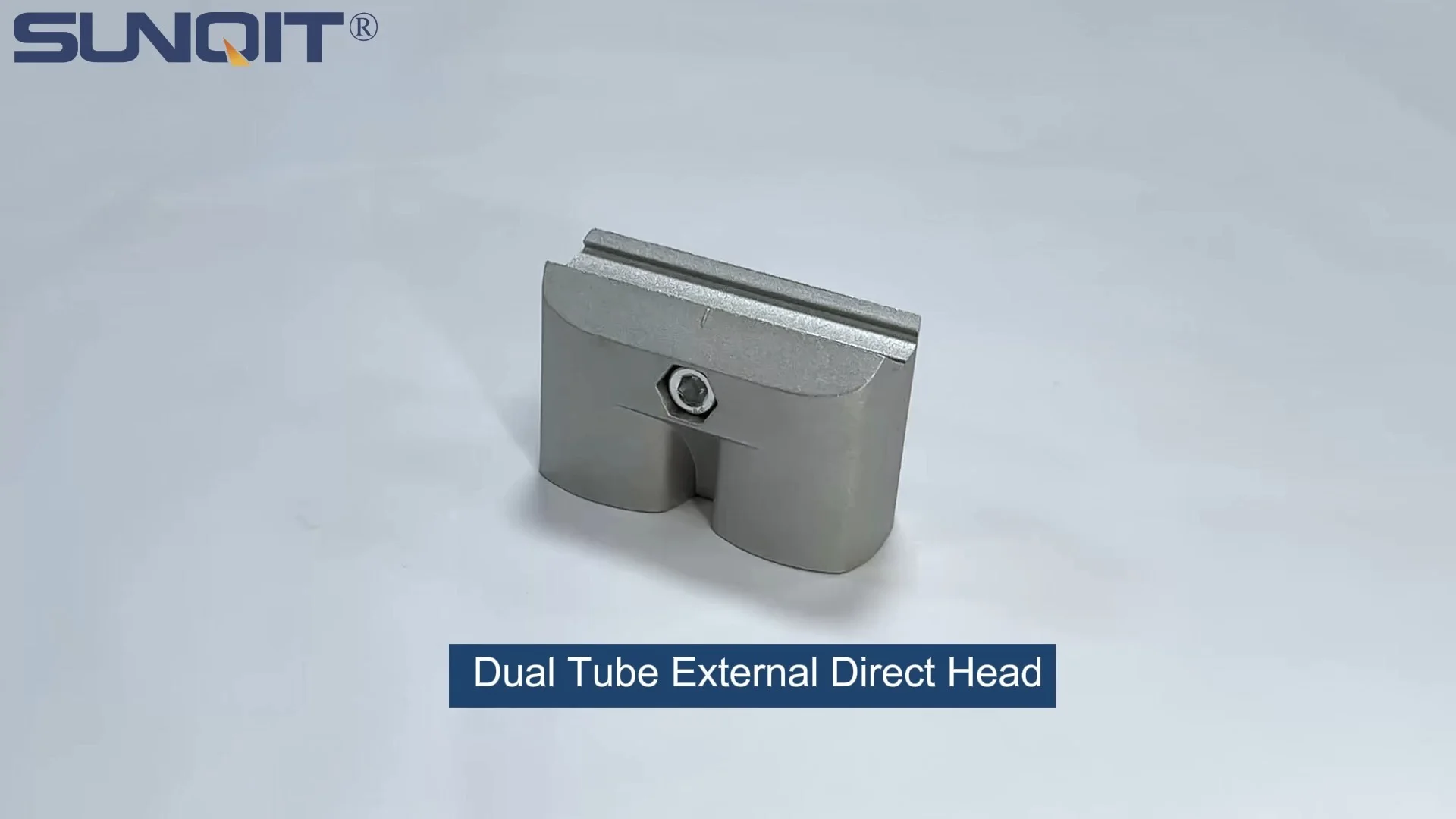
Duplex Aluminum pipe joint used for one pcs 28pcs aluminum pipe and one pcs of 28mm duplex pipe connection in straight angle.
Step into any bustling warehouse, and you'll immediately sense the rhythm of logistics at work—forklifts hum as they navigate aisles, workers load and unload pallets with precision, and inventory shifts constantly to meet ever-changing demand. In this dynamic environment, the backbone of efficiency lies in two critical elements: how materials are stored and how work gets done. Material racks that can't adapt to new product sizes, workbenches that stay fixed amid shifting workflows, and rigid structures that resist quick adjustments don't just slow operations—they cost time, money, and even employee morale. Today, we're diving into a solution that's quietly revolutionizing warehouse design: the duplex aluminum pipe joint. Paired with aluminum pipes and a suite of aluminum profile accessories, these unassuming connectors are transforming static warehouses into agile, future-ready spaces where adaptability isn't just a buzzword—it's the daily reality.
What Are Duplex Aluminum Pipe Joints, Anyway?
Let's start with the basics. Duplex aluminum pipe joints are specialized connectors designed to link aluminum pipes into sturdy, configurable structures. Unlike traditional welded steel joints or flimsy plastic connectors, these joints are engineered for both strength and flexibility. Picture a small, often two-way or multi-way component, typically made from high-grade aluminum alloy, with precision-machined ports that accept aluminum pipes (think basic aluminum tubes or t-slot aluminum pipes) and secure them with simple fasteners—no welding, no heavy tools, just a wrench or hex key. What makes them "duplex" is their ability to create dual or multiple connection points, allowing for the assembly of complex structures like material racks, workbenches, or trolleys with minimal effort.
But their magic isn't just in assembly. These joints are built to last. Aluminum's natural resistance to corrosion means they hold up in humid warehouses or environments with temperature fluctuations, outperforming steel in settings where rust is a concern. And because they're lightweight compared to steel, structures built with duplex joints are easier to move, reconfigure, or even disassemble and rebuild elsewhere. Think of them as the building blocks of a warehouse's "muscle"—strong enough to support heavy loads, yet flexible enough to flex when needs change.
Reinventing Material Racks: From Fixed to Fluid
Material racks are the silent workhorses of any warehouse. They hold everything from small components to bulky pallets, and their design directly impacts how quickly workers can access inventory. Traditional material racks—often made of welded steel or bolted wood—come with a big downside: they're stuck in time. If your warehouse starts stocking taller boxes next quarter, you either squeeze them in (risking damage) or invest in entirely new racks. Enter duplex aluminum pipe joints, which turn material racks into adaptable systems that grow with your business.
Take, for example, a standard Material Rack B (3 row and 3 floor)—a common setup for storing medium-sized parts. With traditional steel racks, those rows and floors are fixed during manufacturing. If your team suddenly needs to add a fourth row to accommodate a new product line, you're looking at cutting, welding, and repainting—assuming the existing frame can even handle the modification. With duplex joints, it's a different story. The aluminum pipes that form the rack's uprights and (crossbeams) are connected via these joints, which can be loosened, repositioned, and retightened in minutes. Need an extra row? Simply add a new aluminum pipe segment and secure it with a duplex joint. Want to adjust shelf heights to fit taller bins? Loosen the joints, slide the crossbeam to the desired level, and lock it in place. It's like building with giant, industrial-grade Legos—only sturdier.
Durability isn't compromised, either. A well-built aluminum rack with duplex joints can easily support hundreds of pounds per shelf, thanks to the joint's ability to distribute weight evenly across the structure. One electronics warehouse in Ohio recently shared their experience: after switching from steel racks to aluminum racks using duplex joints, they reduced the time to reconfigure storage for seasonal inventory by 65%. "We used to spend a weekend rearranging racks for holiday stock," said their logistics manager. "Now, two people can adjust an entire aisle in an afternoon. And because the aluminum doesn't rust, we're not replacing shelves every few years—these will last decades."

Workbenches That Work With Your Team, Not Against Them
If material racks are about storing materials, workbenches are where the "work" in logistics happens. Whether it's assembling products, packing orders, inspecting goods, or prepping shipments, the workbench is the employee's second home. But traditional workbenches often feel like relics of a bygone era: heavy wooden tops bolted to steel frames, fixed at a single height, and impossible to tweak for specific tasks. A workbench that's too low strains a tall worker's back; one that's too high forces shorter employees to stretch. A surface cluttered with tools because there's no built-in storage? That's just wasted time hunting for what you need.
Duplex aluminum pipe joints are changing this narrative, turning workbenches into customizable hubs tailored to how your team works . Let's take the Workbench E (single deck-without caster) as a starting point. With a frame built from aluminum pipes and duplex joints, this basic workbench becomes a blank canvas. Need a shelf for tools? Add a crossbeam halfway up the frame using a duplex joint. Want to mount a monitor arm for digital work instructions? Attach it to the t-slot aluminum pipe using compatible accessories. Ergonomics? Adjust the height by simply repositioning the legs—no cutting or welding, just loosening the joints and sliding the pipes to the ideal level. One automotive parts supplier in Michigan did exactly this: they reconfigured 20 workbenches to match the height of each operator, and within three months, reported a 22% drop in workplace strain injuries.
For specialized environments, like electronics manufacturing where static electricity is a risk, duplex joints shine with ESD workstations. ESD (Electrostatic Discharge) workbenches require grounded surfaces to protect sensitive components, but that doesn't mean they have to be rigid. By using aluminum pipes (which conduct electricity, making grounding easier) and duplex joints, these workstations can include ESD-safe mats, grounded tool holders, and adjustable shelves—all while maintaining the flexibility to reconfigure as production lines change. A semiconductor plant in Arizona even added roller tracks to their ESD workstations using aluminum guide rails and duplex joints, allowing circuit boards to glide smoothly from one workstation to the next without manual lifting.

It's a Team Effort: Duplex Joints and Aluminum Profile Accessories
Duplex aluminum pipe joints don't work alone—they're part of a larger ecosystem of aluminum profile accessories that take their functionality to the next level. Think of it like baking a cake: the joints are the flour (essential), but the accessories are the sugar, eggs, and vanilla that make it delicious. From caster wheels that add mobility to roller tracks that streamline material flow, these accessories turn basic structures into fully functional systems.
Take caster wheels, for example. Adding a set of swivel stem caster wheels with brakes to a Workbench E transforms it from a stationary table into a mobile workstation that can roll to where the action is—no need to carry heavy tools across the warehouse. Similarly, plastic roller track guide rails (yellow or grey, depending on your warehouse's color-coding system) can be mounted to material racks using roller track placon mounts, turning static shelves into gravity-fed flow racks where boxes slide forward as the front one is removed. This "first in, first out" (FIFO) setup reduces picking time by up to 30%, as workers don't have to reach to the back of shelves.
Aluminum profile accessories also enhance safety. End caps for aluminum profiles cover sharp edges, preventing scrapes and cuts. Rubber leveling feet stabilize workbenches on uneven warehouse floors, reducing wobble during precision tasks. Even small touches, like plastic pipe sleeves to protect aluminum pipes from scratches, add up to longer-lasting, better-looking structures. In one distribution center in Texas, combining duplex joints with aluminum honeycomb panels (lightweight, strong workbench tops) and aluminum side guards created workstations that were both durable and easy on the eyes—boosting employee satisfaction alongside efficiency.
| Feature | Traditional Warehouse Solutions | Duplex Aluminum Pipe Joint Solutions |
|---|---|---|
| Flexibility | Fixed structures; modifications require welding or replacement. | Tool-free reconfiguration; adjust heights, add/remove components in minutes. |
| Durability | Steel prone to rust; wood warps in humidity. | Aluminum resists corrosion; joints maintain strength through repeated adjustments. |
| Assembly Time | Hours to days (welding, bolting heavy parts). | Minutes to hours (snap-together with basic tools). |
| Cost Over Time | High (replacement costs for outdated structures). | Lower (reuse components; minimal replacement needed). |
| Customization | Limited (pre-built sizes only). | Unlimited (mix/match pipes, joints, and accessories for unique needs). |

Beyond the Warehouse: Why This Matters for the Future
Warehouses today aren't just storage spaces—they're hubs of innovation, where agility and efficiency can make or break a business. E-commerce growth, shorter product lifecycles, and the rise of just-in-time inventory mean warehouses must adapt faster than ever. Duplex aluminum pipe joints aren't just solving today's problems; they're future-proofing operations. A small business starting with a few material racks and workbenches can scale up using the same components. A large enterprise can test new workflows by quickly reconfiguring a section of the warehouse without disrupting the entire operation. And because aluminum is 100% recyclable, these systems align with sustainability goals, reducing waste from constant replacements.
Consider the story of a regional food distributor in Pennsylvania. When they expanded their frozen food line, they needed deeper, sturdier racks to hold bulk frozen pallets. Instead of buying new steel racks, they used their existing aluminum pipes and duplex joints, adding heavier-duty aluminum profile accessories like reinforced aluminum pipe clamps and heavy-duty split foot seats. The result? They saved 40% on equipment costs and had the new racks ready in two days instead of two weeks. "We didn't just save money," their operations director noted. "We saved the hassle of coordinating with contractors and shutting down part of the warehouse. We did it ourselves, on our timeline."
Wrapping Up: The Duplex Difference
In the world of warehouse logistics, the smallest components often make the biggest impact. Duplex aluminum pipe joints may not grab headlines, but they're quietly reshaping how warehouses operate—turning rigid, frustrating spaces into flexible, employee-friendly environments where adaptability is built into the design. Whether it's a material rack that grows with your inventory, a workbench that adjusts to your team's needs, or a custom structure assembled in hours instead of days, these joints prove that logistics efficiency doesn't have to come from expensive automation alone. Sometimes, it comes from reimagining the basics: how we connect pipes, how we build racks, and how we empower workers to do their best.
So the next time you walk through a warehouse, take a closer look at the racks and workbenches. Chances are, if they're lightweight, sleek, and subtly adaptable, there's a duplex aluminum pipe joint holding them together—quietly, reliably, and ready for whatever tomorrow brings.